

The marketing industry has undergone a monumental transformation in recent years, with a staggering seventy percent of marketers believing that the pace of change in the last three years has eclipsed that of the preceding five decades. This seismic shift, driven by advancements in artificial intelligence, hyper-personalization, data analytics, and the increasing demand for integrated customer experiences, necessitates a parallel evolution in the marketing automation platforms that underpin modern B2B strategies. Against this backdrop, Pardot, a long-standing fixture in the B2B marketing technology ecosystem, is increasingly perceived as struggling to keep pace, leading a growing number of businesses to actively seek out more contemporary and robust alternatives.
The Evolving Landscape of B2B Marketing Automation
The B2B marketing automation market, valued at billions globally and projected for continued strong growth, is a fiercely competitive arena. Once dominated by platforms focused primarily on email nurturing and lead scoring, the modern B2B marketer now demands sophisticated capabilities across the entire customer journey. This includes seamless multi-channel orchestration, advanced segmentation, predictive analytics, robust revenue attribution, and, critically, deep integration with Customer Relationship Management (CRM) systems. The shift from a siloed marketing approach to a unified, customer-centric strategy is paramount, requiring platforms that can aggregate and act upon data from sales, service, and marketing in real-time. The rapid adoption of AI for content generation, predictive lead scoring, and automated campaign optimization further accentuates the need for platforms designed with future-readiness in mind.
Pardot’s Position and Perceived Stagnation

Pardot, officially rebranded as Marketing Cloud Account Engagement by Salesforce in 2022, has historically served as a critical tool for B2B companies leveraging the Salesforce ecosystem. Acquired by Salesforce in 2013, it was positioned as the go-to marketing automation solution for their B2B customer base, offering capabilities for email marketing, lead nurturing, and basic reporting. However, a significant undercurrent of concern has emerged among its user base.
According to Tom Ryan, founder of MarCloud Consulting and a seasoned Pardot expert since 2016, a primary driver for businesses leaving the platform is a pervasive fear of its eventual discontinuation. Ryan articulates this sentiment bluntly: "There’s no development on the platform. There’s a clear migration path." For many long-term users, the lack of significant new features or substantial updates paints a clear picture of a platform in maintenance mode rather than active innovation, leading them to believe its eventual phase-out is "just a case of ‘when’ not ‘if.’"
Beyond these strategic concerns, users frequently encounter tangible operational pain points. Revenue attribution, a cornerstone of effective B2B marketing, remains "incredibly difficult" for many, requiring intricate knowledge to "wrestle with the Pardot-Salesforce sync." This complexity often leads to inaccurate or incomplete insights into campaign ROI, hindering strategic decision-making. Similarly, reporting capabilities are frequently cited as rigid and inflexible. "The reports are not customizable in Pardot and therefore, people cannot get the reports they need. Clear reporting in general is very difficult for people to achieve, without consultant-level knowledge," Ryan explains. This lack of self-service reporting and the need for specialized expertise to extract meaningful data stands in stark contrast to the modern demand for agile, data-driven marketing. The platform’s architecture, often perceived as a separate system requiring constant synchronization with Salesforce CRM, creates data silos and integration challenges that many contemporary platforms have largely overcome.
Salesforce’s Strategic Direction and the Marketing Cloud Next Push
Salesforce, acutely aware of the evolving market and the sentiment surrounding Pardot, has been strategically directing its customers towards its newer, more integrated offering: Marketing Cloud Next. This platform is built natively on Data Cloud, Salesforce’s real-time data platform, eliminating the need for separate system syncing that characterized Pardot. The intention is clear: to offer a unified, data-driven marketing solution that leverages the full power of the Salesforce ecosystem.

However, the push towards Marketing Cloud Next is not always a straightforward or desired migration for Pardot users. As Ryan observes, this redirection often prompts "a wider tech review" rather than a blind adoption of the new Salesforce product. Many businesses, having experienced the limitations of a tightly coupled but ultimately siloed system like Pardot, use this juncture to evaluate their entire technology stack. While some enterprises deeply embedded in the broader Salesforce ecosystem (utilizing Data Cloud or Agentforce) find Marketing Cloud Next a logical progression, a significant proportion, including those who simply want a more intuitive and integrated marketing solution, look elsewhere. This explains why, in Ryan’s extensive experience, the "most common direction is HubSpot" for businesses migrating from Pardot. MarCloud Consulting itself transitioned from being a Pardot-specific consultancy to achieving Diamond Solutions Partner status with HubSpot, underscoring this industry trend.
Evaluating Alternatives: Key Criteria for B2B Teams
When B2B teams embark on the critical journey of selecting a Pardot alternative, a comprehensive evaluation across several key criteria is essential to ensure the chosen platform aligns with current needs and future growth trajectories.
-
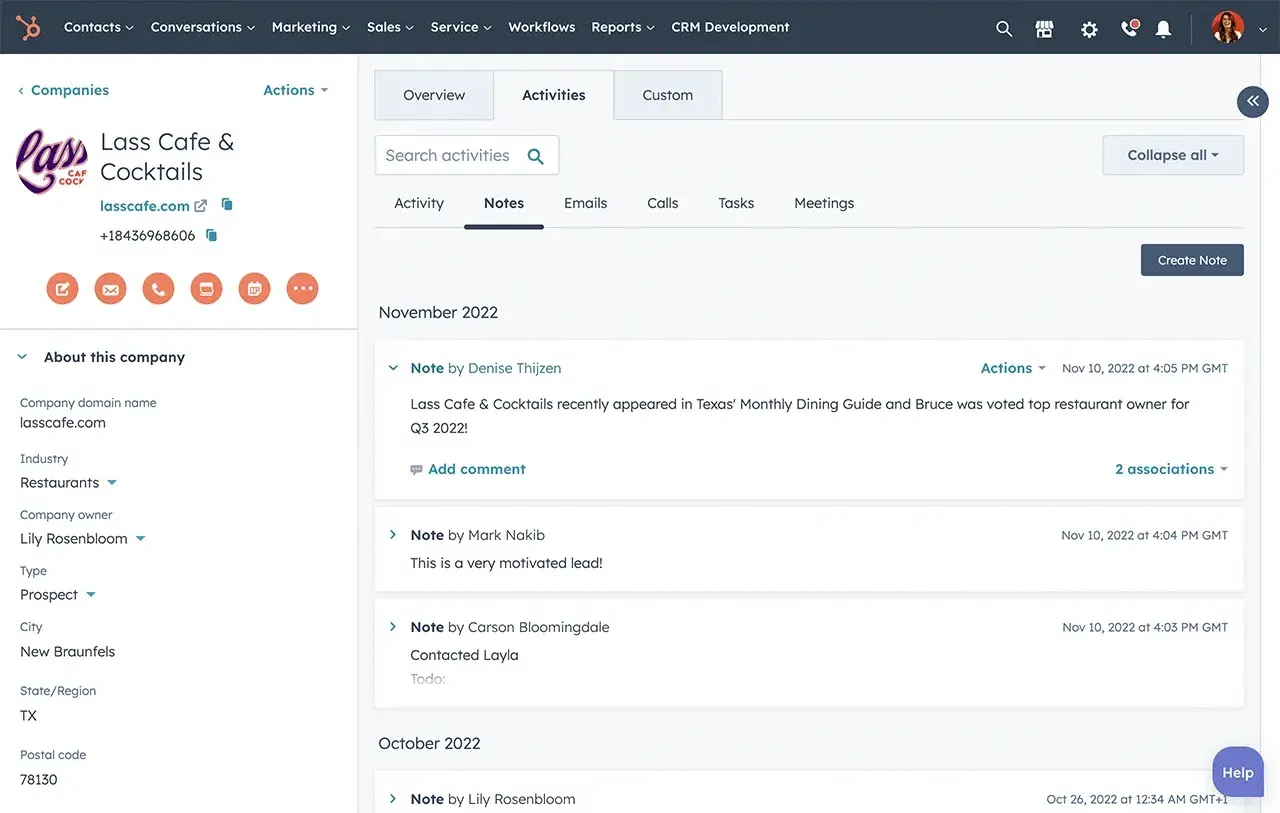
CRM Integration: This is arguably the most critical factor. The ideal alternative offers seamless, native, and often two-way synchronization with a CRM. Some platforms, like HubSpot and Zoho, offer robust CRM capabilities directly within their ecosystem, allowing businesses to consolidate their sales and marketing data under one roof. Others, such as Marketo and ActiveCampaign, provide strong native integrations with Salesforce, catering to companies committed to retaining Salesforce as their core CRM. The goal is to eliminate data silos, ensure a unified customer view, and facilitate accurate lead management and revenue attribution.
-
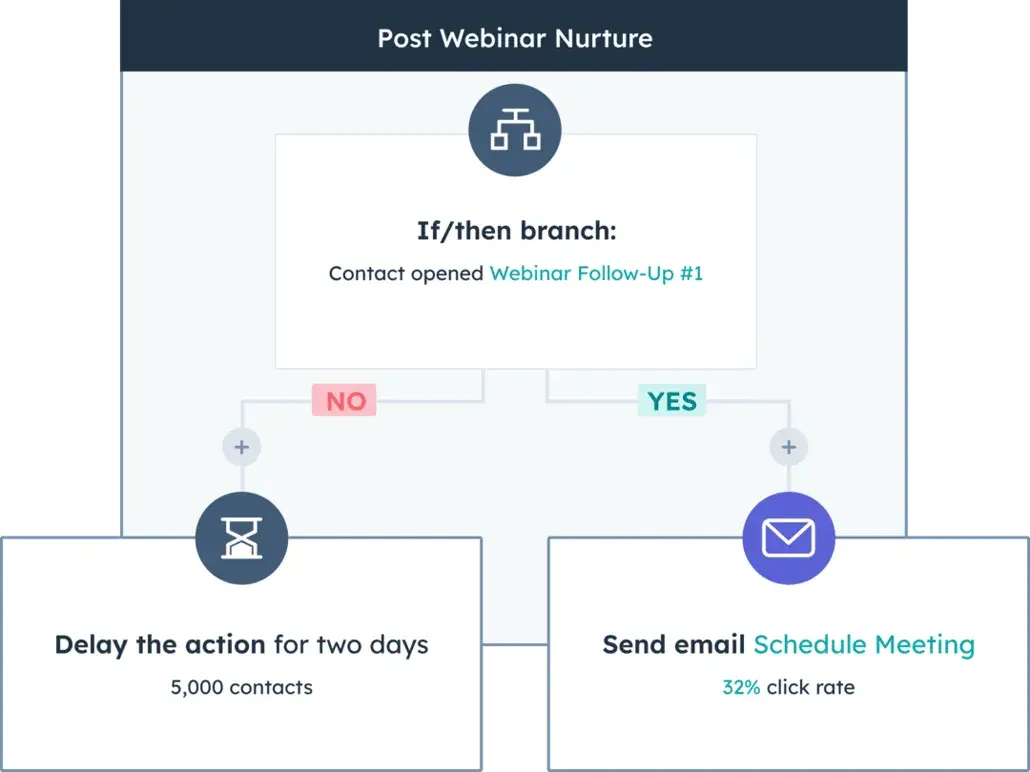
Automation Capabilities: Modern B2B marketing demands highly sophisticated automation. Alternatives should offer intuitive workflow builders, multi-step nurture campaigns triggered by diverse behaviors (website visits, email opens, content downloads, CRM data updates), and the ability to personalize interactions at scale. The platform should support complex branching logic, A/B testing within automations, and dynamic content delivery.
-
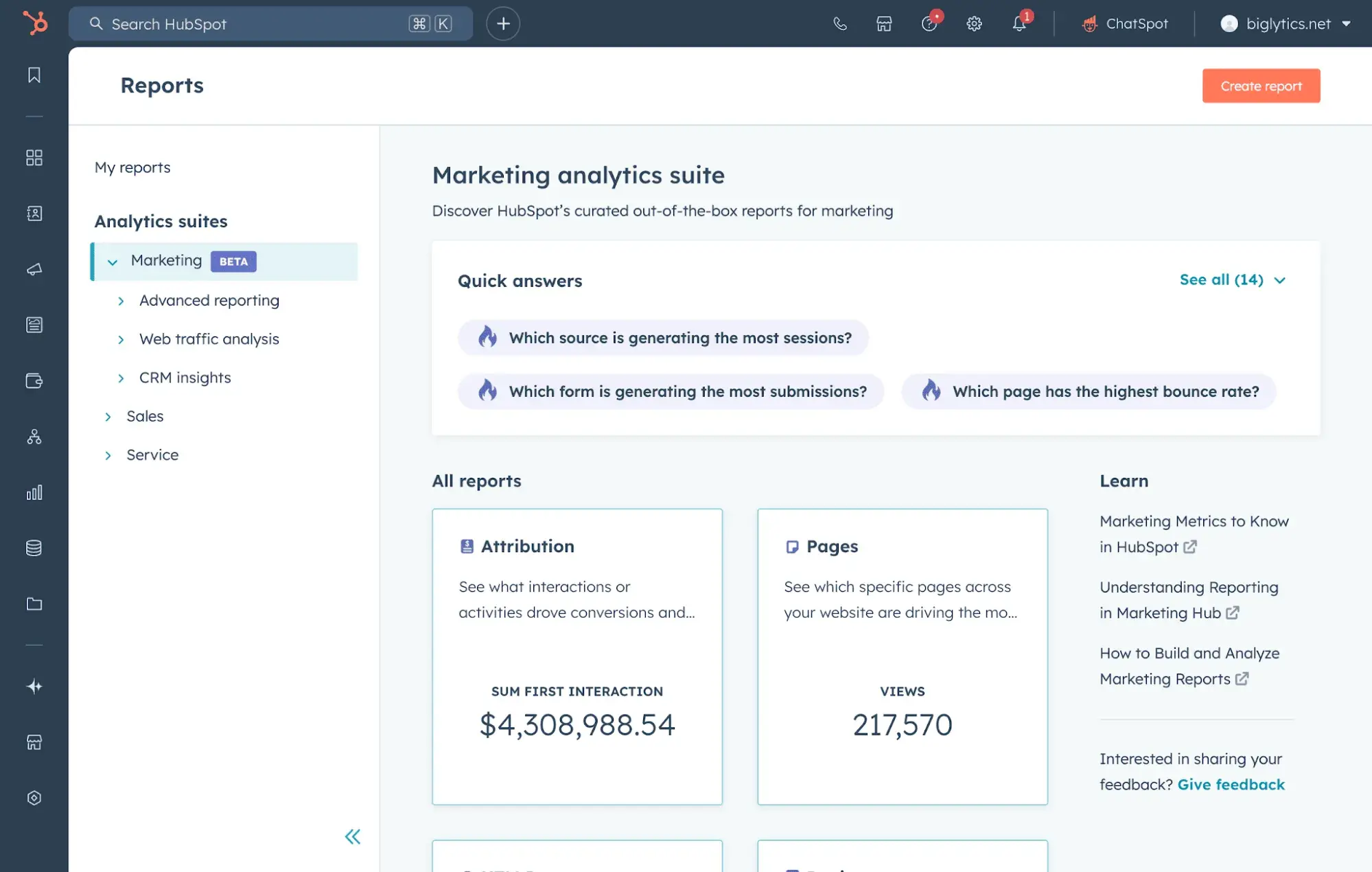
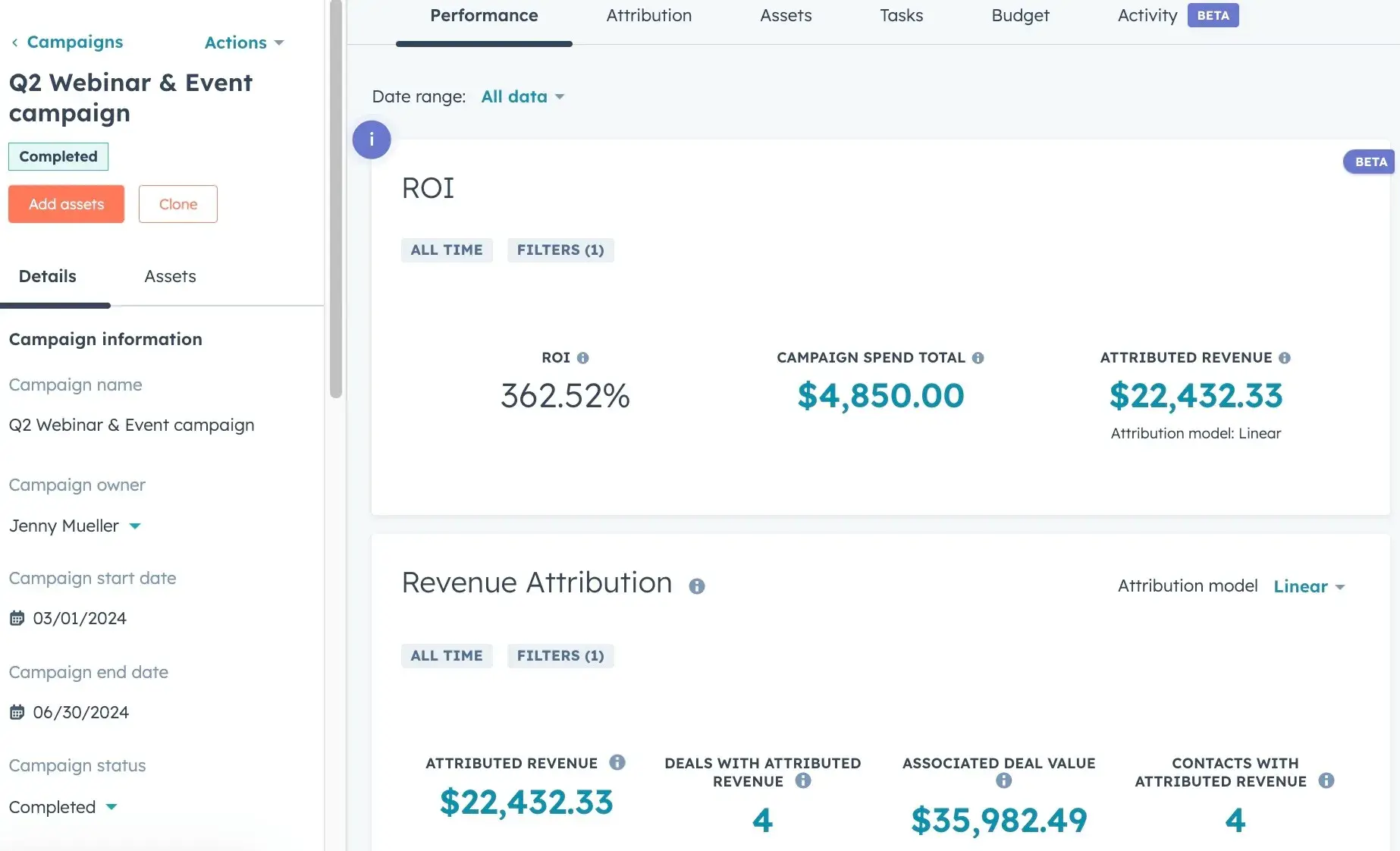
Reporting and Analytics: A key pain point with Pardot, robust reporting is non-negotiable. Alternatives must provide customizable dashboards, comprehensive performance metrics (email engagement, campaign ROI, lead conversion rates, website analytics), and advanced revenue attribution models. The ability to easily generate insights without requiring specialist consultant-level knowledge is crucial for empowering marketing teams.
-
Integrations Ecosystem: Beyond CRM, the chosen platform must integrate seamlessly with other vital marketing and sales tools, including webinar platforms, content management systems, advertising platforms, data enrichment tools, and customer service applications. A rich and open API or a comprehensive marketplace of integrations enhances flexibility and future-proofs the investment.
-
Ease of Use and Learning Curve: While robust features are important, a platform’s usability significantly impacts adoption and efficiency. Intuitive interfaces, drag-and-drop builders, and comprehensive documentation can reduce the learning curve and empower marketers to execute campaigns independently, rather than relying heavily on technical teams or external consultants.
-
Scalability: The platform must be able to grow with the business, accommodating increasing contact volumes, more complex campaigns, and expanding teams without significant performance degradation or prohibitive cost increases.
-
Pricing and Total Cost of Ownership (TCO): While the initial subscription fee is a factor, businesses must consider the TCO, which includes implementation costs, training, potential consultant fees, and how pricing scales with additional users, contacts, or advanced features. Budget-friendly options exist, but often come with trade-offs in terms of features or scalability.
Leading Pardot Alternatives in Detail
The market offers a diverse range of alternatives, each with distinct strengths and target audiences.
1. HubSpot Marketing Automation
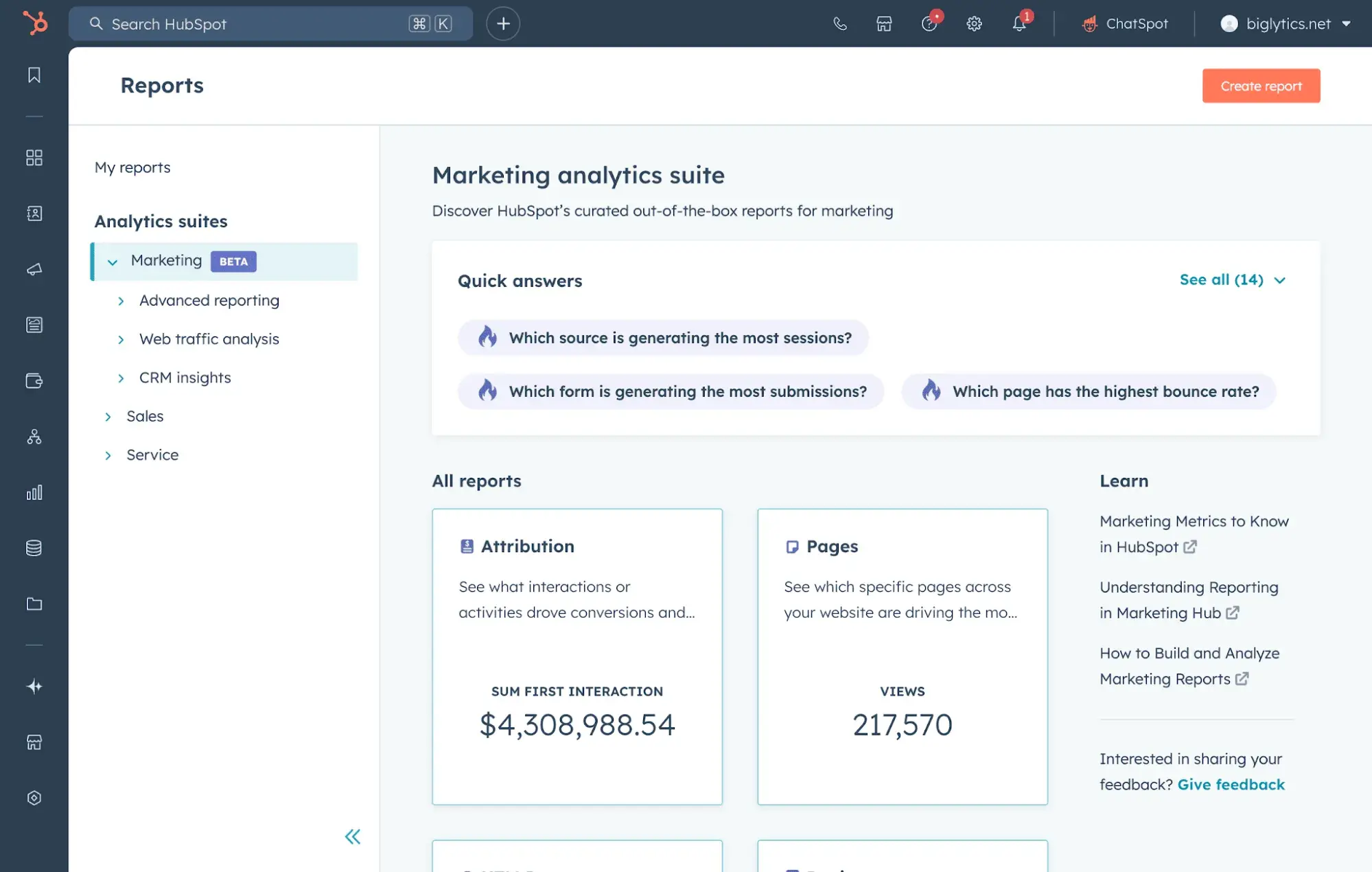
HubSpot Marketing Automation stands out as a top contender, frequently cited by experts like Tom Ryan as the most common destination for migrating Pardot users. Its core appeal lies in its "all-in-one" platform approach, seamlessly integrating marketing, sales, service, and content management within its Smart CRM. This architecture directly addresses Pardot’s perceived siloed design and clunky features by unifying data under one roof. HubSpot excels in building multi-step B2B nurture workflows triggered by behavior, lifecycle stage, or CRM data. Teams can either replace their Salesforce CRM with HubSpot CRM entirely or leverage the robust native two-way sync to maintain alignment across contacts, companies, deals, and activity history between both platforms.
- Key Features: Intuitive drag-and-drop email and campaign builders, advanced marketing automation workflows, comprehensive analytics and customizable dashboards for ROI tracking, robust contact management, account-based marketing (ABM) tools, SEO tools, social media management, and content creation tools (landing pages, blogs).
- Reviews: Users consistently praise HubSpot Marketing Hub for its ease of use, intuitive design, and powerful automation capabilities. While the platform offers extensive features, some users note a learning curve for advanced functionalities and wish for even more niche features.
- Pricing: HubSpot offers a free plan for up to two users, making it accessible for smaller teams. Paid plans begin at $10/month/seat, scaling with additional features and contact tiers.
- Best For: Businesses seeking a truly integrated, user-friendly, all-in-one platform for marketing, sales, and CRM, particularly those frustrated by data silos and complex interfaces. It’s ideal for scaling mid-market companies and even larger enterprises looking for a modern, holistic solution.
2. Salesforce Marketing Cloud Next
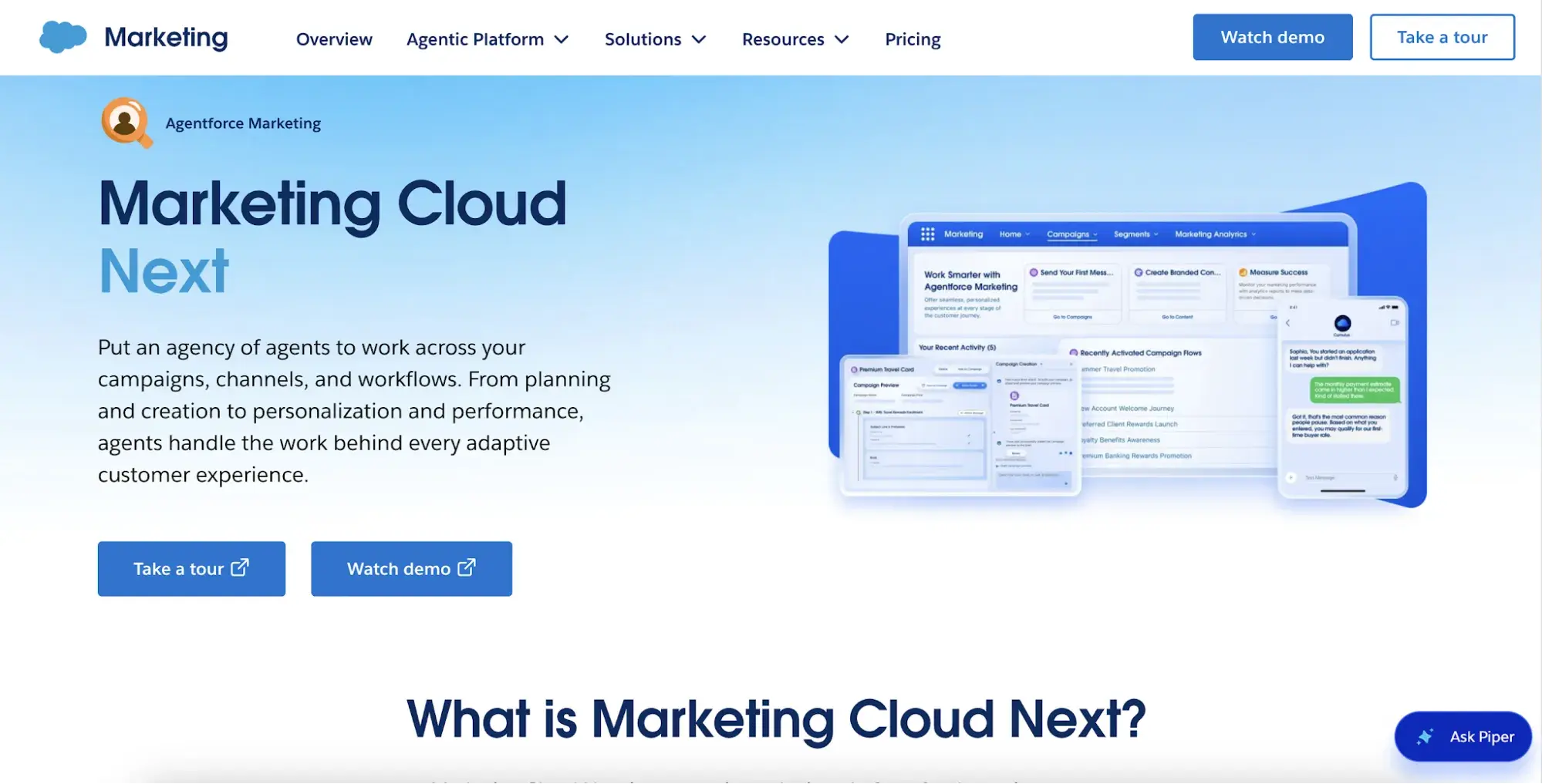
Salesforce Marketing Cloud Next represents Salesforce’s strategic future for B2B marketing automation. Unlike Pardot, which operated as a connected but separate system, Marketing Cloud Next is built natively on Data Cloud, offering deep integration within the broader Salesforce ecosystem. This native integration eliminates many of the data synchronization headaches associated with Pardot, providing a unified view of customer data.
- Key Features: Advanced personalization capabilities driven by Data Cloud, real-time customer data management, AI-powered insights and automation (often leveraging Einstein AI), multi-channel campaign orchestration across email, mobile, web, and social, and scalable architecture for large enterprises.
- Reviews: User reviews for Agentforce Marketing (which encompasses Marketing Cloud Next) are mixed regarding usability, with some highlighting ease of use while others point to a steep learning curve and overall complexity. This often depends on the user’s prior familiarity with the Salesforce ecosystem.
- Pricing: Positioned as an enterprise solution, the Growth Edition pricing starts at $1,500/organization/month, reflecting its advanced capabilities and target market.
- Best For: Large enterprises deeply invested in the Salesforce ecosystem (e.g., using Sales Cloud, Service Cloud, Data Cloud) who prioritize native integration and advanced, scalable capabilities within a unified Salesforce environment, and who have the budget and internal resources to manage a complex platform.
3. Adobe Marketo Engage
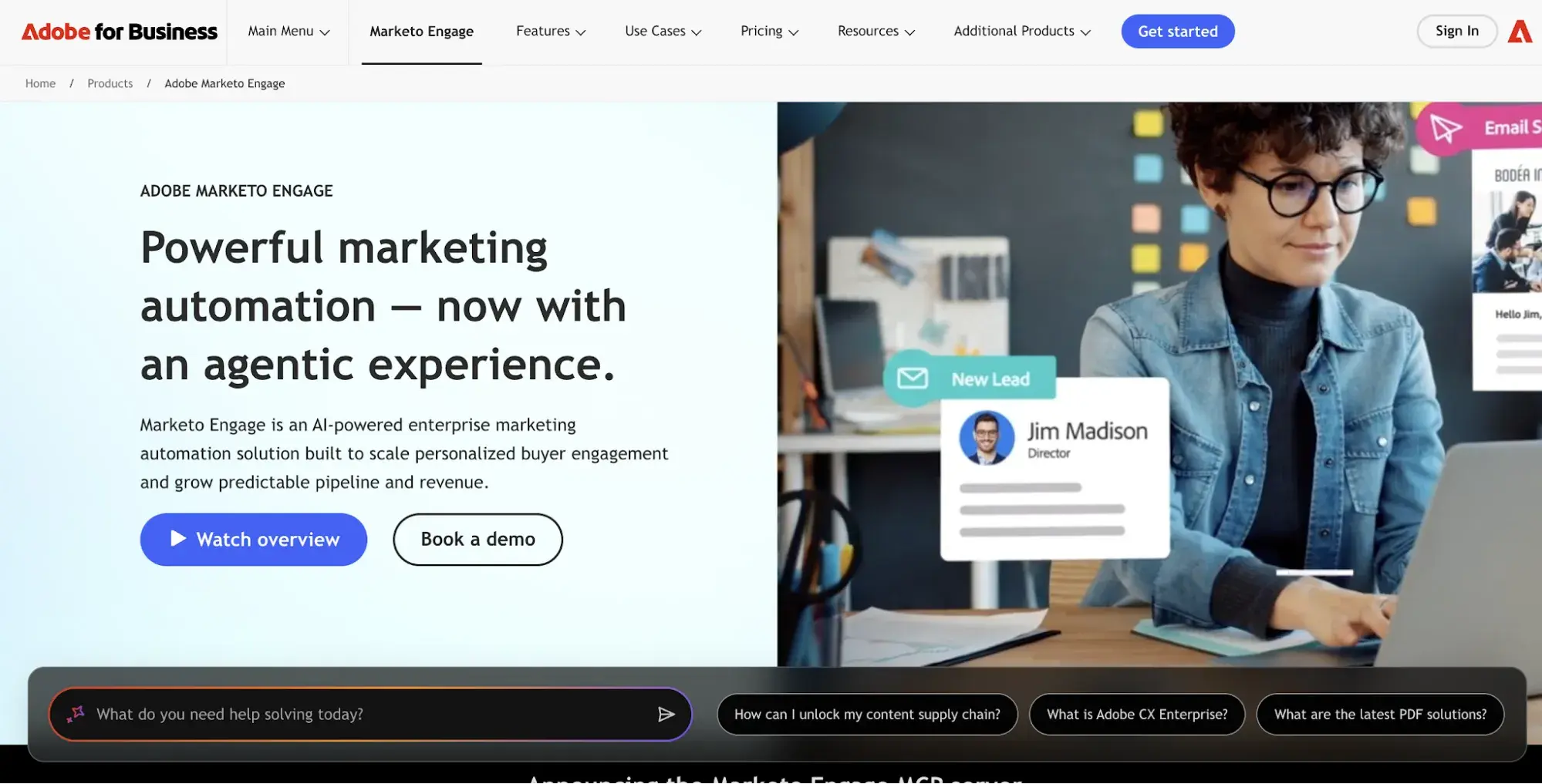
Marketo Engage is a powerful, enterprise-grade marketing automation platform often considered by businesses that have outgrown platforms like Pardot and require extensive customization and robust capabilities. Owned by Adobe, it’s known for its feature richness, though this often comes with a higher degree of complexity and a steeper learning curve.
- Key Features: Advanced lead management (scoring, nurturing, routing), comprehensive email marketing, sophisticated multi-channel campaign orchestration, powerful analytics and reporting, account-based marketing (ABM) capabilities, and a strong integration ecosystem. Its "conversational interface" allows teams to write and test code directly within the platform, reducing reliance on developers for custom interactions.
- Reviews: Users frequently commend Marketo’s robust automation features and its ability to handle complex marketing scenarios. However, common drawbacks cited include its challenging learning curve, sometimes unintuitive design, and overall complexity, which can necessitate significant investment in training or specialized consultants.
- Pricing: Adobe does not publicly disclose Marketo’s pricing, requiring businesses to request a custom quote. This typically indicates an enterprise-level pricing structure.
- Best For: Large enterprises and complex B2B organizations with sophisticated marketing needs, dedicated resources for platform management, and the budget to invest in a powerful, highly customizable, albeit complex, marketing automation solution.
4. ActiveCampaign
ActiveCampaign positions itself as an AI-forward marketing automation platform, offering multi-channel automation alongside a lightweight CRM. It presents a compelling option for smaller to mid-sized teams seeking a balance of power and simplicity, particularly those looking to consolidate their tools or improve upon Pardot’s complexity.
- Key Features: Intuitive automation builder, email marketing, CRM for sales teams, SMS messaging, site tracking, lead scoring, and an "active intelligence" feature that allows users to prompt the AI with spoken language for various tasks, a significant departure from code-heavy platforms. It also offers a native two-way Salesforce sync.
- Reviews: Users generally praise ActiveCampaign for its ease of use and powerful automation capabilities. Recurring complaints, however, include a learning curve for advanced features and limitations in its reporting capabilities, with users frequently requesting more robust and customizable reports.
- Pricing: Plans start at $15/month, but pricing scales rapidly with contact count and desired features, which can lead to steep jumps for growing businesses.
- Best For: Small to mid-sized businesses and growing companies that prioritize advanced multi-channel automation, AI-driven features, and either a lightweight integrated CRM or a strong native sync with Salesforce, and are prepared for potential cost increases as they scale.
5. Zoho Marketing Automation
Zoho Marketing Automation offers a budget-friendly alternative that syncs natively with Zoho’s own CRM and across various marketing channels. It focuses on using customer data for lead scoring, campaign generation, and personalized outreach, making it a viable option for small businesses with straightforward data needs.
- Key Features: Email marketing, lead management, multi-channel campaign orchestration, website tracking, social media marketing, and robust integration with other Zoho products. It emphasizes lead generation and campaign automation with a user-friendly interface.
- Reviews: Users appreciate Zoho’s marketing automation solutions and its affordability. However, common criticisms include issues with customer service and limitations in its reporting functionalities, similar to some other budget-friendly options.
- Pricing: Plans start at $19/month for 1,000 contacts, offering a cost-effective entry point for businesses.
- Best For: Small businesses and startups looking for a budget-friendly marketing automation solution, particularly those already using Zoho CRM or considering moving away from Salesforce entirely to a more consolidated, affordable ecosystem.
Strategic Migration: Navigating the Transition from Pardot with Minimal Risk
Migrating from a long-standing platform like Pardot to a new marketing automation system is a complex undertaking that, if not managed meticulously, can introduce significant risks to ongoing marketing operations. Expert guidance emphasizes a multi-phased approach focusing on data mapping, workflow translation, rigorous quality assurance (QA), and a phased rollout.
Tom Ryan highlights that one of the most common and underestimated mistakes is underestimating the "translation factor" of the migration. This goes beyond simply moving data; it involves reinterpreting and rebuilding core functionalities that operate differently across platforms. For instance, campaign attribution modeling, a critical component for understanding ROI, varies significantly. "A Salesforce campaign is a completely different object from a HubSpot campaign… so there’s a translation there," Ryan explains. Businesses must critically assess where campaign attribution models should reside (HubSpot, Salesforce, or both) and whether existing Salesforce hierarchies are worth preserving in the new system.
Migrations typically involve three priority buckets:
- Core Functionality: Ensuring essential marketing operations (email, forms, landing pages, basic nurturing) are replicated and working correctly.
- Data Integrity: Meticulous data mapping and migration to ensure all prospect data, historical activity, and custom fields are accurately transferred and aligned with the new platform’s structure.
- Advanced Automation & Reporting: Rebuilding complex engagement studios, lead scoring models, ABM strategies, and custom reporting capabilities.
Lead scoring and Account-Based Marketing (ABM) models present particular challenges. Lead scoring models cannot be directly ported due to platform-specific methodologies; they must be rebuilt. However, existing scores and grades can often be retained for segmentation purposes, offering an opportunity to refine the model based on past learnings. Similarly, Engagement Studios and complex automations do not transfer directly and require careful reconstruction. A key consideration here is ensuring prospects continue their journey from where they left off in the old system to the new one, minimizing disruption. Engaging with a specialized migration partner significantly enhances the safety and reliability of this intricate process. While a rapid migration can take as little as one month, a typical, comprehensive Pardot migration usually spans 2-3 months.
Budgeting for a new platform extends beyond the advertised list price. Businesses must factor in the platform’s cost at their current size, anticipated growth in seats and contacts (as tier jumps can significantly escalate costs), and mandatory onboarding or implementation fees often charged in the first year.
Frequently Asked Questions About Pardot Alternatives
Is Pardot part of Salesforce?
Yes, Pardot is a part of Salesforce. It was rebranded to Marketing Cloud Account Engagement in 2022, but the original name "Pardot" is still widely used. It serves as Salesforce’s B2B marketing automation solution.
How long does a typical Pardot migration take?
While expedited migrations can be completed in as little as one month, Tom Ryan indicates that a typical, comprehensive Pardot migration generally takes 2-3 months to ensure thoroughness and minimal disruption.
Will we lose our lead scoring and ABM models if we switch?
Yes, both lead scoring and ABM models will need to be rebuilt. Pardot uses a proprietary scoring model that doesn’t directly transfer to other systems. However, existing scores and grades can be retained for segmentation. This presents an opportunity to refine and optimize these models based on past performance. Engagement Studios and automations also require rebuilding in the new system, with careful planning to ensure prospects continue their journeys seamlessly.
Can we keep Salesforce for sales but switch off Pardot?
Absolutely. Pardot is typically billed as a distinct line item within Salesforce subscriptions. Businesses can continue using Salesforce CRM, Sales Cloud, and other Salesforce products while replacing Pardot with a separate marketing automation tool.
What’s the best way to budget for the first year on a new platform?
To accurately budget, consider the platform’s list price for your current size, anticipate your expected growth in both user seats and contact count (as pricing often escalates significantly with tier changes), and account for any mandatory onboarding, implementation, or training fees that many platforms charge in the first year. It’s also wise to factor in potential consulting costs if you plan to use external migration specialists.
Making the Switch from Pardot
In an era where marketing agility and data-driven insights are paramount, a business’s marketing effectiveness is inextricably linked to the capabilities of its technology stack. When automation tools begin to lag behind industry trends and evolving demands, it becomes imperative to invest in platforms that are not only current but also built for future innovation. The diverse range of Pardot alternatives available today offers solutions tailored to different team sizes, budgets, and strategic needs, all powerful enough to handle advanced customization and scale with ambition. Making the strategic switch from Pardot is not merely a technical migration; it is an investment in a more agile, insightful, and effective marketing future.








