

The digital marketing landscape has reached a critical inflection point where the very tool designed to eliminate guesswork—A/B testing—has become a primary obstacle to meaningful growth for many organizations. What begins as a quest for data-driven certainty often devolves into a cycle of "micro-optimization," where teams spend months testing button colors and headline tweaks while ignoring fundamental flaws in their business models. Industry analysts now identify this phenomenon as a "CRO maturity problem," noting that while A/B testing remains a vital component of the conversion rate optimization (CRO) toolkit, its over-application to complex strategic problems is leading to diminishing returns and strategic myopia across the e-commerce sector.
The Rise of the Experimentation Default
The ascent of A/B testing to its current status as the default decision-making framework is a result of a decade-long shift in software accessibility. Experimentation platforms such as Optimizely, VWO, and FigPii have democratized data science, allowing marketing and product teams to launch variants without the direct oversight of statisticians. This convenience has fostered a culture where "experimentation" is synonymous with "split testing," regardless of whether a binary choice is the most appropriate method for the problem at hand.
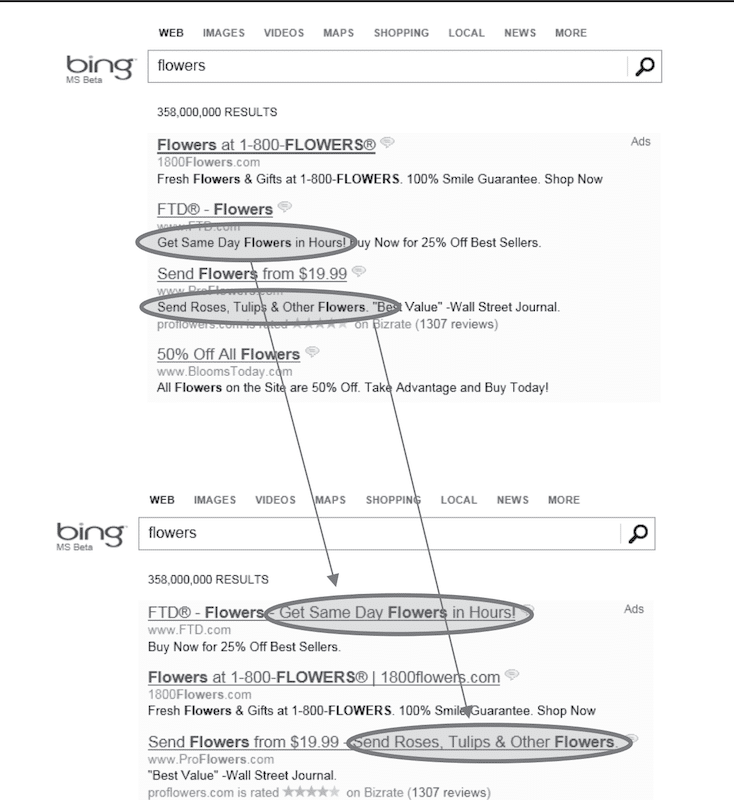
The normalization of this mindset was accelerated by high-profile success stories from Silicon Valley. Microsoft’s Bing team famously reported that a single change—merging two ad title lines into one longer headline—generated an additional $100 million in annual revenue. Such "black swan" successes created an industry-wide expectation that massive growth is just one UI tweak away. Consequently, Microsoft now conducts over 20,000 controlled experiments annually, a scale that many smaller firms attempt to emulate without possessing the necessary traffic or infrastructure.
Data suggests that this emulation is often superficial. According to recent industry surveys, approximately 77% of all digital experiments are simple A/B tests involving only two variants. This indicates a profound reliance on the simplest possible methodology, often at the expense of multivariate or multi-treatment designs that could provide more nuanced insights into user behavior.
The Statistical Reality of the Traffic Gap
One of the most significant, yet frequently ignored, hurdles in modern A/B testing is the requirement for statistical power. For a test to be valid, it requires a large enough sample size to distinguish a genuine behavioral shift from random noise. For many e-commerce brands, this requirement is a mathematical impossibility.
To detect a modest conversion lift of 1% or 2% with a high degree of confidence, a website often needs hundreds of thousands of visitors per variant. Even mid-market brands generating one to two million sessions per month struggle to reach statistical significance within a reasonable timeframe. This leads to several common failure modes:
- The "Duration Trap": Tests are run for six to twelve weeks to reach significance, during which time external variables (seasonal shifts, competitor promotions) contaminate the data.
- The "False Positive": Teams call a "winner" based on a 90% confidence interval rather than the industry-standard 95% or 99%, leading to the implementation of changes that do not actually improve the bottom line.
- The "Flat Test": Significant resources are poured into testing micro-changes that are simply too small to ever move the needle, resulting in a "no-winner" scenario that wastes organizational momentum.
The Survivorship Bias in User Data
The reliance on quantitative "win/loss" data often blinds teams to the "why" behind user actions. This is a modern digital iteration of the survivorship bias identified by statistician Abraham Wald during World War II. When analyzing returning aircraft for bullet holes, the military initially sought to reinforce the areas with the most damage. Wald correctly pointed out that they were only seeing the planes that survived; the planes hit in the engines never returned to be analyzed.
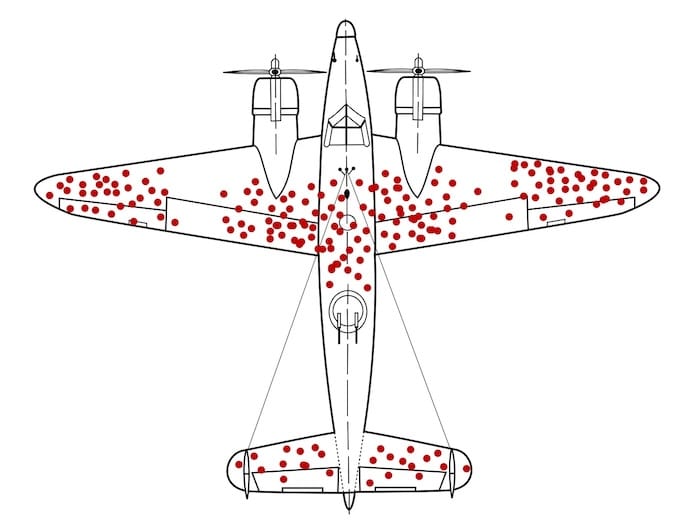
In the context of CRO, A/B tests show the behavior of "survivors"—those who remained in the funnel. They offer little insight into the users who dropped off entirely. A variant might "win" because it forced users through a confusing path that happened to result in a one-time purchase, while simultaneously alienating a larger segment of potential long-term customers. Without qualitative data to explain the mechanism of the win, teams risk optimizing the "bullet holes" while leaving the "engine" (the core value proposition) vulnerable.
Short-Term Uplifts vs. Long-Term Business Health
A/B testing is inherently biased toward short-term, session-based metrics such as click-through rates (CTR) and add-to-cart actions. However, these metrics often clash with long-term business health, including Customer Lifetime Value (LTV), profit margins, and brand equity.
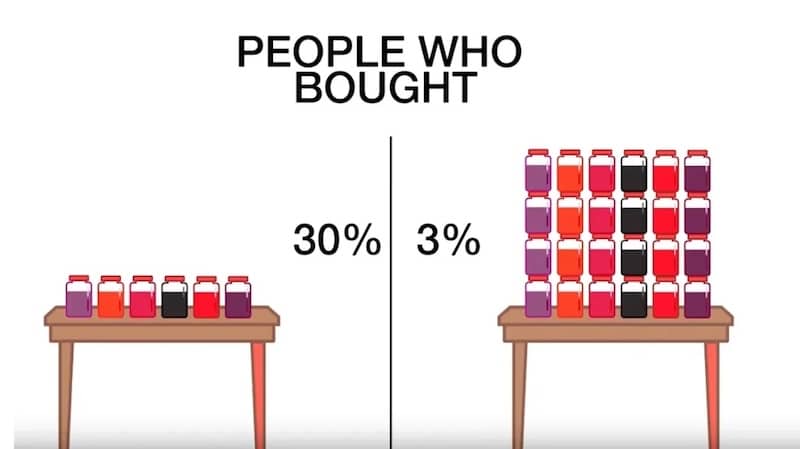
The "Paradox of Choice," illustrated by the famous Jam Experiment conducted by Sheena Iyengar, serves as a cautionary tale. In the study, a display with 24 varieties of jam attracted more interest, but a display with only six varieties resulted in ten times the actual purchases. A modern A/B test might show that adding more options increases "engagement" or "time on page," yet the long-term impact is a reduction in actual conversions and an increase in customer decision fatigue.
Furthermore, aggressive tactics—such as countdown timers or intrusive pop-ups—often win A/B tests by creating artificial urgency. While these might spike conversions for a single week, they can damage brand trust and reduce repeat purchase rates, metrics that are rarely captured in a standard 14-day split test.
The Strategic Shift: How High-Maturity Teams Operate
High-maturity organizations are moving away from the "A/B test everything" mantra in favor of a more sophisticated experimentation toolkit. This evolution involves four key strategic shifts:
1. Diversifying Experimentation Methods
Rather than forcing every question into a binary split, mature teams utilize a variety of designs:
- Sequential Tests: Used for onboarding flows where long-term retention is the primary goal.
- Holdout Groups: A small percentage of users are kept away from a new feature for months to measure its true impact on LTV.
- Switchback Tests: Used in marketplaces (like Uber or DoorDash) where variants are toggled on and off for the entire system at specific intervals to prevent "network interference" between users.
- Quasi-Experiments: Utilized when a clean split is impossible, such as testing new pricing models across different geographic markets.
2. Grounding Hypotheses in Multi-Source Research
The quality of a test is determined before it ever launches. High-maturity teams replace "gut-feeling" backlogs with evidence-led hypotheses. This involves synthesizing data from heuristic analyses, session recordings, customer support tickets, and exit-intent surveys.
A sophisticated hypothesis follows a rigorous structure: "Because we have observed [X evidence], we believe that [Y user problem] exists. Therefore, we will [Z change], and we expect [Metric Alpha] to improve for [Segment Beta]." This level of specificity ensures that even a "losing" test provides valuable intellectual capital for the company.
3. Prioritizing "Big Levers" Over Cosmetic Tweaks
Instead of testing button colors, mature programs focus on elements that influence the fundamental decision-making process:
- Value Proposition: How the product’s benefits are communicated.
- Pricing and Bundling: Testing the psychological impact of different price anchors.
- Information Architecture: How users navigate complex product catalogs.
- Trust Signals: How security, returns, and social proof are integrated into the journey.
The Bing headline example was successful not because it was a "UI tweak," but because it improved the "information scent," helping users more quickly identify the relevance of the ad to their search query.
4. Aligning Experiments with Macro-Business Outcomes
Analysis of over 100,000 experiments shows that while CTA clicks are the most commonly tracked primary metric (34.8%), they have a significantly lower "expected impact" than metrics tied to navigation and product evaluation. High-maturity teams align their experiments with "North Star" metrics. For an e-commerce brand, this might mean prioritizing "Profit per Visitor" over "Conversion Rate," or "90-day Retention" over "Initial Purchase."
Conclusion: The Future of Digital Experimentation
The era of "random acts of testing" is coming to a close. As the digital marketplace becomes more competitive and customer acquisition costs continue to rise, the companies that thrive will be those that view experimentation as a strategic discipline rather than a tactical checkbox.
Building a high-maturity experimentation program requires a shift in focus from the quantity of tests to the quality of insights. It demands an acknowledgment that A/B testing is a diagnostic tool, not a cure-all. By integrating qualitative research, embracing diverse experimental designs, and focusing on long-term business health, organizations can move beyond the plateau of small wins and unlock the true potential of data-driven growth. The goal is no longer just to find a "winner," but to build a deeper, more accurate understanding of the customer—an asset that provides a much more durable competitive advantage than a redesigned checkout button.







