Outdoor furniture retailer Polywood is charting a new course in e-commerce by strategically integrating artificial intelligence (AI) and machine learning (ML) across its digital operations. This ambitious initiative, spearheaded by Chief Digital Officer Ben Spiegel, aims to deeply understand customer trends, enhance personalization efforts, and optimize sales strategies. By leveraging cutting-edge AI tools and developing proprietary machine learning models, Polywood is not only streamlining its internal processes but also achieving significant gains in conversion rates and average order value, signaling a paradigm shift in how traditional retail businesses can harness advanced technology.
At the core of Polywood’s AI strategy is the adoption of sophisticated language models. The company is utilizing Anthropic’s Claude to assist in code base development, a move that demonstrates a commitment to leveraging advanced AI for technical tasks. Beyond off-the-shelf solutions, Polywood has invested in building its own proprietary large language model (LLM). This custom-built LLM is specifically designed to interpret and analyze vast amounts of consumer data and emerging trends, providing actionable insights that directly inform the company’s retargeting campaigns. This dual approach—employing both external and internally developed AI—underscores a comprehensive and tailored integration of the technology.
A pivotal moment in Polywood’s digital transformation occurred approximately 18 months ago when the company transitioned to the Shopify e-commerce platform. This platform migration, coupled with the simultaneous adoption of what Spiegel describes as "100% AI-based coding," resulted in a remarkable 22% increase in conversion rates. Crucially, this technological leap did not come at the expense of human capital. Spiegel emphasized that Polywood retained its entire team of developers, who have since experienced a doubling in their speed and efficiency when deploying new features and functionalities. This approach challenges the prevailing narrative of AI as a direct replacement for human workers, instead positioning it as a powerful augmentation tool that amplifies human capabilities.
"We kept all of our developers," Spiegel explained. "We didn’t fire a single one. They are now twice as fast deploying new features, new capabilities." This statement highlights a forward-thinking strategy that prioritizes collaboration between human expertise and artificial intelligence, fostering a more agile and innovative development environment.
Predictive Analytics: Forecasting Demand with Weather, Real Estate, and Customer Data
Polywood’s AI-driven approach extends to sophisticated predictive analytics, enabling the company to forecast e-commerce demand with a high degree of accuracy. Spiegel outlined three primary factors that underpin this predictive capability: weather, home sales, and building permits. To achieve this, Polywood ingests national, publicly available weather data into its proprietary operating system, which houses its custom LLM. Complementing this, the company acquires Multiple Listing Service (MLS) real estate data.
The integration of these diverse data streams is where the true power of Polywood’s AI lies. By combining weather patterns with real estate transaction data, the company can begin to understand the propensity of consumers to purchase outdoor furniture based on their housing situations. The inclusion of home purchase dates further refines this analysis, allowing Polywood to identify the typical purchase timeline post-relocation. This granular understanding enables highly targeted marketing efforts, ensuring that consumers receive relevant offers at opportune moments.
"And we joined that together with the weather data, and then we ran it against our existing old purchases to establish, based on your house, what are you likely to buy? And then we put in home purchase dates to be able to see: How long after you move into a house do you buy?" Spiegel shared, illustrating the intricate data fusion process.
A significant discovery emerged from Polywood’s analysis of weather data’s impact on sales. Through machine learning models trained on historical weather and customer purchase data, the company identified that while daily weather, three-day forecasts, and even 14-day forecasts were less indicative of purchase behavior, the seven-day forecast emerged as the most reliable leading indicator for a sale. This insight allows Polywood to precisely time the deployment of marketing materials, such as catalog mailings and digital advertisements, regionalized by specific weather patterns.
"It’s machine learning," Spiegel stated. "I hate to overuse the word AI, but we trained our machine learning models on those weather patterns to then be able to test it against the recent data and now predict the right time to send a catalog to serve an ad based on regionalized weather."
The AI’s role is particularly pronounced within Polywood’s internal operating system. The LLM-based system functions akin to a sophisticated chatbot, allowing the team to query past sales data and trend analyses with natural language, unlocking a more intuitive and powerful way to extract business intelligence.
Crafting Customer Personas: Understanding Behavior Through Home Ownership
Leveraging its predictive analytics and AI capabilities, Polywood has moved beyond traditional demographic-based customer segmentation to develop sophisticated customer personas. These personas are not defined by personality traits but rather by the characteristics of the homes consumers own or are purchasing. This novel approach allows for more precise tailoring of marketing messages.
For instance, Polywood’s data reveals a distinct purchasing pattern: consumers who buy new homes tend to invest in outdoor furniture within the first six months of occupancy. However, those who purchase homes already equipped with pools exhibit a more immediate need, typically buying outdoor furniture within the first month. This nuanced understanding, derived from millions of historical orders and the three core predictive factors, enables Polywood to anticipate repeat purchase cycles and identify opportunities for upselling and cross-selling.
While the original article did not explicitly list the benefits derived from these personas, a logical analysis of Polywood’s strategy suggests the following implications:
- Enhanced Marketing Relevance: By understanding the specific context of a customer’s home, Polywood can deliver marketing messages that resonate more deeply, increasing engagement and click-through rates.
- Optimized Campaign Timing: Knowing when a customer is most likely to purchase allows for the deployment of campaigns at the peak of their buying cycle, maximizing return on investment.
- Improved Product Recommendations: Personas can inform product recommendations, suggesting furniture styles and configurations that align with the type of home and outdoor space.
- Streamlined Product Development: Insights into what types of homes lead to specific outdoor furniture purchases can inform future product development and inventory management.
- Targeted Promotions: The ability to segment customers based on home characteristics allows for the creation of highly targeted promotions and offers.
Spiegel further elaborated on how these house-based personas influence strategic decisions, including the establishment of return on ad spend (ROAS) targets, average order value (AOV) optimization, and the overall personalization strategy.
AI-Generated Creative Content: Personalizing Visuals and Copy
Polywood’s innovative use of AI extends to the creation of marketing collateral, encompassing both written copy and visual imagery. This AI-driven content generation is intrinsically linked to personalization, adapting based on consumer interactions and preferences.
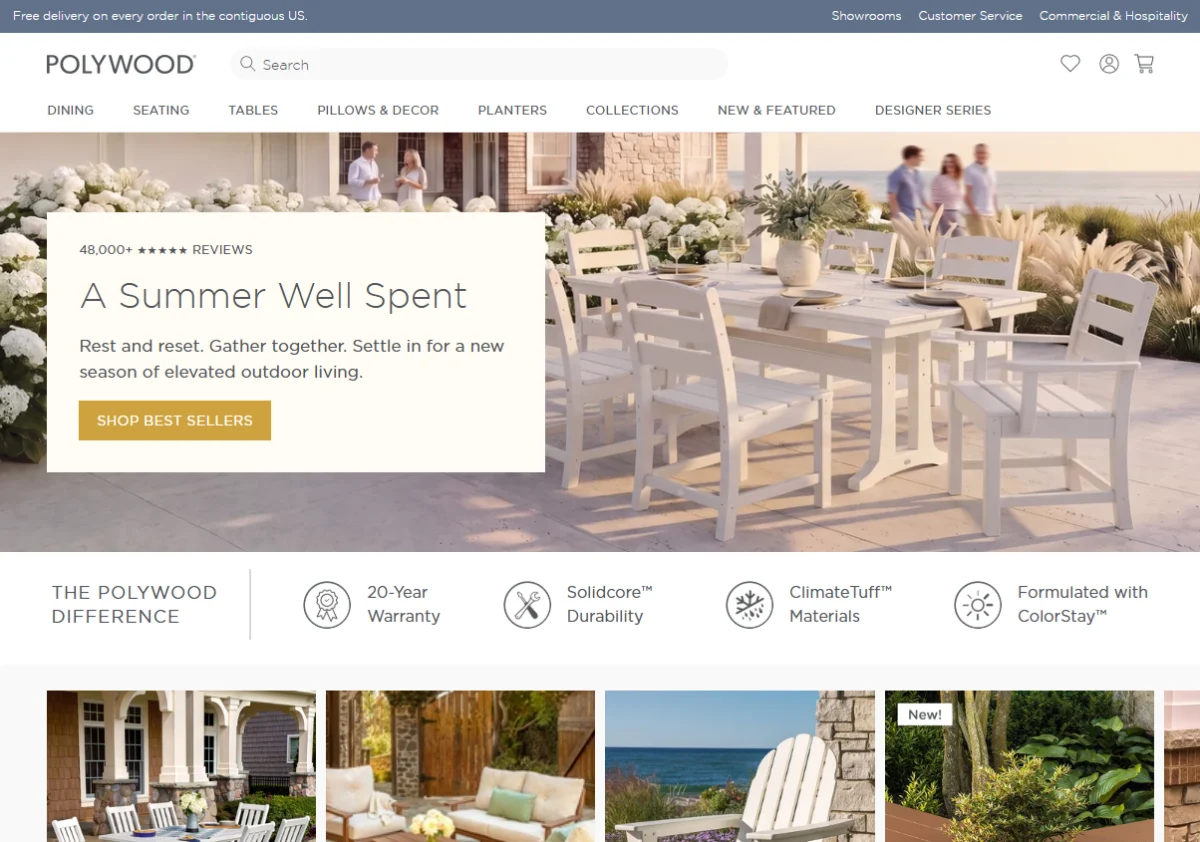
When a consumer searches for specific items, such as "white outdoor furniture," Polywood’s AI can dynamically serve ads featuring precisely that. This personalized advertising extends to the landing page experience, where the website’s content is tailored to match the initial search query, displaying white outdoor furniture prominently. This seamless, personalized journey significantly enhances the user experience and drives conversions.
This AI-powered personalization has yielded tangible results, contributing to a 12% increase in Polywood’s average order value (AOV). Given that the retailer’s average purchase price hovers around $1,600, this AOV increase represents a substantial uplift in revenue, underscoring the financial impact of sophisticated personalization.
Furthermore, the same AI initiatives have bolstered Polywood’s overall conversion rate by an impressive 22%. The generation of ad copy through AI has also proven effective, leading to a reduction in cost per click (CPC) and a further enhancement of conversion rates. Spiegel acknowledged the challenge in precisely attributing improvements to specific AI applications, stating, "We don’t always know which one to attribute which term. Was the ad better or was the landing page experience better? But we saw improvements in both of them." This indicates a holistic positive impact across multiple facets of the customer journey.
Beyond static imagery and ad copy, Polywood has embraced AI for generating lifestyle-oriented visuals. The company feeds its product models into its AI system, which then renders realistic images. With an extensive catalog of 150,000 SKUs in various colors, the AI’s ability to generate diverse and high-quality imagery at scale has become indispensable. This allows for the creation of rich visual content that transcends traditional studio shots, offering customers a more immersive and aspirational view of the products.
"So not just studio shots, but also a lot of the imagery you see now is 100% AI, large-scale automated, which are my funnest projects," Spiegel remarked, highlighting the creative and operational advantages of AI in content production.
The Broader Implications for Retail and Beyond
Polywood’s strategic embrace of AI and machine learning offers a compelling case study for the broader retail industry. The company’s success demonstrates that these advanced technologies are not merely tools for large tech corporations but are accessible and highly effective for businesses of all sizes seeking to gain a competitive edge.
The ability to predict demand based on a confluence of factors like weather and real estate trends, as Polywood has achieved, moves beyond traditional reactive merchandising. It allows for proactive inventory management, optimized marketing spend, and a more resilient supply chain. For an industry often subject to seasonal fluctuations and external economic pressures, such predictive capabilities are invaluable.
Moreover, Polywood’s approach to AI integration, which prioritizes augmenting human capabilities rather than replacing them, provides a model for responsible technological adoption. By empowering developers and marketers with AI tools, companies can foster a culture of innovation, accelerate product development, and enhance customer engagement without sacrificing their existing workforce.
The personalization strategies implemented by Polywood, driven by AI-generated personas and dynamic content, are becoming increasingly critical in an era of heightened consumer expectations. Customers today expect tailored experiences, and retailers that can deliver on this front are likely to see improved loyalty and higher lifetime value.
The company’s investment in proprietary AI solutions, particularly its custom LLM, suggests a recognition that off-the-shelf solutions may not always fully address unique business challenges. Developing in-house AI expertise can lead to more specialized and effective applications, creating a distinct competitive advantage.
As AI continues its rapid evolution, its integration into retail operations is set to accelerate. Polywood’s pioneering work in predictive analytics, persona development, and AI-generated creative content serves as a blueprint for other retailers aiming to navigate the complexities of the modern e-commerce landscape and unlock new avenues for growth and customer satisfaction. The company’s journey underscores a fundamental truth: the future of retail is increasingly intelligent, personalized, and driven by data.