The dynamic landscape of social media continues its rapid evolution, with platforms frequently updating their design parameters and content delivery algorithms. A critical aspect of maintaining a compelling online presence, often overlooked but profoundly impactful, is adhering to the precise image size requirements across various networks. As of early 2026, a new comprehensive guide detailing the most current image dimensions for major social media platforms—including Instagram, X (formerly Twitter), Facebook, LinkedIn, TikTok, Pinterest, Snapchat, YouTube, Bluesky, and Threads—has been released, highlighting the ongoing imperative for digital marketers and content creators to stay abreast of these changes.
The Perennial Challenge of Evolving Platform Standards
![Social media image sizes for all networks [August 2026]](https://blog.hootsuite.com/wp-content/uploads/2023/01/Social-Media-Image-Sizes-2023.png)
The necessity for regular updates on social media image sizes stems from platforms’ continuous efforts to enhance user experience, optimize content delivery, and adapt to technological advancements, particularly the pervasive shift towards mobile-first consumption. While minor adjustments occur throughout the year, significant revisions typically coalesce into annual guidelines, prompting content strategists to reassess their visual assets. Using incorrect dimensions can lead to undesirable outcomes such as image cropping, pixelation, slower load times, and a general lack of brand consistency, all of which can severely impede reach and engagement metrics.
Industry analysts consistently underscore the importance of visual optimization. A recent report by the Global Digital Marketing Institute indicated that social media posts featuring correctly sized and high-quality images achieve, on average, a 35% higher engagement rate compared to those with unoptimized visuals. Furthermore, platforms’ algorithms often favor content that aligns with their display specifications, potentially penalizing improperly formatted images by reducing their visibility in user feeds. This algorithmic preference makes meticulous adherence to size guidelines not merely a matter of aesthetics, but a strategic imperative for organic reach and advertising effectiveness.
![Social media image sizes for all networks [August 2026]](https://blog.hootsuite.com/wp-content/uploads/2025/12/Social-media-image-sizes-for-all-networks-December-2025-556x556.png)
Key Platform Dimensions for 2026: A Strategic Overview
The 2026 guidelines reveal several consistent themes: a strong emphasis on vertical formats for mobile-centric platforms, continued support for square images, and specific requirements for profile pictures and cover banners that define a brand’s initial visual impression.
![Social media image sizes for all networks [August 2026]](https://blog.hootsuite.com/wp-content/uploads/2025/12/Social-media-image-sizes-for-all-networks-January-2026-1-620x465.png)
Instagram: Mastering Visual Storytelling Across Formats
Instagram, a bastion of visual content, continues to support a variety of orientations but with specific display nuances. While users can upload horizontal, vertical, and square images for feed posts, the platform’s grid layout will consistently display them with a vertical crop. This necessitates careful composition to ensure key elements are not inadvertently cut off.
- Profile Picture: Recommended at 320 x 320 pixels, displayed as a circle. Central alignment of crucial visual elements is vital.
- Feed Posts:
- Square: 1080 x 1080 pixels (1:1 aspect ratio).
- Landscape: 1080 x 566 pixels (1.91:1 aspect ratio).
- Vertical: 1080 x 1350 pixels (4:5 aspect ratio).
- Stories & Reels: The immersive, full-screen experience demands 1080 x 1920 pixels (9:16 aspect ratio). Instagram recommends leaving ample space at the top (14%) and bottom (35%) of Reels ads to prevent text or logos from being obscured by UI elements.
- Ads: Vary based on format (single image, carousel, Stories, Reels), generally mirroring feed and Story dimensions for optimal integration.
X (formerly Twitter): Beyond the Text, Embracing Multimedia
X’s evolution into a multimedia-rich platform means visuals play an increasingly crucial role in breaking through the noise.
![Social media image sizes for all networks [August 2026]](https://blog.hootsuite.com/wp-content/uploads/2025/04/Social-media-image-sizes-Instagram-620x558.jpg)
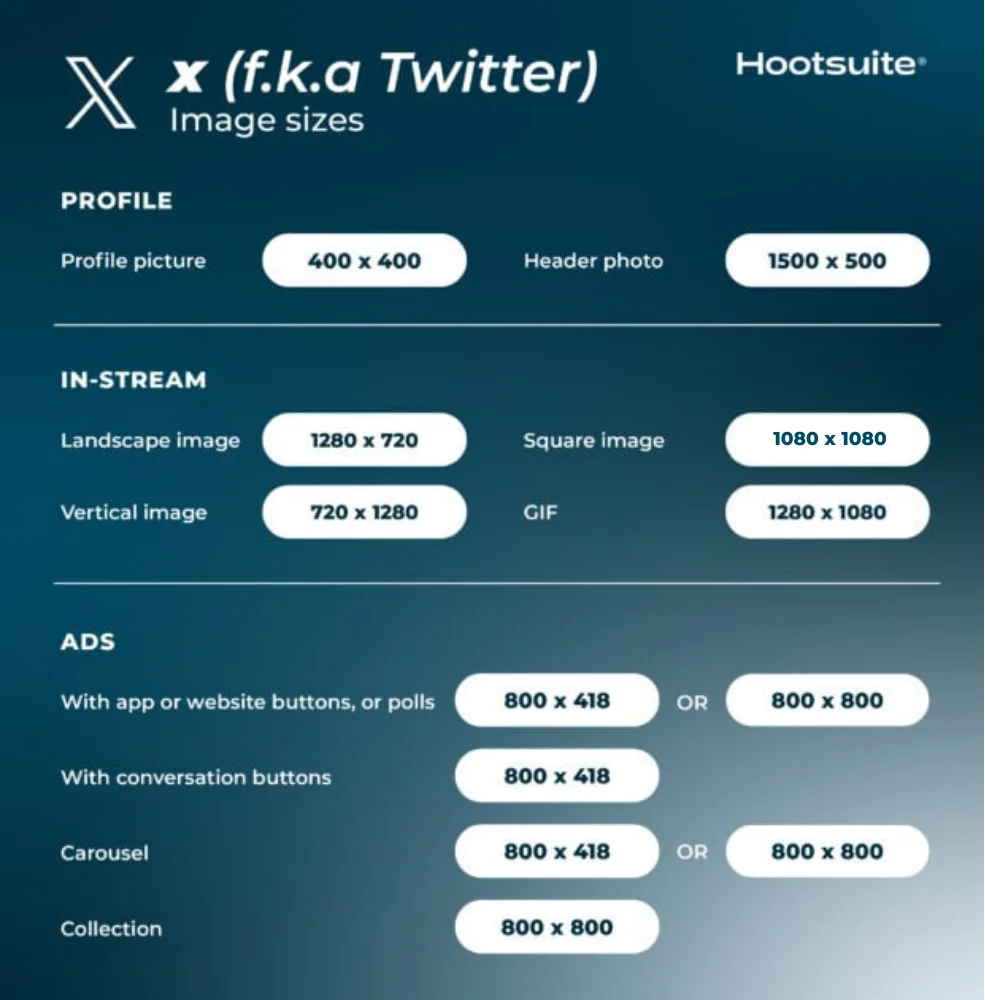
- Profile Photo: 400 x 400 pixels (recommended minimum).
- Header Photo: 1500 x 500 pixels, providing a wide canvas for brand expression.
- In-Stream Photos: Flexible, with common ratios like 16:9 (landscape) and 1:1 (square) being most effective. A minimum width of 600 pixels is advised, though larger images (e.g., 1200 x 675 pixels for 16:9) provide better resolution.
- Ads: Image sizes for X ads are largely consistent with in-stream photos, optimized for visibility within the feed.
Facebook: Adapting to Diverse User Experiences
Facebook’s vast user base spans desktop and mobile, demanding adaptable image strategies. The platform’s algorithm often prioritizes engaging visuals, making correct sizing paramount for both organic and paid content.
- Profile Picture: 320 x 320 pixels (recommended), displayed as a circle on profiles but often square in comments and news feeds.
- Cover Photo: 851 x 315 pixels for personal profiles, 820 x 312 pixels for pages. It’s crucial to design within a "safe zone" of 640 x 312 pixels to ensure visibility across devices.
- Timeline Photos & Posts:
- Square: 1080 x 1080 pixels.
- Landscape: 1200 x 630 pixels.
- Vertical: 1080 x 1350 pixels.
- Stories & Reels: 1080 x 1920 pixels, mirroring Instagram’s full-screen format.
- Ads: Follow general post guidelines, with specific recommendations for carousel, collection, and instant experience ads. For Stories and Reels ads, 1440 x 2560 pixels is recommended.
LinkedIn: Professional Branding Through Visuals
LinkedIn’s professional environment places a high value on polished, professional imagery for both personal profiles and company pages.
![Social media image sizes for all networks [August 2026]](https://blog.hootsuite.com/wp-content/uploads/2025/12/Social-media-image-sizes-for-all-networks-January-2026-1-1-620x629.png)
- Personal Profile Photo: 400 x 400 pixels (recommended minimum).
- Personal Background Photo: 1584 x 396 pixels.
- Company Logo: 300 x 300 pixels.
- Company Cover Image: 1128 x 191 pixels.
- Post Images:
- Square: 1200 x 1200 pixels.
- Landscape: 1200 x 627 pixels (especially for link previews).
- Ads: Generally align with post image sizes, with larger dimensions for sponsored content and spotlight ads.
TikTok: The Vertical Video Powerhouse
TikTok’s identity is intrinsically linked to vertical video, making its image requirements straightforward but critical for photo-based content and ads.
- Profile Photo: 200 x 200 pixels (recommended minimum).
- Video & Carousel Posts: 1080 x 1920 pixels (9:16 aspect ratio).
- Ads: 1080 x 1920 pixels, with similar safe zones as Instagram Reels to avoid overlay obstruction.
Other Emerging and Niche Platforms:
![Social media image sizes for all networks [August 2026]](https://blog.hootsuite.com/wp-content/uploads/2025/12/Social-media-image-sizes-for-all-networks-January-2026-3-620x753.png)
- Pinterest: Favors vertical images (e.g., 1000 x 1500 pixels for standard Pins) to maximize screen real estate. Profile images are 280 x 280 pixels, and cover photos are 800 x 450 pixels.
- Snapchat: Primarily vertical. Ads require 1080 x 1920 pixels, aligning with its Story-like format. Profile images are 320 x 320 pixels, and banners are 375 x 278 pixels.
- YouTube: Focuses on channel branding and video thumbnails. Profile photos are 800 x 800 pixels, banner images 2560 x 1440 pixels (with device-specific safe areas), and video thumbnails 1280 x 720 pixels. Podcast playlist thumbnails are 1280 x 1280 pixels.
- Bluesky: As an emerging decentralized platform, it emphasizes high-resolution visuals. Profile pictures are 1000 x 1000 pixels, banners 3000 x 1000 pixels, and post images require a minimum of 1000 pixels in height or width, allowing for varied aspect ratios.
- Threads: Leveraging its close ties to Instagram, Threads largely mirrors its parent company’s visual standards. Profile images are 640 x 640 pixels, and post images are recommended at 1440 x 1920 pixels.
The Imperative of Optimization: Why Size Matters
Beyond merely avoiding awkward cropping, correctly sizing images on social media directly impacts several crucial performance indicators:
![Social media image sizes for all networks [August 2026]](https://blog.hootsuite.com/wp-content/uploads/2025/04/Social-media-image-sizes-LinkedIn-620x651.jpg)
- Brand Consistency and Professionalism: Optimized images project a polished, professional brand image, reinforcing credibility and attention to detail. Inconsistent or poorly formatted visuals can undermine a brand’s perceived quality.
- Enhanced User Experience: Properly sized images load faster, display correctly on various devices, and provide a seamless viewing experience. This reduces bounce rates and encourages longer engagement with content.
- Increased Engagement: Visually appealing and correctly formatted content is more likely to capture attention, elicit reactions, and drive shares and comments. Images that are distorted or cut off can deter users from engaging.
- Algorithmic Favorability: Social media algorithms are designed to promote high-quality content that adheres to platform guidelines. Optimized images are more likely to be prioritized in user feeds, leading to greater organic reach.
- Advertising Effectiveness: For paid campaigns, correctly sized ad creatives ensure that calls to action, logos, and key messages are fully visible and impactful, maximizing return on ad spend.
- SEO Benefits: While less direct, high-quality, optimized images can contribute to overall content quality, which indirectly benefits search engine optimization on platforms that index social content.
Navigating the Changes: Tools and Best Practices for Enterprises
The constant flux in social media image requirements presents a significant operational challenge for digital marketing teams, especially within enterprises managing multiple brands and extensive content calendars. To effectively standardize image sizes across diverse platforms, organizations are increasingly adopting a multi-pronged approach:
![Social media image sizes for all networks [August 2026]](https://blog.hootsuite.com/wp-content/uploads/2025/04/Social-media-image-sizes-Pinterest-620x517.jpg)
- Template Design: Creating a suite of pre-designed templates for various content types (e.g., Instagram Story, Facebook post, LinkedIn banner) with embedded safe zones ensures consistent branding and optimal sizing from the outset.
- Approved Aspect Ratios: Establishing a clear policy on approved aspect ratios for different platforms simplifies content creation and minimizes post-production adjustments.
- Centralized Digital Asset Management (DAM): A DAM system allows for organized storage of optimized image assets, making them easily accessible and ensuring that only compliant visuals are used.
- Social Media Management Platforms: Tools like Hootsuite, and specifically its integrated "Perch" feature, offer an invaluable solution. These platforms often incorporate up-to-date image dimensions and provide in-dashboard editing capabilities, allowing users to select network-optimized sizes directly from a dropdown menu. This streamlines the workflow, minimizes errors, and keeps teams current with the latest specifications without needing to memorize every pixel dimension. A spokesperson for Hootsuite emphasized, "Our goal is to remove the technical hurdles so marketers can focus on creativity and strategy. Integrating dynamic sizing tools directly into the publishing workflow ensures brand integrity and maximizes content impact across all channels."
The process typically involves: selecting the desired social network, choosing a network-optimized image size from a dropdown, uploading the image, and using integrated editing tools (like those powered by Canva within Perch) to refine and crop the visual to perfection. This ensures the image automatically conforms to the platform’s current best practices before publication.
Conclusion: Agility as the Cornerstone of Digital Strategy
![Social media image sizes for all networks [August 2026]](https://blog.hootsuite.com/wp-content/uploads/2025/04/Social-media-image-sizes-Snapchat-620x325.jpg)
The continuous evolution of social media platforms underscores a fundamental truth in digital marketing: agility is paramount. As user behaviors shift and technological capabilities advance, social networks will continue to refine their visual presentation standards. For brands and content creators, proactively understanding and adapting to these changes is not merely a technicality but a strategic imperative. By leveraging comprehensive guides, implementing best practices in content creation, and utilizing smart social media management tools, enterprises can ensure their visual content remains impactful, consistent, and optimized for maximum reach and engagement in the ever-changing digital landscape of 2026 and beyond. The investment in precise image optimization yields significant dividends in brand perception, audience connection, and ultimately, digital marketing success.