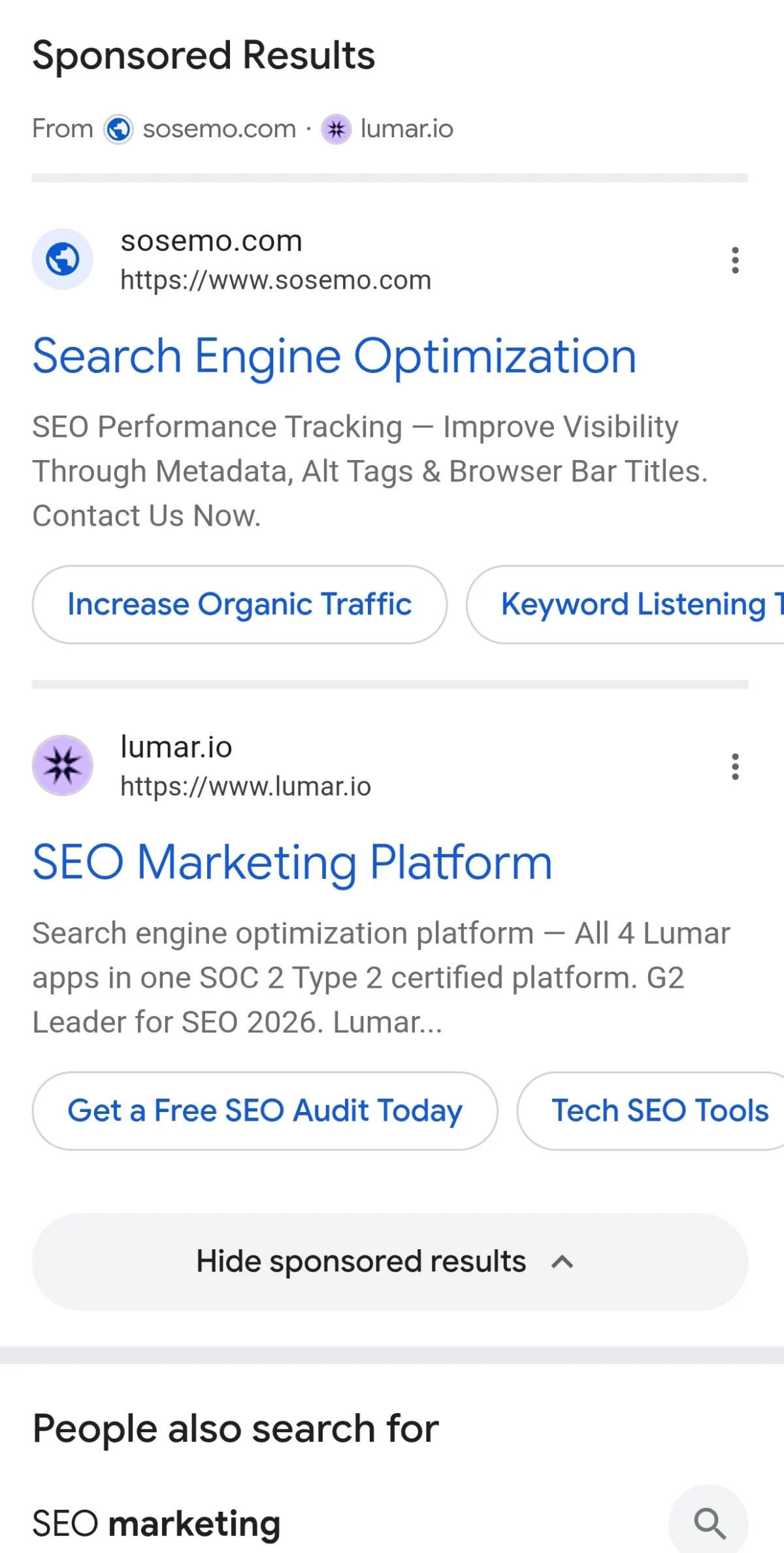
Mountain View, California – Google is currently conducting an experimental change to its search results page (SERP) that introduces a new level of transparency for sponsored listings. Observed on August 11, 2026, by search engine analyst Sachin Patel, this test involves displaying the website’s name and an accompanying icon directly beneath the standard "Sponsored Results" heading. This subtle yet significant alteration aims to provide users with a clearer indication of the source of advertised content, a move that could have considerable implications for both user experience and digital advertising strategies.
Traditionally, sponsored results on Google’s search engine have been demarcated primarily by a "Sponsored Results" heading or a clear "Ad" label, often supplemented by a small, distinct icon. The latest test, however, goes a step further by integrating a subheading that reads "from [website icon] and [website name]." For instance, a search query for "SEO" reportedly yielded three sponsored results, each now featuring this additional layer of identification. This granular approach to ad labeling represents the latest evolution in Google’s ongoing efforts to balance commercial imperatives with user clarity and trust.
Contextualizing the Change: A History of Google Ad Transparency
Google’s journey with ad labeling has been a dynamic one, reflecting shifts in user expectations, advertiser demands, and regulatory scrutiny. In its early days, paid listings were often less distinctly marked, leading to occasional user confusion. Over the years, Google has progressively refined its ad identifiers to enhance transparency.
Early 2000s: Paid results were typically segregated into a "Sponsored Links" section, often on the right sidebar or at the top of the main results, sometimes with a different background color. The distinction was present but less prominent than today.
Mid-2000s to Early 2010s: The "Sponsored Links" label evolved, and eventually, a yellow "Ad" label began to appear next to paid results, later changing to a green background to match the URL text. This was a crucial step in making the distinction more immediately visible.
Mid to Late 2010s: The green "Ad" label became more standardized. Google experimented with various visual cues, including placing the "Ad" label within a green box or using a bolder font. The goal was always to ensure that users could quickly differentiate between organic and paid results.
Early 2020s: Google introduced favicons (website icons) into organic search results, providing a visual identifier for websites. This move was initially met with mixed reactions, with some arguing it blurred the lines between organic and paid results, especially when favicons were also applied to ads without clear differentiation. However, Google soon refined this, ensuring ads maintained a distinct "Ad" label.
This latest test, displaying the actual website name and icon underneath the "Sponsored Results" heading, builds upon these previous iterations. It suggests a move towards a more explicit and brand-centric form of ad identification, possibly aiming to leverage brand recognition even within the sponsored segment. This continuous refinement underscores Google’s commitment to adapting its search interface in response to evolving digital landscapes and user behaviors.
The Rationale Behind Enhanced Ad Labeling
Several factors likely contribute to Google’s decision to test this enhanced ad labeling. These reasons span user experience, advertiser value, and potential regulatory compliance.
1. Enhancing User Experience and Trust: A primary motivation is often to improve the user experience. By clearly stating "from [website name]," Google provides immediate context about the advertiser. This could help users make more informed decisions about which links to click, potentially increasing trust in sponsored results if users recognize and trust the brands being advertised. In an era where "ad blindness" – the phenomenon where users unconsciously ignore advertisements – is prevalent, increasing transparency might paradoxically make ads more appealing by fostering trust.
2. Increasing Advertiser Value and Brand Recognition: For advertisers, this change could be highly beneficial. Displaying the website name and icon prominently beneath the "Sponsored Results" heading offers an additional touchpoint for brand recognition. In a competitive advertising landscape, even subtle visual cues can significantly impact brand recall and click-through rates (CTRs). This test could allow brands to stand out more effectively, reinforcing their presence even before a user clicks on the ad. It might also encourage higher-quality ad content if advertisers know their brand name is explicitly visible.
3. Addressing Regulatory and Ethical Considerations: Digital advertising faces increasing scrutiny from regulatory bodies worldwide regarding transparency and deceptive practices. Laws like the EU’s Digital Services Act (DSA) and similar regulations in other jurisdictions emphasize the need for clear identification of commercial communications. By making the source of sponsored content unequivocally clear, Google could be proactively addressing these concerns, demonstrating a commitment to ethical advertising practices and avoiding potential legal challenges or fines. This move aligns with a broader industry trend towards greater disclosure in online advertising.
4. Combating Ad Blindness: As users become more sophisticated in navigating the internet, they often develop an innate ability to filter out advertisements. By providing more specific information about the advertiser, Google might be trying to break through this ad blindness. If users see a familiar or trusted brand name, they might be more inclined to engage with the sponsored result, perceiving it less as a generic advertisement and more as a direct offering from a known entity.
Detailed Description of the Observed Test
The core of the observed test lies in the subtle addition of a secondary line of text and an icon directly beneath the primary "Sponsored Results" heading. Prior to this test, a typical sponsored result section would simply feature the "Sponsored Results" heading, followed by the ad listings themselves. The new format introduces a subheading such as "from [website icon] [website name]."

For example, if a user searched for "SEO software" and a company like "SEMrush" was running an ad, the display might appear as:
Sponsored Results
from 📊 SEMrush.com
[SEMrush Ad Title]
[SEMrush Ad Description]
[SEMrush Display URL]
This structure provides immediate brand attribution. The inclusion of the favicon, which is often a company’s logo or a distinct visual marker, further reinforces brand identity. This visual and textual combination aims to create a stronger, more identifiable presence for the advertiser within the sponsored section. The specific example cited by Sachin Patel involved three sponsored results under the "SEO" search query, each exhibiting this new subheading format, indicating a consistent application across multiple ad slots within the test environment. The screenshots shared by Patel clearly illustrate this new visual hierarchy, showcasing both desktop and mobile renditions of the altered SERP.
Implications for Advertisers
This experimental change carries significant implications for advertisers utilizing Google Ads.
Increased Brand Visibility and Recognition: The most direct benefit is the enhanced visibility of an advertiser’s brand name and icon. This could be particularly valuable for less familiar brands trying to establish themselves, or for well-known brands looking to reinforce their presence and trustworthiness. In a crowded digital marketplace, any advantage in brand exposure is highly sought after.
Potential Impact on Click-Through Rates (CTRs): If users perceive sponsored results with explicit brand attribution as more trustworthy or relevant, it could lead to higher CTRs for these ads. Trust is a major factor in online behavior, and knowing the source of an advertisement upfront could reduce hesitation. This could translate to more efficient ad spending and a better return on investment (ROI) for advertisers. Conversely, for brands with negative associations, this transparency could lead to lower CTRs, pushing them to improve their brand perception.
Shifting Competitive Landscape: This change might subtly alter the competitive dynamics within Google Ads. Brands with strong recognition might gain an edge, potentially increasing their bidding power or ad effectiveness. Smaller brands might need to double down on brand building efforts to compete effectively, as simply having a compelling ad copy might no longer be sufficient if users are also factoring in brand familiarity.
Emphasis on Brand Safety and Reputation: With brand names explicitly displayed, advertisers will have an even greater incentive to maintain a positive online reputation. Any negative press or poor customer reviews could be more easily associated with their sponsored listings, potentially impacting performance. This encourages a holistic approach to digital marketing, where brand management is inextricably linked to ad performance.
Impact on User Experience and Trust
For the end-user, the proposed change primarily aims to foster greater transparency and potentially enhance the overall search experience.
Improved Clarity and Informed Decisions: Users will gain immediate clarity regarding the entity behind a sponsored result. This allows for more informed decision-making, as they can instantly recognize if an ad is from a trusted retailer, a known service provider, or an unfamiliar brand. This reduces ambiguity and the cognitive load associated with evaluating search results.
Combating Misinformation and Deception: In an age where misinformation and deceptive advertising can be prevalent, clearly identifying the source of an ad is a crucial step in promoting a healthier information ecosystem. While not a complete solution, it makes it harder for malicious actors to masquerade as legitimate entities through generic ad labels.
Potential for Increased Ad Engagement: While some users might instinctively avoid all ads, others might be more inclined to click on sponsored results if they recognize and trust the brand. This could lead to a more relevant and satisfying search experience, as users are guided to products or services from brands they prefer.
Addressing User Concerns about Ad-Organic Blurring: Critics have often pointed to Google’s gradual blurring of the lines between organic and paid results. This specific test, by providing more information about the ad’s source, could be seen as a step towards greater transparency, potentially assuaging some of those concerns. It doesn’t remove the ad, but it makes its commercial nature and origin abundantly clear.
Regulatory Landscape and Digital Advertising Standards
The backdrop against which Google is testing this change includes an increasingly stringent global regulatory environment for digital advertising. Governments and consumer protection agencies worldwide are pushing for greater transparency in online commercial communications.
European Union’s Digital Services Act (DSA): The DSA, which is progressively coming into full effect, mandates clear identification of commercial communications on online platforms. It requires platforms to ensure that recipients of the service are aware that the information is an advertisement and on whose behalf it is displayed. Google’s current test aligns perfectly with the spirit and letter of such regulations, by making the "on whose behalf" aspect explicit.

Federal Trade Commission (FTC) in the U.S.: The FTC has long issued guidelines for disclosures in advertising, emphasizing clarity and conspicuousness. While often focusing on influencer marketing, these principles extend to all forms of digital advertising. Explicitly naming the advertiser directly under the "Sponsored Results" heading enhances compliance with these principles.
Global Trend Towards Consumer Protection: Beyond specific legislations, there’s a global trend towards empowering consumers with more information and protecting them from deceptive practices. Companies like Google, operating across jurisdictions, often develop solutions that can satisfy a broad range of regulatory requirements, making such transparency initiatives a strategic move. This proactive approach can help Google avoid potential fines and maintain its reputation as a responsible platform.
Technical Implementation and Future Rollout
The nature of this test, observed in a live environment, suggests it is likely a limited-scale A/B test. Google frequently rolls out new features and interface changes to a small percentage of users to gather data on their performance, user interaction, and overall impact before deciding on a wider rollout.
Data Collection and Analysis: During this testing phase, Google will be meticulously collecting data on various metrics, including:
- Click-Through Rates (CTRs): How does the new labeling affect the percentage of users clicking on sponsored results?
- User Engagement: Are users spending more time on landing pages from these ads?
- User Feedback: Are there implicit or explicit signals from users indicating approval or disapproval?
- Ad Quality Score: Does this change influence advertisers’ Quality Scores?
Potential for Iteration: It’s important to note that, as with any test, this format might not be the final version. Google may iterate on the design, wording, or placement based on the data gathered. For instance, the exact phrasing "from website icon and website name" might be tweaked, or the visual prominence adjusted.
Uncertainty of Permanent Rollout: As stated in the original observation, there is no guarantee that this test will lead to a permanent rollout. Google regularly tests numerous changes, many of which never see a wider release. The decision will hinge on whether the collected data indicates a net positive impact on user experience, advertiser value, and Google’s own strategic objectives.
Expert Commentary and Industry Reactions (Inferred)
While no official statements have been released regarding this specific test, industry experts and digital marketing professionals would likely offer a range of perspectives.
Digital Marketing Agencies: Many agencies would welcome the change, particularly those focused on brand building. "This is a win for brand advertisers," commented a hypothetical senior PPC strategist. "Anything that increases brand visibility and helps users trust the source of an ad is a net positive for our clients. It pushes the industry towards more responsible and transparent advertising."
User Advocacy Groups: Consumer advocacy organizations might view this as a positive step towards greater transparency. "Clear labeling of commercial content is fundamental to consumer protection," a representative from a fictional user privacy foundation might state. "While Google still has work to do, explicitly identifying the advertiser is a step in the right direction, empowering users to make more informed choices."
Search Engine Optimization (SEO) Specialists: SEOs, while primarily focused on organic rankings, would also take note. "Any change to the SERP impacts user behavior, whether for paid or organic results," an SEO consultant might observe. "If sponsored results become more trusted due to clearer branding, it could subtly shift some clicks away from organic listings, making SEO even more challenging and competitive."
The Broader Evolution of Google Search Results
This test is not an isolated event but part of Google’s continuous evolution of its search engine results pages. The SERP is a dynamic interface, constantly refined through A/B testing, algorithm updates, and the integration of new features. Google’s goal is to provide the most relevant and useful results, whether organic or paid, while maintaining its position as the dominant search provider.
The integration of features like Knowledge Panels, rich snippets, Featured Snippets, local packs, and image carousels has transformed the SERP from a simple list of ten blue links into a complex ecosystem of information. Changes to ad labeling fit within this broader strategy of optimizing the user journey and information consumption. As artificial intelligence and machine learning become more sophisticated, Google will continue to explore ways to present information – including advertisements – in ways that are both highly relevant and easily digestible for users.
Conclusion
Google’s experimental display of website names and icons directly under sponsored results represents a significant step in the ongoing evolution of ad transparency on its platform. Observed on August 11, 2026, this test, documented by Sachin Patel, moves beyond simple "Ad" labels to provide explicit brand attribution. This change has the potential to profoundly impact user trust, advertiser brand recognition, and the overall dynamics of digital advertising.
While still in a testing phase with no guarantee of a permanent rollout, the rationale behind such a move is clear: to enhance user experience through greater clarity, to provide increased value to advertisers by boosting brand visibility, and to proactively address the growing global demand for transparency in online commercial communications. Should this feature be widely adopted, it would mark another important milestone in Google’s commitment to balancing its commercial interests with its responsibility to provide a clear, trustworthy, and user-friendly search environment. The digital advertising landscape continues to adapt, and Google remains at the forefront of shaping its future.