

The discipline of Conversion Rate Optimization (CRO) has transitioned from a specialized technical function to a cornerstone of modern digital business strategy, particularly within the competitive landscape of European e-commerce. Sanne Maach Abrahamsson, the Digital Team Lead at Lomax A/S, recently provided an in-depth perspective on this evolution, detailing how her organization has integrated evidence-based decision-making into its core operations. Lomax A/S, a prominent Danish retailer specializing in office supplies and business equipment, operates in a high-volume B2B environment where marginal gains in user experience and conversion efficiency translate into significant financial outcomes. Abrahamsson’s journey into the field reflects a broader trend in the industry: the movement from intuitive design toward a rigorous, data-driven methodology that prioritizes long-term organizational learning over short-term metrics.

The Professional Trajectory: From Finance to Digital Leadership
Abrahamsson’s entry into the world of optimization was not a traditional one, highlighting the interdisciplinary nature of modern digital roles. With a professional background rooted in finance and interaction design, she was tasked with introducing CRO as a formal discipline at Lomax A/S shortly after joining the company. At the time, the concept of conversion rate optimization was relatively nascent within the organization, necessitating a foundational build-out of both technical tools and cultural mindsets. Abrahamsson notes that her background in interaction design provided a critical bridge; it allowed her to harmonize the qualitative needs of the user with the quantitative requirements of the business.
This intersection of disciplines is a hallmark of successful CRO programs. According to industry data, organizations that successfully integrate user-centered design with rigorous data analysis are 1.5 times more likely to report significant improvements in customer acquisition costs. For Abrahamsson, the "click" moment occurred when she observed the direct commercial impact of user-centered changes—a realization that shifted her focus toward mastering the balance of evidence and creativity.

Defining the Core Objective: Evidence Over Intuition
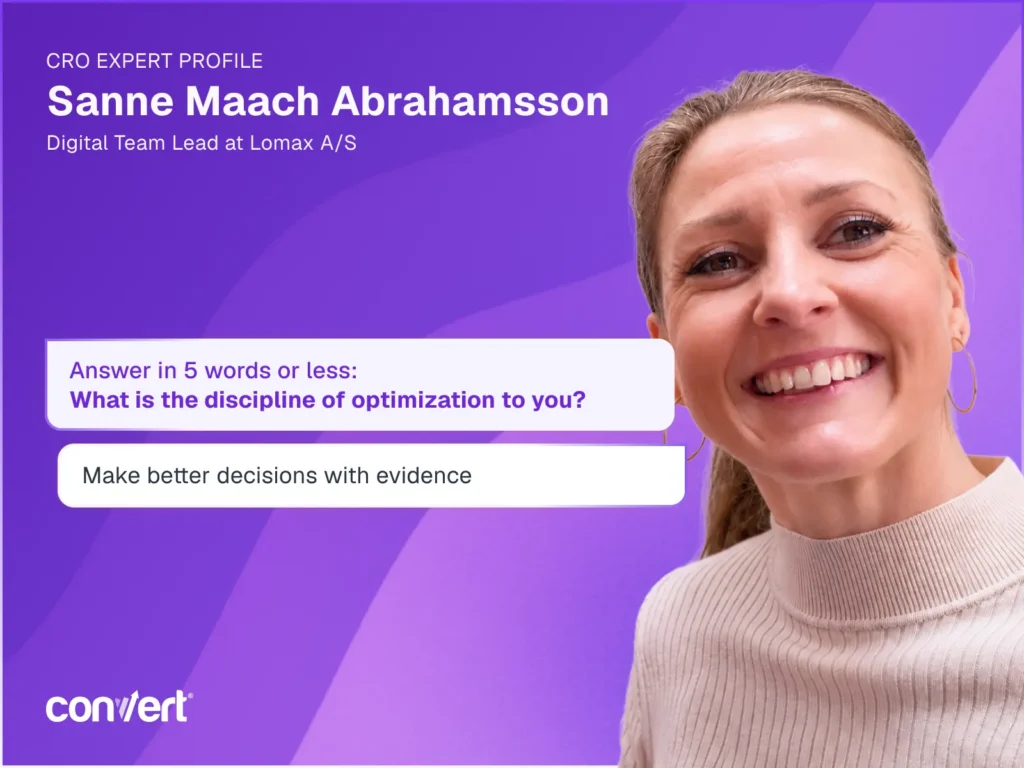
When asked to define the discipline of optimization in a concise manner, Abrahamsson identifies it as the ability to "make better decisions with evidence." This definition strips away the jargon often associated with A/B testing and growth hacking, focusing instead on the fundamental utility of experimentation as a risk-mitigation tool. In a corporate environment, especially within a large-scale enterprise like Lomax, the "Highest Paid Person’s Opinion" (HiPPO) can often drive product roadmaps. Abrahamsson’s approach utilizes experimentation to provide a factual counter-narrative, ensuring that investments are directed toward features and changes that have been empirically validated.
The Technological Shift: Integrating AI into the Experimentation Workflow
One of the most significant shifts in the CRO landscape is the integration of Artificial Intelligence (AI). However, Abrahamsson emphasizes that the value of AI is not found in mere speed, but in the capacity to create higher-order value with existing resources. At Lomax, the focus has shifted toward using AI to manage repetitive tasks, thereby freeing human practitioners to engage in critical thinking and strategic direction.

A central component of this strategy is the development of a "learning infrastructure." Lomax utilizes Airtable as a centralized repository for research, roadmaps, documentation, and results. This "single source of truth" is critical in preventing the loss of institutional knowledge—a common failure in digital teams where insights are often siloed in defunct slide decks or Jira tickets. By connecting this structured data to Large Language Models (LLMs) like Claude, the team can synthesize years of experimental data almost instantaneously. This allows the organization to move beyond analyzing individual tests to identifying broader patterns in customer behavior, effectively building a "shared organizational memory" that informs future hypotheses.
Case Study: Mitigating Risk through Negative Results
The utility of CRO is often measured by "wins"—tests that lead to a direct increase in conversion rates. However, Abrahamsson argues that some of the most valuable experiments are those that produce negative results, as they prevent costly strategic errors. She cites a specific example involving an automated product video tool. The tool promised to scrape YouTube for relevant content and automatically populate product pages with video, a prospect that excited senior management due to its potential for automation.
Despite the initial enthusiasm and a convincing vendor demo, the experimentation team insisted on a controlled test. The results were decisively negative: conversion rates and average order values dropped significantly. The qualitative analysis revealed that the automated matches were often poor, featuring influencers who did not align with the brand or subtitles in incorrect languages. By testing before investing, Lomax avoided a one-year contract for a tool that would have actively harmed the customer experience. This highlights a critical lesson for digital leaders: the primary value of an experimentation team is often its ability to act as a financial safeguard against unproven "innovations."
AI Content Performance: A Nuanced Evaluation
In another significant experiment, Abrahamsson’s team tested AI-generated product descriptions against human-written content across various stages of the funnel. The findings provided a nuanced view of AI’s capabilities. On individual product pages, the AI descriptions performed exceptionally well, providing clear, concise information that assisted users in their final decision-making. However, on category-level pages, the AI-generated content lacked the creative flair and strategic messaging necessary to guide users further into the funnel, leading to underperformance.
This experiment exemplifies the shift from binary "AI vs. Human" thinking to a more sophisticated understanding of where specific tools add value. It allowed Lomax to refine their content strategy, deploying AI where it was most efficient and retaining human oversight where creativity was a competitive advantage.
The Future of CRO: From Execution to Judgment
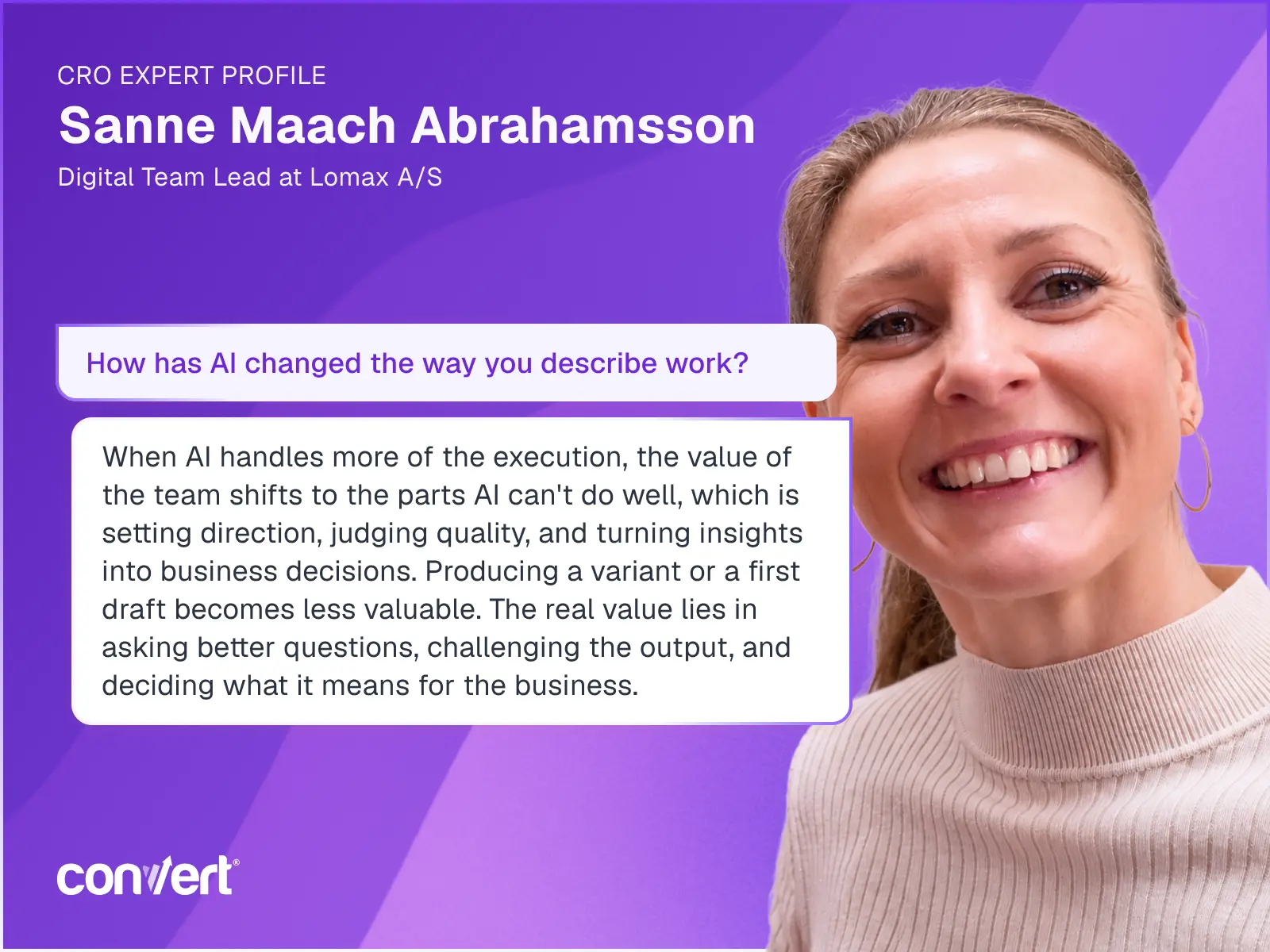
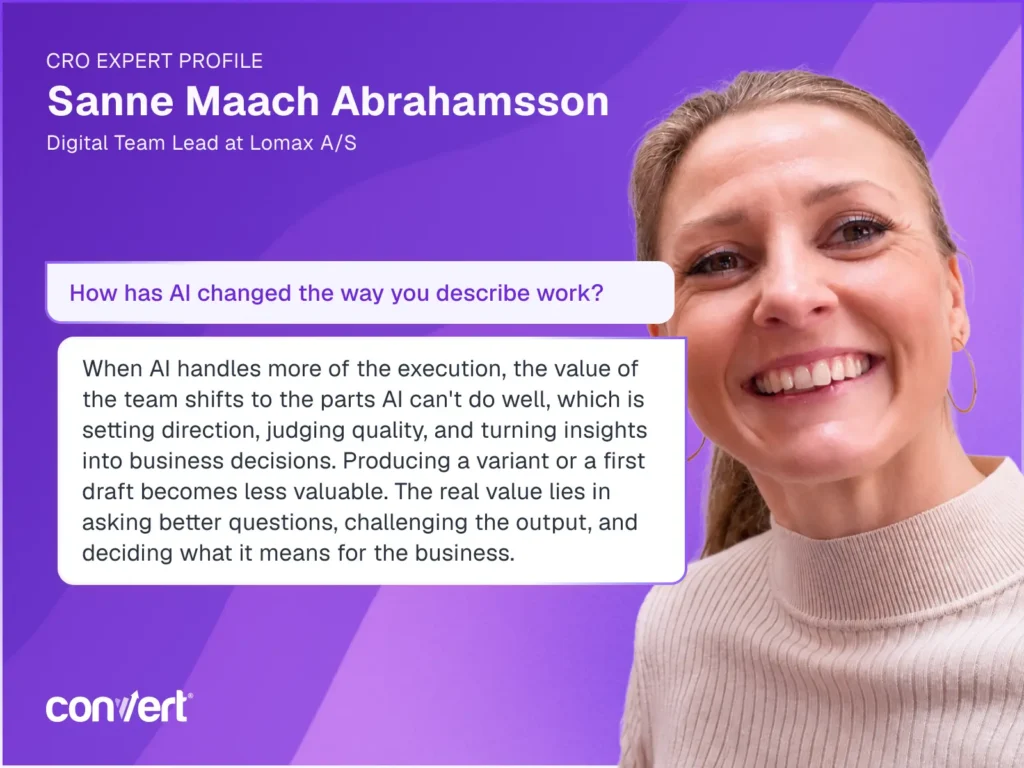
As AI continues to simplify the execution phase of experimentation—handling tasks like code generation, variant design, and basic data analysis—the role of the human practitioner is undergoing a fundamental transformation. Abrahamsson posits that the value of a CRO team is moving away from the "production" of tests and toward "judgment."

The practitioners who will thrive in the coming years are those who can set strategic direction, protect the quality of the data, and connect disparate insights across the business. In this new paradigm, asking the right questions and challenging the output of automated systems becomes more important than the ability to run a high volume of tests. Abrahamsson notes that her role as a leader is shifting toward managing a hybrid workforce of human talent and AI agents. The objective remains the same: fostering curiosity and critical thinking while maintaining a high standard of quality.
Broader Industry Implications and Chronology
The trends identified by Abrahamsson reflect a broader chronology of the CRO industry:

- 2010–2015: The Tooling Era. Organizations focused on acquiring testing software (Optimizely, VWO) and running simple color or headline tests.
- 2015–2020: The Process Era. The focus shifted to frameworks like the PIE (Potential, Importance, Ease) or ICE scoring models to prioritize roadmaps.
- 2020–Present: The Strategic Era. Experimentation is now seen as a business intelligence function, integrated with AI and focused on long-term customer insights.
In the Nordic market, where Lomax A/S is a major player, the digital economy is characterized by high levels of consumer sophistication and a strong emphasis on privacy and transparency. Organizations in this region are increasingly moving away from "black box" algorithms toward transparent, evidence-based systems that respect the user journey.
Conclusion: Building the Smarter Organization
The insights provided by Sanne Maach Abrahamsson underscore a vital truth in the digital age: technology is a multiplier, not a replacement for strategy. By investing in learning infrastructure and prioritizing evidence over intuition, Lomax A/S has positioned itself to navigate the complexities of the AI-driven future. The ultimate goal of optimization is not merely to increase a percentage point on a dashboard, but to make the entire organization smarter. As AI takes over the repetitive mechanics of the trade, the human element—characterized by judgment, ethics, and strategic vision—remains the most critical asset in the pursuit of digital excellence.







