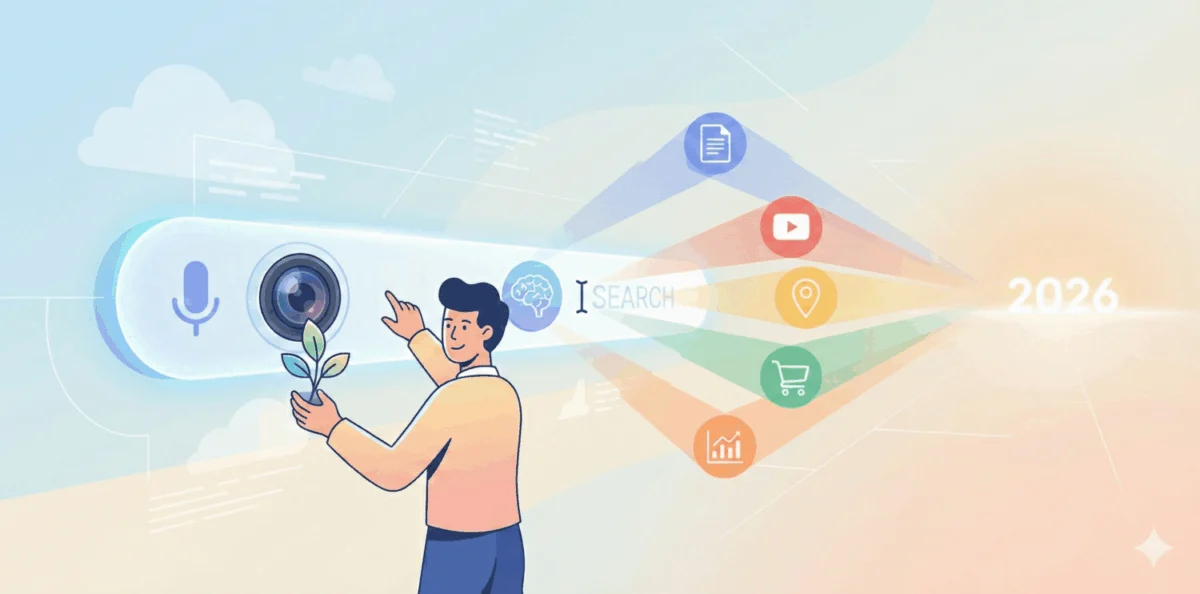
The landscape of online information discovery is undergoing a profound transformation, driven by the rapid advancements in artificial intelligence. This shift represents far more than a cyclical update to search engine algorithms; it is a fundamental re-engineering of how individuals access and process information, moving beyond traditional keyword-based queries to conversational, context-aware AI systems. For marketing professionals, this paradigm shift necessitates a complete overhaul of established SEO and content strategies, rendering the conventional playbook obsolete. The imperative is clear: adapt now, or risk diminished visibility in the emerging AI-first discovery ecosystem.
The Dawn of AI-Driven Discovery: A Brief Chronology
The journey towards AI-centric search has been incremental but accelerated dramatically in recent years. For decades, Google’s "ten blue links" dominated the search experience, with optimization revolving around keyword density, backlinks, and technical SEO. However, foundational research in natural language processing (NLP) and machine learning began paving the way for more sophisticated interactions.
The inflection point arrived with the public release of generative AI models. OpenAI’s ChatGPT, launched in November 2022, demonstrated the immense potential of large language models (LLMs) to understand complex queries, synthesize information, and generate coherent, human-like responses. This was swiftly followed by Google’s introduction of Bard (now Gemini) and its experimental Search Generative Experience (SGE), later rebranded as AI Overviews. These developments marked a clear signal from the industry leader that AI-powered answer engines were not a niche offering but the future core of search. Other players like Perplexity AI emerged, specifically designed to offer direct, sourced answers, further fragmenting the search landscape. This rapid evolution, from conceptual AI to widespread public adoption within a span of less than two years, underscores the urgency for brands to recalibrate their digital strategies.
Prediction 1: AI Answer Engines Will Become the Default Search Experience
By 2026, the era of traditional "ten blue links" will recede into a secondary role. Instead, tools such as ChatGPT, Google’s AI Overviews, Gemini, and Perplexity will serve as the primary conduits for information discovery. This shift moves beyond a singular search gateway, evolving into a multifaceted "search ecosystem" where AI systems curate and synthesize answers from disparate sources. These systems draw from publisher content, brand-owned assets, and third-party reference materials, evaluating their credibility before presenting a synthesized response.
The critical implication for marketers is that content can now influence outcomes without necessarily generating a direct click. Visibility is no longer solely about securing the top organic ranking on a search results page. It’s about ensuring content is highly retrievable and sufficiently trusted to be integrated as an input into an AI-generated answer. This redefines the fundamental principles of both SEO and content marketing.
Implications:
- Content Design: Content must be designed for citation and synthesis. This means structured data, clear and unambiguous language, explicit sourcing, and demonstrable signals of expertise will transition from mere best practices to absolute necessities.
- Authority and Breadth: The consistency and breadth of a brand’s presence across various authoritative platforms will become paramount. Being recognized as an authority in multiple credible venues increases the likelihood of content being selected and referenced by AI models.
- Measurement: Traditional click-through rates (CTRs) will diminish in importance as direct answers reduce the need for users to navigate to external websites. New metrics related to citation frequency and model inclusion will emerge.
Data from recent studies already indicates this trend. A 2023 study by SparkToro and Rand Fishkin revealed that zero-click searches continue to rise, now accounting for over 65% of all Google searches, a figure likely to escalate with widespread AI integration. Publishers like The New York Times and The Guardian have voiced concerns over AI models using their content without adequate attribution or compensation, highlighting the economic ramifications of this shift.
Prediction 2: Search and Recommendation Will Collapse Into a Single Discovery System
The academic distinction between "search" (explicit user query) and "recommendation" (inferred user interest) is rapidly dissolving. By 2026, these two functions will largely converge into a seamless discovery system. AI platforms are already adept at inferring user needs before they are explicitly articulated. YouTube proactively suggests explainers, LinkedIn surfaces relevant professional posts, TikTok masterfully predicts engaging content, and Amazon anticipates purchase intentions based on browsing history and past behavior.
This convergence presents both expanded opportunities and heightened risks for marketers. Content can now reach its intended audience without the necessity of a specific keyword search. A meticulously researched industry analysis or a well-crafted explanatory video can achieve significant reach far beyond the confines of traditional search results. However, content that is not readily intelligible to these AI systems—or fails to align with a platform’s native signals and formats—will face significant hurdles in discovery.
Implications:
- Platform-Native Content: Marketers must shift from a "one-size-fits-all" content approach to designing content specifically for the unique evaluation criteria and native formats of diverse platforms. This includes understanding the algorithms governing content distribution on social media, video platforms, and e-commerce sites.
- Inferred Needs: The focus must pivot towards designing for "inferred need" rather than solely explicit demand. This requires deep audience understanding, predictive analytics, and a proactive approach to content creation that anticipates user interests and pain points.
- Systemic Understanding: A comprehensive understanding of how different AI systems assess relevance, context, and user engagement will be crucial for content creators aiming for broad discovery.
Research from Statista indicates that over 40% of internet users discover new brands or products through social media, underscoring the growing role of recommendation engines in the discovery funnel. This trend is expected to intensify as AI further refines its predictive capabilities across all digital touchpoints.
Prediction 3: Personalization Will Get a Memory
Persistent conversational history and user-level memory are becoming standard features across leading AI platforms. ChatGPT, Gemini, and Perplexity already retain past interactions, stored preferences, and accumulated context, profoundly shaping the content recommendations users receive. This evolution will lead to an unprecedented level of audience fragmentation.
A user who has extensively explored a topic at an advanced level will receive vastly different results than a novice encountering the subject for the first time. Prior clicks, conversational patterns, and even explicit feedback loops will all influence the AI’s output. The same query from two distinct users could, therefore, yield entirely different content based on their individual "memory profiles."
Implications:
- Modular Content Strategies: Marketers must adopt highly modular content strategies. This involves creating content that caters to varying knowledge levels (e.g., beginner, intermediate, expert) and designing it as a clear progression.
- Clear Signaling: Content needs clear entry points, pathways for deeper exploration, and explicit signals that help AI systems understand the intended audience and complexity level of each piece. This might involve advanced metadata, content tagging, and internal linking structures that guide both users and AI.
- Hyper-Segmentation: While challenging, this level of personalization offers an opportunity for hyper-targeted engagement, delivering precisely the right information to the right user at the right stage of their journey.
The consumer demand for personalization is well-documented; a 2022 McKinsey study found that 71% of consumers expect personalized interactions, and 76% get frustrated when they don’t receive them. As AI systems become the primary interface for information, this expectation will extend to the very fabric of search results, demanding sophisticated content architectures from brands.
Prediction 4: Attribution Models Will Break, but New KPIs Will Emerge
The rise of AI-driven search fundamentally disrupts traditional click-based attribution models. As AI systems provide direct answers and users interact more within AI environments, brands will lose clear visibility into the conventional click-to-conversion pathway. This makes it increasingly difficult to quantify how content directly influences purchasing decisions or other desired actions.
Click-through rates (CTRs), long considered a bedrock metric for search performance, will become less reliable as primary Key Performance Indicators (KPIs). Many conversions will occur through pathways that bypass traditional website tracking, making last-click attribution a relic of a bygone era.
Implications:
- New Metrics: A new suite of metrics will emerge to fill this void. "Citation frequency"—how often a brand’s content is referenced by AI systems—will become a significant signal of influence. Model recall rates, patterns of excerpt usage, structured data adoption, and dwell time within AI-generated summaries will offer crucial insights into content performance.
- "Share of Answers": Perhaps the most significant new benchmark will be "share of answers." Analogous to "share of voice" in public relations, this metric will quantify how frequently a brand appears in AI-generated responses relative to its competitors.
- Holistic Measurement: Performance teams and forecasting models will need to integrate these new signals, developing sophisticated frameworks that capture content’s influence even when direct attribution is impossible. This demands a more holistic view of content’s impact across the entire customer journey, recognizing its role in building brand authority and shaping pre-conversion decisions.
The marketing analytics industry is already responding. Companies like Gartner and Forrester are advising clients to prepare for a "post-cookie, post-click" world, emphasizing first-party data strategies and probabilistic attribution models. The challenge will be to establish industry-wide standards for these nascent AI-centric KPIs.
Prediction 5: Authority Signals Will Become the New Ranking Factors
As large language models become more sophisticated and cautious about the quality and provenance of information, authority signals are rapidly supplanting traditional SEO factors as the primary determinants of visibility. Trust, verifiable accuracy, and demonstrable expertise are now the critical currencies dictating whether a brand’s content is surfaced by AI systems.
This shift directly reflects how AI systems evaluate content. They increasingly prioritize verifiable claims, content authored by named experts, transparent publication practices, and clear information provenance. "High-signal" pages—those rich in factual data, specificity, clear structure, and alignment with established consensus—will receive preference over high-volume content lacking depth or originality.
Implications:
- Substance Over Scale: The era of "thin aggregation" and keyword-stuffed SEO filler content is unequivocally ending. Marketers must invest in substantive, original content: proprietary research, direct quotes from subject matter experts (SMEs), and first-party data insights will gain substantial value.
- Credentials and Transparency: Brands must meticulously build and display their credentials. This includes detailed author bios, rigorous citation practices, transparent disclosure statements, and robust expert review processes. The emphasis on Google’s E-E-A-T (Experience, Expertise, Authoritativeness, Trustworthiness) guidelines, which predate the AI boom, is now more pertinent than ever.
- Human Expertise as a Competitive Advantage: In a world awash with AI-generated text, authentic human expertise becomes a distinct competitive differentiator. Brands that leverage and showcase their internal and external experts will gain a significant advantage in earning the trust of AI models and, by extension, their users. The viral attention garnered by a recent Wall Street Journal article on companies desperately seeking "storytellers" underscores the renewed value placed on genuine human insight and narrative.
The drive for "safe precision" within AI models, influenced by model training updates, retrieval layers, and safety guardrails, inherently rewards content that is factually robust and demonstrably credible. Brands that back up claims with evidence will be favored, while those that do not will be penalized.
Preparing for the Search Landscape Ahead
The ongoing transformation of search, driven by pervasive AI integration, presents both formidable challenges and unparalleled opportunities for brands. Those marketers who steadfastly adhere to outdated, legacy approaches will inevitably find their strategies yielding diminishing returns. Conversely, those who proactively adapt and innovate will strategically position their brands for sustained organic growth and enhanced influence in the coming years.
The window for preparation is now. It is imperative for marketing teams to conduct a thorough audit of their existing content, assessing its "answer-readiness" for AI systems. Investments in structured data, robust expertise signals, and transparent content provenance are no longer optional but foundational requirements. Crucially, new measurement frameworks must be developed and implemented to accurately capture content’s influence beyond traditional clicks, focusing instead on citation, synthesis, and share of answers. The AI-driven discovery era of 2026 is rapidly taking shape, and the strategic foundations laid today will irrevocably determine a brand’s visibility, authority, and success in this profoundly altered digital ecosystem.
Frequently Asked Questions (FAQs):
If clicks are declining, how do we prove content is working?
Measurement is shifting from a focus on direct traffic to assessing influence and impact. Metrics such as citation frequency, excerpt reuse by AI systems, and "share of answers" are becoming more meaningful indicators of content performance than traditional CTRs alone. While these signals may not offer the clean, direct attribution of last-click models, they provide a more comprehensive picture of how content shapes user decisions and perceptions upstream in the discovery process, even when traditional analytics cannot directly track the final conversion.
What kinds of content perform best in AI-driven discovery?
Content that is characterized by clarity, specificity, and defensibility tends to achieve greater reach and influence in AI-driven discovery environments. AI systems prioritize structured explanations, verifiable claims supported by evidence, insights from named experts, and content with well-defined scopes. Original research, expert commentary, tightly framed explainers, and data-rich analyses consistently outperform broad, generic material, or content created solely for keyword optimization.
How should teams adapt their content strategy for personalization and memory?
Content teams must evolve from creating one-size-fits-all assets to thinking in terms of progressive content pathways. This necessitates designing modular content that caters to different knowledge levels (e.g., beginner, intermediate, advanced) and clearly signals the intended audience for each piece. Entry-level explainers should logically connect to deeper technical breakdowns, and advanced perspectives, allowing AI systems to surface the most relevant material based on a user’s individual history, accumulated context, and demonstrated expertise. This requires robust content taxonomy, semantic markup, and clear internal linking strategies.