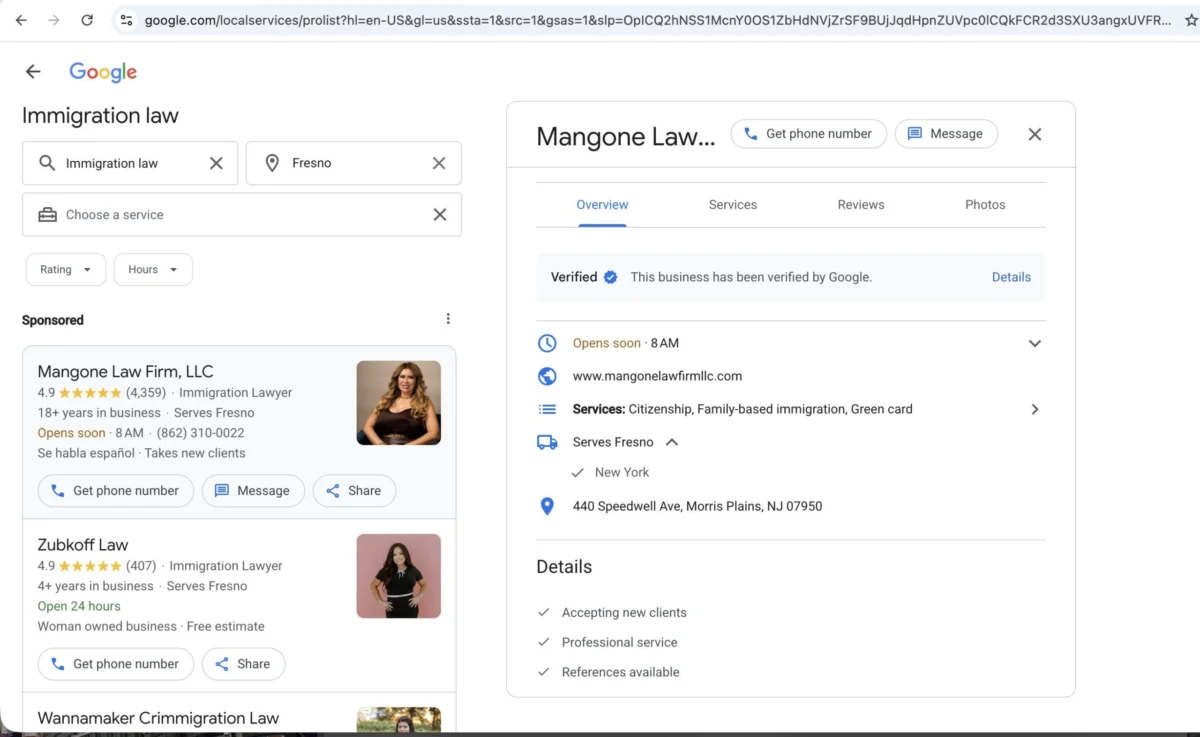
AI slop refers to low-value digital content created wholly or substantially with generative artificial intelligence, released with insufficient human judgment, verification, craft, or accountability. This pervasive issue arises when publishers prioritize speed, scale, traffic, engagement, or cost reduction over the usefulness and integrity of the information delivered to the end-user. The phenomenon extends far beyond mere disposable articles clogging search results, encompassing synthetic videos designed to capture children’s attention, fraudulent product reviews, hollow corporate memos, and hyper-realistic images crafted to elicit specific emotional reactions or spread misinformation. Crucially, not all content touched by AI qualifies as slop; a reporter using transcription software for an interview or an expert leveraging AI to organize original research that an editor subsequently verifies does not fall into this category. The fundamental distinction lies in the quality, contribution, purpose, verification, and accountability embedded in the content, rather than the mere presence of a machine in the workflow.
The Genesis and Mainstreaming of the Term "AI Slop"
While the word "slop" itself is ancient, its contemporary technological meaning gained traction in the nascent era of generative AI. Developer Simon Willison significantly popularized the term in May 2024. Willison drew a compelling analogy, suggesting that "slop" could become for unwanted AI-generated content what "spam" had long been for unsolicited email. Although Willison did not claim to invent the term, his contribution was instrumental in transforming a scattered, anecdotal complaint into a widely recognized and useful label. His original post serves as a foundational reference for understanding the term’s early dissemination.
The label resonated and spread rapidly because it articulated a judgment that the broader phrase "AI-generated content" could not. "AI-generated content" merely describes a production method; "slop," however, conveys a critical assessment of the output, the effort (or lack thereof) behind it, its distribution methods, and the burden it imposes on consumers, editors, and platforms for cleanup and verification.
By the close of 2025, the term "AI slop" had transcended internet slang to enter the mainstream lexicon. Merriam-Webster recognized its growing societal relevance, selecting "slop" as its 2025 Word of the Year. The dictionary defined it as "low-quality digital content usually produced in quantity by artificial intelligence." This swift inclusion by such a respected linguistic authority underscored how quickly public discourse and vocabulary adapted to the explosive growth of AI content production. The rapid formalization of the term highlighted a collective societal realization about the emerging challenges posed by unchecked generative AI.
Despite its widespread adoption, researchers continue to debate the precise boundaries of "AI slop." A comprehensive report published by Columbia University in June 2026 further elaborated on the concept, describing it as high-volume synthetic text, images, audio, or video generated rapidly and primarily optimized for engagement rather than genuine depth or accuracy. The report also issued a pertinent warning: while useful, the "slop" label can sometimes oversimplify and flatten important distinctions between benign experimentation, legitimate artistic expression, mere annoying clutter, deliberate manipulation, and outright fraud. The Columbia SIPA report remains a critical resource for mapping the nuanced tensions inherent in defining and identifying AI slop.
The Crucial Distinction: AI-Generated Content vs. AI Slop
This boundary represents the most critical point of understanding in the ongoing discussion surrounding generative AI. "AI-generated content" is an expansive umbrella term that encompasses a vast array of outputs. This includes a machine-translated support page, a computer-generated background in a film, a meticulously cleaned interview transcript, an automatically written weather summary, or, indeed, an article that received no human oversight. Some examples are undeniably useful and benefit from careful human supervision, while others unequivocally constitute slop.
Research conducted in April 2025 by Ahrefs, which analyzed 900,000 English-language web pages, estimated that 74.2% contained some degree of AI-generated text. This striking statistic, however, does not imply that three-quarters of all new web pages were "slop." Instead, it indicated the widespread adoption of AI assistance in web content creation, based on the specific detection methods and thresholds employed in their study. Ahrefs transparently published its methodology and results, emphasizing that such methodological detail is paramount for distinguishing a useful statistical insight from an alarming yet potentially false conclusion.
The paper "Why Slop Matters," published in 2026, identified three key characteristics that frequently explain why certain synthetic content earns the pejorative "slop" label:
- Lack of verifiable facts or evidence: Content often presents claims without any grounding in reality or accessible sources.
- Prioritization of quantity over quality: The economic model encourages mass production, de-emphasizing individual content integrity.
- Absence of genuine human contribution or insight: The content lacks unique perspective, expertise, or personal experience that would add value.
These characteristics function as "family resemblances" rather than a rigid legal definition, helping to explain why, for instance, a meticulously polished report featuring fabricated sources can feel more like "slop" than a clumsy but honest human note.
The Economic Imperative: Why AI Slop is Spreading
Generative AI did not invent the concept of low-quality or junk content. The digital landscape was already rife with content farms, scraped pages, clickbait, fabricated reviews, templated videos, and made-for-advertising (MFA) sites long before the advent of models like ChatGPT. What generative AI fundamentally altered, however, was the economics of producing such material.
Previously, a publisher aiming to create a convincing imitation of a legitimate publication would require a team of writers, designers, editors, and a significant investment of time. Today, a relatively small operation can leverage interconnected AI tools to generate vast quantities of text, images, narration, code, headlines, and translations at an unprecedented scale. The marginal cost of producing each additional item approaches zero, while existing distribution channels—search engines, social media feeds, creator programs, and ad exchanges—offer immediate and wide-reaching dissemination.
This creates a profound economic mismatch: the cost of producing another item of content approaches zero, yet human attention, verification, and critical judgment remain inherently expensive. Columbia’s 2026 analysis posits that the proliferation of slop is often a reflection of systemic incentive structures rather than individual creative failings. Monetization programs, engagement metrics, search engine ranking systems, and automated content pipelines predominantly reward scale, speed, and immediate emotional responses. Under these conditions, generating an abundance of content, regardless of its intrinsic value, becomes a rational and highly profitable strategy for producers, even as the overall information ecosystem deteriorates for users.
The "AutoBait" operation, meticulously documented by DoubleVerify, provides a stark illustration of this business model. Researchers uncovered a network comprising over 200 made-for-advertising websites that systematically employed templated AI prompts to generate clickbait articles and deceptively realistic images. Some of these sites featured slideshows with dozens of individual slides, each presenting numerous potential ad placements. DoubleVerify estimated that the cost to generate a single page could be less than $2.25. Their investigation notably exposed the specific production prompts used by the network. In this paradigm, the article itself is not the primary product; rather, ad inventory is the true commodity, and the article serves merely as inexpensive wrapping designed to capture a few fleeting seconds of user attention.
The Multifaceted Threat: Main Forms of AI Slop
AI slop is highly adaptive, molding itself to the specific characteristics and incentive structures of the distribution system it exploits. Whether it’s a search engine rewarding query coverage, a short-video feed optimizing for retention, an ad network seeking impressions, or a workplace valuing the mere appearance of productivity, the underlying production logic remains disturbingly consistent.
-
Search Slop: This category comprises web pages meticulously crafted to capture search queries rather than to genuinely resolve them with useful information. Common manifestations include mass-generated location pages devoid of local reporting, rewritten definitions offering no new insight, recycled old articles merely updated with a current date, comparison pages compiled solely from manufacturer specifications without independent analysis, and troubleshooting guides written by authors who have never actually used the product in question. The most insidious variants of search slop borrow signals of experience and authority they have not earned. A page might assert "we tested," "our experts found," or "after 30 days" without any verifiable test records, original photographs, empirical measurements, named reviewers, or any observation that could only originate from actual, hands-on use.
-
Social and Video Slop: Optimized for immediate reaction before a viewer has time for critical inspection, feed slop often utilizes exaggerated peril, saccharine rescue narratives, overly sentimental scenes, fabricated celebrity content, or a disjointed chain of unrelated synthetic clips loosely held together by generic narration. Children’s content is particularly vulnerable to this model, as repetition, bright imagery, familiar characters, and constant novelty can effectively hold attention without the need for a coherent or meaningful story. Recognizing this problem, YouTube’s monetization rules now explicitly reject mass-produced, generic, repetitive, or manipulative channels, while still allowing AI tools when the resulting content delivers original creative or educational value. This policy reflects a crucial distinction that a blanket ban would fail to capture.
-
Image Slop and Synthetic Empathy Bait: This encompasses visually generated content such as impossible architecture, fake historical photographs, nonexistent disaster scenes, imaginary products, and emotionally charged images specifically designed to solicit comments, shares, or other forms of engagement. The infamous "Shrimp Jesus" images, bizarre enough to become a viral joke, served as an early warning. Subsequent investigations revealed networks exploiting similarly surreal religious imagery to generate engagement and funnel users towards ad-heavy or scam websites. As visual AI quality rapidly improves, traditional screening methods like malformed hands or mangled text are becoming less reliable. Consequently, assessing the source, context, posting behavior, and provenance of an image is increasingly critical.
-
Commercial and Review Slop: Generative AI systems possess the capability to produce thousands of plausible product descriptions, testimonials, buying guides, and comparison tables without any actual human interaction with the products. This makes commercial slop particularly damaging, as it directly imitates independent judgment at the precise moment a consumer is preparing to make a purchasing decision. While a summary based on publicly disclosed specifications can be legitimate, a first-person verdict founded on imaginary use is inherently deceptive. The core issue here is fabricated evidence and misrepresentation, not merely polished grammar.
-
Workslop: This refers to AI-generated workplace material that, despite appearing finished, fundamentally lacks the context, critical thinking, or actionable insights necessary to advance a task. Examples include a strategic memo without a clear decision point, code without adequate explanation, a research summary containing unsupported claims, or an excessively long email that forces the recipient to sift through filler to discern the actual request. A September 2025 survey by BetterUp Labs and the Stanford Social Media Lab, involving 1,150 full-time US desk workers, revealed that 40% had encountered workslop within the preceding month. Respondents estimated that resolving each incident consumed approximately two hours. While the exact cost varies by organization, the mechanism is clear: one individual records a perceived "productivity gain" by offloading unverified or incomplete work, while another bears the cost of correction and rework.
-
Slopaganda: This term describes synthetic political communication that leverages the cheap production, emotional intensity, and feed-native style characteristic of commercial slop. Slopaganda, even when overtly absurd, can subtly shape public perception of what feels normal, threatening, popular, or worthy of ridicule. While not every synthetic political joke constitutes misinformation, the risk escalates significantly when realistic content conceals its origin, impersonates individuals, invents events, targets vulnerable audiences, or overwhelms the information environment through coordinated and repetitive distribution.
-
Knowledge and Research Slop: Academic papers, educational videos, research reports, and reference materials derive their authority from their format and assumed rigor. Generative AI output can flawlessly reproduce these formats while simultaneously inventing citations, flattening complex uncertainties, reiterating retracted findings, or creating a deceptive trail of sources that ultimately loop back to the same unsupported claim. This form of slop is particularly insidious because subsequent writers, databases, and AI models may inadvertently treat the published item as legitimate evidence. A weak, unverified article can thus become an input, then a citation, and eventually contribute to an apparent, yet false, consensus.
Measuring the Scale of the Problem: Interpreting the Numbers Carefully
There is currently no reliable census or single, accurate automated tool capable of measuring the full extent of AI slop across the internet. The category itself is subjective, highly context-dependent, and resistant to simplistic quantification. The most frequently cited figures typically address narrower questions, requiring careful interpretation.
- 74.2% of new pages contained AI content (Ahrefs, April 2025): This figure, derived from an AI detector’s analysis of 900,000 new pages, primarily indicates the widespread adoption of AI assistance in web publishing. It does not prove that 74.2% of new pages were low-quality or constituted slop.
- 3,749 AI content-farm sites (NewsGuard, June 2026): NewsGuard’s count identifies news and information sites across 16 languages that systematically produce low-quality AI content. This confirms the existence of a large, documented ecosystem of such publishing, but it is not a complete count of all slop sites or all AI-made websites. NewsGuard’s methodology, combining automated detection with rigorous human analyst review, requires substantial AI content, a lack of clear disclosure, and consistent low-quality output, making its tracker particularly valuable.
- 21% of first 500 YouTube Shorts / 59% of first 500 TikTok videos (Kapwing): These figures represent useful experiments showing what a fresh account’s feed can contain. They are not platform-wide prevalence rates for YouTube or TikTok. Recommendation systems personalize rapidly, meaning one account’s experience cannot represent the diversity of user experiences across an entire platform, country, or interest group.
NewsGuard’s meticulous approach, requiring both automated detection and human analyst review against specific criteria (substantial AI content, lack of clear disclosure, repeated low-quality output), provides a more robust indicator of the problem. Its tracker had identified 3,749 such sites across 16 languages by June 2026. The feed studies from Kapwing’s YouTube and TikTok reports, while vivid, serve best as demonstrations of potential exposure for new users rather than universal estimates.
Detecting AI Slop: Beyond Automated Tools
No single clue definitively proves that content was AI-generated or that it constitutes slop. A more effective approach involves looking for clusters of evidence and examining the publisher’s actions and intentions, rather than solely focusing on stylistic quirks.
Stronger Warning Signs:
- Absence of verifiable facts or sources: Claims are made without any supporting evidence or links to original data.
- Generic, highly repetitive phrasing across multiple articles/pages: Indicates templated generation rather than unique human insight.
- High volume of content on obscure, long-tail topics without clear expertise: Suggests automated query capture.
- Claims of personal experience ("we tested," "I found") without supporting detail (photos, measurements, names): Indicates fabricated authority.
- Lack of author bylines, contact information, or transparent editorial process: Hides accountability.
- Inconsistencies or logical errors that a human editor would catch: Points to lack of human review.
- Content optimized purely for ad impressions or engagement metrics: Prioritizes profit over user value.
- Visually "perfect" but contextually nonsensical images: Indicates AI generation without human oversight.
Weaker Clues (Often Overvalued):
- Perfect grammar, tidy headings, transition words, short introductions, repeated sentence patterns, certain favorite phrases, and enthusiastic punctuation may raise suspicion. Excessive em dashes have, for instance, become a running joke associated with AI writing. However, none of these stylistic elements definitively proves AI use, nor do they inherently indicate whether the work is inaccurate or useless. Writers can naturally sound formulaic, and AI models can be prompted to produce irregular or quirky prose. A serious assessment must delve beneath the superficial voice.
Why AI Detectors Fall Short: AI detectors attempt to estimate the probability that text or media originated from a model. Slop, however, is a judgment about quality, usefulness, context, intent, and production behavior. These are fundamentally different questions. Research summarized in Columbia’s 2026 report found that professional editors’ slop judgments reflected complex criteria such as usefulness, accuracy, framing, coherence, relevance, and writing quality. The importance of each dimension varied by context, and automated methods failed to reliably reproduce these nuanced human judgments. The underlying study, "Measuring AI Slop in Text," highlights fully automated measurement as an ongoing and significant challenge.
Detectors also face an uphill battle against edited output, mixed human-AI authorship, translated text, the continuous evolution of new models, false positives, and the strong incentive for publishers to evade detection. Therefore, a detector should be used as one signal within a broader investigation, never as definitive proof that a writer cheated or that content lacks value.
Provenance Tools (C2PA): A Glimmer of Hope: C2PA Content Credentials offer a more precise and increasingly useful approach. These tools can cryptographically record an asset’s origin, edits, and any use of AI in a verifiable digital history, akin to a "digital nutrition label." However, C2PA explicitly cautions that credentials do not determine the truthfulness of a claim, and the absence of credentials does not automatically render an asset untrustworthy. The C2PA explainer details both the standard’s capabilities and its inherent limitations. For the ordinary reader, the most effective approach remains lateral reading: leaving the page, investigating the publisher, seeking original sources, comparing independent coverage, and verifying whether apparent evidence genuinely exists.
AI Slop and SEO: Google’s Stance
Google’s public guidance clarifies that AI content is not automatically against its rules. Generative AI can legitimately assist with research and content structuring. However, generating large volumes of pages without adding genuine user value may violate Google’s scaled content abuse policy. Google’s generative AI guidance consistently focuses on the result and the purpose of the content, rather than imposing a blanket ban on the production tool itself.
Google’s spam policy is even more explicit. "Scaled content abuse" is defined as producing many pages primarily to manipulate search rankings rather than to genuinely help users, irrespective of whether these pages were created by AI, humans, scraping, translation, or stitched from various sources. Google specifically lists mass AI generation without added value as a prime example of this policy violation.
This distinction yields three critical lessons for publishers:
- Focus on unique value, not just AI use: Content must provide distinct benefit to users, regardless of how it’s created.
- Ensure human oversight and accountability: AI is a tool, but human judgment remains essential for quality and accuracy.
- Prioritize user experience over manipulation: Strategies that attempt to game search algorithms are inherently risky and unsustainable.
While slop may temporarily rank in search results—spam has always found fleeting openings—a strategy predicated on search engines failing to recognize a lack of value is a gamble against the engine’s stated objectives, the user’s memory, and the publisher’s long-term reputation.
Strategies for Responsible AI Integration
The solution to avoiding slop is not to simply "humanize" a generated draft with quirks. True quality stems from fundamentally altering the approach to content creation.
-
Start with Evidence, Not a Blank Prompt: Begin by gathering primary evidence: interviews, datasets, screenshots, test notes, product access, source documents, customer questions, or genuine subject-matter expertise. Utilize AI to help transform and structure material you possess, rather than asking it to imitate knowledge you have not genuinely acquired.
-
Give Every Factual Claim a Route Home: For high-value content, maintain a "claim ledger." Document each factual claim, its original source, the exact supporting passage or observation, the date it was checked, and the editor responsible for verification. If a source does not fully support the final wording, narrow the claim to ensure accuracy.
-
Separate Generation from Verification: Never ask the same AI model response to both create a claim and certify its accuracy. Crucially, verify all important facts against primary documents, real software, raw data, original recordings, or independent subject-matter experts. High-stakes subjects necessitate rigorous, independent subject-matter review.
-
Make the Human Contribution Visible: Incorporate methodologies, explicit exclusions, original photographs, screenshots, detailed calculations, dissenting findings, acknowledgments of uncertainty, and clear reasoning behind recommendations. A reader should be able to readily identify what the publisher or author personally learned, discovered, or decided.
-
Assign One Accountable Owner: A specific editor or author should be willing to publicly attach their name to the final output and be fully accountable for its accuracy and integrity. "The AI wrote it" is a description of a process, not an acceptable correction or accountability policy.
-
Tie Publishing Volume to Review Capacity: If a team can rigorously review and verify ten articles per week, the ability to generate 500 articles does not magically create capacity for 500. It simply creates an overwhelming queue of unverified, potentially problematic output. The safe production ceiling is dictated by the capacity for evidence gathering and quality control, not merely the speed of generation.
-
Disclose AI Use When it Matters to the Audience: Disclosure is especially vital for realistic synthetic media, public-interest information published without human review, automated updates, or any content where readers might reasonably assume a person witnessed or created the underlying material. A useful label should be specific: "AI-generated illustration," "automated summary reviewed by Jane Smith," or "voice translated with AI" conveys far more helpful information than a vague "AI may have been used." However, transparency alone does not rectify invented evidence, weak analysis, or careless review; quality and transparency are distinct, yet complementary, duties.
-
Preserve Corrections and Updates: Establish clear and easy mechanisms for users to report problems. Indicate when material was last checked or updated, and visibly correct the record when consequential errors are identified. Given that automation accelerates publication speed, the correction and update system must be equally agile.
Platform and Regulatory Responses
Responses to AI slop from both platforms and regulators are increasingly targeting problematic behaviors and incentive structures, rather than merely the presence of AI itself.
- Google’s Evolving Search Policies: Google has consistently refined its search algorithms and spam policies, explicitly penalizing "scaled content abuse," which includes mass AI generation lacking user value. This reflects a commitment to prioritizing helpful, reliable content.
- YouTube’s Monetization Guidelines: As noted, YouTube has updated its policies to reject channels that rely on mass-produced, generic, or manipulative AI content for monetization, while still allowing AI as a creative tool when it adds value.
- Merriam-Webster’s Lexical Recognition: The dictionary’s designation of "slop" as its Word of the Year signifies a broad cultural acknowledgment of the issue and its impact on information quality.
- Emerging Regulatory Frameworks: Governments and international bodies are exploring or implementing regulations, such as the European Union’s AI Act, which aim to ensure transparency, accountability, and safety in AI systems, particularly concerning content generation and its potential for harm.
- Industry Initiatives (e.g., C2PA): Collaborative efforts to develop content provenance standards are gaining traction, aiming to provide verifiable digital histories for media, helping users and platforms identify the origin and any AI modifications of content.
These measures are designed to mitigate certain incentives that drive slop production. However, labels and regulations alone cannot fully measure inherent usefulness or quality. A clearly labeled page, if devoid of value, can still waste a user’s time, while a meticulously reviewed and AI-assisted page can be exceptionally informative and useful. The ongoing challenge lies in fostering an ecosystem where value and accountability consistently outweigh the allure of cheap, scalable, but ultimately detrimental, content.