The modern enterprise often invests significantly in Customer Relationship Management (CRM) systems, viewing them as foundational tools for enhancing customer interactions, streamlining sales processes, and improving data-driven decision-making. However, a startling paradox persists: despite their immense potential and high investment, a substantial percentage of CRM implementations fail to deliver on their promised value. Industry analyses consistently reveal that these failures are rarely rooted in technical shortcomings of the software itself. Instead, the primary culprits are human and organizational factors: a lack of user buy-in, inadequate or generic training, and the absence of sustained adoption ownership post-launch. The consequence is a costly system that fails to provide crucial pipeline visibility, hinders process alignment, and ultimately becomes an underutilized asset, eroding trust in technological investments.
The Pervasive Challenge of CRM Adoption
The statistics paint a clear picture of the challenge. Research by Prosci, a leading authority in change management, consistently demonstrates a strong correlation between effective change management and project success. Their studies, drawing on insights from thousands of change practitioners, indicate that projects with excellent change management are nearly twice as likely to meet or exceed their objectives compared to those with poor change management strategies. This significant gap underscores that the "human side" of technology adoption is not an afterthought but a critical determinant of success.
When organizations neglect structured change management, the costs compound rapidly. Sales representatives revert to familiar spreadsheets or ad-hoc methods, data integrity erodes, and critical insights become obscured. Validity’s 2025 State of CRM Data Management report, for instance, found that a staggering 76% of organizations believe less than half of their CRM data is accurate and complete. This data degradation directly impacts management’s ability to forecast, leads to misinformed strategic decisions, and within months, prompts leadership to question the initial CRM investment. A well-managed CRM rollout, conversely, yields compounding benefits: improved user efficiency, enhanced data quality, and ultimately, a clearer, more actionable view of the customer journey and business performance.
Establishing a Robust CRM Change Management Plan
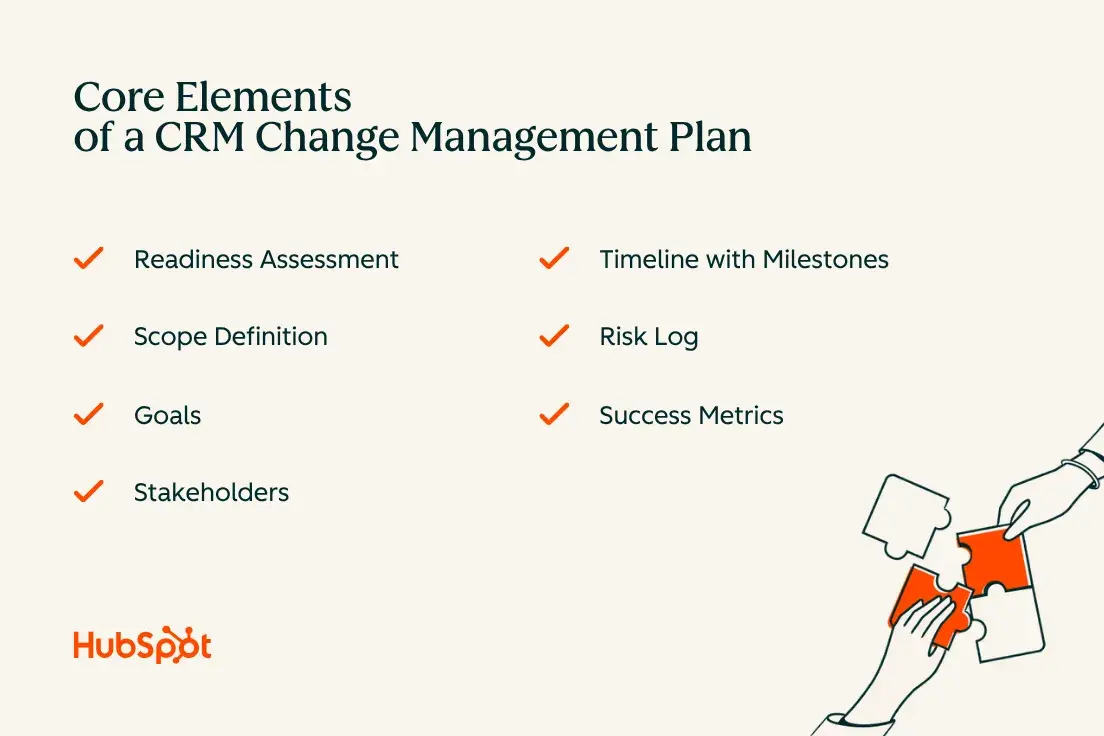
A successful CRM deployment necessitates a comprehensive change management plan that addresses the people and process challenges systematically, spanning the phases before, during, and after the software’s technical configuration. This plan serves as the operational blueprint, tying all rollout efforts together. It typically encompasses seven core elements: a thorough readiness assessment, clear scope definition, measurable goals, identification of all key stakeholders, a detailed timeline, a proactive risk log, and well-defined success metrics. Omitting any of these elements significantly increases the likelihood of unforeseen complications that can impede adoption or undermine governance.
- Readiness Assessment: This initial phase involves evaluating the organization’s capacity and willingness to adopt the new CRM. It assesses current processes, identifies potential resistance points, and gauges user proficiency with new technologies.
- Scope Definition: Clearly articulating what the CRM will and will not do, which departments it will impact, and the functionalities to be implemented in each phase.
- Goals: Defining specific, measurable, achievable, relevant, and time-bound (SMART) objectives for the CRM, directly linked to business outcomes (e.g., increased sales efficiency, improved customer satisfaction, enhanced data accuracy).
- Stakeholders: Identifying all individuals and groups affected by the CRM, from executive sponsors to end-users, and understanding their needs and concerns.
- Timeline: Establishing a realistic project schedule with key milestones, including planning, configuration, training, go-live, and post-launch stabilization.
- Risk Log: Proactively identifying potential challenges (e.g., technical integration issues, user resistance, data migration problems) and developing mitigation strategies.
- Success Metrics: Defining how the success of the CRM adoption will be measured, encompassing both quantitative (e.g., login frequency, data completeness) and qualitative (e.g., user satisfaction) indicators.
Guiding Frameworks for Organizational Change
Two widely recognized frameworks often provide invaluable scaffolding for successful CRM rollouts: the Prosci ADKAR model and Kotter’s 8-step process. While neither is mandatory, their complementary nature offers powerful guidance.
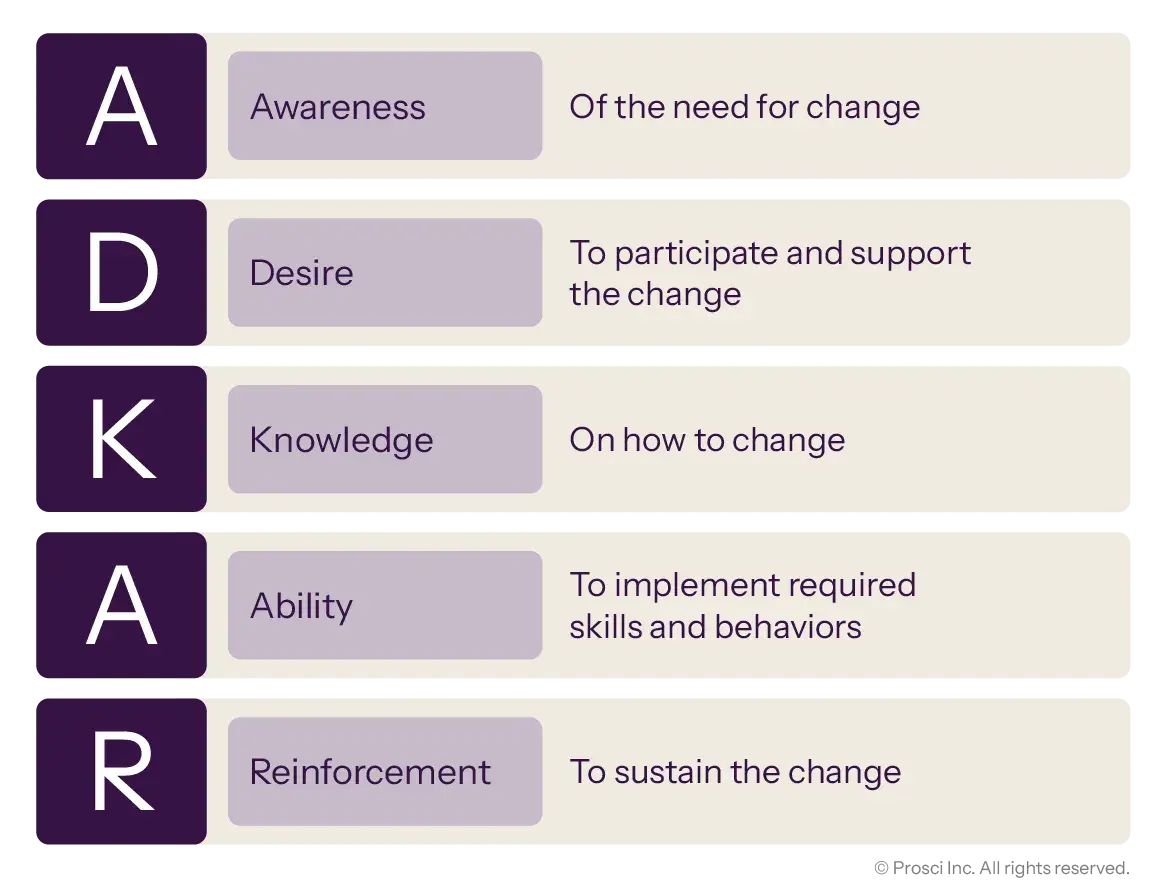
The Prosci ADKAR Model focuses on the individual’s journey through change, standing for Awareness, Desire, Knowledge, Ability, and Reinforcement. This framework is particularly strong for diagnosing precisely where adoption struggles are occurring. For example, if a sales representative understands the purpose of the new CRM (Awareness) but does not perceive how it benefits their daily work (lack of Desire), this presents a different challenge than a rep who wants to use it but lacks the necessary skills (Knowledge). ADKAR’s diagnostic capability transforms a vague observation like "people aren’t adopting" into a specific, actionable problem. A practical "pro tip" for organizations is to conduct a quick ADKAR self-assessment survey with pilot users before a full rollout. By rating their Awareness, Desire, Knowledge, Ability, and Reinforcement on a scale, scores below a certain threshold (e.g., 3 out of 5) pinpoint areas requiring immediate intervention, saving weeks of guesswork.
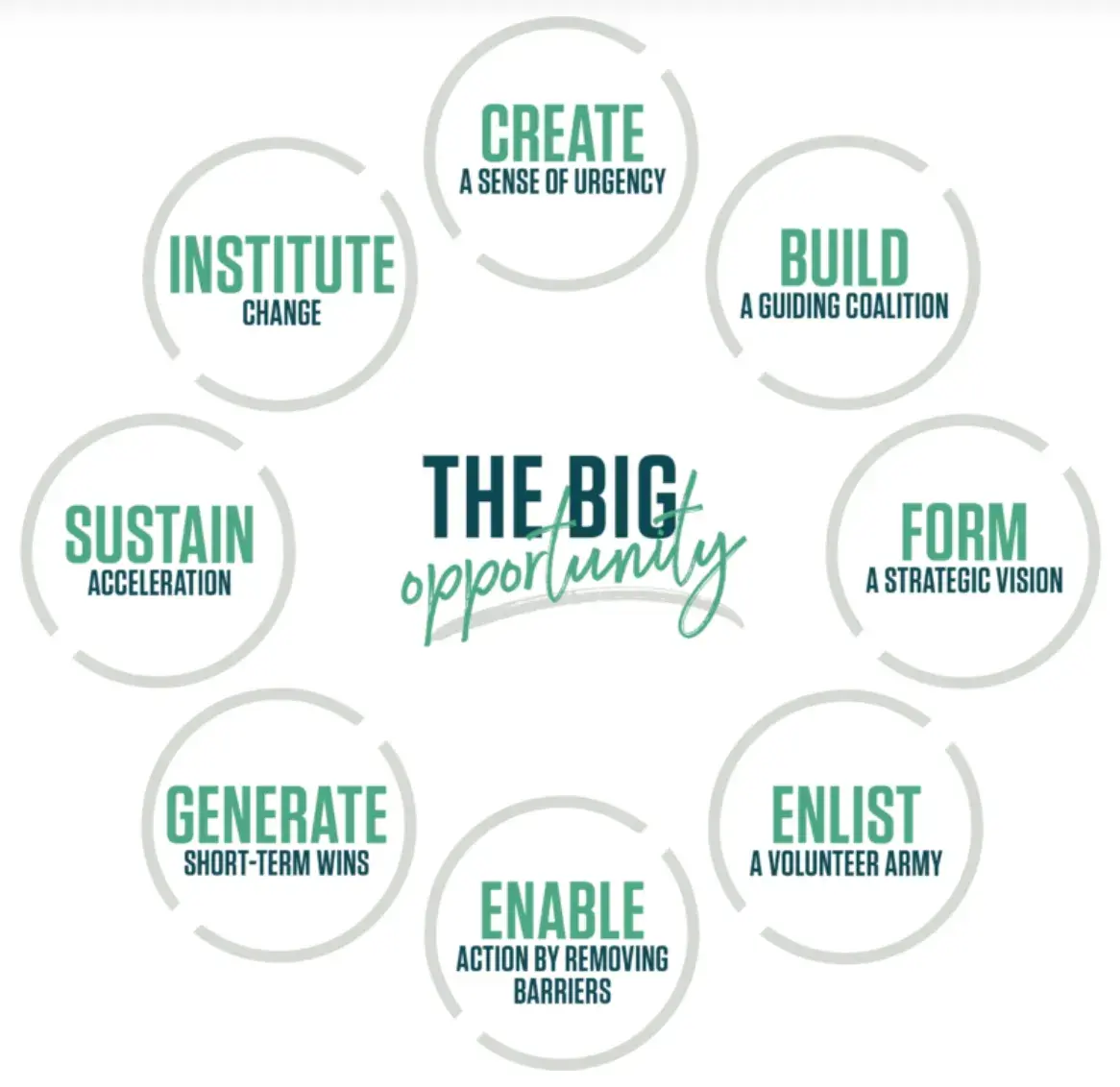
Kotter’s 8-step Process, conversely, operates at the organizational level. Its steps include creating a sense of urgency, building a guiding coalition, forming a strategic vision and initiatives, communicating the change vision, empowering broad-based action, generating short-term wins, sustaining acceleration, and instituting the change. For large-scale enterprise CRM deployments across multiple regions or business units, the coalition-building and urgency-creation steps are particularly pertinent. Without visible and sustained executive sponsorship, requests for CRM adoption can easily be perceived as optional, leading to lukewarm engagement.
An optimal approach often involves combining these models: using ADKAR to diagnose and address individual-level adoption gaps through targeted interventions, while leveraging Kotter’s framework to structure leadership communication and overall organizational strategy.
Assembling the CRM Change Management Team
Successful CRM adoption hinges on assigning accountability for outcomes to the right individuals. A dedicated CRM change management team should draw leaders from across departments, including marketing, sales, service, operations, IT, enablement, and analytics. The specific roles and responsibilities must be formalized well before the launch date. A common tool for this is the RACI matrix (Responsible, Accountable, Consulted, Informed), which clearly delineates who does what.

For instance, an Executive Sponsor is Accountable for the overall change vision, Consulted on scope decisions, and Informed of all milestones. The CRM Program Lead is Accountable for plan execution and coordinates workstreams. Sales Leaders drive rep adoption and reinforce pipeline hygiene. Revenue Operations (RevOps) or CRM Administrators configure the system, govern data standards, and monitor dashboards. Enablement Leads design and deliver role-based training. IT and Security handle technical configurations, integrations, and compliance. Marketing Leaders ensure lead-to-revenue mapping and campaign workflow adoption, while Service Leaders oversee ticket workflow adoption and customer service standards.
Adapting the RACI assignments to the specific organizational structure is crucial. The critical takeaway is that every role and responsibility within the change management plan must have a clear, accountable owner. Furthermore, governance cadences, such as weekly adoption stand-ups for the first 90 days, monthly steering committee reviews through the first year, and quarterly data governance audits, should be established before go-live and maintained rigorously thereafter to sustain adoption.
Driving Adoption Through Strategic Communication and Training
Effective communication is the cornerstone of successful CRM adoption. It must clearly articulate what is changing, what remains the same, and crucially, why the change matters, tailored for diverse audiences and delivered through multiple channels at various stages of the rollout. A single launch email, no matter how well-crafted, is insufficient.
A powerful starting point is an audience message map. Revenue operations leaders, sales representatives, service agents, and marketing managers each have distinct priorities and concerns. A sales rep will primarily care about how the CRM simplifies their daily tasks and enhances their ability to close deals. A service lead will focus on CSAT visibility and SLA tracking. A RevOps leader will prioritize pipeline hygiene and forecast accuracy. Crafting specific messages for each audience, rather than a generic one, significantly increases resonance and reduces resistance.
The "What’s Changing / What’s Not Changing" tracker is an exceptionally high-value, low-effort communication tool. A simple two-column table, shared early and updated regularly, helps to alleviate anxiety, directs attention to actual workflow modifications, and preempts the rumor mill that often flourishes when employees are uncertain about what to expect. Communication cadence should adopt a layered approach: a kick-off announcement from an executive sponsor, followed by more granular, team-level briefings from direct managers, and ongoing reinforcement via internal communication channels like Slack or email from the CRM program lead.
Regarding training, role-based modules are paramount. Generic, one-size-fits-all training wastes valuable time and signals a lack of understanding of actual user workflows, thereby fostering resistance. A sales rep does not need an in-depth understanding of ticketing systems, just as a service agent doesn’t require extensive training on deal pipeline configuration. Training that directly maps to daily tasks builds confidence and accelerates adoption. The most effective training architectures often combine four layers: self-paced online modules, live instructor-led sessions (virtual or in-person), hands-on workshops, and ongoing support channels like office hours or dedicated internal champions. Platforms like HubSpot Academy offer free certification courses tailored to specific CRM hubs (Sales, Service, Marketing), which can be integrated into structured enablement plans, especially for onboarding new hires. A critical "pro tip" is to build a training completion dashboard before go-live, giving managers visibility into their team’s progress. Completion rates tend to drop sharply when not actively monitored, whereas visible progress encourages follow-up from managers.

Finally, robust feedback loops must be integral to the communication plan, not an afterthought. Pulse surveys at 30, 60, and 90 days post-launch provide early warnings of adoption issues before they become deeply entrenched habits. Anonymous feedback forms can capture concerns users might be hesitant to voice in group settings. Both mechanisms enable proactive intervention, which is far more effective than attempting to diagnose low adoption rates retrospectively.
Common Pitfalls and Proactive Mitigation Strategies
Most CRM rollout failures are predictable, stemming from recurring patterns that derail otherwise well-intentioned implementations. Understanding these common mistakes allows for proactive prevention or timely remediation.
-
Unclear Ownership: When no single individual or team is explicitly accountable for adoption measurement, low adoption rates go unaddressed. This often manifests as diffused responsibility, with IT assuming sales owns training, sales believing IT handles configuration, and RevOps caught in the middle.
- Prevention: Assign a named CRM program lead with clearly defined scope and authority before the project commences.
- Remediation: If already mid-rollout, conduct a rapid RACI mapping workshop to clarify ownership immediately.
-
Weak or Absent Executive Sponsorship: An executive sponsor who announces the CRM at launch and then disengages inadvertently signals that the initiative is optional. Prosci’s research highlights that visible, sustained leadership advocacy is a primary driver of successful change.
- Prevention: Integrate regular CRM updates into existing leadership forums (e.g., QBRs, all-hands meetings, leadership reviews).
- Remediation: Re-engage executive sponsors by demonstrating early wins and reiterating the strategic importance of the CRM.
-
Generic Training: One-size-fits-all training alienates users, wastes time, and suggests a lack of understanding of diverse user workflows.
- Prevention: Design role-based training tracks before go-live.
- Remediation: Survey frontline users to identify specific knowledge gaps and conduct targeted micro-sessions to address them.
-
Over-customization: Every unnecessary field, redundant workflow, or custom object that doesn’t align with a genuine business process creates maintenance burdens and user friction. Instances with hundreds of custom properties can become unusable within 18 months due to lack of governance.
- Prevention: Establish a rigorous field request process requiring a documented business case before any new property is added.
- Remediation: Conduct a property audit on existing instances and archive unused elements.
-
Poor Data Governance: Bad data leads to unreliable reports, which erodes trust in the system and subsequently lowers adoption. Validity’s research indicates that inaccurate CRM data is widespread, meaning weak governance rapidly exacerbates the problem.
- Prevention: Define required fields, data entry standards, and a duplicate management protocol before go-live.
- Remediation: Implement regular data hygiene practices, including deduplication and data enrichment.
-
Ignoring Frontline Feedback: Rollouts that treat feedback as a mere formality, collecting it without visible action, destroy user trust faster than any technical issue.
- Prevention: Establish a documented feedback review cycle and transparently communicate actions taken based on input.
- Remediation: Implement a "you said, we did" communication strategy to rebuild credibility if past feedback was not visibly addressed.
Measuring and Sustaining CRM Adoption Post Go-Live
Sustaining CRM adoption requires ongoing measurement and governance, not just a one-time launch effort. Organizations that continuously track key metrics at defined intervals are those that achieve lasting success. A 30-60-90 day adoption stabilization period is crucial, with concrete benchmarks at each gate.
Key adoption metrics to track include:
- Login Frequency: Percentage of assigned users logging in weekly (e.g., >60% at Day 30, >90% at Day 90).
- Key Activity Completion: Percentage of deals with next steps logged, notes created, or tasks completed (e.g., >50% at Day 30, >90% compliance with same-day logging at Day 90).
- Data Hygiene Score: Required fields completion rate on new records, and frequency of duplicate flagging (e.g., >70% at Day 30, >95% completeness with zero-duplicate audits passed at Day 90).
- Pipeline Hygiene: All open deals having current close dates and stages, and stale deals being flagged and reviewed (e.g., forecast variance <15% at Day 90).
- Time-to-First-Value: How quickly each team completes their first full workflow cycle within the CRM.
- Case Response Adherence (for Service Teams): Tickets created in CRM for incoming cases and SLA response tracked (e.g., >80% at Day 30, >95% SLA adherence at Day 90).
Post-launch governance cadences, as outlined in the team structure section, become the ongoing operating model. This includes regular reviews of adoption metrics, feedback management loops, and a commitment to continuous improvement. For complex rollouts, a phased project structure reduces risk by targeting high-priority teams or workflows with high executive visibility first, demonstrating measurable adoption before expanding. Each phase should formally incorporate learnings from the preceding one.
The Evolving Role of AI in CRM Change Management
Artificial intelligence is not a replacement for human judgment but serves as a powerful multiplier for activities that would otherwise be performed manually, accelerating CRM change management efforts. AI assistants can streamline various aspects of the rollout:
- Content Generation: AI can rapidly draft communication messages (e.g., launch announcements, training reminders), knowledge base articles, and FAQ documents, saving considerable time for change leaders.
- Personalized Training: AI can analyze user behavior and proficiency to suggest personalized training modules or micro-learnings, making enablement more relevant and effective.
- Data Quality Automation: AI-powered tools can proactively identify and flag data inconsistencies, duplicates, or missing information, significantly improving data hygiene without manual effort.
Autonomous AI agents, such as HubSpot’s Breeze Agents, can extend this into ongoing operations. Prospecting Agents can research leads, Customer Agents can resolve support inquiries across channels, and Content Agents can draft communications and knowledge base updates. When triggered by CRM events like deal stage changes or ticket creation, these agents become active participants in the post-launch adoption ecosystem.
However, it is crucial to recognize what AI does not replace: executive sponsorship, the building of peer relationships, fostering organizational trust, and the nuanced judgment calls that determine whether a rollout feels supported or imposed. AI compresses the work, but people ultimately make the change happen.
Modern CRM Platforms as Catalysts for Change
Modern CRM platforms are increasingly designed to reduce rollout friction across every stage of change management. For example, a "Smart CRM" acts as a central source of truth, unifying contact, company, deal, and ticket data into a single record accessible to all teams. Platforms consistently rated highly for implementability directly address complexity, one of the biggest barriers to adoption.
Integrated hubs (e.g., Sales Hub, Service Hub, Marketing Hub) support adoption by providing specific tools that genuinely make users’ jobs easier. Sales automation, AI-guided selling, and playbooks motivate reps from within, rather than relying solely on top-down mandates. Help desk management, SLA tracking, and omnichannel service workflows empower service teams. Marketing automation and segmentation tools can even manage the CRM adoption communication campaign itself, running launch announcements and training reminders directly from the platform being rolled out. Comprehensive online academies offer free certification courses, providing structured, self-paced learning that complements live training and reduces the burden on internal enablement resources.
Ultimately, organizations that combine a phased communication plan, role-based training, and weekly adoption reviews consistently achieve the steepest gains in the 30- to 90-day post-launch window. The common threads among high-performing rollouts are clear: adoption metrics defined before go-live, a named program lead with unwavering executive backing, and a governance cadence that proactively identifies and addresses problems before they become ingrained habits. These elements are not just best practices; they are imperatives for transforming CRM investments into tangible business value.