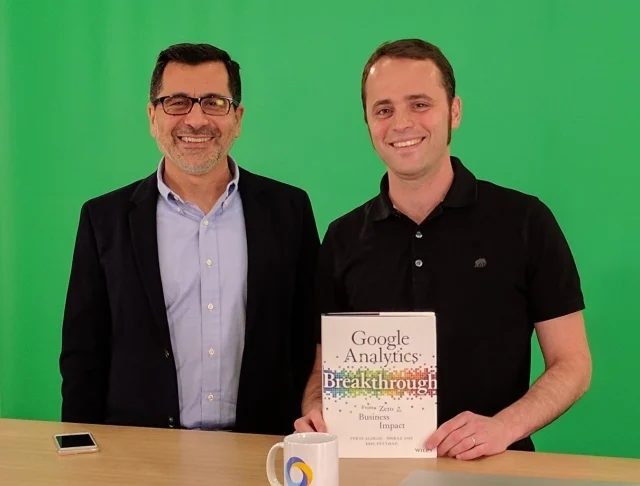
The digital marketing landscape has undergone a radical transformation over the last decade, shifting from a linear model of consumer engagement to a complex, multi-faceted ecosystem. In a comprehensive dialogue between Daniel Waisberg, a prominent figure in the analytics community, and Feras Alhlou, Co-Founder and Principal Consultant at E-Nor, the two industry veterans explored the evolving role of data as a core business process rather than a mere technical requirement. This discussion, held at the Google Analytics studio, underscored the necessity for organizations to move beyond basic data collection and toward a sophisticated framework of optimization, testing, and personalization. As the co-author of "Google Analytics Breakthrough," Alhlou has been at the forefront of defining how enterprises leverage data to drive growth, and his insights provide a blueprint for companies navigating the deluge of information available in the modern era.
The Evolution of Digital Analytics as a Business Process
Central to the discussion was the philosophy that analytics should not be viewed as a siloed IT function or a secondary marketing task. Instead, Alhlou posited that analytics is a fundamental business process that requires a structured, iterative approach. This perspective marks a departure from the early days of web tracking, where "hits" and "pageviews" were the primary metrics of success. Today, the focus has shifted toward understanding the "why" behind user behavior and aligning those insights with overarching business objectives.
The partnership between Waisberg and Alhlou, which spans nearly a decade, reflects the broader industry trend of collaboration between tool experts and strategic consultants. Their dialogue highlighted that while the tools—such as Google Analytics—have become more powerful, the human element of strategy and interpretation remains the most critical factor in achieving a return on investment (ROI) from data initiatives.
The E-Nor Optimization Framework: A Five-Step Methodology
To manage the complexities of modern data, Alhlou introduced the E-Nor Optimization Framework, a systematic approach designed to guide businesses from raw data collection to impactful personalization. The framework is built upon five distinct pillars:
-
The Comprehensive Audit (Business and Technical):
The process begins with a dual-layered audit. The technical side focuses on the integrity of the data—ensuring that tracking codes are correctly implemented, tag management systems are optimized, and data leakage is minimized. However, Alhlou emphasized that the technical audit is incomplete without a business audit. This involves engaging stakeholders across the organization to identify "what matters most." By understanding business goals first, analysts can ensure that the technical implementation serves a strategic purpose. -
Data Measurement and Implementation:
Once the objectives are defined, the focus shifts to placing the data. This stage involves the actual configuration of analytics tools to capture the specific KPIs identified during the audit. This ensures that the data being collected is not just voluminous, but relevant and accurate. -
The Reporting Layer:
Reporting is the bridge between data collection and data analysis. Alhlou noted that the goal of this layer is to present data in a way that is accessible to decision-makers. Effective reporting answers the question, "What happened?" and provides the necessary visualization to spot trends and anomalies quickly. -
Analysis and Actionable Insights:
This is the stage where value is extracted. Analysis goes deeper than reporting by answering "Why did this happen?" and "What should we do next?" Finding actionable insights requires a blend of statistical rigor and business acumen, allowing companies to pivot their strategies based on observed user behavior. -
Testing and Personalization:
The final stage of the framework represents the pinnacle of digital maturity. Once a company has reliable data and actionable insights, it can move into A/B testing, multivariate testing, and real-time personalization. This is the point at which data-driven decisions directly impact the user experience and, consequently, the bottom line.
Navigating the Complexity of Multi-Channel Data Environments
The conversation also addressed the significant increase in data volume and variety. In the early years of digital marketing, the environment was relatively simple: marketers focused on a single device (the desktop) and a handful of channels. Today, the reality is far more fragmented. Consumers interact with brands across mobile devices, social media platforms, web interfaces, and offline touchpoints.
Alhlou pointed out that the modern marketer must deal with "data everywhere." This includes not only front-end web and mobile analytics but also back-end CRM data, point-of-sale information, and third-party social data. To make sense of this, organizations must understand the context around the data. This involves identifying the user journey across multiple touchpoints and understanding how different channels influence one another.
The challenge for modern enterprises is no longer the lack of data, but the inability to synthesize it into a cohesive narrative. Without a structured framework like the one proposed by E-Nor, companies risk becoming "data rich but insight poor," overwhelmed by the sheer volume of information without a clear path toward optimization.
The Strategic Importance of a Data Roadmap
A key recommendation from the discussion was the implementation of a data roadmap. Alhlou advised that companies should not attempt to boil the ocean; instead, they should start with what they own and control. The primary focus should be on web and mobile analytics data, as these are the foundational elements of a digital presence.
As the roadmap progresses, companies can begin to augment their reports with basic social data. This adds a layer of qualitative context to the quantitative figures found in analytics dashboards. By understanding the sentiment and engagement levels on social platforms, marketers can gain a more holistic view of their brand health.
Furthermore, Alhlou highlighted the role of the Google Surveys product as a revolutionary tool for gathering qualitative insights. Historically, market research was an expensive and time-consuming endeavor, often reserved for large corporations with massive budgets. The democratization of survey tools allows businesses of all sizes to capture the "voice of the customer" directly on their own properties. This capability enables market research to be conducted with high levels of targeting and speed, providing immediate feedback on product launches, marketing campaigns, or user experience changes.
Industry Context and Supporting Data
The shift toward the "analytics-as-a-business-process" model is supported by broader industry trends. According to market research reports, the global digital analytics market was valued at approximately $3.5 billion in 2017 and has continued to grow at a compound annual growth rate (CAGR) of nearly 18%. This growth is driven by the increasing demand for data-driven decision-making and the proliferation of cloud-based analytics solutions.
Data from recent industry surveys indicates that organizations that prioritize data-driven marketing are six times more likely to be profitable year-over-year compared to those that do not. Additionally, companies that utilize advanced personalization techniques—the final stage of Alhlou’s framework—see an average increase in sales of 10% to 15%. These figures underscore the financial imperative of moving beyond basic reporting and into the more advanced stages of the optimization maturity curve.
Official Responses and Broader Implications
While the interview focused on the tactical and strategic elements of analytics, the broader implications for the industry are significant. Industry experts suggest that the integration of artificial intelligence (AI) and machine learning (ML) will further accelerate the "Analysis" and "Testing" phases of the E-Nor framework. Automated insights and predictive modeling are becoming standard features in platforms like Google Analytics, allowing analysts to focus more on strategy and less on manual data processing.
The emphasis on stakeholder engagement during the audit phase also reflects a growing trend in corporate governance. Data is no longer the sole province of the "web guy"; it is a vital asset for the CEO, CFO, and CMO. Ensuring that all parties are aligned on what metrics define success is essential for fostering a data-driven culture.
Conclusion: From Data to Impact
The dialogue between Daniel Waisberg and Feras Alhlou serves as a reminder that the path to digital excellence is paved with structured processes and strategic alignment. By treating analytics as a business process rather than a technical hurdle, organizations can transform their raw data into a competitive advantage.
The E-Nor Optimization Framework provides a clear trajectory for this transformation: starting with a rigorous audit, moving through measurement and reporting, and culminating in the high-impact realms of testing and personalization. As the digital landscape continues to evolve and become more complex, the principles discussed in the Google Analytics studio remain more relevant than ever. Success in the modern era requires more than just the right tools; it requires a roadmap, a commitment to understanding the customer, and the agility to act on the insights that data provides.