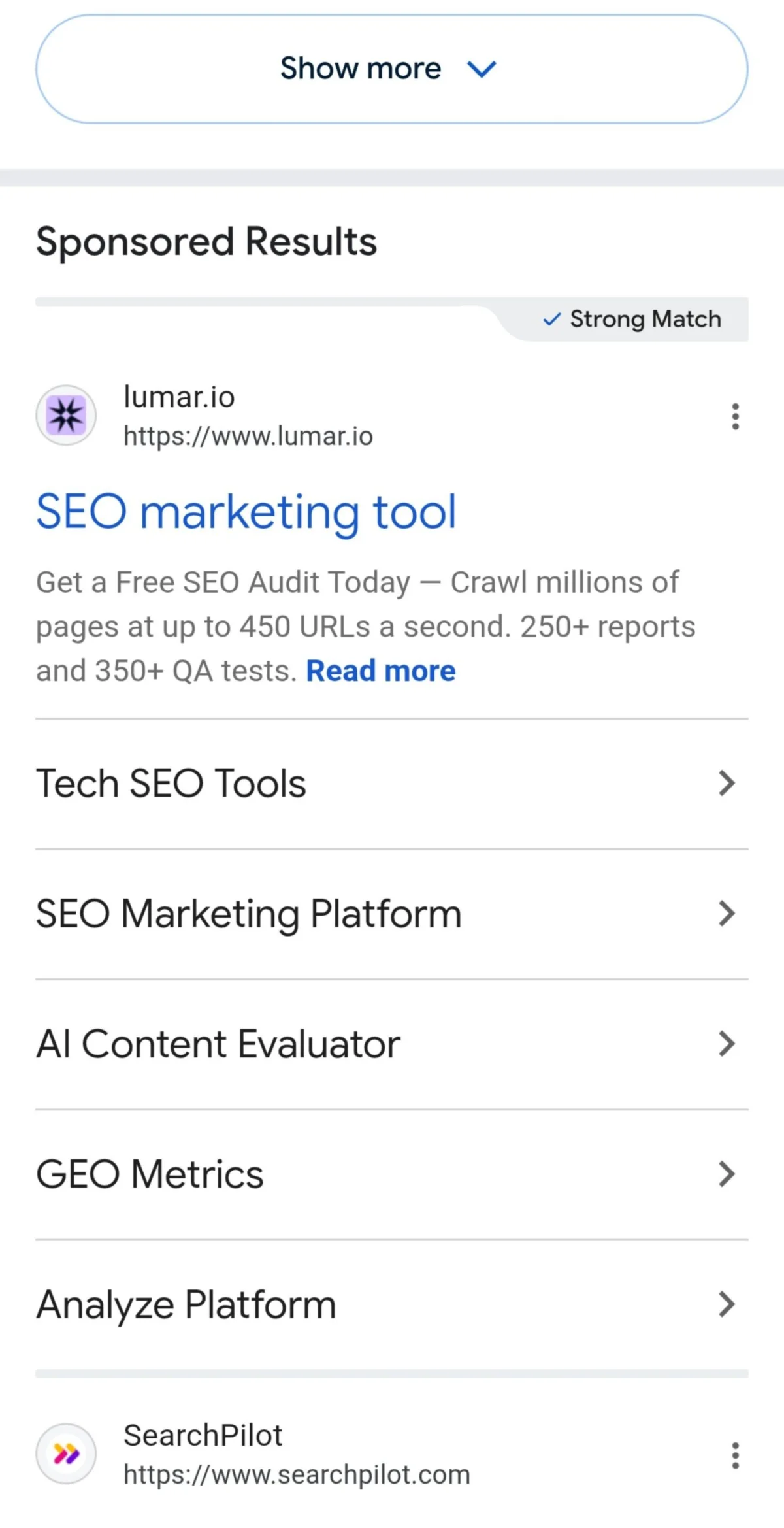
Google has officially confirmed the initiation of a new experiment involving the display of "Strongest match" or "Strong match" labels on select search advertisements. This development was announced by Ginny Marvin, Google’s Ads Liaison, on August 7, 2026, through posts on LinkedIn and X, providing direct insight into the company’s latest efforts to refine its advertising ecosystem. The primary objective of this test is to visually signal to users when an advertisement is deemed exceptionally relevant to their search query, with the anticipated outcome of improving click-through rates (CTR) for these designated ads. Early sightings of these new labels have already been reported by users within the digital marketing community, including Brodie, who spotted the "Strongest Match" iteration, further confirming the live nature of this global experiment.
A History of Google Ad Transparency and Evolution
The introduction of "Strongest match" marks another chapter in Google’s long-standing evolution of advertising labels and transparency efforts. From its inception, Google has navigated the delicate balance between monetizing its search engine through advertisements and maintaining a user-friendly, trustworthy search experience. In the early days, ads were often less distinct, sometimes blending seamlessly with organic results, leading to user confusion and, at times, frustration.
Over the years, Google has iteratively refined its ad labeling. Initially, ads were often identified by a "Sponsored Links" tag or a shaded background. This evolved into the more direct "Ad" label, which itself has undergone several visual transformations. Early "Ad" labels were often rendered in a yellow box, then transitioned to a green text with a green outline, and more recently, a more subdued black "Ad" text, sometimes with a small icon, designed to be less intrusive while still being identifiable. These changes were not arbitrary; they reflect Google’s continuous data-driven efforts to optimize both user engagement with ads and overall search satisfaction. Each iteration has aimed to strike a balance: making ads visible enough to generate revenue, yet clear enough for users to distinguish them from organic results, preventing perceived deception.
The importance of relevance in Google’s advertising model cannot be overstated. The company’s Quality Score system, which assesses ad relevance, landing page experience, and expected CTR, directly influences an ad’s position and cost. Highly relevant ads are rewarded with better placement and lower costs per click, creating a powerful incentive for advertisers to create useful and targeted campaigns. The "Strongest match" label appears to be a direct extension of this philosophy, providing an explicit, front-facing signal of this algorithmic assessment of relevance.
This isn’t the only recent experiment Google has conducted to enhance sponsored results. The company has also been observed testing other additions, such as "Read more" and "Learn more" links appended to ads. These concurrent tests suggest a broader strategy by Google to explore multiple avenues for making sponsored listings more informative, more engaging, and ultimately, more clickable. The goal appears to be to move beyond simple ad identification to a more nuanced communication of an ad’s potential value to the user.

Mechanism and Visuals of the New Labels
Based on the initial screenshots shared, the "Strongest match" and "Strong match" labels appear prominently within or adjacent to the ad copy. One visual depicted the label positioned above the ad’s headline, potentially in a contrasting color or font to draw attention. Another showed it integrated more subtly but still distinctly. The precise visual styling, including color, font, and placement, may vary as part of the experiment to determine the most effective presentation.
The psychological impact of such a label is significant. While the standard "Ad" label serves primarily to identify commercial content, "Strongest match" goes a step further by offering a qualitative assessment. It suggests a curated recommendation from Google’s algorithms, implying a higher degree of confidence in the ad’s ability to fulfill the user’s intent. For a user, this could mean a reduction in cognitive load, as they are pre-informed that this particular ad has been algorithmically vetted for superior relevance. This qualitative distinction sets it apart from previous ad labels, which were purely descriptive. It moves from "this is an advertisement" to "this is an advertisement that Google believes is particularly good for your query."
The Rationale Behind the Experiment: Boosting Relevance and Engagement
Google’s motivation for testing these new labels stems from several strategic imperatives. Foremost among them is the continuous drive to improve the performance of its advertising products for both advertisers and its own bottom line. Higher relevance in advertisements directly translates to a better user experience. When users encounter ads that genuinely address their needs, they are more likely to engage with them, leading to higher CTRs.
For advertisers, an increase in CTR is a critical metric. A higher CTR often leads to a better Quality Score, which can result in lower costs per click (CPC) and improved ad positions, ultimately driving a higher return on investment (ROI). If the "Strongest match" label effectively communicates superior relevance, it could lead to a significant uplift in engagement for those ads that qualify, making Google Ads an even more attractive platform for businesses.
For Google, increased ad engagement directly translates into increased revenue. As the world’s largest digital advertising platform, even marginal improvements in CTR across its vast network can result in substantial financial gains. Furthermore, by making ads more useful and less intrusive, Google reinforces its position as a valuable resource, maintaining user trust and platform stickiness. This initiative can also be seen as an effort to combat "ad blindness," a phenomenon where users unconsciously ignore advertisements due to their familiarity with ad formats. A novel and assertive label like "Strongest match" could potentially break through this blindness, re-engaging users with commercial content they might otherwise overlook.

Broader Context: Google’s Dominance in Digital Advertising
Google’s experiments with ad labels are situated within the broader context of its formidable dominance in the global digital advertising market. With a significant share of worldwide digital ad revenue, Google’s advertising business remains a core pillar of its financial success. In 2025, Google’s ad revenue continued its upward trajectory, contributing the vast majority of Alphabet’s (Google’s parent company) total earnings. This financial imperative drives Google’s continuous innovation in ad products and features.
The scale of the Google Ads platform is immense, processing billions of search queries daily and serving ads across a vast network. The company invests heavily in artificial intelligence and machine learning to constantly refine its ad targeting, ranking algorithms, and ad display formats. These technologies are crucial for discerning user intent with increasing accuracy and matching it with the most relevant advertisements from its millions of advertisers. The "Strongest match" label is likely an output of these sophisticated AI-driven relevance models, providing a user-facing indication of their effectiveness.
Potential Implications for Advertisers
The "Strongest match" label carries several significant implications for advertisers operating on the Google Ads platform:
- Opportunity for High-Quality Campaigns: This initiative is a clear signal that Google continues to prioritize relevance. Advertisers who consistently deliver highly relevant ad copy, tightly knit keyword targeting, and optimized landing page experiences are most likely to benefit. Their ads will be more prone to receiving the "Strongest match" designation, potentially giving them a competitive edge in CTR and conversion rates.
- Increased Competition for ‘Strong Match’ Status: While the designation is algorithmically determined, it will undoubtedly intensify the focus on ad quality. Advertisers will likely redouble their efforts to optimize campaigns, striving for the coveted "Strongest match" status. This could lead to a virtuous cycle where overall ad quality on the platform improves as advertisers compete on relevance.
- Impact on Ad Strategy: The test may prompt a strategic re-evaluation for many advertisers. Campaigns that might have previously focused on broad keyword matches could shift towards more granular targeting and highly specific ad copy to increase their chances of being deemed a "strong match." Investment in A/B testing for ad copy, landing page optimization, and keyword refinement will become even more critical.
- Metrics and Reporting: It is plausible that Google will eventually provide specific reporting metrics related to "Strongest match" performance if the feature is widely adopted. This would allow advertisers to analyze the impact of the label on their campaigns, further refining their strategies.
Potential Implications for Users
For the end-user, the "Strongest match" label could represent a double-edged sword:

- Enhanced User Experience: If the algorithms accurately identify genuinely relevant ads, users could experience a more efficient search journey, quickly finding commercial products or services that align perfectly with their intent. This could save time and reduce frustration associated with irrelevant ads.
- Improved Trust (or Misinterpretation?): The label implicitly carries a degree of Google’s endorsement of relevance. This could build greater trust in the ads that carry the label, potentially reducing the skepticism some users hold towards sponsored content. However, there is a subtle risk that users might misinterpret "Strongest match" as a broader endorsement of the product or service itself, rather than just its relevance to the search query. Clear communication from Google about what the label signifies will be crucial to prevent such misinterpretation.
- Navigating the SERP: The introduction of another layer of information on the Search Engine Results Page (SERP) adds complexity. While it aims to simplify decision-making by highlighting key ads, users will need to understand what the label means in the context of their search. For some, it might make ad identification even clearer, while for others, it might introduce a new element to process.
Industry Reactions and Expert Analysis
The digital marketing industry is closely watching Google’s latest experiment. Experts generally view this as a logical progression in Google’s ongoing efforts to refine its ad delivery and user experience. Analysts suggest that such a label, if successful, could significantly impact ad performance benchmarks across various industries. Discussions within the community are likely to revolve around the criteria Google uses to assign the "Strongest match" status, whether it will be tied to specific Quality Score thresholds, and how it might influence bidding strategies.
There’s also an anticipated debate regarding the ethical implications of Google, as a platform, implicitly "endorsing" an ad’s relevance. While it’s an algorithmic assessment, the phrasing "Strongest match" carries a powerful connotation. Comparisons might be drawn to how other platforms label highly-rated products or services, and whether Google’s role as a search engine operator requires a different standard of neutrality for its sponsored results. Many anticipate that Google will gather extensive data during this test to measure user perception, CTR uplifts, and advertiser satisfaction before any broader rollout or permanent integration.
The Future of Search Advertising and Transparency
This "Strongest match" experiment is indicative of a larger trend in search advertising: a continuous movement towards more intelligent, more integrated, yet still clearly identifiable advertisements. As AI and machine learning capabilities advance, the ability of search engines to understand user intent and match it with highly precise commercial offerings will only improve. This will likely lead to further innovations in ad formats that aim to be helpful rather than merely promotional.
The ongoing regulatory scrutiny surrounding ad disclosure and consumer protection will also continue to shape how Google and other platforms present advertisements. Transparency remains a paramount concern for regulators globally. Google’s tests, therefore, are not just about optimizing revenue but also about demonstrating a commitment to clear communication with users about the nature of the content they are consuming. This iterative process of testing, refining, and potentially rolling out new features is a hallmark of Google’s product development cycle. If the "Strongest match" label proves effective in enhancing user experience and ad performance, it could become a standard feature, further redefining how relevance is communicated in the ever-evolving landscape of search advertising.
In conclusion, Google’s "Strongest match" experiment represents a significant step in its journey to optimize the utility and perception of search advertisements. By providing a clear, algorithmically-backed signal of high relevance, Google aims to benefit both its advertisers through increased engagement and its users through a more efficient and satisfying search experience. The success of this test could well pave the way for a more sophisticated and transparent era of search advertising, further integrating commercial content as a valuable component of the overall search ecosystem.