

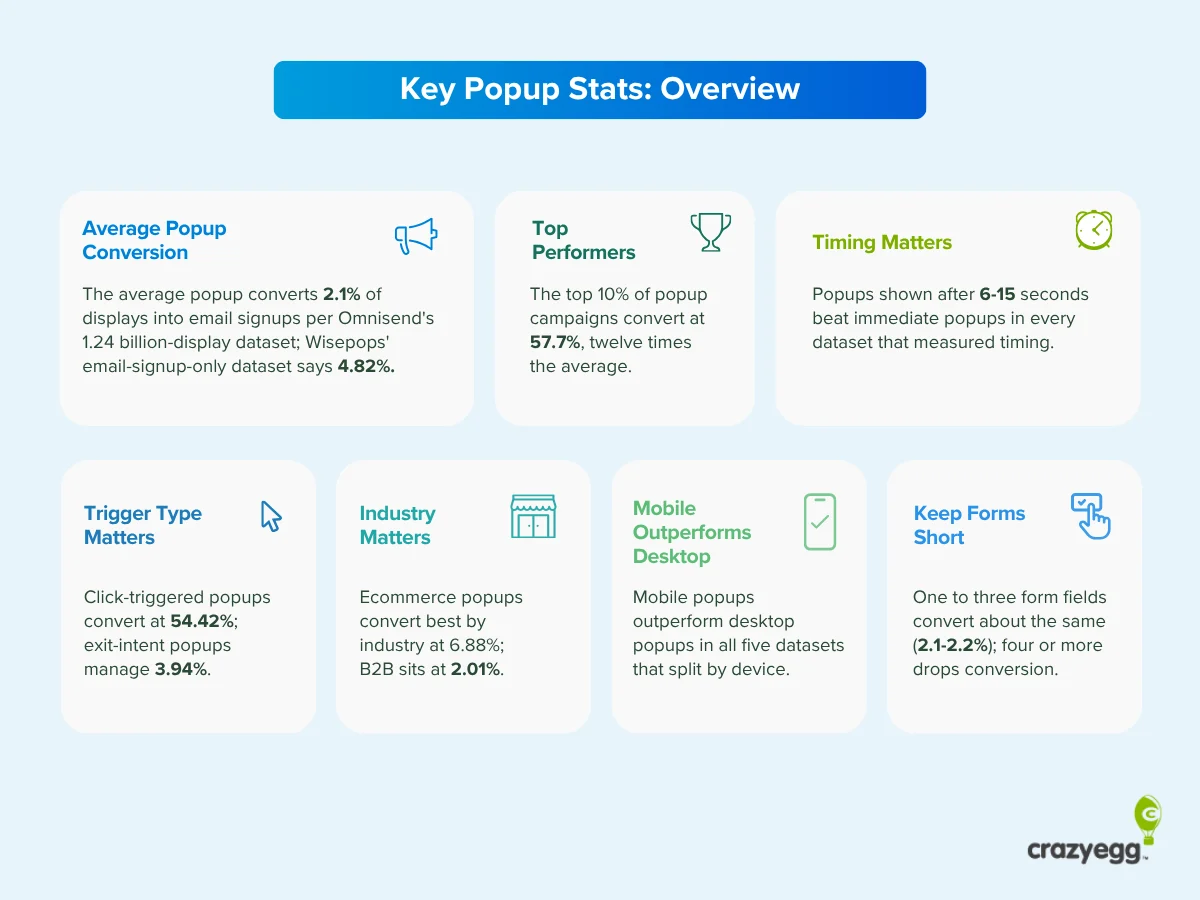
The landscape of digital marketing is currently undergoing a significant shift as brands move away from generic lead-generation tactics toward highly scrutinized, data-driven engagement strategies. At the center of this evolution is the website popup—a tool that has survived decades of user skepticism to remain one of the most effective methods for capturing first-party data. Recent industry data reveals that while the average email popup conversion rate fluctuates between 0.25% and 5%, the discrepancy between standard performance and high-tier optimization is widening. New benchmarks suggest that success in 2026 is no longer defined by the mere presence of an overlay, but by the precision of its timing, the relevance of its trigger, and its adherence to increasingly strict user experience (UX) standards.
The efficacy of popups is often debated, yet the numbers provide a compelling case for their continued use in a multi-channel marketing environment. According to longitudinal studies of conversion benchmarks, the "average" performance is a moving target that depends heavily on the denominator used for calculation. When measuring conversions against total site displays, rates often hover in the low single digits. However, when the metric is narrowed to visitors who actively engage with or view the popup for more than a few seconds, conversion rates frequently triple. This distinction is critical for marketers who must justify the potential "annoyance factor" of popups against the tangible growth of their subscriber lists.
The Evolution of the Digital Interstitial: A Brief Chronology
To understand the current state of popup statistics, one must look at the technological and regulatory timeline that shaped today’s environment. In the early 2010s, popups were largely static and intrusive, often appearing the moment a page loaded regardless of user intent. This led to a significant backlash, culminating in 2017 when Google introduced the "Intrusive Interstitial Penalty," which targeted mobile sites that blocked content with large, difficult-to-close overlays.
By 2021, research from the Nielsen Norman Group highlighted a growing "overlay overload," where users felt frustrated by competing popups. This forced a transition toward "smart" triggers. By 2024 and into 2025, the industry saw a surge in gamified popups—such as "spin-to-win" wheels—which attempted to mask the transactional nature of data collection with entertainment. As of 2026, the focus has shifted toward multi-step modals and "micro-conversions," where the initial interaction is low-friction, leading to a higher eventual opt-in rate.
Industry-Specific Performance and Behavioral Benchmarks
Data aggregated across various sectors indicates that not all industries benefit from popups equally. E-commerce continues to lead the field, with popup conversion rates averaging approximately 3.8%—more than three times the rate of B2B services, which typically see a 1.1% conversion. This disparity is largely attributed to the nature of the incentive; e-commerce brands can offer immediate financial gratifications, such as discounts or free shipping, whereas B2B popups often rely on "lead magnets" like whitepapers or webinars that require a higher cognitive investment from the user.
Within the e-commerce sector, the "cart abandonment" popup remains the highest-performing variant. These triggers fire when a user moves their cursor toward the browser’s close button or address bar while items remain in their shopping cart. Recent studies, including a 2026 Shopify cart-popup analysis, suggest the median recovered order value for these interventions sits at $98. However, analysts warn that these figures must be balanced against the cost of the incentives provided to secure the sale, as well as the "cannibalization" factor—where a user might have completed the purchase even without the discount.
The Impact of Timing, Triggers, and Device Type
Technical execution is perhaps the most significant predictor of popup success. Current data suggests a "sweet spot" for timing: popups delayed by 6 to 10 seconds consistently outperform those that fire immediately upon page load. Immediate popups are often dismissed reflexively as "digital noise," whereas delayed popups allow the user to establish a baseline of interest in the content before being presented with an offer.
Furthermore, click-triggered popups—where the user initiates the overlay by clicking a specific link or button—convert at a rate 13 times higher than exit-intent popups. This is because the click-trigger represents an active choice and a high level of intent, whereas exit-intent is a reactive "last-ditch" effort to retain a bouncing visitor.
Device-specific data also reveals a surprising trend: mobile popups are currently outperforming desktop popups across nearly every major dataset. Experts suggest this is due to the "full-screen" nature of mobile interactions; whereas a desktop popup is one of many elements on a large screen, a mobile popup (when designed correctly as a sticky bar or a focused modal) commands the user’s full attention. However, this comes with significant SEO risks. Google’s 2025 Search Central updates continue to emphasize that intrusive elements obstructing mobile content can lead to lower search rankings. Consequently, the industry is seeing a shift toward "engagement-triggered" sticky bars that occupy minimal screen real estate.
Design Variables: What Actually Moves the Needle?
The design of a popup is where marketing datasets often diverge, yet several consistencies have emerged in 2026. Multi-step popups—those that ask a simple "Yes/No" question before requesting an email address—consistently see higher completion rates than single-step forms. This psychological phenomenon, known as the "foot-in-the-door" technique, reduces the initial friction of the interaction.
Other design elements show more varied results:
- Images: While some studies suggest images increase conversion by providing visual context, others indicate they can slow down load times and distract from the call-to-action (CTA).
- Countdown Timers: These are highly effective for "flash sales" or limited-time offers, creating a sense of urgency that can boost conversions by up to 40% in specific retail contexts.
- Field Count: There is a direct inverse correlation between the number of input fields and the conversion rate. Every additional field beyond the email address typically results in a 10% to 15% drop in signups.
The Hidden Costs: User Experience and Brand Perception
While conversion rates provide a quantitative measure of success, they do not account for the qualitative impact on a brand’s reputation. Research from the Baymard Institute highlights a phenomenon where users "reflexively" close popups without reading them. In usability testing of 80 major e-commerce sites, many participants labeled intrusive popups as "spam," suggesting that the short-term gain of an email address could lead to long-term brand erosion.
The Nielsen Norman Group’s research underscores that the frustration caused by popups is cumulative. If a user encounters a "cookie consent" banner, followed by a "location permission" request, and finally a "newsletter signup" popup, the likelihood of a site bounce increases exponentially. For a popup to be effective in 2026, it must be perceived as a value-add rather than an interruption.
Strategic Analysis: Calculating the Real Return on Investment (ROI)
For a business to truly understand if its popups are "working," it must look past the opt-in rate and analyze the downstream value of the acquired lead. Using benchmarks from 2025 and 2026, if a popup has a 4.8% conversion rate and the subsequent email campaign has a 0.16% "placed-order" rate (as per Klaviyo’s recent benchmarks), a brand would need approximately 12,970 popup views to generate a single sale.
This "math of marketing" suggests that popups are most effective for high-traffic websites where a small percentage of a large number still results in significant volume. For smaller brands, the focus must be on maximizing the quality of the lead through hyper-segmentation—targeting popups based on the specific page the user is viewing or their previous purchase history.
Optimization Framework: A Data-Driven Approach
To optimize popup performance without alienating the audience, industry leaders recommend a three-step cyclical process:
- Baseline Measurement: Marketers must track conversion rates (submissions divided by displays) and segment this data by device, page category, and traffic source. A 2% conversion rate on a high-intent product page may be "poor," while the same rate on a general blog post might be "excellent."
- Behavioral Diagnosis: Utilizing heatmaps and session recordings is essential. Frustration signals, such as "rage clicks" on the close button or "dead clicks" on non-interactive elements, indicate that the popup is obstructing the user’s path. If a user hovers over the CTA but does not click, the incentive likely lacks sufficient appeal.
- Hypothesis-Based A/B Testing: Rather than changing multiple elements at once, brands should test one variable—such as the headline, the trigger delay, or the presence of a countdown timer—to achieve statistical significance.
Implications for the Future of Digital Marketing
As we look toward the remainder of 2026, the role of the website popup is being redefined by privacy regulations and AI-driven personalization. With the phasing out of third-party cookies, the "first-party data" collected via popups has become more valuable than ever. However, this value is only realized if the data is used to create a better, more personalized experience for the user later in the customer journey.
The consensus among digital strategists is clear: popups are a powerful tool, but they are a "high-risk, high-reward" tactic. When executed with a deep understanding of user psychology and technical precision, they can be the primary driver of a brand’s growth. When used indiscriminately, they become a barrier to entry that drives users away and damages search engine visibility. The successful marketer of 2026 is not the one with the most popups, but the one with the most relevant ones.







