ChatGPT has officially begun testing and rolling out a significantly enhanced advertising format, featuring multiple product feed ads within a single, prominent carousel unit positioned at the bottom of its conversational results. This strategic shift represents a notable evolution from earlier, simpler ad placements, indicating a robust move by OpenAI to diversify its revenue streams and establish ChatGPT as a formidable platform in the digital advertising landscape. The new format was initially identified and brought to public attention by digital marketing expert Brodie Clark via a post on X (formerly Twitter), highlighting its immediate deployment following a recent announcement.
The Unveiling: Details of the New Ad Format
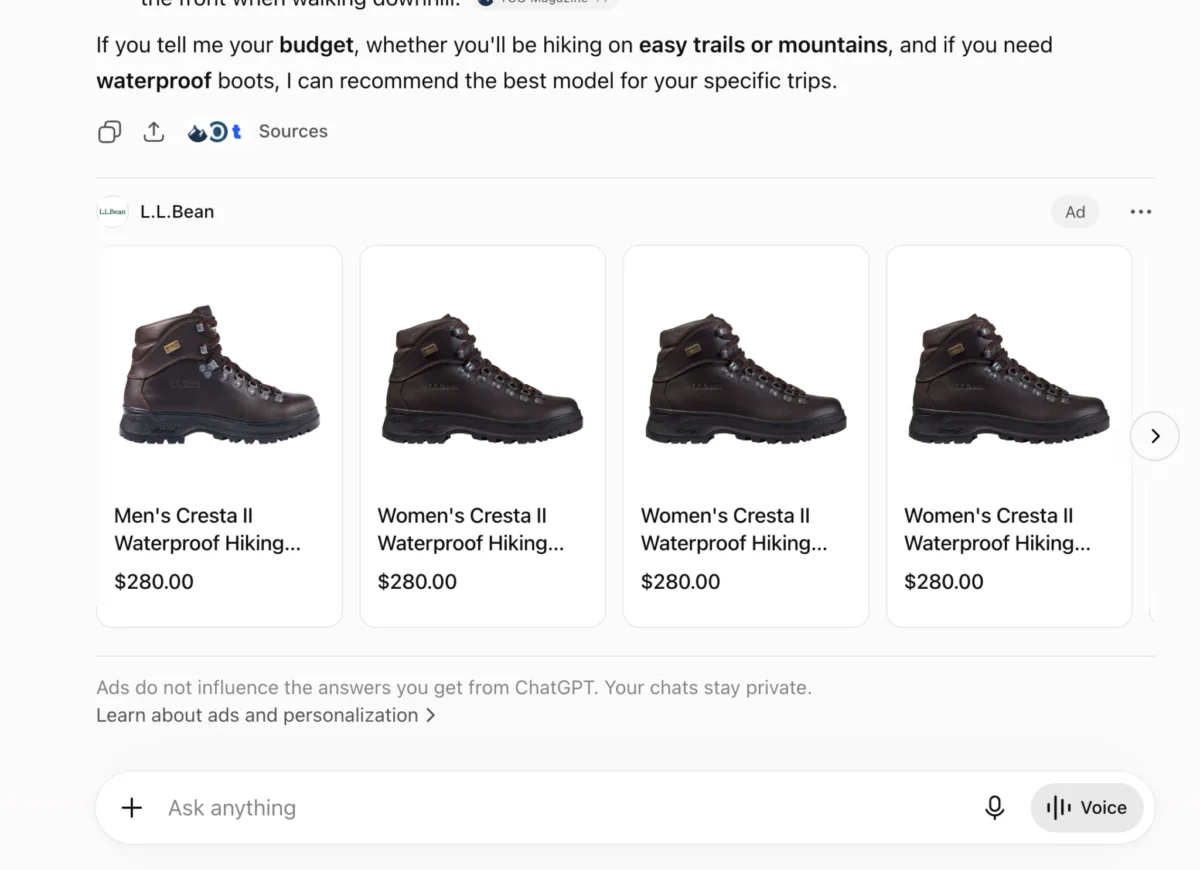
The newly implemented ad unit is a stark departure from the more understated advertising experiments previously observed within ChatGPT. Instead of a single textual link or a solitary product display, users are now presented with a visually rich carousel unit that typically showcases five individual product ads from a single brand. This presentation closely mirrors the familiar layout of product listing ads found in platforms like Google Shopping, where multiple product images, titles, and prices are displayed in an easily scrollable format. However, a key distinction here is the exclusivity to a single advertiser within the carousel, rather than a competitive array from various brands.
Brodie Clark, an astute observer of search and AI trends, detailed his findings on X, stating, “ChatGPT is now showing multiple product feed ads within a prominent unit at the bottom of its results. Five individual ads showing within the unit appear to be the default, where products are shown within a carousel for a single brand, similar to how they are presented in Google Shopping, but for just one brand.” Clark’s observation underscored the rapid deployment, noting that the feature appeared to be live merely a day after its announcement. He further provided tangible examples, showcasing the ad units for prominent retailers and service providers such as L.L.Bean, VistaPrint, and Walmart, suggesting a broad initial test group of high-profile advertisers. The visual evidence, including screenshots shared by Clark, illustrates the compelling nature of these new units, occupying a substantial portion of the screen real estate at the conclusion of a chat interaction. This visually intensive approach marks a significant step up, transforming a potential single ad impression into a mini-catalog experience directly within the AI interface.
OpenAI’s Strategic Shift: The Road to Monetization
This latest advertising development is not an isolated incident but rather a crucial chapter in OpenAI’s ongoing strategic evolution from a pure research laboratory to a commercially viable entity. The journey of developing and maintaining cutting-edge large language models (LLMs) like GPT-4, which powers ChatGPT, involves immense computational resources and, consequently, astronomical operational costs. Estimates suggest that running sophisticated AI models can cost millions of dollars per day, necessitating a robust and diversified revenue strategy to ensure long-term sustainability and continued innovation.

OpenAI’s initial monetization efforts primarily revolved around premium subscriptions, such as ChatGPT Plus, offering enhanced features, faster response times, and priority access to new functionalities. Additionally, the company has successfully commercialized its underlying AI models through API access, allowing developers and businesses to integrate OpenAI’s powerful capabilities into their own applications and services. The strategic partnership with Microsoft, which includes significant investments, further underscores the pressure and potential for OpenAI to generate substantial returns. While enterprise solutions and custom model deployments have also contributed to revenue, the introduction of a sophisticated advertising model signals a clear intent to leverage ChatGPT’s massive user base—estimated to be in the hundreds of millions globally—as a direct and scalable revenue channel. This move aligns with a broader industry trend where platforms with significant user engagement eventually turn to advertising to subsidize free access and fuel growth.
A Chronology of ChatGPT’s Commercial Evolution
The evolution of ChatGPT’s monetization strategy has been swift and deliberate, paralleling its unprecedented growth and technological advancements.
- November 2022: OpenAI officially launches ChatGPT to the public, rapidly gaining viral traction and demonstrating the immense potential of conversational AI. The initial phase focuses on user acquisition and model refinement, with no direct monetization.
- February 2023: OpenAI introduces ChatGPT Plus, a premium subscription service priced at $20 per month. This marked the company’s first direct monetization effort, offering subscribers benefits like general access even during peak times, faster response times, and priority access to new features and improvements.
- March 2023: OpenAI releases the API for ChatGPT and Whisper models, enabling developers to integrate the advanced language capabilities into their own applications. This opened up a significant B2B revenue stream and expanded the reach of OpenAI’s technology.
- August 2023 onwards: OpenAI expands its enterprise offerings, targeting larger businesses with enhanced privacy, data control, and scalability features, further diversifying its revenue portfolio. Rumors and small-scale experiments with simpler ad formats or sponsored links begin to surface, indicating an exploration into advertising as a potential revenue stream.
- Late 2025/Early 2026: More structured, albeit still rudimentary, ad tests are rumored or spotted, typically involving single sponsored links or brief text-based promotions at the bottom of conversations. These tests likely served as preliminary data collection points for user acceptance and engagement.
- August 2026: The formal announcement and rapid rollout of the prominent multi-product carousel ad units mark a pivotal moment, transitioning from experimental ad placements to a more integrated and scalable advertising solution. This suggests that previous smaller-scale tests yielded positive results, validating a more aggressive approach to ad integration.
Broader Context: AI’s Integration into the Advertising Ecosystem
The advent of multi-product carousel ads within ChatGPT is not merely an internal development for OpenAI; it represents a significant milestone in the broader integration of artificial intelligence into the global advertising ecosystem. The digital advertising market, projected to exceed $700 billion by 2026, is constantly seeking innovative channels to reach consumers. AI has already revolutionized various aspects of advertising, from highly sophisticated audience targeting and programmatic ad buying to dynamic creative optimization and real-time bid management. ChatGPT, as a leading conversational AI platform, presents a unique frontier for advertisers.
Unlike traditional search engines, where user intent is often expressed through short, keyword-based queries, conversational AI interactions allow for a much deeper and more nuanced understanding of user needs, preferences, and context. This rich contextual data offers unprecedented opportunities for hyper-personalization in advertising. Imagine a user discussing travel plans to a specific region; an ad carousel for relevant travel gear, accommodation, or local experiences could be highly effective. The conversational interface allows for a more natural integration of product discovery, potentially blurring the lines between helpful suggestions and commercial promotions. This move by OpenAI is set to further accelerate the trend of AI-driven marketing, pushing the boundaries of how brands connect with consumers in highly interactive digital environments.
Implications for Advertisers: A New Frontier for Reach and Engagement
For advertisers, the introduction of multi-product carousel ads on ChatGPT represents a compelling new frontier. The platform offers access to a massive and highly engaged user base, many of whom are actively seeking information, assistance, or recommendations.

- Unprecedented Contextual Targeting: The conversational nature of ChatGPT means that user intent can be understood with a depth rarely achieved through traditional keyword analysis. This allows for highly relevant ad placements, increasing the likelihood of user engagement and conversion. If a user is discussing "best hiking boots for winter," an L.L.Bean carousel showing various winter hiking boots would be exceptionally pertinent.
- Direct Product Showcasing: The carousel format provides a direct, visually appealing way to showcase multiple products from a single brand. This is a powerful tool for driving discovery and consideration, allowing users to browse relevant items without leaving the ChatGPT interface. Brands can effectively present their product catalog in a dynamic and interactive manner.
- Early-Mover Advantage: Brands like L.L.Bean, VistaPrint, and Walmart, identified as early adopters, stand to gain a significant first-mover advantage. They can refine their strategies, optimize ad creatives, and gather valuable performance data before the platform becomes more saturated.
- New Performance Metrics: Advertisers will need to adapt their measurement strategies to this new environment. Beyond traditional click-through rates (CTRs) and conversion rates, metrics related to conversational context relevance and user interaction with the carousel itself will become crucial.
- Integration Challenges: While promising, integration with existing product feeds and ad management systems will be a key consideration. Advertisers will need streamlined processes to feed product data into OpenAI’s ad platform and manage campaigns effectively.
- Analyst Perspective: Industry analysts, such as those from Gartner or Forrester, might infer this as a "significant opportunity for brands seeking to engage with a technologically savvy and intent-rich audience." They would likely advise advertisers to "allocate experimental budgets to test and learn, focusing on highly relevant product offerings and compelling visuals to maximize ROI in this nascent advertising channel." The potential for ChatGPT to become a major performance marketing channel is high, especially if its targeting capabilities prove superior due to its deep understanding of user dialogue.
Impact on User Experience: Balancing Utility with Commercialism
The introduction of prominent advertising naturally raises questions about its impact on user experience. ChatGPT’s core appeal lies in its utility, its ability to provide helpful and unbiased information. Integrating ads requires a delicate balance to avoid alienating users or compromising the perceived integrity of the AI’s responses.
- Relevance is Key: The success of these ads hinges on their relevance. If the multi-product carousels consistently display products directly related to the user’s ongoing conversation, they could be perceived as helpful recommendations rather than intrusive advertisements. Irrelevant ads, however, could quickly lead to user frustration and a degradation of the ChatGPT experience.
- Placement Strategy: The decision to place these ad units "at the bottom of its results" is a strategic one. This ensures that the primary AI response is delivered first, allowing the user to engage with the core functionality before being presented with commercial content. This contrasts with search engine results pages, where ads often appear at the very top.
- Transparency and Trust: OpenAI will need to maintain clear transparency regarding sponsored content. Users must be able to easily distinguish between AI-generated responses and paid advertisements to preserve trust in the platform.
- Potential for Ad Fatigue: While the initial novelty might be high, consistent exposure to ads, especially if they are not highly relevant, could lead to ad fatigue. OpenAI will likely monitor user feedback and engagement metrics closely to optimize the frequency and targeting of these ads.
- Inferred User Reactions: Early user reactions are likely to be mixed. Tech-savvy users might appreciate the convenience of integrated product discovery, provided the relevance is high. Others might express concerns about the commercialization of AI and potential clutter. The general sentiment will heavily depend on the quality of the ad targeting and the overall seamlessness of the integration.
The Competitive Landscape: Challenging Established Giants and Shaping AI Advertising
OpenAI’s move into prominent product advertising directly positions ChatGPT as a potential challenger in a market dominated by tech giants, particularly Google. Google’s vast advertising empire is built on search intent, and its Shopping ads are a cornerstone of its e-commerce advertising revenue.
- Direct Competition with Google: The "single brand" carousel, while distinct, draws a clear parallel to Google Shopping’s multi-brand product listing ads. ChatGPT’s ability to understand conversational intent could offer a unique competitive edge against Google’s traditional keyword-based targeting. If users begin their product research directly within ChatGPT, this could divert significant ad spend away from Google Search.
- Influence on Other AI Chatbots: This development will undoubtedly influence other AI chatbot providers, including Google’s Gemini, Meta AI, and Perplexity AI. As the AI market matures, monetization strategies will become increasingly important. OpenAI’s aggressive move into product advertising could set a precedent for how other conversational AI platforms choose to monetize their services.
- Broader Digital Ad Market Impact: The success of ChatGPT’s new ad format could accelerate the shift towards "AI-native advertising," where ads are intrinsically linked to AI interactions. This could compel traditional ad platforms to innovate further in integrating AI and conversational capabilities into their own offerings.
- Potential for New Ad Verticals: Beyond product feeds, the conversational context could open doors for other ad formats, such as sponsored conversational responses (e.g., "Based on your interest, I recommend checking out X service from Y brand"), or even interactive ads that allow users to ask follow-up questions about a product directly within the ad unit.
Looking Ahead: The Evolution of AI-Powered Commerce
The introduction of multi-product carousel ads is likely just the beginning of ChatGPT’s journey into the advertising realm. Future developments could include:
- Advanced Personalization: Leveraging a deeper understanding of user history, preferences, and even emotional tone from conversations to deliver even more tailored ad experiences.
- Multimodal Advertising: As ChatGPT integrates more multimodal capabilities (e.g., image and video generation), ads could evolve to include rich media, interactive 3D models, or even AI-generated personalized video ads.
- Direct Purchase Integration: The ultimate evolution could see direct purchase capabilities integrated within the ad unit, allowing users to complete transactions without leaving ChatGPT, creating a seamless AI-powered commerce experience.
- Ethical Considerations and Regulation: As AI advertising becomes more sophisticated, issues surrounding data privacy, algorithmic bias, and transparency will become increasingly critical. OpenAI and the broader industry will need to navigate these challenges with robust ethical guidelines and potentially new regulatory frameworks.
In conclusion, the deployment of prominent multi-product carousel ads by ChatGPT marks a pivotal moment for OpenAI and the digital advertising industry at large. It signifies OpenAI’s firm commitment to establishing a sustainable business model for its groundbreaking AI technology. For advertisers, it opens a novel and potentially highly effective channel for engaging with consumers through deeply contextualized product showcasing. For users, the success of this integration will depend on a delicate balance between commercial imperatives and the preservation of a helpful, unbiased AI experience. As ChatGPT continues to evolve, its role in shaping the future of AI-powered commerce and advertising will be a critical development to watch.