

The digital marketing realm is undergoing a profound transformation, with email remaining a cornerstone of customer communication. However, recent shifts in technology, regulation, and consumer behavior are forcing brands to rethink their approach to subscriber relationships. A critical element emerging at the forefront of this evolution is the email preference center, a powerful tool predicted by industry experts, including Validity, to become an indispensable asset for brands aiming to foster deeper engagement and mitigate rising unsubscribe rates. This shift is not merely a tactical adjustment but a strategic imperative driven by a confluence of factors, from stringent data privacy regulations to the sophisticated demands of modern consumers and the algorithmic advancements of major mailbox providers.
The Evolving Landscape of Email Engagement and Data Privacy
For years, email marketing strategies often prioritized list growth over granular subscriber management, leading to generic campaigns and an inundation of irrelevant messages. This era, however, is rapidly drawing to a close. A series of significant developments has reshaped the playing field, compelling brands to adopt a more subscriber-centric approach.
The initial catalysts for this change can be traced back to the introduction of comprehensive data privacy regulations. The General Data Protection Regulation (GDPR) in Europe (enacted 2018) and the California Consumer Privacy Act (CCPA) in the United States (effective 2020) fundamentally altered how companies could collect, process, and store personal data. These regulations underscored the importance of consent and transparency, laying the groundwork for subscribers demanding greater control over their data and communication preferences.
Further accelerating this evolution was Apple’s Mail Privacy Protection (MPP), rolled out in 2021. MPP masked users’ IP addresses and pre-loaded all email content, effectively rendering traditional open-rate tracking unreliable. This move forced email marketers to pivot away from relying solely on open rates as a primary engagement metric and instead focus on more substantive indicators like clicks, conversions, and direct feedback from subscribers. The implication was clear: brands needed to get serious about sourcing zero-party data—information directly and proactively shared by the customer—to truly understand their audience and personalize communications effectively.
Most recently, the landscape has been further complicated by AI-fueled developments and policy changes from major mailbox providers (MBPs) like Gmail and Yahoo. In late 2023 and early 2024, these providers announced stricter sender requirements aimed at reducing spam and enhancing user experience. These changes included authenticated sending, easier one-click unsubscribe options, and stricter thresholds for spam complaints. The direct impact has been dramatic: research from Mailerlite indicates that year-on-year unsubscribe rates more than doubled from 2024 to 2025, largely attributed to Gmail’s enhanced unsubscribe functionality making it frictionless for users to opt-out.
The Unsubscribe Challenge and the Power of Subscriber Control
The surging unsubscribe rates highlight a critical underlying issue: subscriber fatigue. The top drivers for opt-outs and spam complaints are consistently cited as "too many emails" and "messages not relevant." This feedback loop reveals a fundamental disconnect between brand sending practices and subscriber expectations. While many brands fear losing subscribers, a significant portion of those opting out would prefer to adjust their email frequency or content preferences rather than severing ties completely – if only they were given an easy, prominent way to do so.
The core problem, as identified by numerous industry practitioners, is not a lack of subscriber interest in customizing their experience, but rather a profound lack of awareness regarding the existence and utility of preference centers. Traditionally, preference center links have been relegated to the smallest font in email footers, buried beneath legal disclaimers and social media icons, rendering them practically invisible for organic discovery. This oversight has proven costly, leading to unnecessary churn and missed opportunities for data enrichment.
Preference Centers: A Strategic Imperative with Proven ROI
In this dynamic environment, email preference centers are no longer a mere compliance checkbox but a strategic asset. They represent a direct conduit for collecting invaluable zero-party data, allowing brands to tailor communications with unparalleled precision. The payoff for leveraging preference centers is not theoretical; it is empirically proven.
Single Grain, for instance, published compelling research on an e-commerce client that implemented a tiered preference center. The results were striking: an astounding 189% increase in email engagement and a significant 76% decrease in unsubscribes. These figures underscore the direct correlation between giving subscribers control and fostering a more engaged, loyal audience. Similarly, Oracle’s findings further validate this approach, demonstrating that senders who incorporated a "snooze" option into their email preference centers saw unsubscribes drop by an average of 82%. This flexibility allows subscribers to temporarily pause communications during busy periods or specific events without committing to a permanent opt-out, preserving the long-term relationship.
These statistics collectively paint a clear picture: investing in and proactively promoting preference centers is a high-ROI strategy that directly addresses the challenges of declining engagement and rising churn. It transforms a potential point of friction (too many emails) into an opportunity for deeper personalization and stronger customer relationships.
Key Strategies for Elevating Preference Center Visibility and Usage
To fully harness the power of preference centers, brands must move beyond passive placement and adopt an intentional, multi-faceted approach to promotion and functionality. Here are ten critical strategies:
-
General Promotion: Initiating the Conversation
The simplest step is often the most overlooked: explicitly tell your subscribers about your preference center. Even a basic message highlighting its existence and guiding users to its location can significantly increase discovery. Brands like Chanel keep their message concise, explaining how the tool empowers subscribers to tailor marketing communications to their specific interests. This initial awareness campaign serves as a crucial foundation, signaling to subscribers that their preferences matter. -
Welcome Email and Onboarding Series: Seizing Peak Engagement
The welcome email, and subsequent onboarding series, represents prime real estate for promoting preference centers. New subscribers are at their highest point of engagement and most receptive to shaping the brand relationship. Integrating a clear call-to-action (CTA) for preference management within these early communications sets a positive precedent. Mizuno, for example, cleverly leverages a sporting theme in its welcome series, encouraging new subscribers to "be part of the first team, not the reserves," subtly guiding them to set preferences. For brands with more extensive onboarding, like Accor Hotels, a dedicated message within the series can focus entirely on optimizing the customer experience through preference settings, covering everything from preferred communication channels to room amenities for loyalty members.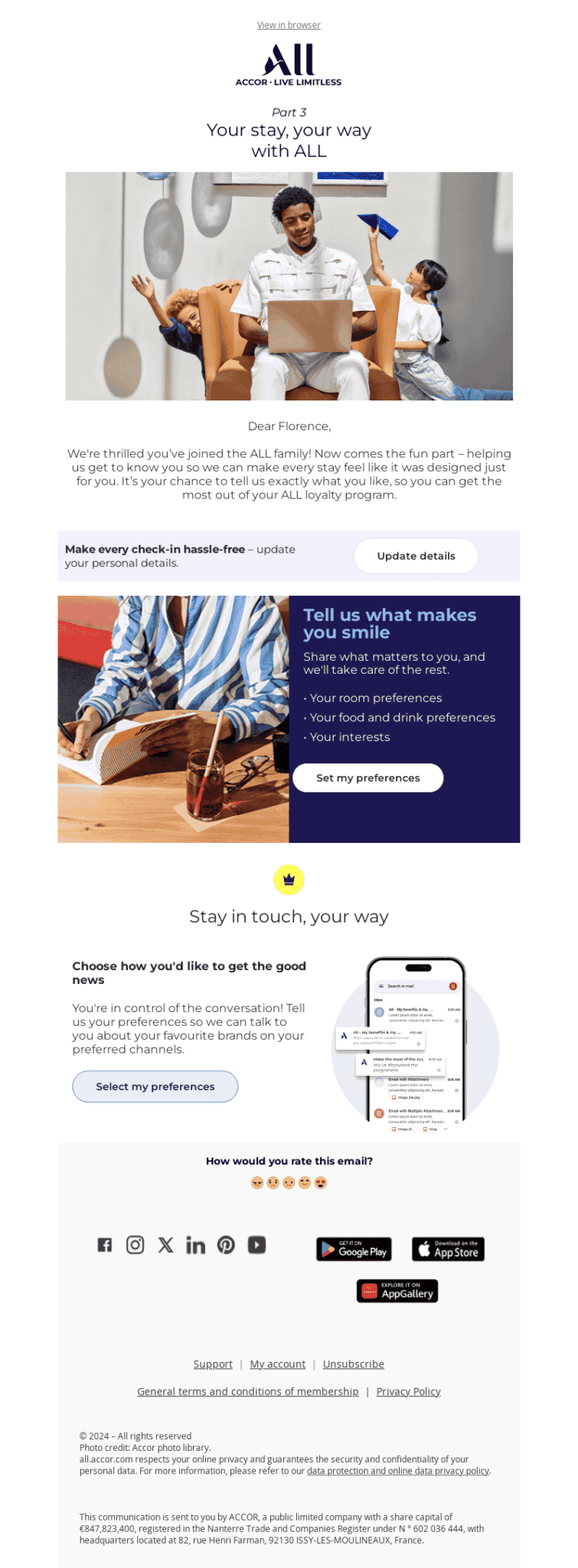
-
Progressive Profiling: Building Data Gradually
Instead of overwhelming subscribers with a lengthy preference form upfront, progressive profiling builds customer profiles gradually. This approach reduces friction and improves completion rates. Brands can start with essential data points, then periodically check in to gather richer information over time. For an airline or travel aggregator like Skyscanner, knowing a customer’s preferred airport is a fundamental piece of zero-party data that immediately enhances relevance. Similarly, collecting a date of birth provides an excellent opportunity for personalized birthday offers, while simultaneously offering valuable insights into age demographics, life stages, and potential buying power. This iterative process makes data collection feel less intrusive and more like an ongoing conversation. -
Making It Interactive: Gamification for Engagement
Gamification is a powerful tool for driving engagement, and it can be effectively applied to preference capture. By transforming the preference-setting process into an interactive experience, brands can make it more enjoyable and memorable. Oceania Cruises, for instance, might engage subscribers with a poll asking, "Choose which destination interests you most," displaying a running counter of popular choices. This not only captures valuable preference data but also fosters a sense of community and interaction, building a rich body of customer insights over time. Interactive elements can significantly boost participation compared to static forms. -
Explaining the Benefits: What’s In It For Them?
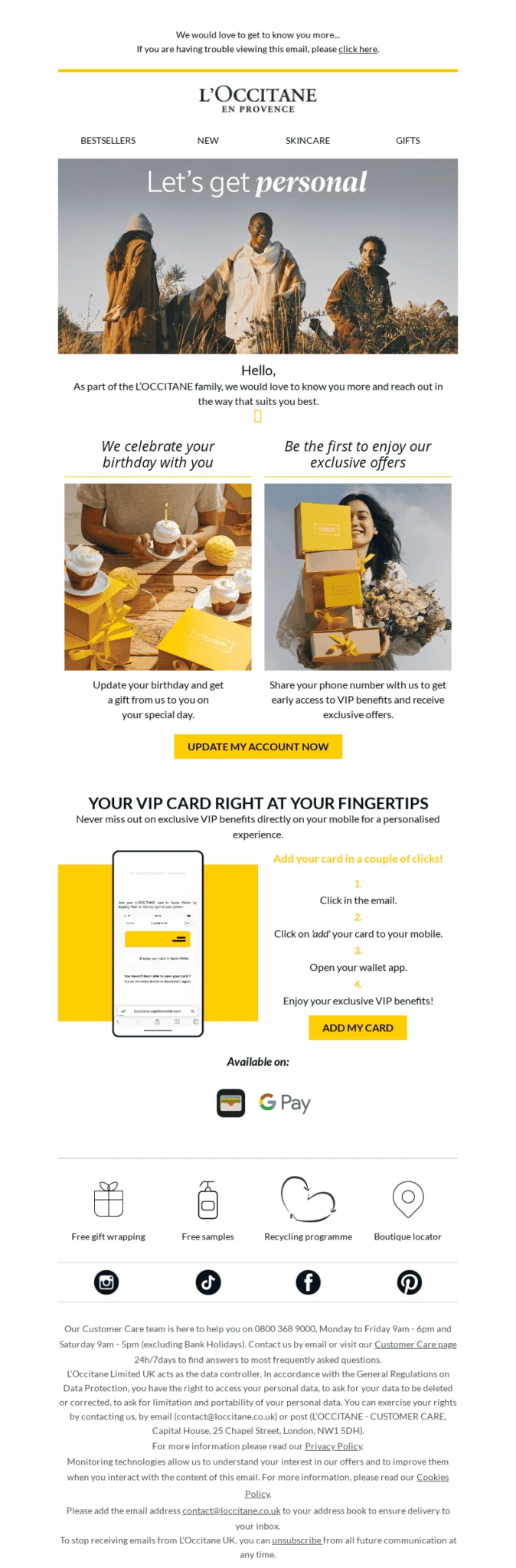
Subscribers are more likely to engage with a preference center if they understand the tangible benefits. Brands must clearly articulate "what’s in it for me?" L’Occitane excels at this, explicitly spelling out advantages such as early access to exclusive offers and a special birthday gift for those who update their preferences. They also detail the types of content subscribers can expect—new products, personalized offers, special events—and even offer choices beyond email, like text, post, or WhatsApp, empowering the subscriber with comprehensive control. This transparency builds trust and provides a strong rationale for engagement. -
Providing a Tangible Incentive: Harder Proof for Value
While "soft" benefits like early access are appealing, some subscribers require more concrete proof of value for their data. A direct incentive can be highly effective. Offering a discount, for example, works exceptionally well because it directly rewards the subscriber and simultaneously encourages a purchase, benefiting the sender financially. This approach acknowledges the perceived value of subscriber data and provides a clear return on their investment of time and information. A discount can be a powerful nudge for those who might otherwise defer updating their preferences. -
Opt-Out Options for Sensitive Events: Empathy in Action
The rise in emails inviting subscribers to opt out of emotionally sensitive dates (e.g., Valentine’s Day, Mother’s Day, Father’s Day) reflects a growing awareness of customer empathy. However, the sheer volume of these individual opt-out emails can inadvertently amplify the very sensitivity they aim to mitigate. A more sophisticated and less intrusive approach is to integrate these options directly into the preference center as one-time or seasonal settings. Some brands are already moving towards greater granularity: Interflora offers an anniversary opt-out, Bloom & Wild allows subscribers to mute Grandparent’s Day, and Hotel Chocolat enables customers to suppress alcohol-related promotions. This consolidated approach empowers subscribers without creating an additional stream of potentially sensitive emails. -
Holiday Season Management: The "Snooze" Imperative
Revenue-critical periods like Black Friday and Cyber Monday often lead to an overwhelming surge in email volume. Many subscribers would prefer to temporarily opt out during these intense periods rather than face a permanent "unsubscribe from all." The "snooze" option, as highlighted by Oracle’s research, is invaluable here. Allowing subscribers to pause communications for a defined period (e.g., the holiday shopping season) prevents permanent churn. Bvlgari effectively implements this strategy. Alternatively, brands can use the run-up to sales events as a relevance check. Spoonflower, with its clever CTA "Curate My Content," leverages the sentiment of "no one likes a cluttered inbox" to encourage subscribers to refine their preferences before the deluge. -
Increased Visibility: Pre-headers and Content Blocks
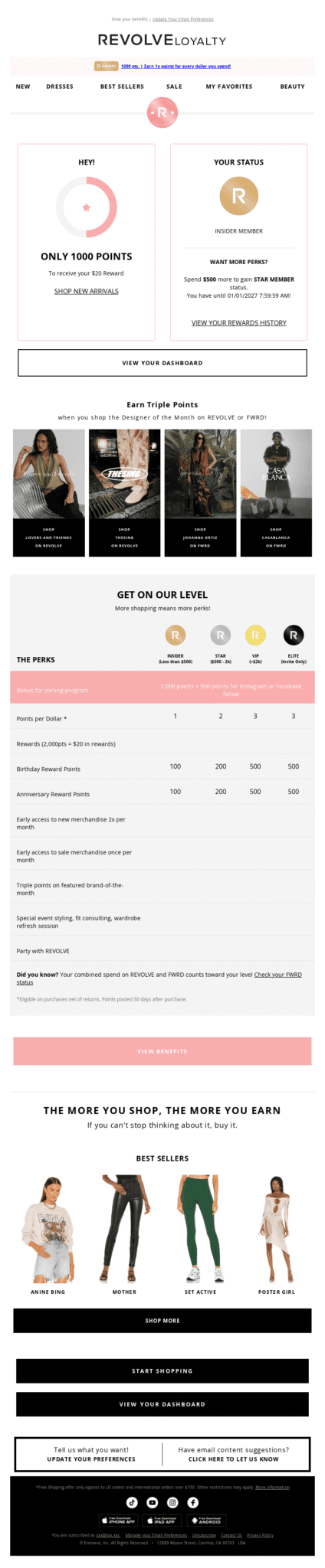
Beyond dedicated campaigns, every email should work harder to promote the preference center. Two tactical enhancements stand out for increasing visibility:- The Pre-header: This short line of text, appearing next to or below the subject line, is excellent for drawing attention. Just as it’s recommended for unsubscribe links to build trust and reduce spam complaints, placing a preference center link here signals transparency and control. REVOLVE effectively uses its pre-header to prompt loyalty status updates and points, implicitly encouraging preference management.
- Dedicated Content Blocks: Integrating a consistent, visually distinct content block within the body of regular emails ensures the message is reinforced constantly, rather than relying solely on standalone campaigns. Bloom & Wild consistently uses such blocks, allowing responders to opt out of multiple events at once, making preference management a continuous, accessible option.
-
Re-engagement Campaigns: The Last Chance for Connection
When subscribers become disengaged, a re-engagement campaign often serves as a final effort to win them back before they unsubscribe completely. Incorporating the preference center into these campaigns provides a viable alternative to an outright opt-out. CVS Pharmacy does this effectively by restating the benefits of staying subscribed, asking for feedback, and closing with a CTA that demonstrates a real commitment: "Yes, I still want emails." This approach acknowledges the subscriber’s potential dissatisfaction while offering a path to a more relevant and tailored experience.
Beyond Promotion: Optimizing the Preference Center Itself
While promoting preference centers is crucial, the effectiveness ultimately hinges on the quality and usability of the center itself. A well-designed preference center acts as a personalization engine, serving as a dynamic "conversation starter" for unlocking zero-party data. Key attributes of an optimal preference center include:
- Granularity and Clarity: Offer specific options for content categories (e.g., product updates, promotions, newsletters, event invitations) and frequency (e.g., daily, weekly, monthly). Avoid vague categories.
- Ease of Use: The interface should be intuitive, mobile-responsive, and quick to navigate. Minimize the number of clicks required to update preferences.
- Zero-Party Data Collection: Design the center to proactively ask for explicit preferences, interests, and demographic information that directly informs personalization efforts.
- Multi-Channel Options: Allow subscribers to manage preferences not just for email, but potentially for SMS, push notifications, or even direct mail, creating a holistic communication profile.
- Instant Updates: Ensure changes made in the preference center are reflected immediately in the customer database and email sending platform.
Measuring Success and Future Outlook
The true test of a successful preference center strategy lies in its measurable impact on email marketing engagement. Brands must establish clear key performance indicators (KPIs) to track the link between preference center usage and improved outcomes. This includes monitoring:
- Preference Center Visit Rates: How many subscribers are accessing the center?
- Preference Update Rates: How many are actively changing their settings?
- Impact on Unsubscribe Rates: A direct measure of churn reduction.
- Engagement Metrics (Open, Click-Through, Conversion Rates): Are subscribers who use the preference center more engaged with subsequent emails?
- Zero-Party Data Enrichment: How much new, actionable data is being collected?
If data reveals that subscribers actively utilizing the preference center exhibit higher clicks, greater spend, and lower churn, it provides a strong business case for continued investment in email program optimization.
As AI continues to shape the future of marketing, the importance of robust, high-quality data will only grow. AI-powered personalization models are only as good as the data they consume. Preference centers, by facilitating the collection of explicit, consensual zero-party data, will become even more critical in fueling these intelligent systems, enabling hyper-personalized experiences that resonate deeply with individual subscribers.
In conclusion, the era of generic, one-size-fits-all email marketing is over. With increased regulatory scrutiny, evolving consumer expectations, and technological advancements from mailbox providers, brands must embrace a more sophisticated, subscriber-centric approach. Email preference centers, when strategically promoted and thoughtfully designed, are not merely a compliance tool but a powerful engine for building trust, enriching data, boosting engagement, and ultimately, driving sustained business growth in a complex digital landscape. Brands that prioritize empowering their subscribers with control over their communication preferences will be the ones that thrive in this new era of email marketing.








