The landscape of search engine optimization (SEO) and web analytics continues its rapid evolution, particularly with the widespread integration of artificial intelligence (AI) into core search functionalities. On August 7, 2026, a significant development surfaced regarding how Google Search Console, the indispensable tool for webmasters, is now reporting user interactions with its AI Mode. It has been confirmed that short, conversational follow-up queries, such as a simple "yes," originating from AI Mode interactions, are being logged as distinct, new queries within the standard Search Console performance reports. This revelation comes after an observation by SEO professional Anastasia Kourou and subsequent clarification from Google’s Search Advocate, John Mueller, highlighting a new dimension to data interpretation for site owners.
Earlier this year, Google introduced a dedicated AI Performance Report within Google Search Console, designed to offer webmasters specific insights into how their content performs within AI-generated overviews and other AI-driven search experiences. This specialized report provides metrics such as impressions, pages, countries, devices, and dates. Crucially, however, it notably omits query data, a decision that has been a point of discussion among SEO professionals since its inception. The absence of specific query data in the AI Performance Report has meant that webmasters lacked granular insights into the exact prompts or follow-up questions users were posing within these AI-enhanced environments. This is a recurring theme in Google’s data reporting, reminiscent of the "not provided" era for organic keywords, which has consistently pushed the SEO community to adapt its analytical approaches.
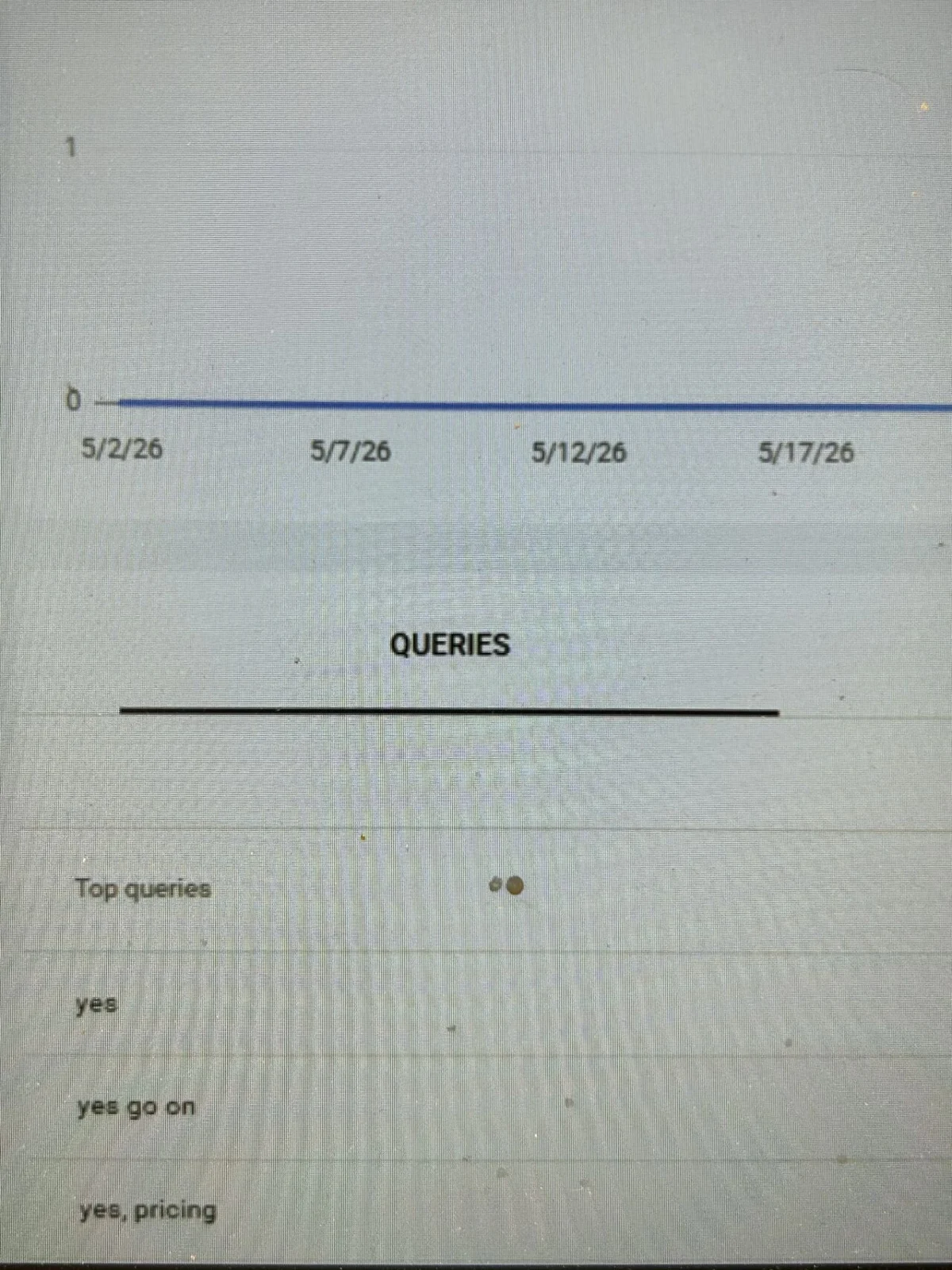
The standard Google Search Console Performance report, historically the primary source for understanding organic search queries, has now become the unexpected repository for certain types of AI Mode interactions. This situation came to light recently when Anastasia Kourou, an experienced digital marketing professional, posted on LinkedIn about her discovery of unusual queries appearing in her regular Search Console performance reports. These queries, unlike typical search strings, were remarkably short and conversational, often consisting of single words or brief phrases such as "yes," "tell me more," or "what about that?" Such entries stood out because they deviate significantly from the complex or keyword-rich phrases users typically type into a search bar. Kourou’s observations quickly garnered attention within the SEO community, prompting many to check their own reports for similar anomalies. Her proactive flagging of these discrepancies underscored the community’s ongoing vigilance regarding changes in Google’s data reporting mechanisms, especially as AI permeates more deeply into user interactions.
Google’s Official Clarification and Documentation
In response to Kourou’s public inquiry, John Mueller, a prominent figure and Search Advocate at Google, provided a direct clarification. Mueller confirmed that "Search Console includes information on AI Overviews and AI Mode in the general performance report." This statement officially acknowledged that data stemming from Google’s nascent AI functionalities is indeed being integrated into the broader performance metrics, rather than being exclusively confined to the new, query-less AI Performance Report.
Mueller further directed the community to the official Google Search Console help documentation, specifically a section titled "AI Mode." This documentation elucidates the technical rationale behind these observations: "If a user asks a follow-up question within AI Mode, they are essentially performing a new query. All impression, position, and click data in the new response are counted as coming from this new user query." This explanation is pivotal. It means that Google’s systems are programmed to treat each distinct interaction within an AI conversational thread as a fresh search query. For instance, if a user initially asks "What are the benefits of a Mediterranean diet?" and then, in AI Mode, responds with "yes" to a prompt like "Would you like more information on specific recipes?", that "yes" is registered as an entirely new query. This "new query" then accumulates its own set of impressions, clicks, and associated position data, as if it were an independent search performed by the user. The implications are profound for how webmasters interpret their performance data.
A screenshot provided alongside the original report visually confirmed these "AI Mode Queries," showcasing entries like "yes" or similar brief conversational responses logged as standard queries within the performance report interface. This visual evidence reinforced the anecdotal reports and solidified the understanding of how these AI interactions manifest in webmaster data.
Chronology of AI Integration and Reporting

The integration of AI into Google Search has been a multi-year strategic initiative.
- Early 2023: Google first announced its ambitious plans for integrating generative AI into its search engine, initially dubbed "Search Generative Experience" (SGE), during its I/O developer conference. This marked a significant pivot from traditional keyword-matching to a more conversational, summary-driven search experience.
- Late 2023 – Early 2024: Phased rollouts of AI Overviews and AI Mode began for select users and regions, allowing Google to gather feedback and refine the technology. These initial phases highlighted both the potential and the challenges of AI in delivering accurate and reliable information.
- Q1 2026: Google officially launched the dedicated AI Performance Report within Search Console. This was seen as a proactive step to provide webmasters with tools to monitor their site’s visibility within these new AI-driven search features, albeit with the aforementioned limitation of no query data. The introduction of this report underscored Google’s commitment to making AI a central component of its search product, thereby necessitating new reporting mechanisms for webmasters.
- Mid-2026 (Leading up to August 7): Anastasia Kourou’s observation of "odd queries" in the general Search Console performance report sparked community discussion. This period highlighted the evolving nature of AI interaction and how it was subtly altering traditional data reporting.
- August 7, 2026: The confirmation from John Mueller and the updated documentation officially clarified that AI Mode follow-up queries are logged as new queries in the standard performance report, providing context for the previously observed anomalies.
Implications for Webmasters and SEO Strategy
This development carries several significant implications for webmasters, SEO professionals, and content strategists:
1. Challenges in Data Interpretation:
The inclusion of short, conversational AI Mode queries like "yes" in the general performance report introduces a new layer of complexity to data analysis. Previously, unusually long or highly specific conversational queries were already suspected to originate from AI Overviews. Now, even single-word responses contribute to this noise. Webmasters must learn to distinguish between genuine, human-typed search queries and these AI-generated follow-ups. This distinction is critical for accurately understanding user intent, identifying keyword opportunities, and optimizing content for specific search patterns. Without clear segmentation or a dedicated filter for AI Mode queries within the general report, extracting actionable insights about traditional organic search performance becomes more challenging. The overall impression and click data may appear inflated or skewed by these AI interactions, making it harder to gauge the true effectiveness of SEO efforts targeting human-initiated queries.
2. Adapting Content and Optimization Strategies:
The shift towards conversational AI means that content creators need to think beyond traditional keyword targeting. While optimizing for direct answers and clear, concise information remains paramount for AI Overviews, the logging of follow-up queries suggests an increasing need for content that anticipates and addresses subsequent questions. This might involve structuring content with clear FAQs, providing comprehensive yet digestible explanations, and designing pages that naturally lead users through a topic in a conversational flow. The goal is to not only rank for the initial AI-generated summary but also to be the authoritative source for the inevitable follow-up questions a user might pose in AI Mode. This could influence decisions regarding internal linking, schema markup, and the overall information architecture of a website.
3. The Evolving Landscape of Search Console:
This incident underscores the dynamic nature of Google Search Console as a reporting tool. As search technology evolves, so too must the analytics platforms that monitor it. The community may call for further refinements, such as:
- Dedicated Filtering: A filter within the general performance report to exclude or specifically segment AI Mode queries.
- Enhanced AI Performance Report: The addition of query data to the AI Performance Report itself, providing the granular insights currently lacking. This would be a game-changer for understanding AI-driven user behavior.
- Clearer Labels: More transparent labeling of AI-derived data points to avoid confusion.
These potential enhancements would allow webmasters to more accurately assess their site’s performance across different search modalities, thereby informing more effective SEO strategies.
4. Understanding User Behavior Shifts:
The prevalence of conversational follow-up queries like "yes" reflects a fundamental shift in user interaction with search engines. Users are increasingly engaging in iterative, dialogue-based searches rather than single, self-contained queries. This indicates a growing comfort with AI as a conversational partner in information retrieval. For businesses, understanding this shift is crucial for developing user experiences that align with modern search behaviors. It also highlights the importance of a brand’s presence within AI Overviews, as these initial summaries often serve as the starting point for conversational interactions.
The broader context of Google’s push for AI integration into search cannot be overstated. With competitors like Microsoft’s Copilot (formerly Bing Chat) also leaning heavily into conversational AI, Google is committed to maintaining its leadership in the search domain by offering increasingly sophisticated AI-powered experiences. While these innovations promise more intuitive and efficient information access for users, they simultaneously introduce new complexities for webmasters striving to measure and optimize their online presence. The data anomalies now observed in Search Console are not merely technical glitches; they are direct reflections of this ongoing technological transformation and the evolving contract between search engines, content providers, and users.
As webmasters continue to spot these odd, conversational queries in their own Search Console reports, the imperative for deeper understanding and adaptive strategies becomes ever clearer. The ongoing dialogue between Google and the SEO community, exemplified by interactions like Kourou’s observation and Mueller’s clarification, will be vital in navigating this new era of AI-powered search, ensuring that the tools provided remain relevant and insightful for all stakeholders. The challenge now lies in harnessing these new data points, however unusual, to paint a clearer picture of user engagement in the age of artificial intelligence.