

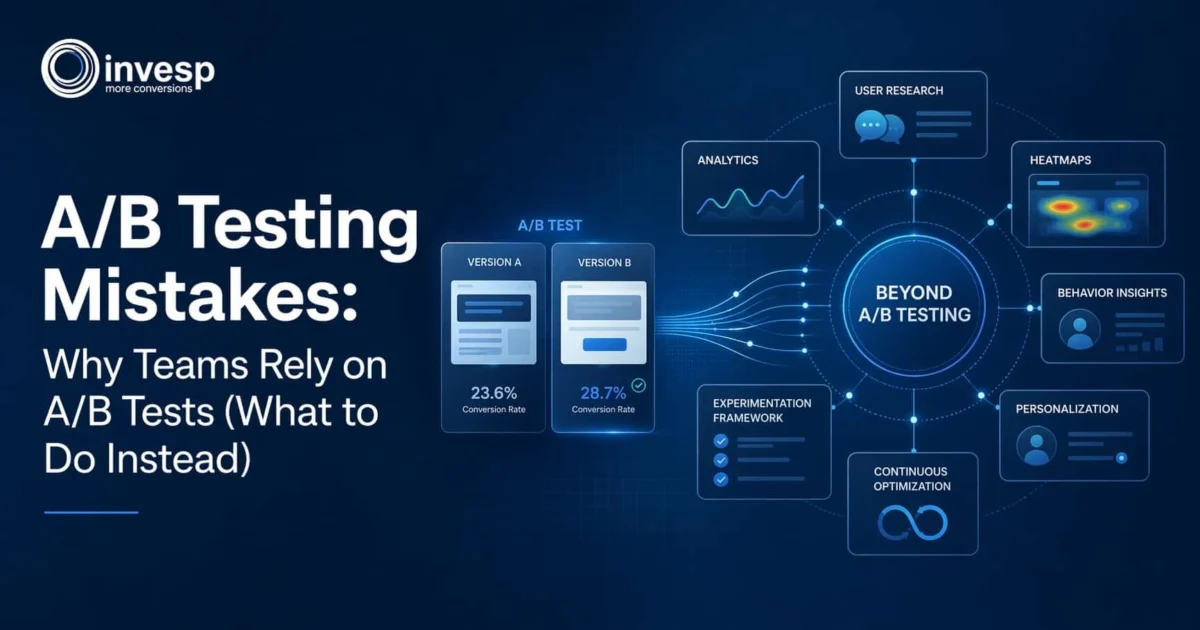
The evolution of digital commerce has seen the A/B test rise from a niche statistical tool to the cornerstone of corporate decision-making, yet this ubiquity has birthed a phenomenon known as the "optimization trap." Most digital product teams do not intentionally set out to over-rely on simple split testing; rather, the process typically begins with a modest victory—a headline change that nudges conversions upward or a button color tweak that yields a minor lift. Over time, these small wins solidify into a default methodology where teams stop asking "why" and focus exclusively on "which one wins." While A/B testing remains a vital component of the conversion rate optimization (CRO) landscape, industry experts warn that an over-reliance on this single method is often symptomatic of low organizational maturity, leading to stagnant growth and a failure to address fundamental business challenges.
The Rise of the Experimentation Culture
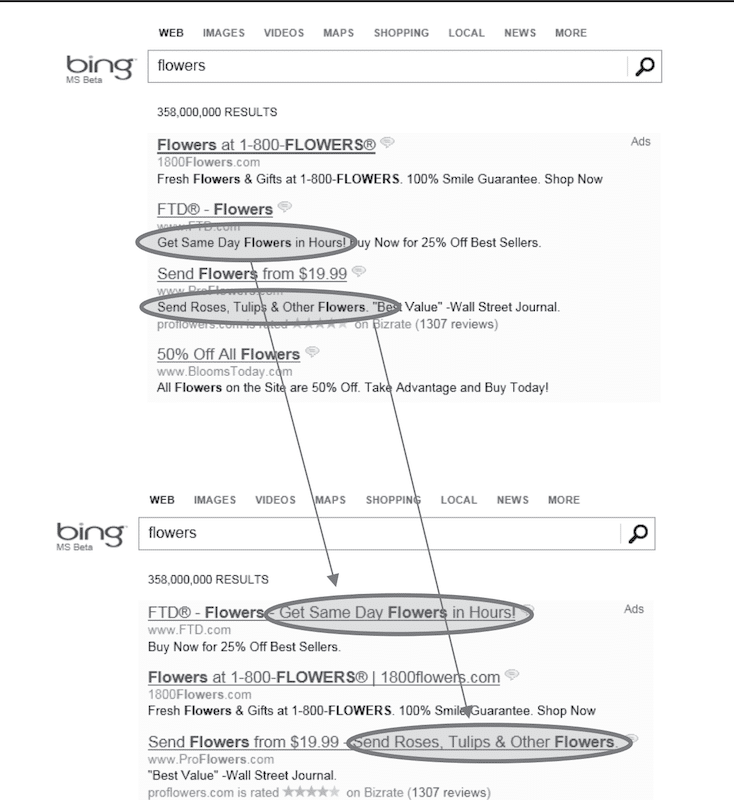
The normalization of A/B testing as the primary vehicle for digital growth can be traced back to the early 2010s, popularized by tech giants like Microsoft, Google, and Amazon. A landmark case in this movement occurred within Microsoft’s Bing team, where a simple experiment merging two ad title lines into a single longer headline resulted in a click-through rate increase that generated more than $100 million in additional annual revenue. Such high-profile successes catalyzed a shift in corporate culture, moving away from the "Highest Paid Person’s Opinion" (HiPPO) toward data-driven validation.
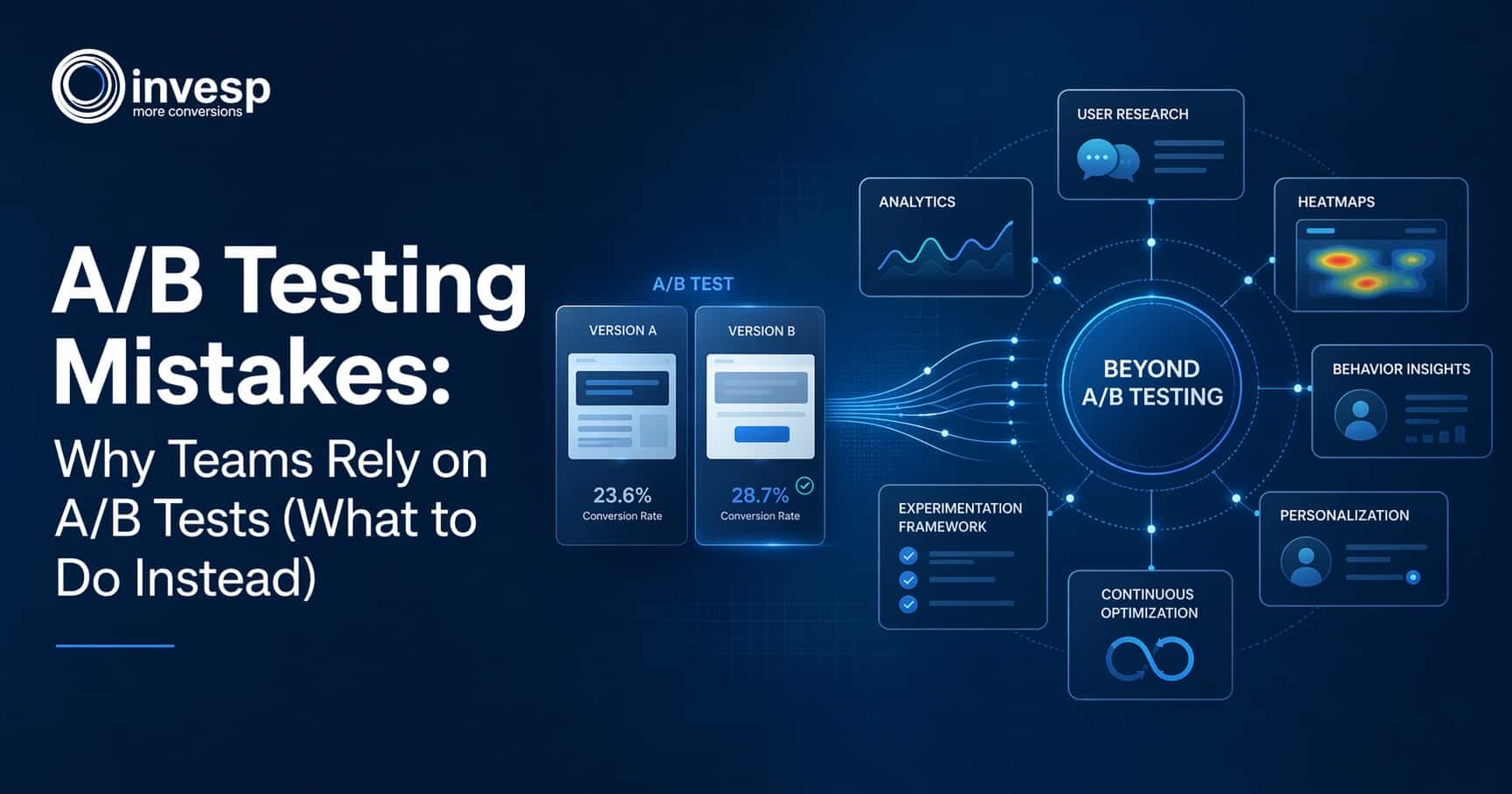
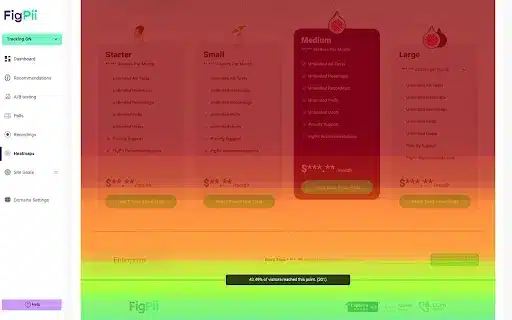
Today, the scale of experimentation is staggering. Microsoft reportedly runs over 20,000 controlled experiments annually across the Bing ecosystem alone. This culture has been further democratized by the emergence of experimentation platforms such as Optimizely, VWO, and FigPii. These tools have made it possible for marketing and product teams to launch tests without the direct intervention of data scientists or statisticians. However, this ease of use has created a double-edged sword: according to industry data, approximately 77% of all digital experiments are simple A/B tests involving only two variants. This suggests a significant portion of the industry is defaulting to the simplest possible approach, often at the expense of deeper, more informative multi-treatment designs.
The Statistical Reality and the Traffic Barrier
One of the most significant, yet frequently ignored, hurdles in A/B testing is the requirement for statistical power. For an A/B test to provide a reliable answer, it requires a large enough sample size to distinguish a genuine behavioral shift from random noise. For many mid-market e-commerce brands, this creates a functional impossibility. To detect a small lift of 1% to 2% with high confidence, a site may need hundreds of thousands of visitors per variant.
When companies lack this traffic but insist on testing, they fall into three common failure modes: running tests for months (which leads to "sample pollution" as cookies expire or user behavior shifts), calling winners too early based on "peeking" at the data, or ignoring the fact that the results are statistically insignificant. This pursuit of data-driven certainty often results in teams making confident decisions based on what is essentially a coin flip.
The Problem of Narrow Inquiry and Survivorship Bias
A/B testing is designed to answer narrow, tactical questions: "Does Headline A or Headline B lead to more clicks?" It is fundamentally ill-equipped to answer strategic questions regarding pricing models, brand positioning, or complex navigation structures. When teams try to use A/B tests to solve these larger issues, they often miss the root cause of poor performance.
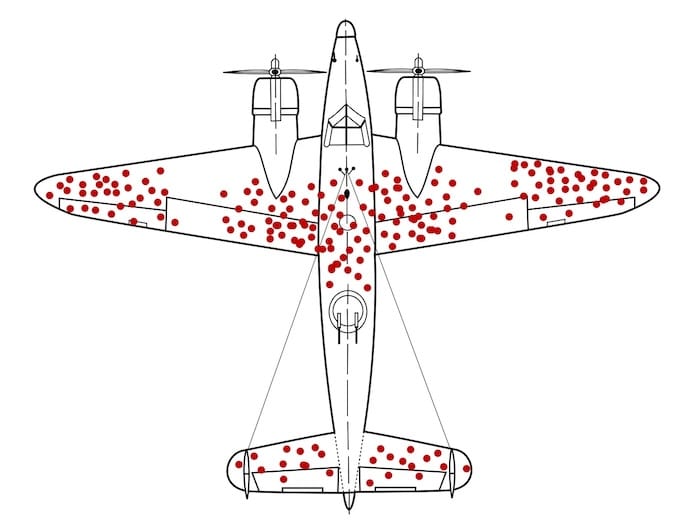
This limitation is often compared to the World War II phenomenon of survivorship bias. During the war, the military analyzed bullet holes in returning aircraft to determine where to add armor. They initially planned to reinforce the areas with the most holes until statistician Abraham Wald noted that they were only looking at the planes that survived. The planes that were hit in the engines never made it back to be measured. Similarly, A/B tests only provide data on the "survivors"—the users who stayed in the funnel long enough to interact with the test. They offer no insight into the users who abandoned the site entirely due to slow load times, confusing value propositions, or lack of trust.
A test result might show that "Variant B won," but it fails to explain the mechanism. Did it win because it was genuinely better, or because it was the least confusing version of a fundamentally broken experience? Without understanding the "why" through qualitative research, teams risk "optimizing the bullet holes" while the engine of the business remains vulnerable.
Short-Term Gains vs. Long-Term Health
A recurring critique of the A/B-first mindset is its focus on immediate session-based metrics—clicks, add-to-carts, and instant conversions—rather than long-term business health. In the e-commerce sector, the metrics that truly drive valuation are Customer Lifetime Value (LTV), repeat purchase rates, and net profit margins.
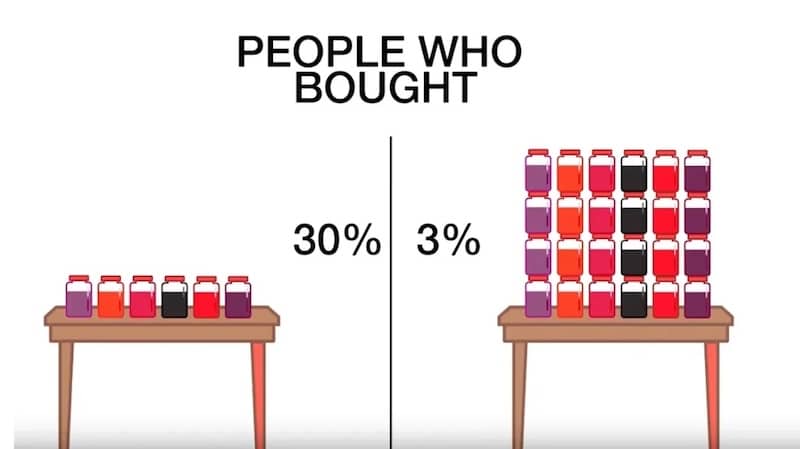
The conflict between short-term "wins" and long-term value is well-documented in behavioral economics. A classic example is the "Jam Experiment" conducted by researchers at Columbia and Stanford Universities. They found that while a display with 24 varieties of jam attracted more interest, a display with only six varieties led to significantly more actual purchases. In a modern digital context, an A/B test might show that a high-pressure countdown timer or a cluttered "suggested products" section increases immediate clicks. However, if these tactics erode customer trust or lead to "choice overload," the long-term result is a decline in repeat business and brand loyalty. High-maturity teams recognize that a "win" in a 14-day window can be a "loss" over a 12-month horizon.
The Methodology of High-Maturity Organizations
As organizations evolve, they shift from being "A/B testing teams" to "experimentation teams." This transition involves expanding the toolkit beyond the binary split test. Mature organizations utilize a variety of methodologies tailored to specific problems:
- Sequential Testing: Used when teams need to make decisions faster or when traffic is limited, allowing for valid conclusions to be drawn as data accumulates.
- Holdout Groups: A small percentage of the audience is kept away from a new feature for an extended period (months) to measure the long-term impact on retention and LTV.
- Switchback Testing: Often used in marketplaces or logistics (like Uber or DoorDash), where variants are toggled on and off for the entire system over specific time windows to prevent "interference" between users.
- Quasi-Experiments: Used when a clean A/B split is impossible, such as testing a new television ad campaign or a regional pricing change, by comparing the affected group to a statistically similar control group.
The Role of Evidence-Led Hypotheses
High-maturity teams also prioritize the quality of the hypothesis over the quantity of tests. In many low-maturity environments, testing backlogs are filled with "I think" statements or random ideas from stakeholders. In contrast, sophisticated programs ground every test in multi-source research. This includes heuristic analysis (expert reviews), user testing, session recording analysis, and customer support logs.
A robust hypothesis in a professional environment follows a strict structure: "Because [Evidence from Research], we believe [Specific User Problem], so we will [Specific Change], and we expect [Metric + Direction] to improve." This ensures that the team is solving a documented problem rather than guessing. For example, instead of "testing a new layout," a mature team would state: "Because session recordings show users abandon the checkout when delivery dates are vague, we believe uncertainty is reducing orders; therefore, we will add arrival estimates to the cart, expecting a 3% increase in completion rate."
Broader Impact and Industrial Implications
The shift away from simplistic A/B testing has profound implications for the digital economy. In the current economic climate, where the cost of customer acquisition (CAC) is rising across social and search platforms, companies can no longer afford to "polish the brass on a sinking ship." The focus is shifting from minor UI tweaks to "big lever" changes—pricing strategy, product bundling, and core value proposition clarity.
Industry analysts suggest that the next phase of experimentation will be defined by "Full-Stack" integration, where tests are run not just on the surface-level UI but deep within the product’s algorithms and backend logic. This move toward experimentation maturity is not merely a technical upgrade; it is a strategic necessity. Organizations that fail to move beyond the "which button wins" mindset risk being outpaced by competitors who are using data to answer the fundamental questions of why their customers buy, why they leave, and how to build lasting value.
In conclusion, while the A/B test remains a foundational tool, it is the beginning of the experimentation journey, not the destination. The path to maturity requires a willingness to embrace complex data, prioritize qualitative insights, and align experimentation with the long-term financial objectives of the business. For the modern digital enterprise, the goal is no longer just to run more tests, but to gain more meaningful intelligence from every experiment conducted.







