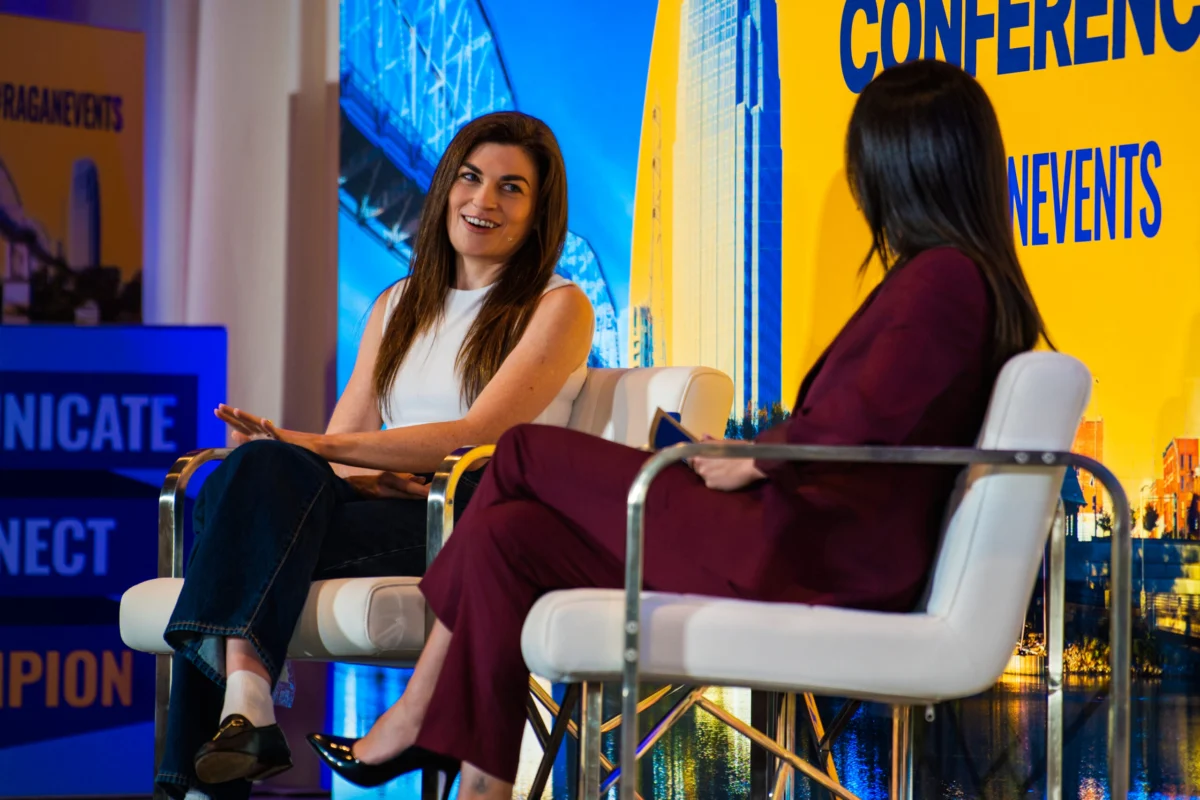
The professional landscape in 2026 stands at a critical crossroads, defined by the rapid integration of generative artificial intelligence, a shifting global economic tide, and an increasingly vocal workforce demanding transparency and purpose. Against this backdrop, Ragan’s Employee Experience Conference recently convened in Nashville, bringing together a diverse cohort of internal communications experts, human resources executives, and organizational strategists. The gathering served as a high-level forum to address the most pressing challenge of the modern era: how to maintain a human-centric culture while navigating unprecedented technological and structural disruption.
As organizations grapple with what many are calling the "Second Digital Revolution," the consensus in Nashville was clear: the tools of the trade have changed, but the fundamental requirements of trust, clarity, and empathy have never been more vital. Through a series of keynote addresses, panel discussions, and workshops, five primary themes emerged as the blueprint for organizational success in the latter half of the decade.
The Stability of Values Amidst Perpetual Change
One of the most resonant discussions focused on the paradox of change—specifically, how to lead people through transformation by focusing on what stays the same. Ryan Poe, APR, director of executive communications at St. Jude Children’s Research Hospital, provided a foundational framework for this approach. Poe argued that while strategies and technologies are fluid, an organization’s core identity must remain an anchor.
Poe made a sharp distinction between organizational values and cultural principles. Values, he noted, define the "who"—the immutable soul of the institution. Cultural principles, conversely, dictate the "how"—the behaviors and actions expected of employees on a daily basis. For internal communicators, the task is not merely to announce change but to repeatedly embed these values into the employee experience.
Supporting this perspective, Hilary Hamblin, manager of organizational change management and internal communications at St. Jude, emphasized that during periods of high-intensity disruption, employees often experience a sense of loss or disorientation. By explicitly identifying the elements of the culture that will remain constant, leaders can provide a sense of psychological safety. This "continuity of culture" serves as a stabilizing force, allowing employees to focus on adapting to new workflows without fearing for the loss of the organization’s mission.
Redefining the Managerial Role: Filters Over Funnels
The conference also addressed the evolving role of middle management, a group that has historically been squeezed between executive mandates and frontline realities. Heather Kestly, senior communications director at Medtronic, introduced a concept that challenged traditional top-down communication models: managers must act as "filters" rather than "funnels."
In a funnel model, managers simply pass down every piece of information received from the top, often overwhelming their teams with irrelevant data and noise. As a filter, however, a manager’s responsibility is to synthesize information, providing the specific context and "why" behind a directive. This shift is essential because, as Jamesia Harrison, director of university communications at North Carolina A&T State University, observed, employees cannot execute on what they do not understand. There is often a significant gap between what a leader believes they have communicated and what an employee has actually internalized. Closing this gap requires managers to be empowered as strategic translators of the corporate vision.
Data from recent workplace studies support this need for focused communication. According to 2025 industry benchmarks, the average knowledge worker receives over 120 internal notifications daily across various platforms. Without the filtering mechanism described by Kestly, the risk of "communication fatigue" leads to a measurable drop in productivity and engagement.
Purposeful AI: Solving Problems, Not Chasing Trends
Perhaps no topic dominated the hallways of the Nashville conference more than Artificial Intelligence. However, the tone was notably more cautious and pragmatic than the hype-filled sessions of previous years. The prevailing sentiment was that AI adoption must be driven by genuine business or employee needs rather than a desire to appear "tech-forward."
Scott Armstrong, director of communications at Microsoft, cautioned against the "AI everywhere" fallacy. He argued that organizations must resist the urge to automate every touchpoint. When a technological interface replaces a human interaction, leaders must ask if the efficiency gain is worth the potential loss of connection. This is particularly true in high-stakes or sensitive scenarios. Shoshana Leon, strategic communications lead at CSAA Insurance Group, pointed out that in moments of personal or professional crisis—such as an employee dealing with an accident or a family emergency—the empathy of a human colleague cannot be replicated by a chatbot, no matter how advanced the natural language processing may be.
Furthermore, the successful adoption of AI is inextricably linked to organizational culture. Samantha Stark, founder and chief strategist at Phyusion, highlighted that for AI to be truly transformative, employees must be given the "right to fail." In cultures where experimentation is penalized, AI usage will remain superficial and performative. To unlock the real value of these tools, organizations must foster an environment of psychological safety where employees feel empowered to test new workflows without fear of repercussion.
Data Literacy and the Search for Meaningful Metrics
In an era of "Big Data," the challenge for HR and communications leaders is no longer gathering information, but interpreting it. Adam Perrow, senior director of employee experience and human resources at Ally Financial, noted that more data does not inherently lead to better decision-making. In fact, an obsession with vanity metrics can often distract from underlying systemic issues.
Perrow advocated for a "diagnostic" approach to data. When employees report frustration or burnout, the cause is rarely a lack of perks or "wellness" programs; more often, the friction lies within flawed processes, outdated systems, or inefficient handoffs between departments. Communicators add the most value when they can filter out the statistical noise and help leadership identify these specific operational bottlenecks.
This audience-centric approach was echoed by Craig Thomason, director of global employee and executive communications at Merck. Thomason introduced the "ABC" rule: Audience Before Content. In a world of infinite information, the only way to capture attention is to ensure that every communication is tailored to the specific needs, challenges, and preferences of the recipient. This requires a sophisticated understanding of different employee segments, from frontline workers in manufacturing plants to remote-first software developers.
The Human Premium: Empathy as a Performance Driver
The final pillar of the conference was the recognition that as technical skills become increasingly commoditized by AI, "soft skills"—such as judgment, curiosity, and empathy—are becoming the new "hard skills" of the corporate world. Kerrie Vnuk, head of internal communications at Cotality, emphasized the importance of relationship-building across all levels of the hierarchy.
Vnuk suggested that communicators must proactively seek out "informal advisory groups" within the organization. By testing messages with a diverse group of skeptics and supporters before a broad rollout, leaders can identify potential points of resistance or confusion. This grassroots approach ensures that communications are not just "sent," but "received" in the intended spirit.
The link between employee well-being and organizational performance was also a central theme. Nick LaFave, senior director of organizational communications at Children’s Minnesota, argued that mental and emotional health are not "nice-to-have" benefits but fundamental drivers of capacity. He noted that a stressed or depleted employee is physically and cognitively incapable of the high-level problem-solving required in the modern economy. Therefore, caring for the "whole person" is a strategic imperative for any organization seeking sustained high performance.
Analysis: The Future of the Employee Experience
The insights gathered from the 2026 Employee Experience Conference signal a significant maturation of the internal communications and HR professions. We are moving away from an era of "employee engagement" as a series of isolated events or surveys, and toward an era of "human-centric design" where the employee’s daily experience is the primary focus of corporate strategy.
The implications are profound. Organizations that continue to treat communication as a one-way broadcast or view AI as a mere cost-cutting tool are likely to face significant talent retention challenges. Conversely, those that invest in building high-trust cultures, empower their managers as strategic filters, and prioritize human empathy in the face of technological change will emerge as the employers of choice.
As the conference concluded, the message to the attendees was one of both challenge and opportunity. The "human fundamentals"—trust, clarity, and care—remain the only sustainable competitive advantage in an increasingly automated world. The role of the communicator, therefore, has shifted from being a mere messenger to being the architect of the organizational soul.
The journey toward this future continues, with many participants looking forward to the upcoming Internal Communications Conference in Seattle to further refine these strategies. In the meantime, the lessons from Nashville provide a clear roadmap: navigate change with values, lead with context, use technology with purpose, and never lose sight of the people at the heart of the enterprise.