The digital marketing landscape is once again experiencing significant turbulence as Google’s search rankings have entered a period of intense volatility, particularly over August 5th and 6th. This follows a weekend of reported fluctuations, with the latest surge in community chatter suggesting a substantial, albeit unconfirmed, algorithm update is actively rolling out. SEO professionals and website publishers across the globe are observing dramatic shifts in search engine results pages (SERPs) and corresponding traffic metrics, prompting widespread discussion and concern.
Unconfirmed Algorithm Update Sends Ripples Across SEO Community

While Google has yet to issue any official confirmation regarding an ongoing algorithm update—a common practice for minor or ongoing adjustments—the sheer volume and intensity of reports from the SEO community point to a significant shift. Over the past 24 to 48 hours, industry forums and social media platforms have been abuzz with accounts of considerable ranking swings. Some webmasters are reporting reversals from previous unconfirmed updates earlier in the week, while others are grappling with entirely new patterns of change. The lack of official communication from Google often leaves SEOs in a diagnostic limbo, forced to analyze patterns and interpret data from third-party tracking tools to understand the nature of these shifts.
These periods of heightened volatility are not uncommon for Google Search, which continuously refines its algorithms to deliver the most relevant and high-quality results to users. However, the current intensity has many professionals on edge, particularly given a broader trend of diminishing referral traffic from Google to publishers.

A Recent History of Unconfirmed Shifts
The current volatility on August 5th and 6th is not an isolated incident but rather the latest in a series of unconfirmed fluctuations observed throughout July and early August. This recent pattern includes:

- August 1st to 3rd: Initial reports of significant ranking movements were noted across various sectors.
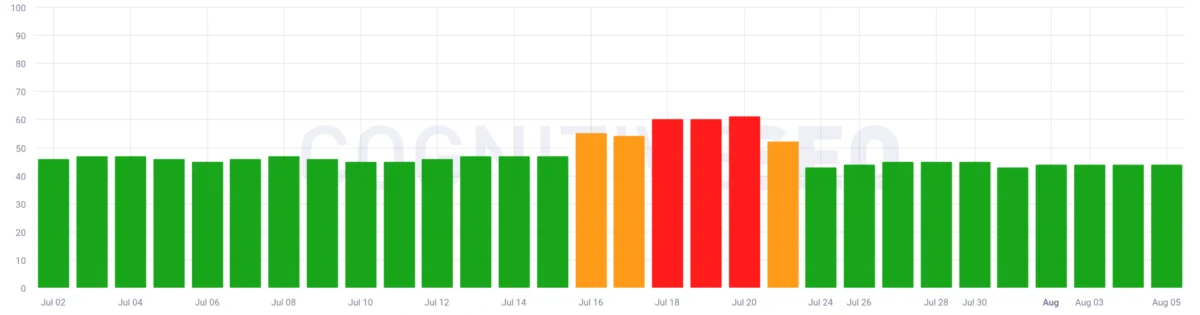
- July 24th: Another period of unconfirmed volatility, causing shifts for many sites.
- July 18th and 19th: A prolonged period of instability that extended for much of that week.
- Early July (dubbed the "7-Eleven update"): An earlier unconfirmed event that also generated considerable discussion.
In contrast to these unconfirmed movements, Google did confirm two major updates earlier this year:
- June 2026 Spam Update: This update commenced on June 14th and concluded on June 26th, specifically targeting spam and low-quality content.
- May 2026 Core Update: A broad core algorithm update that began on May 21st and finished on June 2nd, typically impacting a wide range of ranking factors and website types.
The distinction between confirmed core updates and unconfirmed volatility is crucial for SEOs. Core updates usually involve fundamental changes to how Google assesses content and authority, requiring more comprehensive strategic adjustments. Unconfirmed fluctuations, while impactful, can sometimes be temporary, part of smaller, continuous algorithmic tweaks, or even A/B tests by Google. However, the current "heated" chatter suggests something more substantial than routine fluctuations.

SEO Community Voices Concern and Frustration
The sentiment within prominent SEO forums such as WebmasterWorld and Black Hat World, as well as comments sections on industry news sites, reflects a mix of apprehension and exasperation. Many webmasters are reporting drastic changes, often negative, in their site performance.

- Massive Traffic Drops: Numerous reports highlight significant decreases in organic search traffic. Figures cited include "more than 50%," "14%," and even "at least a 70% drop" for some sites, with one user noting, "traffic has been turned off." This translates directly into lost revenue for businesses heavily reliant on Google’s referral traffic, with reports of "zero sales from Google traffic" for some.
- Ranking Swings and Reversals: While some users expressed optimism, stating, "Seeing massive changes this morning. Hopefully it sticks. Much more positive for us, seems like its reverting to pre July," others are observing major downward movements. This suggests a varied impact, with some sites benefiting from the changes while others are negatively affected.
- Impact on Google Discover and News: Beyond standard search, a decline in traffic from Google Discover was also noted, indicating broader algorithmic changes affecting content distribution platforms. "What happened with Discover? Traffic down today," queried one user, while another lamented, "Google News is a complete trainwreck right now."
- Perceived Favoritism for High-Authority Sites: A recurring theme in the chatter is the perception that Google is increasingly prioritizing high-authority domains. One user speculated, "Some of my low authority sites got wiped out. They were pushed back to prioritize high authority sites. Google now started showing 3-4 related pages from each high authority site before showing one relevant result each from low authority sites in SERPs. This will probably give 10x boost to high authority sites, encouraging them to keep doing SEO for Google and spending money on ads." This observation, if widespread, could significantly alter strategies for smaller publishers and niche content creators.
- Increased YouTube Visibility: Several SEOs also noted an increased presence of YouTube content in SERPs, suggesting a potential algorithmic adjustment favoring video content, especially for certain queries.
- Sudden Rebounds: Interestingly, some reports indicated rapid fluctuations within a single day, with traffic plummeting and then surging unexpectedly. "Traffic suddenly surged around 6 PM, sales skyrocketed, and it actually turned into a highly successful day in the end," one user shared, illustrating the unpredictable nature of the current environment.
The overwhelming consensus among affected professionals is that "Something big seems to be going on right now."
Third-Party Volatility Trackers Corroborate Instability

Independent SEO tools designed to monitor Google’s algorithmic activity have largely corroborated the community’s observations. These tools, which track fluctuations in SERPs across millions of keywords, are showing significant spikes in volatility for August 5th and 6th.
- Wireboard (Aggregate Index): This tool, which normalizes data from multiple volatility trackers, showed a clear upward trend in volatility, indicating a broad consensus among tracking services.
- AccuRanker Grump: Displayed a notable increase, aligning with the "grumpy" sentiment among webmasters.
- AWR (Advanced Web Ranking): Registered a significant spike, reflecting widespread ranking instability.
- Sistrix: Also showed a pronounced increase in its volatility index, underscoring the severity of the changes.
- DataForSEO SERP Volatility: Exhibited a sharp rise, further confirming the algorithmic shifts.
- Wincher: Reported elevated levels of volatility, consistent with other trackers.
- CognitiveSEO, Zutrix Tension, Serpstat, SimilarWeb, Mozcast, Algoroo, and SEMRush Sensor: All these tools, to varying degrees, indicated increased instability, with several showing clear spikes on or around August 5th, reinforcing the narrative of an active algorithm update.
The collective data from these widely respected tools provides compelling evidence that the current ranking fluctuations are not isolated incidents but rather a systemic shift across Google’s search infrastructure.

Broader Implications: Publishers’ Growing Discontent and the Future of Search
The current surge in ranking volatility occurs against a backdrop of increasing tension between Google and content publishers. A growing number of large publishers are reportedly considering or actively exploring strategies to block Google Search from crawling their websites entirely. This drastic measure stems from a fundamental reevaluation of the value exchange between publishers and Google.

Historically, publishers provided content, and Google referred traffic back to those sites. However, with the rise of "zero-click searches" (where users find answers directly on Google’s SERP without clicking through to a website), AI-powered summaries, and increased integration of Google’s own products (like YouTube and Google Maps) directly into search results, the volume of referral traffic to publishers has steadily declined. Many feel that Google is deriving immense value from their content (training AI models, providing instant answers) without adequately compensating or driving traffic back to the source.
This "flipped value exchange" is pushing publishers to reconsider their reliance on Google. If more publishers opt to block Google, it could have profound implications for the diversity and depth of information available in search results, potentially impacting Google’s ability to maintain its dominant position as a comprehensive information source. It could also force publishers to explore alternative monetization and traffic generation strategies, lessening their dependence on a single platform.

Navigating the Unconfirmed Update: Advice for SEOs and Publishers
In the absence of official guidance from Google, SEO professionals and publishers are left to interpret the changes and adapt their strategies. Key considerations include:

- Data Analysis: Meticulously track ranking changes, traffic shifts, and user behavior data (e.g., bounce rates, time on site) to identify patterns and affected content categories.
- Content Quality and E-E-A-T: Continuously focus on producing high-quality, original, and authoritative content that demonstrates Expertise, Experience, Authoritativeness, and Trustworthiness (E-E-A-T). Google consistently emphasizes these factors as central to its ranking philosophy.
- Technical SEO Health: Ensure websites are technically sound, fast-loading, mobile-friendly, and easily crawlable by search engines.
- Diversification of Traffic Sources: Reduce over-reliance on Google Search by exploring other traffic channels such as social media, email marketing, direct traffic, and other search engines.
- User Experience (UX): Prioritize excellent user experience, as engaged users and low bounce rates can send positive signals to search engines.
- Patience and Observation: Algorithm updates, especially unconfirmed ones, can sometimes involve temporary fluctuations or rollbacks. Continuous monitoring and a cautious approach to drastic changes are advisable.
The current period of heightened Google Search ranking volatility serves as a stark reminder of the dynamic nature of the search ecosystem. While the immediate cause remains unconfirmed, the collective experience of the SEO community and the data from third-party tools unequivocally point to a significant algorithmic shift underway. For publishers, it further exacerbates existing concerns about the diminishing value of organic search traffic, potentially accelerating a re-evaluation of their relationship with the search giant. As the situation unfolds, close monitoring and strategic adaptability will be paramount for all stakeholders in the digital landscape.