

In the rapidly evolving landscape of digital advertising, conversations often center on the sophisticated models and strategies powering AI-driven campaigns. While discussions about campaign types, bidding algorithms, and creative formats dominate, a critical foundation is frequently overlooked: the quality and completeness of the underlying data. This overlooked element, the conversion signals that fuel Google’s automated advertising solutions like Smart Bidding, Performance Max, and Demand Gen, is facing a significant erosion, leading to an invisible measurement gap that is increasingly hindering advertiser performance.
The Stealthy Erosion of Conversion Signals: A Measurement Chasm Widens
The decline in reliable conversion data has been a gradual process, making it deceptively easy for advertisers to miss the extent of the damage. Historically, third-party cookies served as a primary mechanism for tracking user behavior across websites. However, privacy-first browsers like Safari and Firefox, which collectively account for approximately 21% of global web traffic, have progressively clamped down on these cookies. This restriction means that a significant portion of user journeys is now measured with far less accuracy than even a few years ago.
Further compounding this issue is Apple’s App Tracking Transparency (ATT) framework. Launched with considerable fanfare, ATT requires app developers to obtain explicit user consent before tracking their activity across other companies’ apps and websites. The opt-in rates for ATT have typically hovered between 15% and 25%, leaving the vast majority of Apple users effectively invisible to standard in-app tracking mechanisms. This creates a substantial blind spot for advertisers relying on app-based conversion data.
The challenges do not end there. The proliferation of ad blockers, which are designed to intercept and remove tracking tags before they can fire, further disrupts the data collection process. Moreover, the default Google Tag, a widely used tracking script, often loads from a third-party domain. Privacy tools and browser settings are increasingly engineered to intercept these third-party requests, further fragmenting the data available to advertisers. The cumulative effect of these factors is a widening chasm in the measurement of user actions, leaving advertisers with an incomplete and often inaccurate picture of campaign performance.
The Cascade Effect: How Incomplete Data Cripples AI Optimization
The ramifications of this measurement gap extend far beyond mere reporting inaccuracies. Google’s automated bidding strategies, the engines that drive efficiency and performance in modern advertising, are fundamentally reliant on conversion data to learn and optimize. When these conversion signals are thin or incomplete, the AI is essentially operating in the dark.
Smart Bidding algorithms, for instance, learn which clicks, audience segments, and placements are most likely to lead to a desired conversion. Without a robust and accurate stream of conversion data, the system struggles to discern true performance drivers. This can lead to misallocation of budget, with ad spend being directed towards ineffective channels or audiences, or conversely, underfunding those that could yield significant returns. Campaigns that should be performing strongly begin to drift, and the promise of AI-driven automation is significantly diminished, underperforming its true potential. This creates a frustrating feedback loop where advertisers may perceive AI as failing, when in reality, it is being starved of the essential fuel it needs to operate effectively.

Defining Data Strength: Google’s Framework for Rebuilding Measurement
In response to this growing challenge, Google has been championing a concept it terms "Data Strength." This framework aims to consolidate various tools and strategies designed to bolster the quality and completeness of conversion signals. Advertisers who have engaged with Google’s training sessions in the past year have likely encountered terms such as GTG (Google Tag Gateway), ECW (Enhanced Conversions for Web), ECL (Enhanced Conversions for Leads), and Customer Match, all of which are components of this broader initiative.
Data Strength can be conceptualized as the fuel that powers the advertising automation engine. The more robust and comprehensive the conversion signals (the fuel), the more efficiently and effectively the AI engine can operate. This concept builds upon earlier messaging around first-party data by emphasizing the crucial aspect of completeness. A single data product in isolation may offer marginal improvements, but the true power of Data Strength lies in connecting every available data source – both online and offline – into a unified input for Google’s AI.
This integrated approach offers a significant competitive advantage. Google’s automation systems optimize for advertisers who provide them with the highest quality data. Consequently, rivals with superior measurement capabilities can achieve faster campaign learning cycles and gain a sustained edge over time. An advertiser’s proprietary data, when effectively leveraged, acts as a "moat," shielding their insights and performance from competitors who cannot access or interpret it. Google’s own figures suggest that advertisers who establish strong data foundations can observe between 10% to 20% more conversions, a substantial prize in an increasingly competitive digital arena.
The Pillars of Data Strength: Components for Robust Measurement
Google’s Data Strength framework is built upon a layered architecture, with each component addressing specific measurement challenges and reinforcing the overall data signal.
The Foundation: Google Tag and Google Tag Gateway
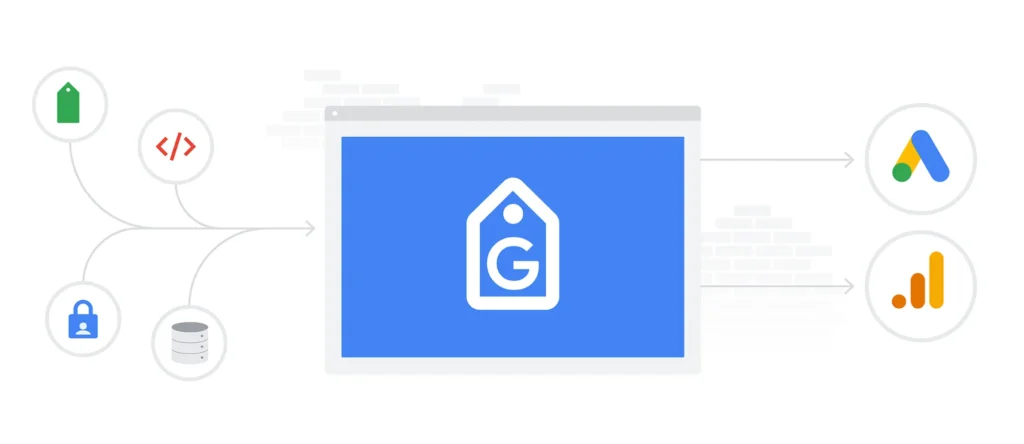
The bedrock of this framework is the Google Tag. However, its utility can be hampered by its loading from a third-party domain, making it susceptible to blocking by ad blockers and privacy settings. Google Tag Gateway (GTG) addresses this fundamental structural weakness. By serving the Google Tag from the advertiser’s own domain, GTG reclassifies the tag as a first-party request from the browser’s perspective, significantly increasing the likelihood of it loading successfully. Google reports an average uplift of 14% in observed conversions attributed to GTG. For users of Cloudflare, a popular content delivery network, GTG can be implemented with minimal effort, often without the need for extensive re-tagging. This foundational step is crucial for ensuring that basic tracking mechanisms are not inadvertently circumvented.
Enhanced Conversions for Web (ECW): Bridging the Cookie Gap
Enhanced Conversions for Web tackles the scenario where a conversion occurs, but the absence of a cookie prevents the user from being definitively identified. ECW leverages consented first-party data collected at the point of conversion, typically a hashed email address. This hashed data is then used to attribute the conversion even when a cookie match fails. Crucially, the data is hashed within the user’s browser before transmission, ensuring that Google only receives an encrypted identifier, preserving user privacy. Google’s data indicates an uplift of 8.5% in Search conversions and a more significant 15% for YouTube conversions, a channel that has historically presented attribution challenges.
Enhanced Conversions for Leads (ECL): Capturing Offline Value
For businesses that rely heavily on lead generation and offline conversions, Enhanced Conversions for Leads (ECL) is a critical component. Traditional offline conversion imports primarily depend on the Google Click ID (GCLID) and are click-based, making them vulnerable to deprecation. ECL enhances this process by allowing advertisers to upload hashed first-party data alongside the GCLID. This provides Google with multiple identifiers for matching, improving the accuracy of offline conversion attribution. Google reports a 10% lift in Search conversions and a substantial 22% lift for YouTube conversions over standard import methods when using ECL, underscoring its value for businesses with offline sales funnels.

Customer Match: Activation and Audience Intelligence
Beyond measurement, Customer Match shifts the focus to data activation. This tool allows advertisers to upload hashed, consented customer data. Google then matches this data to signed-in users across its platforms, including Search, Shopping, YouTube, Gmail, and Display. This capability enables advertisers to precisely target their existing customers, exclude them from prospecting campaigns to avoid wasted spend, and build lookalike audiences based on their most valuable customer segments.
Data Manager: The Unifying Hub
Data Manager serves as the central orchestration point for these disparate data sources. It acts as Google’s integrated hub for connecting website, app, store, and CRM data into a single, cohesive view. Advertisers who leverage Data Manager to integrate offline and app data report an average lift of 26% in incremental Return on Ad Spend (ROAS). The platform has seen significant updates, with its availability extended across Google Ads, Search Ads 360, and Campaign Manager 360 in 2026, with Analytics integration planned. Furthermore, expanded integrations with platforms like Mailchimp, Klaviyo, and TripleWhale make it easier for a wider array of data sources to feed into the Data Strength ecosystem.
Real-World Impact: Recovering Lost Conversions
The theoretical benefits of Data Strength translate into tangible results for advertisers. In one notable case, a home improvement retailer was experiencing a significant decline in lead volume, directly attributed to signal loss. A phased rollout of the Data Strength framework proved instrumental in recovering 27% of these previously lost conversions. The initial phase involved a straightforward, one-click integration of the tag gateway via Cloudflare. This step alone, even before implementing other components, delivered a 15% uplift in observed conversions. Subsequent additions of Consent Mode and Enhanced Conversions further bolstered their measurement capabilities, demonstrating the compounding benefits of a layered approach.
The Strategic Imperative: Building Data Strength for Future Performance
The prevailing debate surrounding AI in advertising often stops at the model itself, overlooking the indispensable role of data. For a vast number of advertisers, this data is not merely incomplete; it is actively leaking. Conversion signals are being blocked, user actions are going unattributed, and the AI is being forced to operate with a fragmented understanding of customer journeys. This critical data deficit rarely manifests directly in standard dashboards because the missing data, by its very nature, is not visible. This inherent invisibility is precisely why the issue often goes unaddressed for extended periods, allowing performance to quietly erode.
Data Strength represents the strategic solution to this pervasive problem. It is not a quick fix or a single product but a comprehensive, layered approach to rebuilding and fortifying measurement capabilities. Each implemented layer progressively recovers more of the essential signals that AI requires to learn, optimize, and bid effectively.
In the current advertising climate, where automation increasingly dictates campaign outcomes, advertisers who prioritize building robust Data Strength foundations now will cultivate a significant and compounding advantage over their competitors. This foundational strength is not merely an incremental improvement; it is the bedrock upon which all future advertising performance will rest. As privacy regulations continue to evolve and user tracking becomes more restricted, the ability to accurately measure and attribute conversions will be the defining factor separating high-performing campaigns from those that struggle to demonstrate ROI. The investment in Data Strength is, therefore, an investment in the future viability and success of digital advertising efforts.









