


Commercial email, a cornerstone of digital marketing, consistently delivers an impressive return on investment, with industry figures often citing returns ranging from $10 to $36 for every dollar spent. This remarkable efficiency, however, is contingent on sophisticated execution that ensures messages not only reach their intended recipients but also resonate effectively. Far from a simple promotional tool, commercial email operates within a complex ecosystem governed by legal mandates, technical protocols, and evolving consumer expectations, necessitating a meticulous approach to compliance, deliverability, and user experience.
The Enduring Power of Commercial Email Marketing
In an increasingly fragmented digital landscape, email marketing stands out for its direct communication channel and proven efficacy. Reports from sources like the Data & Marketing Association (DMA) and HubSpot consistently highlight email’s superior ROI compared to other digital channels, often exceeding social media and paid search. This sustained performance underscores its critical role in customer acquisition, retention, and brand building. However, achieving this high return is not automatic; it demands a strategic understanding of its definition, purpose, and the technical intricacies that dictate its success.
Commercial email, as legally defined by the Federal Trade Commission’s (FTC) CAN-SPAM Act, is any electronic mail message whose primary purpose is the advertisement or promotion of a commercial product or service. This legal classification is not merely academic jargon; it forms the bedrock of ethical email practices, sender reputation management, and ultimately, campaign success. Without adherence to these foundational principles, even the most expertly crafted campaigns risk being relegated to spam folders or, worse, leading to legal repercussions and irreparable damage to brand credibility.
Navigating the Regulatory Landscape: CAN-SPAM and Beyond
The distinction between commercial and transactional email is paramount, not just for strategic planning but for legal compliance and optimal deliverability. Transactional emails are those sent to facilitate an agreed-upon commercial transaction or update an existing customer relationship. Examples include order confirmations, shipping notifications, password resets, and account updates. These messages are generally exempt from certain strict advertising regulations, such as mandatory unsubscribe links, due to their essential nature in customer service. In contrast, commercial emails are explicitly promotional.
The evolution of email regulation provides crucial context. The proliferation of unsolicited bulk email, or "spam," in the late 1990s and early 2000s necessitated governmental intervention. The U.S. Congress passed the Controlling the Assault of Non-Solicited Pornography And Marketing (CAN-SPAM) Act in 2003, establishing national standards for the sending of commercial emails. This landmark legislation aimed to protect consumers from deceptive practices while still allowing legitimate businesses to engage in email marketing. Key requirements of CAN-SPAM include:
- Prohibiting false or misleading header information.
- Banning deceptive subject lines.
- Requiring that commercial emails be identified as an advertisement.
- Mandating a clear and conspicuous way for recipients to opt out of future emails.
- Requiring senders to include their physical postal address.
The "hybrid gray area" emerges when emails blend both commercial and transactional elements. For instance, a purchase receipt that also contains a promotional coupon code blurs the line. In such cases, the FTC employs the "primary purpose test." If the main objective of the email is to confirm a transaction, it is considered transactional. If, however, the overwhelming focus is to drive another sale or promote an additional product, it falls under the commercial classification and must adhere to all associated regulations. This distinction is critical because transactional emails typically enjoy higher deliverability rates due to their expected nature and higher engagement. Misclassifying a commercial email as transactional to circumvent regulations can severely harm sender reputation and lead to penalties. Beyond CAN-SPAM, global regulations like the General Data Protection Regulation (GDPR) in Europe and Canada’s Anti-Spam Legislation (CASL) further reinforce the need for explicit consent, transparent data handling, and easy unsubscribe options, creating a complex web of compliance requirements for international marketers.

Key Archetypes of Commercial Email for Strategic Engagement
Effective commercial email marketing is not a one-size-fits-all endeavor. Successful campaigns leverage different email types, each designed to achieve specific business outcomes across the customer lifecycle.
-
The Promotional Blast: These emails are the direct sales vehicles of email marketing. Characterized by urgency and a clear call to action, promotional blasts aim for immediate conversions, announcing sales, discounts, or limited-time offers. They are optimized for speed and impact, often featuring bold visuals and concise copy. While effective for driving short-term revenue, overuse can lead to subscriber fatigue and increased unsubscribe rates if not carefully segmented and timed. Industry data suggests that timely and relevant promotions can significantly boost sales, but irrelevant "blasts" are a leading cause of spam complaints.
-
The Newsletter: Positioned as a long-term relationship builder, newsletters prioritize content value over direct sales. They aim to nurture subscriber relationships by delivering educational content, company news, industry insights, or curated product updates. Newsletters build brand loyalty, establish thought leadership, and keep the brand top-of-mind. While their direct ROI may not be as immediate as promotional blasts, they are crucial for fostering a engaged audience that is more likely to convert over time. Regular newsletters with valuable content have been shown to increase customer lifetime value.
-
The Retention/Re-engagement Email: These strategic communications target inactive subscribers or lapsed customers. Their purpose is to win back engagement, prevent churn, and reactivate dormant accounts. Common tactics include personalized offers, surveys to understand reasons for inactivity, or showcasing new products/features that might re-ignite interest. A well-executed re-engagement campaign can significantly reduce churn rates, which is often more cost-effective than acquiring new customers. Analytics platforms reveal that a substantial portion of a subscriber list can become inactive over time, making these emails vital for list hygiene and revenue recovery.
-
The Product Launch/Update: These emails serve as the official announcement for new products, services, or significant updates to existing offerings. They build anticipation, educate the audience about features and benefits, and drive initial adoption. Effective launch emails create excitement through teasers, early bird access, or exclusive content, converting interest into immediate sales or sign-ups. They are critical for generating buzz and ensuring a strong market entry for new innovations. The success of a product launch email often hinges on compelling storytelling and a clear demonstration of value.
The Technical Imperatives: Ensuring Deliverability and Optimal Performance
Strategy alone is insufficient; the technical execution of commercial emails is what separates inbox champions from spam-folder casualties. Five best practices are critical for high-performance campaigns:
-
Prioritize Compliance: Building Trust and Avoiding Penalties:
Compliance is the bedrock of sustainable email marketing. Beyond the general principles of CAN-SPAM, specific requirements are non-negotiable. Every commercial email must visibly include your physical business address, ensuring transparency and accountability. Crucially, a one-click unsubscribe mechanism must be present and easy to use, and unsubscribe requests must be honored within 10 business days. This isn’t just a legal requirement; it’s a trust-building exercise. Mailbox providers (MBPs) like Gmail and Yahoo increasingly monitor these compliance factors, penalizing senders who fail to meet standards. Moreover, the "from" name and subject line must accurately represent the content of the email. Deceptive subject lines, such as "Re: Your Order" for a promotional message, are not only illegal but also erode subscriber trust. Transparent and honest practices signal legitimacy to both recipients and MBPs, directly impacting engagement rates and sender reputation. Non-compliance can lead to hefty fines, blacklisting by ISPs, and a significant drop in deliverability.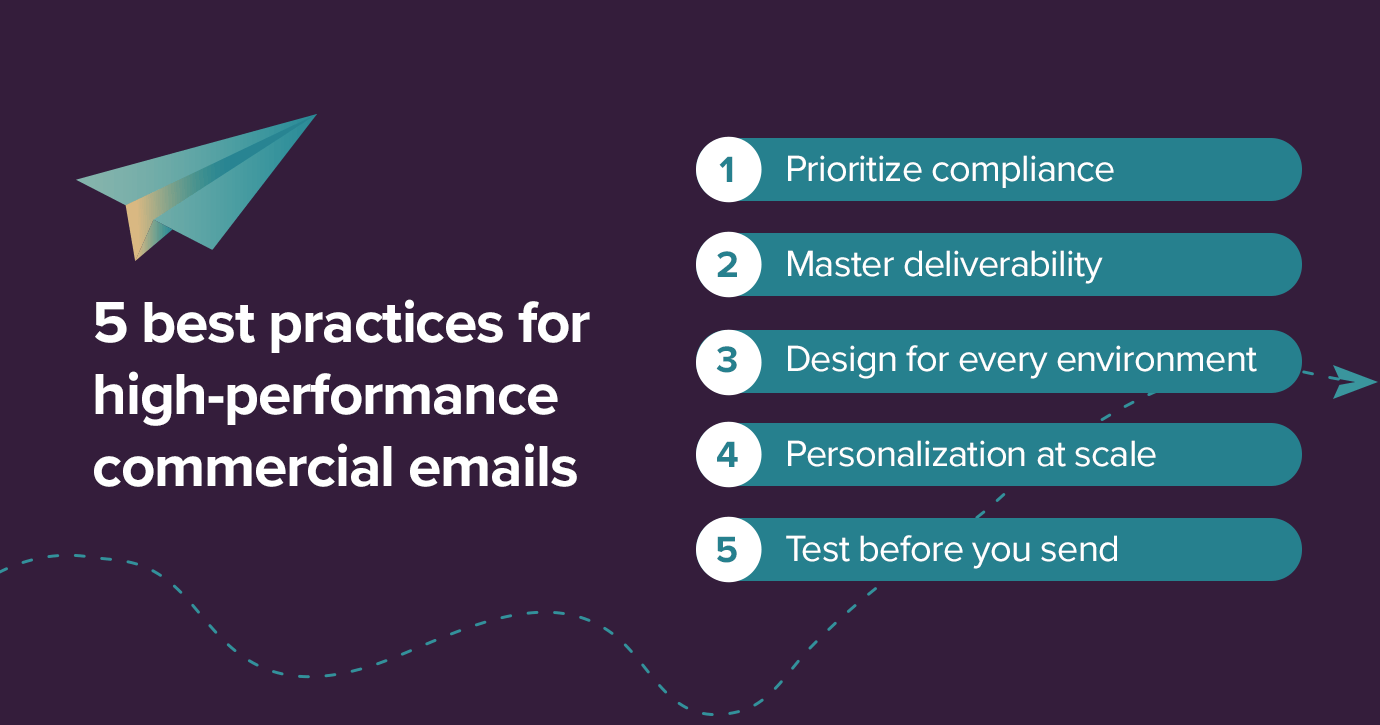
-
Mastering Deliverability: The Gateway to the Inbox:
Email deliverability is the ability for an email to successfully land in a subscriber’s inbox, bypassing spam folders and blocklists. It is the single most critical factor determining the effectiveness of any email campaign. MBPs assign a sender reputation score based on a multitude of signals, including engagement rates (opens, clicks), complaint rates (marking as spam), bounce rates, and list hygiene. This reputation is dynamic and constantly updated, directly influencing whether emails are delivered, filtered, or blocked.To achieve high deliverability, fundamental authentication protocols are mandatory. SPF (Sender Policy Framework), DKIM (DomainKeys Identified Mail), and DMARC (Domain-based Message Authentication, Reporting, and Conformance) are "table stakes." These protocols verify that an email sender is authorized to send emails from a specific domain, preventing spoofing and phishing, and thus building trust with MBPs. For instance, recent changes by major providers like Google and Yahoo now explicitly mandate DMARC authentication for bulk senders.
Beyond authentication, several factors "move the needle":
- Engagement: Low open and click rates signal to MBPs that recipients do not value your mail, prompting them to filter it. Regularly segmenting and re-engaging inactive subscribers, or even suppressing them, is vital. Data from industry reports suggests that segmenting email lists can increase open rates by 14% and click-through rates by 100%.
- Complaint Rates: Every spam complaint directly damages sender reputation. Maintaining complaint rates below 0.1% is crucial. High complaint rates often indicate issues with list acquisition quality (e.g., purchased lists) or email frequency, rather than content.
- List Hygiene: Regular validation and cleaning of email lists are essential. Hard bounces (permanent delivery failures), spam traps (email addresses used to identify spammers), and role-based addresses (like info@ or admin@) all negatively impact reputation. Removing chronic bouncers and invalid addresses improves overall list quality.
- Send Consistency: Sudden, large spikes in email volume can trigger MBP filters, flagging the sender as suspicious. Gradual "warming up" of new IPs or domains is necessary when increasing send volume, allowing MBPs to recalibrate and trust the new sending patterns.
A strategic best practice is to use separate subdomains or dedicated IP addresses for commercial versus transactional emails. This segregation ensures that a temporary dip in commercial campaign performance (e.g., due to a promotional offer that garners higher spam complaints) does not negatively impact the deliverability of critical transactional emails, such as order confirmations or security alerts.
-
Designing for Universal Accessibility: The Multi-Environment Challenge:
Modern email design must account for a diverse array of viewing environments. A significant challenge is ensuring emails render correctly in dark mode, a preference for a growing number of users. Without specific CSS techniques and rigorous testing, text can become invisible, logos can disappear against dark backgrounds, and brand colors can be inverted, creating a frustrating and unprofessional experience. Industry reports indicate that over 80% of email users check emails on mobile devices. Therefore, mobile responsiveness is paramount. Designs must feature single-column layouts, large touch targets (at least 44px by 44px, as recommended by accessibility guidelines), and thumb-friendly button placement.The complexity arises from the multitude of email clients (Gmail, Outlook, Apple Mail, etc.) and devices (smartphones, tablets, desktops), each with its own rendering engine and dark mode interpretation. A commercial email that appears perfect on a desktop in light mode might be completely unusable on a mobile device in dark mode. Comprehensive testing across all relevant combinations of clients, devices, and modes is not optional; it is a necessity to maintain brand credibility and user engagement.
-
Beyond Basic Greetings: The Art of Scalable Personalization:
Personalization has evolved far beyond simply inserting a recipient’s first name. Modern commercial email leverages dynamic content blocks and advanced segmentation to create highly relevant and engaging experiences. This can include:- Purchase History: Recommending products based on past purchases or complementary items.
- Browsing Behavior: Sending reminders for abandoned carts, or showcasing products viewed but not purchased.
- Engagement Patterns: Adjusting send times based on when an individual is most likely to open emails, or tailoring content based on past email interactions.
- Geographic Data: Promoting local events or store-specific offers.
Advanced personalization can significantly enhance engagement. Studies show that personalized emails generate 6x higher transaction rates and 26% higher open rates than non-personalized emails. The key is to start simple with behavioral triggers (e.g., welcome series, cart abandonment) and gradually scale up to more sophisticated segmentation and AI-driven recommendations. Even basic behavioral personalization often outperforms demographic-based segmentation alone, demonstrating a deeper understanding of the customer’s journey and preferences.
-
The Non-Negotiable Step: Pre-Send Testing and Quality Assurance:
The potential for errors in email campaigns is vast, ranging from broken links and rendering inconsistencies to formatting issues across 100+ email clients. What appears flawless in an email builder can be a garbled mess in a subscriber’s inbox. A single rendering error can undermine brand credibility, leading to lost conversions and unsubscribes.
Pre-send testing tools are indispensable. Platforms like Litmus allow marketers to preview emails across a wide array of clients and devices, identifying dark mode failures, mobile formatting disasters, and other rendering glitches before deployment. Beyond visual checks, these tools can:
- Test subject lines for spam-filter triggers.
- Verify that all links function correctly.
- Ensure calls-to-action (CTAs) are clickable and prominent across all environments.
- Check for accessibility standards, such as sufficient contrast ratios and alt text for images.
This rigorous quality assurance process is the final safeguard, ensuring that every carefully crafted commercial email performs at its peak, regardless of the recipient’s chosen email client or device settings.
Broader Implications for Businesses and Consumers
The meticulous application of these best practices has far-reaching implications. For businesses, it translates directly into higher conversion rates, improved customer loyalty, and a stronger brand reputation. Consistent deliverability ensures that marketing spend isn’t wasted on messages that never reach the inbox. Effective personalization fosters a deeper connection with customers, leading to increased customer lifetime value. Compliance mitigates legal risks and builds a foundation of trust.
For consumers, these practices result in a more relevant and less intrusive email experience. They receive messages that genuinely interest them, are easy to read on their preferred device, and respect their privacy and preferences. This positive experience reduces frustration, enhances their perception of the brand, and ultimately makes email a more valuable communication channel for everyone involved. The collective effort of marketers to adhere to these standards contributes to a healthier email ecosystem, where legitimate commercial messages can thrive without being drowned out by spam.
Conclusion: Train Like a Champion, Send Like a Pro
Commercial email remains an unparalleled revenue driver in the digital marketing arsenal. Its impressive ROI is not a given, but a direct outcome of strategic design, rigorous technical execution, and unwavering adherence to best practices. Understanding the legal definitions, mastering deliverability, designing for universal accessibility, leveraging advanced personalization, and committing to comprehensive pre-send testing are not merely suggestions; they are imperatives for success. In an increasingly competitive and regulated environment, these practices differentiate inbox champions from those whose efforts languish in spam folders. By embracing these principles, businesses can confidently harness the full power of commercial email, ensuring their campaigns not only reach their audience but also resonate, convert, and build lasting customer relationships.








