Social media governance stands as a critical framework encompassing the policies, processes, roles, and technological tools that dictate how an organization manages its entire digital presence. This overarching structure ensures that every account, post, and interaction aligns meticulously with brand standards, legal obligations, and strategic objectives. Far beyond simply dictating "what to post," robust governance addresses the fundamental questions of "who decides, who approves, who has access, and what corrective actions are taken when issues arise," thereby transforming potential digital chaos into a structured and secure operational environment for enterprises navigating an increasingly complex online landscape. It is the connective tissue that binds an organization’s social media policy (the rules) with its social media strategy (the goals), ensuring consistent execution and accountability.
The Evolution of Digital Risk: A Historical Perspective
The journey of social media in the corporate world has evolved dramatically. In its nascent stages, around the early 2000s, businesses cautiously dipped their toes into platforms like MySpace, then Facebook and Twitter, often with experimental and informal approaches. The focus was primarily on marketing reach and brand visibility, with little foresight into the intricate web of compliance, security, and reputational risks that would emerge. Companies often allowed individual departments or even employees to manage social accounts with minimal oversight, leading to fragmented brand messaging and isolated incidents of miscommunication.

As social media matured into a ubiquitous communication channel for customer service, sales, and public relations, the stakes grew exponentially. The proliferation of platforms, the rise of influencer marketing, and the sheer volume of content created a complex, often uncontrollable environment. Landmark events, such as major data breaches and privacy scandals like the Cambridge Analytica incident, served as stark reminders of the profound implications of digital negligence. This era spurred the initial development of rudimentary social media policies, often focusing on acceptable use and basic brand guidelines. However, these early policies often lacked the comprehensive, systemic approach required to manage enterprise-level risk effectively.
Today, the digital landscape is characterized by unprecedented speed and complexity. The integration of Artificial Intelligence (AI) into nearly every facet of content creation, analytics, and customer interaction has introduced a new paradigm of opportunities and risks. Simultaneously, global regulatory bodies are tightening their grip on data privacy, content disclosure, and consumer protection, making comprehensive governance an absolute necessity rather than a mere best practice. Gartner projects that AI-driven automation in marketing work is expected to double by 2028, underscoring the urgent need for robust AI governance within broader social media strategies. This confluence of technological advancement and regulatory scrutiny mandates a holistic, proactive approach to social media governance, moving beyond simple policies to integrated frameworks that safeguard brand integrity and mitigate multifaceted risks.
Core Components of a Robust Governance Framework
A comprehensive social media governance plan is built upon several interconnected pillars, designed to provide clarity, control, and accountability across an organization’s digital footprint.

-
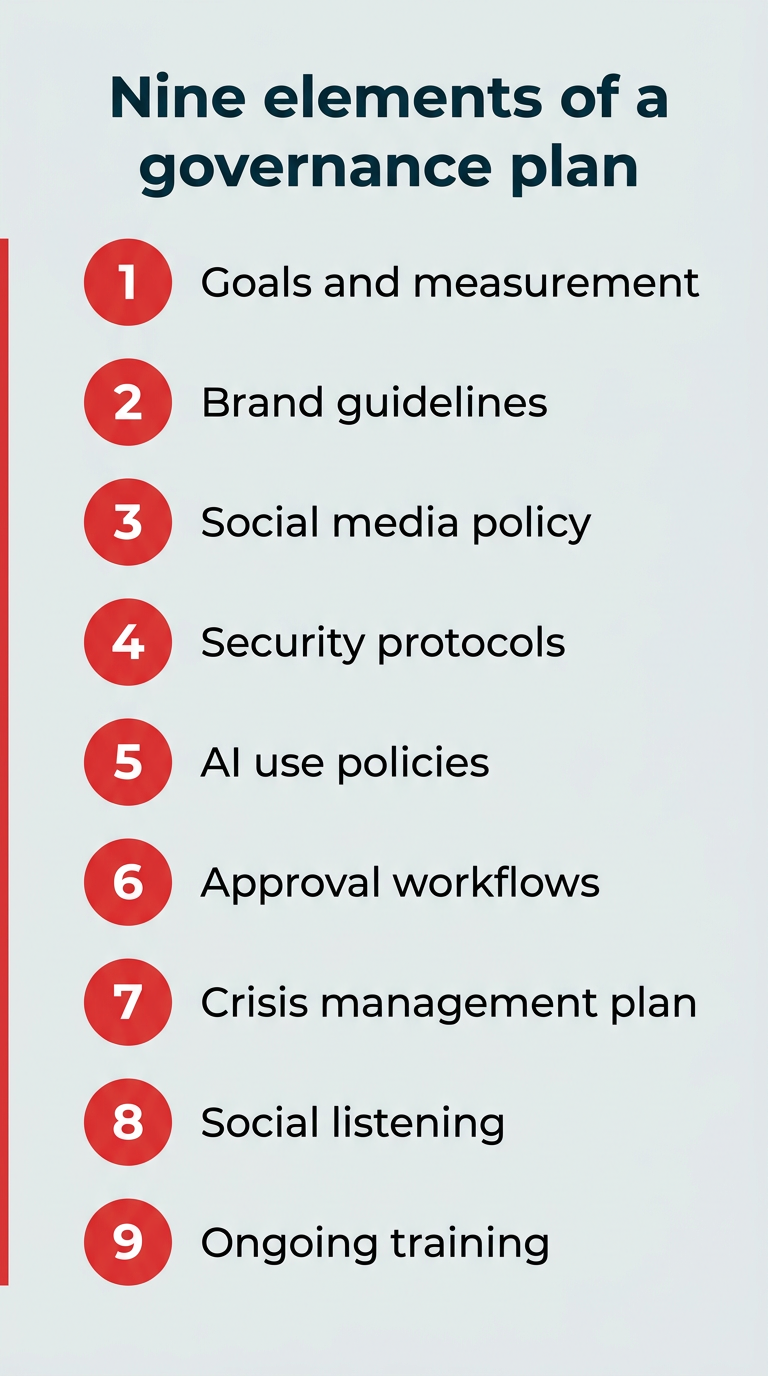
Social Media Goals and Measurement: Before any action, an organization must define its "why." Clear, SMART (Specific, Measurable, Achievable, Relevant, Time-bound) goals are paramount. These objectives – whether brand awareness, customer engagement, lead generation, or crisis communication – dictate the strategy and inform all subsequent governance components. A robust framework outlines precise Key Performance Indicators (KPIs), methodologies for tracking and analyzing data, and reporting mechanisms to relevant stakeholders, ensuring continuous refinement of the social strategy based on tangible results.
-
Brand Guidelines and Style Standards: These are the bedrock of brand consistency. They meticulously detail how the brand should sound (tone of voice), look (visual identity, logos, approved imagery), and behave online. This includes specific guidelines for language use, hashtags, emoji application, legal disclaimers, accessibility standards, and even pre-approved content templates. By providing a centralized content library with examples, organizations ensure that all content, regardless of the creator or platform, feels unmistakably authentic to the brand.
-
A Comprehensive Social Media Policy: Distinct from the broader governance system, the social media policy is a crucial document outlining explicit rules for all personnel. It covers appropriate conduct for official corporate accounts, guidelines for employee use of personal social media accounts (especially when identifying affiliation with the company), content restrictions, disclosure requirements, and clear protocols for engaging with customers or handling sensitive information. The policy serves as an educational tool, outlining expectations and consequences, thereby reducing the likelihood of accidental missteps that could harm the brand.
-
Robust Security Protocols: Protecting social media accounts from unauthorized access, cyber threats, and data breaches is non-negotiable. Governance dictates stringent password policies (e.g., multi-factor authentication, regular rotations, complexity requirements), role-based access controls (ensuring individuals only have necessary permissions), and a complete prohibition on password sharing. Furthermore, it mandates ongoing employee training to recognize evolving threats such as sophisticated phishing attacks, deepfake impersonations of executives, and credential stuffing, which are increasingly prevalent and difficult to detect.
-
AI Use Policies and Responsible AI Governance: As AI tools become integral to content creation, analytics, and customer service, specific governance for AI is essential. Policies must address the ethical use of AI, disclosure requirements for AI-generated content, verification processes to prevent "hallucinated" facts, and measures to ensure AI output aligns with brand voice and values. Controls are needed to prevent sensitive data from being inadvertently fed into public AI models by employees using ungoverned tools, and to mitigate risks of AI-powered deepfakes or synthetic media impersonations. Given that 70% of CMOs reportedly lack mature AI processes, this area represents a critical and rapidly expanding risk factor.
-
Streamlined Approval Workflows: To prevent off-brand or non-compliant content from going live, clear approval hierarchies are indispensable. These workflows define who drafts content, who reviews it, and who gives final authorization. In highly regulated industries like financial services or healthcare, legal and compliance teams often require mandatory review of all public-facing content, particularly anything new or high-risk, including AI-assisted content. Automation tools are crucial for routing content efficiently and ensuring documented sign-offs.
-
Proactive Crisis Management Plan: This component is designed to prepare for the worst. A well-defined crisis management plan outlines procedures for identifying a social media crisis, activating a dedicated response team, establishing communication protocols, developing pre-approved holding statements, and coordinating across departments. It defines clear decision-making authority during high-pressure situations, enabling rapid, calm, and thoughtful responses that can prevent a momentary issue from escalating into lasting reputational damage.
-
Advanced Social Listening and Monitoring: Beyond merely tracking mentions, robust governance integrates sophisticated social listening capabilities. This involves continuous monitoring of brand mentions, industry trends, competitor activities, and public sentiment in real time. Advanced listening tools provide early warning signals for potential crises by detecting shifts in sentiment or spikes in negative commentary. The insights derived from social listening are invaluable for informing strategic adjustments, refining brand guidelines, and proactively addressing emerging issues before they escalate.
-
Ongoing Training and Education: The dynamic nature of social media necessitates continuous learning. Governance frameworks must include a commitment to regular training for all employees involved in social media, covering new platform features, evolving compliance requirements, updated security protocols, and especially AI literacy. Certification programs and access to industry resources ensure that teams remain up-to-date and competent in navigating the ever-changing digital landscape.
The Multiplier Effect: Why Governance Matters More Now
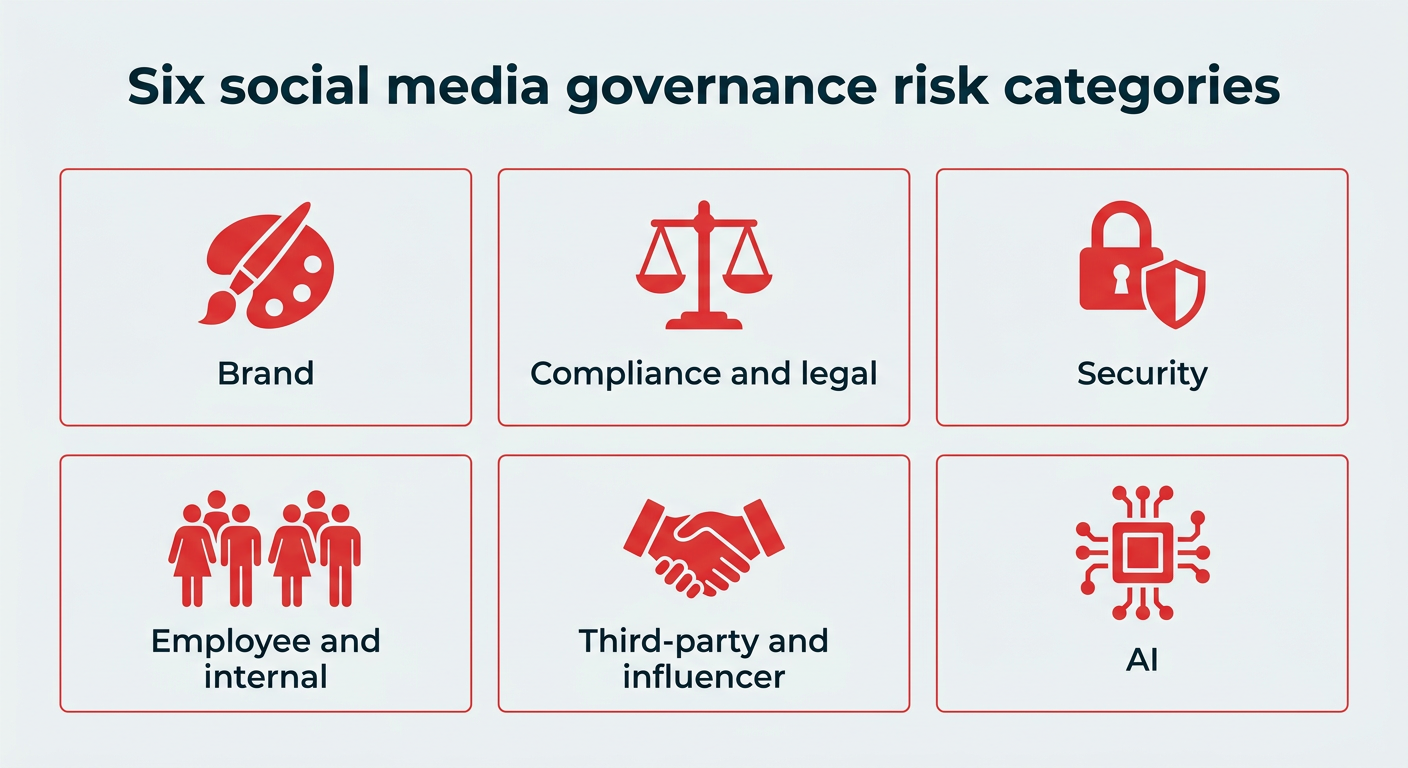
The absence of robust social media governance in today’s interconnected world amplifies risks across multiple critical domains, making its implementation an urgent imperative for enterprises.
Protecting Brand Reputation: Inconsistent messaging, off-brand content, or unauthorized posts can rapidly erode public trust and dilute brand equity. A single ill-conceived tweet or a visually misaligned campaign can go viral for the wrong reasons, leading to widespread negative sentiment and long-term damage. Strong governance ensures a unified brand voice, consistent visual identity, and aligned messaging across all platforms, fostering recognition and trust among audiences. It also empowers employees to understand how their personal online activities reflect on the organization, safeguarding the brand’s image indirectly.

Managing Regulatory and Compliance Risk: The regulatory landscape for social media is becoming increasingly complex and punitive. Organizations must adhere to a patchwork of laws covering advertising standards, data privacy (e.g., GDPR, CCPA, HIPAA), consumer protection, and industry-specific regulations (e.g., FINRA for financial services, FDA for pharmaceuticals). Failure to disclose sponsorships, misuse customer data, or share protected health information can result in severe financial penalties, legal action, and reputational fallout. For instance, the largest data privacy fine globally targeted Meta, underscoring the significant financial gravity of compliance breaches. Clear approval workflows, documented processes, and stringent archiving requirements become critical safeguards during audits.
Reducing Security Threats: Social media accounts are prime targets for cybercriminals. Without strong governance, risks such as password theft, phishing attacks, account takeovers, and the spread of malware become far more likely. The consequences can range from unauthorized posts and data breaches to direct financial fraud and the compromise of sensitive corporate information. Robust security protocols, including multi-factor authentication and regular security audits, are vital to protect digital assets and maintain the integrity of communication channels. The rise of sophisticated AI-powered phishing and deepfake technology makes these protocols more crucial than ever.
Preparing for Crises and Staying Agile: In an era of instant communication, a minor incident can quickly spiral into a full-blown crisis. Without a predefined governance structure, decision-making during such events can be chaotic, slow, and ineffective, exacerbating the damage. A clear crisis management plan, embedded within the governance framework, provides a roadmap for rapid response, outlining roles, responsibilities, communication channels, and pre-approved messaging. This agility allows organizations to react swiftly, calmly, and thoughtfully, containing the narrative and mitigating long-term negative impacts.
Emerging Risks: AI and Third-Party Management: The advent of AI introduces novel risks, from the generation of "hallucinated" content that spreads misinformation to the potential for AI tools to inadvertently leak sensitive corporate data if used without proper oversight. AI-powered deepfakes and synthetic impersonations pose significant threats to executive credibility and brand trust. Furthermore, relying on third-party influencers, agencies, or applications extends an organization’s digital footprint and introduces external risks. Undisclosed sponsorships, off-brand behavior by partners, or security vulnerabilities in third-party tools can quickly become liabilities. Comprehensive governance includes rigorous vetting processes, clear contractual standards, and continuous auditing of third-party access and compliance.
Implementing a Governance Framework: A Phased Approach
Building an effective social media governance framework is an ongoing process that requires strategic planning and cross-functional collaboration.
-
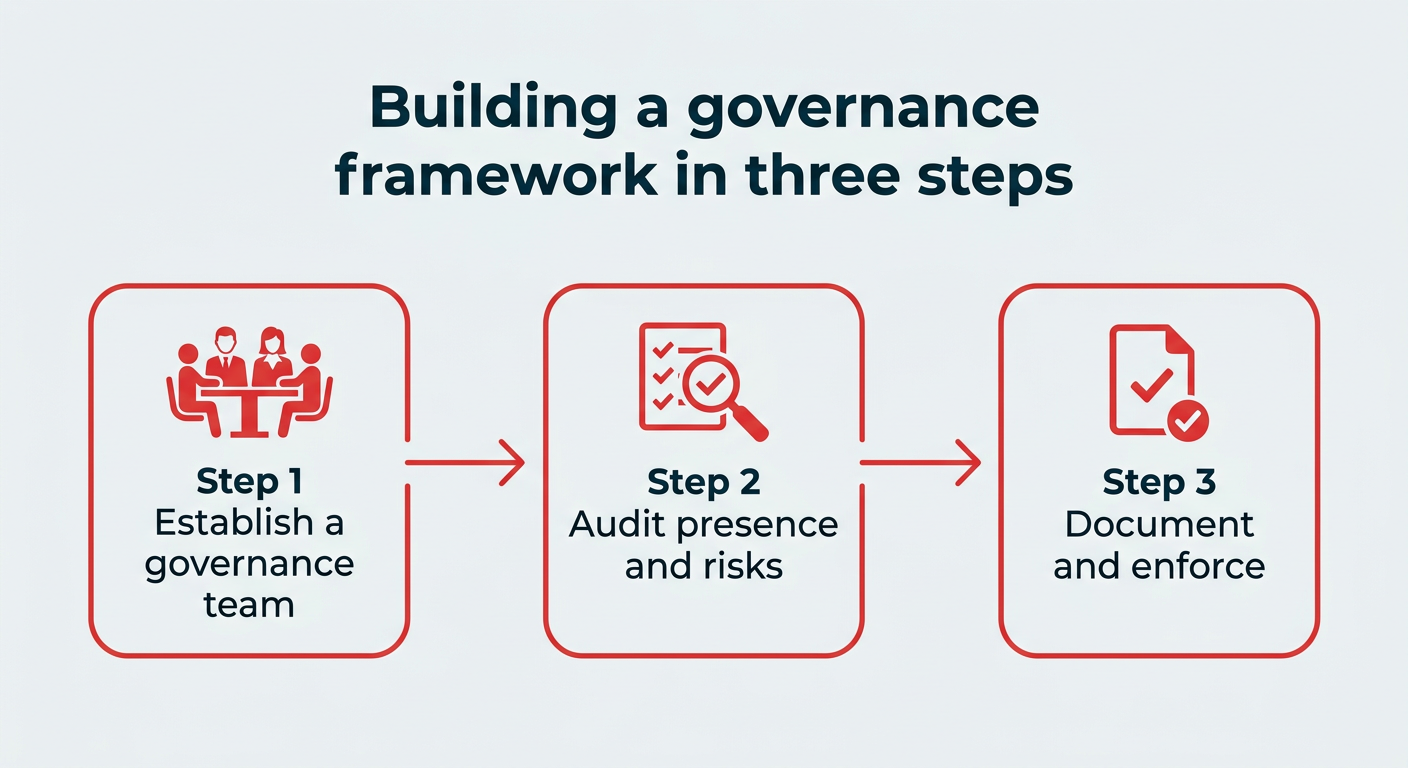
Establish a Governance Team or Center of Excellence: The first critical step is to define ownership. The most effective approach involves forming a cross-functional team, often referred to as a "Center of Excellence." This team typically includes representatives from marketing, legal, compliance, IT, communications, and human resources. Clear roles must be defined: a governance lead to oversee the entire system, platform owners responsible for specific social media accounts, and compliance reviewers who provide final sign-off on high-risk content. This shared ownership prevents gaps and ensures all critical areas are addressed.
-
Audit Your Current Social Presence and Risks: Before implementing new policies, a comprehensive audit is essential to understand the current state. This involves taking an inventory of every active and inactive social media account, every tool and integration used, and identifying who has access to each. The audit should also review existing policies, identifying gaps against the ideal governance elements, and flagging forgotten accounts, overly broad access permissions, or outdated protocols that currently pose risks. This process often uncovers shadow IT and unauthorized social activities.
-
Document, Distribute, and Enforce Your Plan: A governance framework is only effective if it is known and followed. All policies, guidelines, and procedures must be clearly documented in an easily accessible central repository. These documents must then be distributed to every relevant stakeholder, accompanied by mandatory training sessions that outline clear expectations and the implications of non-compliance. Enforcement should be integrated into daily workflows through automated approval processes and role-based access controls, rather than solely relying on good intentions. Regular disciplinary protocols for violations reinforce accountability.
-
Ongoing Review and Adaptation: The digital landscape is in constant flux. Therefore, a social media governance plan cannot be a static document. It requires regular, proactive review and updates, ideally at least quarterly. Additional reviews should be triggered by significant events such as major platform changes (e.g., new networks gaining traction, algorithm shifts), new regulatory requirements, or internal organizational changes. This continuous adaptation ensures the framework remains relevant, effective, and capable of addressing emerging risks and opportunities.
Leveraging Technology for Effective Governance
In an enterprise environment, specialized social media management platforms are indispensable tools for operationalizing governance. These platforms centralize disparate social media activities, providing a unified dashboard for publishing, engagement, analytics, and compliance. Features such as granular, role-based permissions ensure that only authorized personnel can access or publish content. Built-in approval workflows route content through necessary review stages before publication, documenting every step for audit trails. Real-time social listening capabilities act as an early warning system for potential crises, while integrated AI tools can assist with content creation under controlled parameters, ensuring brand alignment and compliance disclosure.

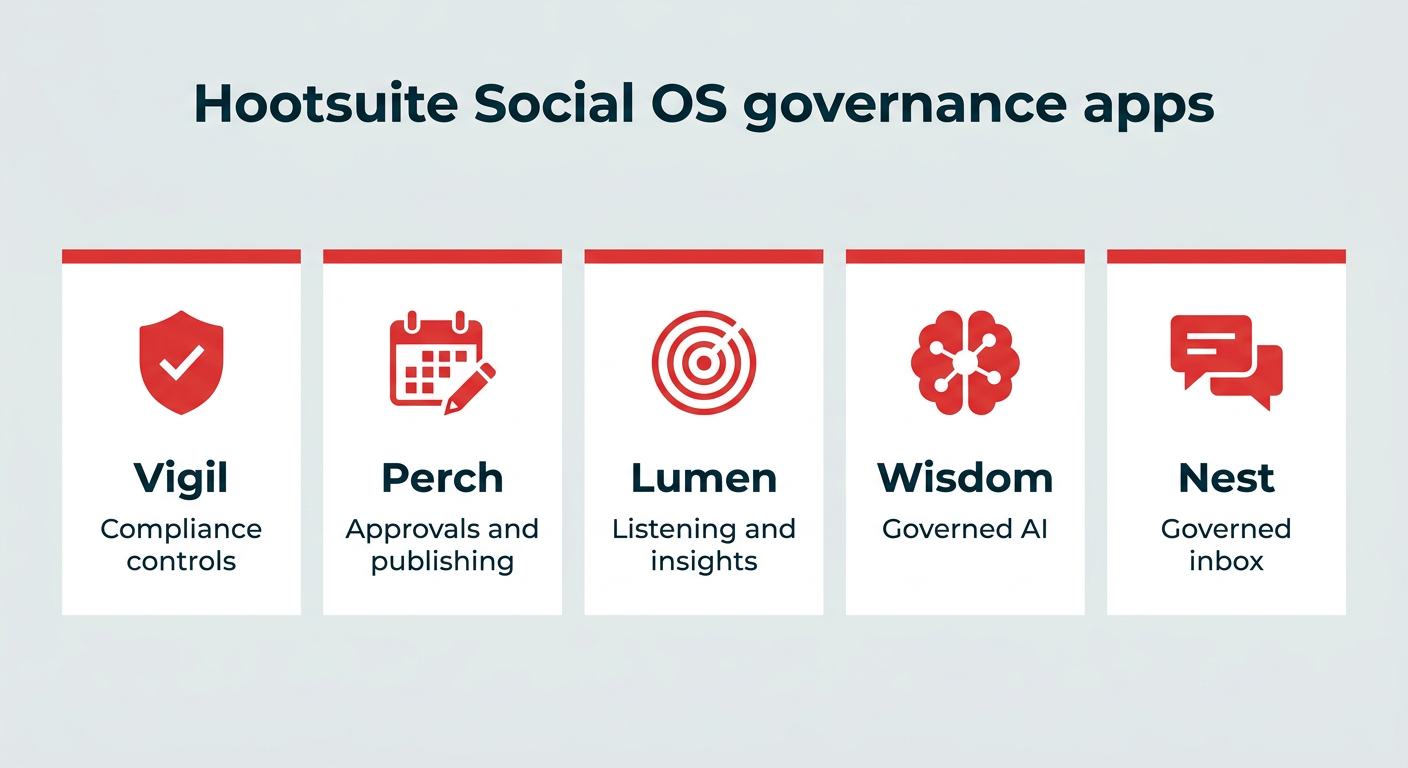
Hootsuite Social OS, for example, exemplifies how such a platform integrates governance into daily operations. Its components like Vigil focus on compliance and governance, Perch streamlines approval workflows, Lumen offers real-time insights and listening, and Wisdom provides governed AI capabilities. By consolidating these functions, such platforms allow organizations to manage access, approvals, and publishing rights effectively, ensuring consistency and mitigating risks across global teams and diverse digital channels.
Broader Implications and Future Outlook
Effective social media governance extends beyond mere risk mitigation; it becomes a strategic enabler. By providing clarity, consistency, and control, it empowers organizations to innovate confidently, explore new platforms, and engage authentically with their audiences without fear of unforeseen repercussions. It fosters trust, both internally among employees who understand the rules of engagement, and externally among customers who experience a cohesive and reliable brand presence.
However, challenges persist. Keeping pace with the rapid evolution of technology, navigating divergent global regulations, and managing internal resistance to stricter controls remain significant hurdles. The future of social media governance will likely see even greater reliance on AI for automating compliance checks, identifying emerging risks, and personalizing content within governed parameters. It will also increasingly integrate with broader enterprise risk management systems, becoming a fundamental pillar of overall corporate resilience. Ultimately, robust social media governance is not just about avoiding pitfalls; it is about building a sustainable, trustworthy, and agile digital presence that supports long-term business objectives in an ever-changing world.