


The evolution of digital commerce has transitioned from simple interface adjustments to complex, platform-wide experimentation frameworks that drive multi-billion dollar product strategies. At the forefront of this shift is Apurva Sandbhor, Manager of Platform and Product Experimentation at The Home Depot, who argues that the long-term success of enterprise testing lies not in the volume of tests conducted, but in the structural integrity of the platforms and the cultural shift toward "learning value." As organizations increasingly integrate Artificial Intelligence (AI) into their workflows, the focus is pivoting from manual execution to automated, high-velocity systems that safeguard data integrity while allowing for rapid innovation.
The Shift from Tactical Testing to Platform-First Strategy
In the early stages of Conversion Rate Optimization (CRO), many organizations treated experimentation as a series of isolated, tactical projects—minor adjustments to button colors or hero images intended to nudge short-term metrics. However, as digital ecosystems have grown in complexity, this reactive approach has proven insufficient for global enterprises. Sandbhor suggests that scaling an experimentation program without first scaling the underlying platform architecture creates "compounding friction."
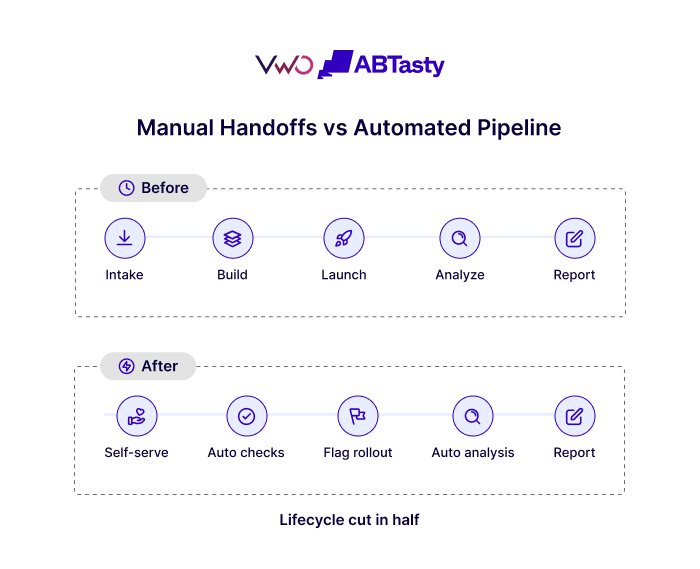
The traditional response to increased testing demand has been to increase headcount. Yet, without a robust structural framework, a larger team often leads to siloed execution, metric discrepancies, and significant operational noise. The modern alternative is a "platform-first" strategy. This approach treats the experimentation framework itself as a product, designed to act as a force multiplier for the entire organization. By automating the repetitive aspects of test setup, quality assurance, and data analysis, companies can increase their testing velocity without a linear increase in human capital costs.

The Dual-Lane Framework: Balancing Enablement and Innovation
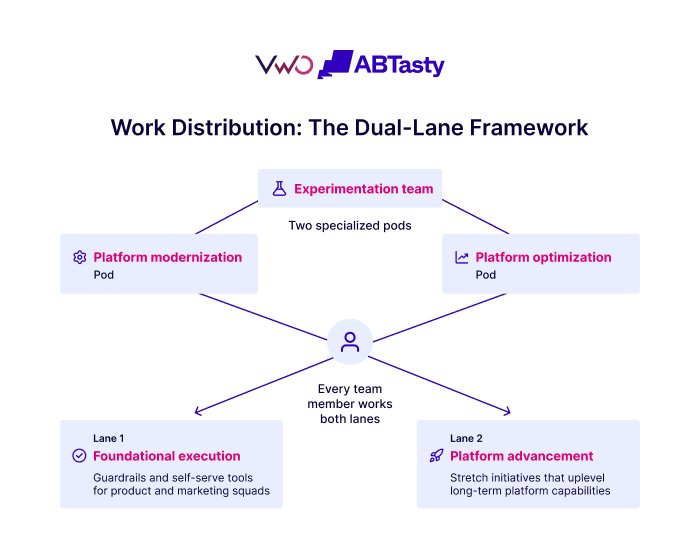
To manage work distribution across a massive organization like The Home Depot, leaders are increasingly adopting a "Dual-Lane" framework. This model effectively decouples day-to-day operational support from core platform innovation, preventing centralized teams from becoming bottlenecks.
- The Enablement Lane: This lane focuses on empowering decentralized product squads. It provides the tools, documentation, and governance necessary for individual teams to run their own experiments autonomously. The goal is to lower the barrier to entry for testing while ensuring that every team follows standardized protocols.
- The Innovation Lane: Simultaneously, a dedicated core team focuses on the evolution of the experimentation platform itself. This includes integrating new statistical engines, developing server-side capabilities, and building automated pipelines that connect experimentation data directly to executive dashboards.
By separating these functions, organizations can maintain a high volume of testing across various product lines while continuously improving the technical infrastructure that supports those tests.
Redefining Success: Moving Beyond Win Rates
One of the most significant cultural hurdles in enterprise experimentation is the over-reliance on "win rates" as a primary Key Performance Indicator (KPI). When leadership mandates a high percentage of positive test results, it inadvertently incentivizes "safe" testing. Teams become hesitant to explore bold, disruptive ideas, opting instead for low-risk, low-reward tweaks that are virtually guaranteed to yield minor improvements.
Industry data suggests that in high-maturity experimentation programs, only about 10% to 20% of tests yield a statistically significant positive result. Sandbhor aligns with this perspective, noting that the true value of a program lies in its "learning velocity" and "decision integrity." A "failed" test is not a loss of resources if it prevents a multi-million dollar feature from being rolled out that would have ultimately harmed the user experience or decreased conversion rates.

To shift this narrative, forward-thinking leaders are introducing new metrics to evaluate program health:
- Strategic Risk Avoidance: Calculating the estimated revenue loss prevented by stopping a flawed feature before a full release.
- Decision Velocity: The speed at which an organization can move from a hypothesis to a data-backed business decision.
- Insight Compounding: The rate at which learnings from previous tests are successfully integrated into the hypotheses of future experiments.
Maintaining Data Integrity through Automated Guardrails
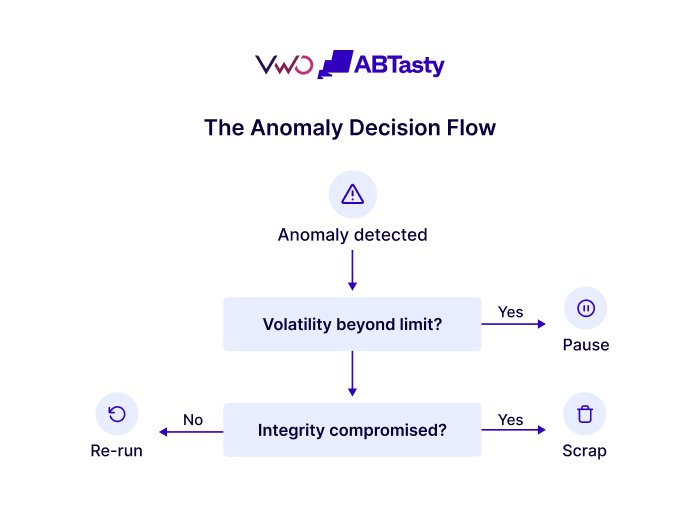
As the speed of testing increases, the risk of data contamination and false positives grows. Achieving true velocity requires the integration of automated statistical guardrails directly into the platform’s ingestion pipeline.
One of the most critical checks is for Sample Ratio Mismatch (SRM). SRM occurs when the actual distribution of traffic between test variations does not match the intended assignment, often signaling a technical bug in the bucketing logic or data tracking. In a manual environment, SRM might go unnoticed for weeks, leading to invalid conclusions. In an automated platform, the system can flag these anomalies in real-time, pausing the experiment before the data is used to inform strategic decisions.
Furthermore, modernized architectures are increasingly decoupling deployment from activation. By utilizing a hybrid of client-side and server-side experimentation, developers can deploy code to the production environment but keep it "dark" until the experiment is activated. This reduces the risk of "flicker" (where a user sees the original version before the variant loads) and allows for more complex, back-end logic testing that was previously impossible with simple browser-based tools.
The Human-AI Synergy in Experimentation
The rise of AI is fundamentally changing the execution layer of experimentation. AI agents are now capable of generating test variants, automating data pulls, and even performing initial analysis on results. However, Sandbhor emphasizes that AI cannot replace the strategic judgment required of a product leader or Chief Revenue Officer (CRO).
Human judgment remains essential in three primary areas:
- Ethical and Strategic Boundaries: Defining what should be tested and ensuring that experiments align with long-term brand values and regulatory requirements.
- Psychological Synthesis: Translating complex user behaviors and qualitative feedback into novel hypotheses that an algorithm might miss.
- Stakeholder Alignment: Building the internal consensus necessary to act on data, especially when results contradict the intuition of senior leadership.
While AI can optimize the path and handle the "drudge work" of data processing, human leaders must still choose the "mountain"—the high-level strategic goals that the organization aims to conquer.
Case Study: Behavioral Nuance in Checkout Optimization
The importance of human-led analysis was recently highlighted in a checkout optimization rollout. The organization introduced an algorithmic recommendation engine designed to cross-sell accessories during the final stages of the purchase path. Initial data showed a surprising aggregate drop in cart conversion rates.
A purely automated system might have simply labeled the feature a "failure" and recommended its removal. However, a deep-dive analysis by the experimentation team revealed a nuanced behavioral insight: the algorithm performed well for product discovery, but the multi-choice layout created "decision paralysis" at the high-intent checkout stage.
By refining the hypothesis and replacing the multi-choice layout with a single, pre-configured bundle, the team was able to eliminate cognitive friction. A follow-up test validated this approach, turning the initial loss into a significant net revenue lift. This case underscores that experimentation is a continuous loop of compounding insights rather than a linear "launch-and-forget" process.
The Road to Server-Side Maturity
For many organizations, the ultimate goal is the transition to server-side experimentation. This allows for deeper testing of core business logic, such as search algorithms, pricing models, and shipping configurations. However, Sandbhor warns that this transition requires a high degree of organizational maturity.
Before moving to server-side, companies must have a robust data-driven culture and a clear "Change Management" plan. This includes training for engineering teams, who must take a more active role in experiment implementation compared to client-side testing. The infrastructure must also be capable of handling real-time data ingestion without adding significant latency to the user experience.
Conclusion and Broader Implications
The perspectives shared by industry leaders like Apurva Sandbhor signal a maturation of the digital product landscape. Experimentation is no longer a peripheral activity managed by marketing teams; it is becoming a core piece of enterprise infrastructure. By focusing on platform-first scaling, automated guardrails, and a culture of "learning value," organizations can navigate the complexities of the modern market with greater precision.
As AI continues to commoditize the tactical aspects of testing, the competitive advantage for firms will lie in their ability to build systems that facilitate high-integrity decision-making. The most successful programs will be those that treat experimentation as an "ironclad insurance policy" for innovation—protecting the enterprise from costly strategic missteps while providing the data necessary to scale the next generation of digital products. In this new era, volume is merely an input; the ultimate output is a deeper, data-backed understanding of the consumer.







