

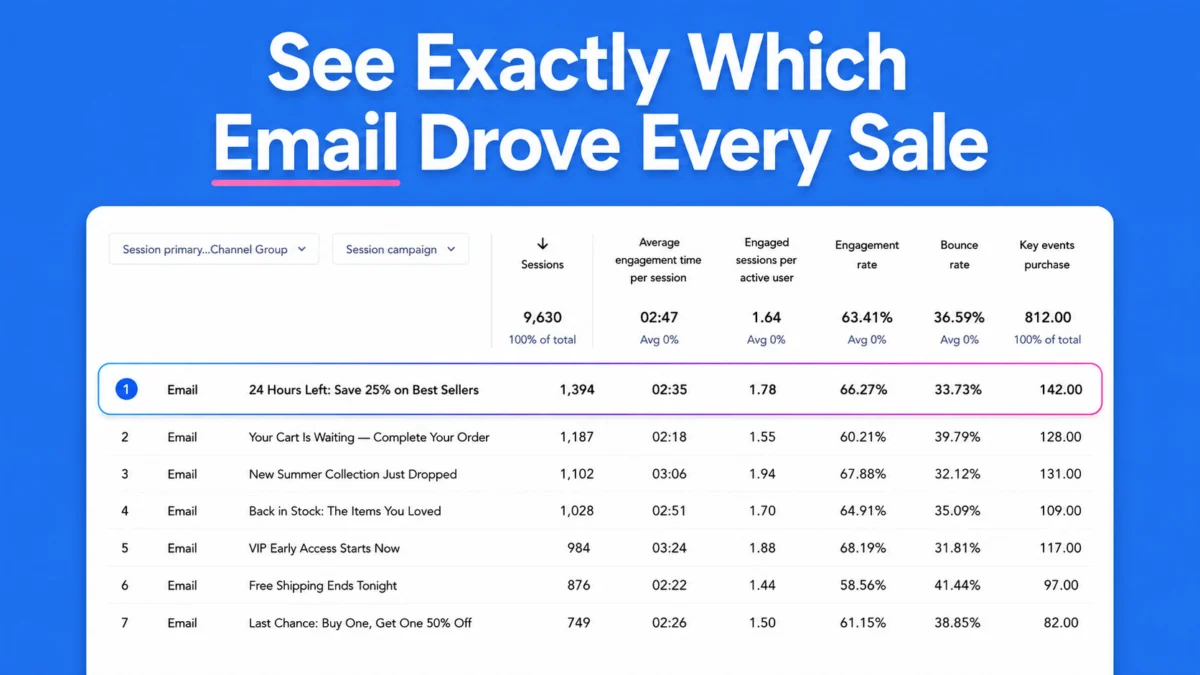
Philadelphia, PA – July 7, 2026 – AWeber, a venerable leader in email marketing services, has announced a significant enhancement to its platform, fundamentally transforming how marketers track the effectiveness of their email campaigns. The company has rolled out an automatic UTM parameter tagging feature that seamlessly integrates with Google Analytics, promising to simplify sales attribution and provide unprecedented clarity into email performance without any manual setup. This innovation, unveiled today, aims to bridge the gap between email engagement and measurable conversions, allowing users to trace sales directly back to the specific subject lines that initiated them.
The core of this new functionality lies in AWeber’s ability to automatically append UTM parameters to every link within an outgoing email. These parameters – utm_source, utm_medium, and utm_campaign – are standard tags used by Google Analytics to categorize website traffic sources. With this update, AWeber designates aweber as the source, email as the medium, and the email’s subject line as the campaign name. This automated process ensures that once an email is sent, comprehensive performance data is immediately available within Google Analytics, negating the need for marketers to manually generate or insert tracking codes.
The Evolution of Digital Attribution: A Critical Need for Precision
In the increasingly complex landscape of digital marketing, accurate attribution is not merely a convenience; it is a strategic imperative. Businesses allocate significant resources to email marketing, a channel consistently cited for its high return on investment (ROI), with estimates often ranging from $36 to $42 for every dollar spent. However, proving this ROI and understanding which specific elements of an email campaign contribute most effectively to sales has traditionally been a labor-intensive and error-prone process.
Before the advent of sophisticated analytics, marketers often relied on anecdotal evidence or broad channel-level data. The introduction of UTM parameters by Google provided a standardized method for tracking the origin of website traffic, allowing marketers to segment visitors by source (e.g., Google, Facebook), medium (e.g., organic, CPC, social), and campaign (e.g., Summer Sale, Q3 Newsletter). While powerful, the manual application of these parameters for every link in every email, especially across numerous campaigns, presented a substantial operational challenge. Marketers frequently struggled with inconsistencies, forgotten tags, or incorrect parameter values, leading to fragmented or unreliable data.
AWeber, established in 1998, has consistently evolved with the digital marketing industry, serving millions of small businesses and entrepreneurs. Its longevity in the competitive email service provider (ESP) market is largely attributed to its commitment to simplifying complex marketing tasks. This latest feature represents a significant leap in that tradition, directly addressing one of the most persistent pain points in email campaign management: precise, effortless attribution.
The Technical Mechanics: Seamless Integration and Intelligent Design
The new AWeber system operates by intercepting outbound links at the point of dispatch. For every link in an email, AWeber automatically injects the three aforementioned UTM parameters. The brilliance of this system lies in its intelligent design: if a user has already manually added their own UTM parameters to a link, AWeber’s system detects them and leaves them untouched. This ensures that custom tracking strategies remain intact, providing flexibility for advanced users while offering robust default tracking for everyone else.
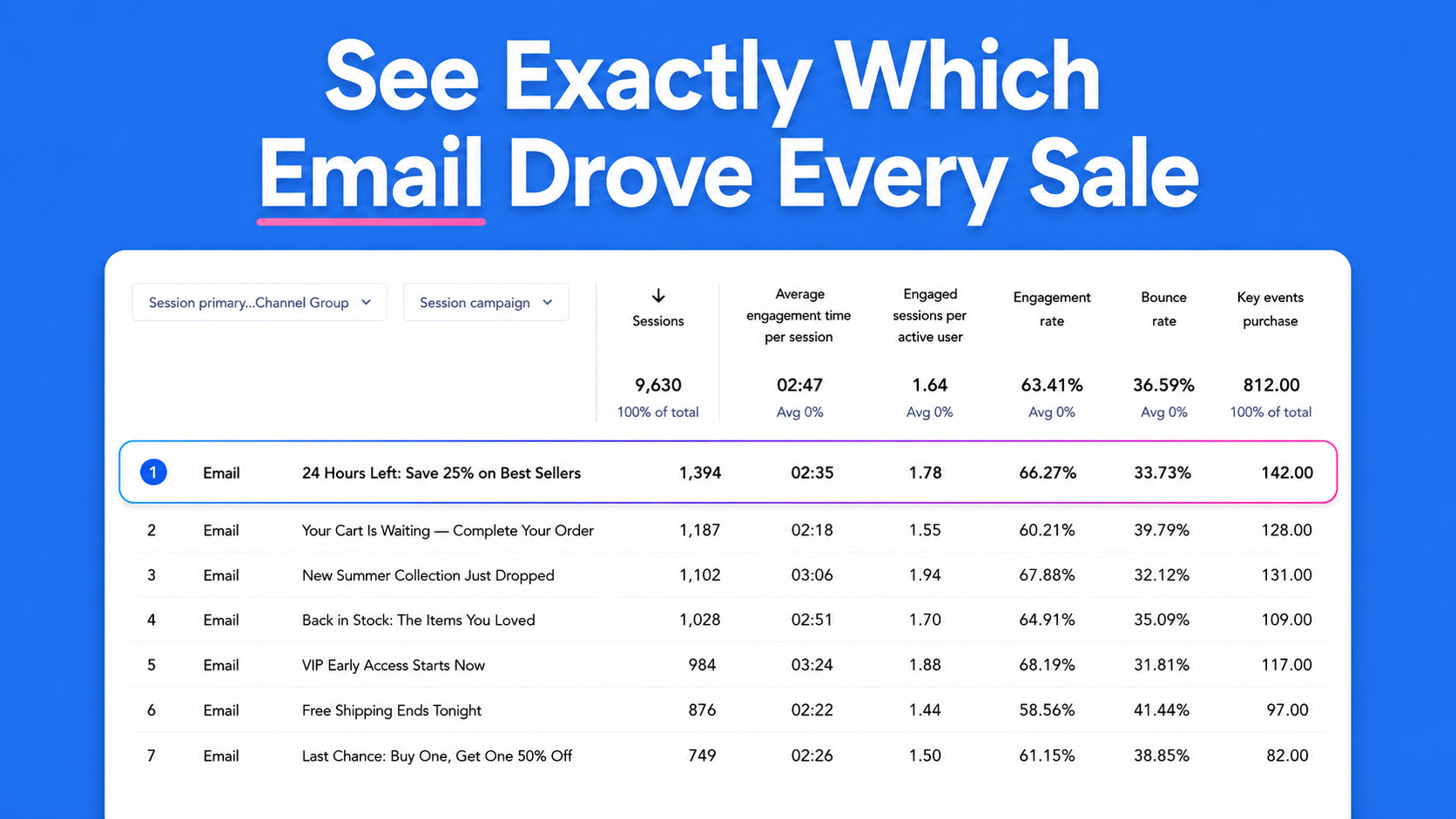
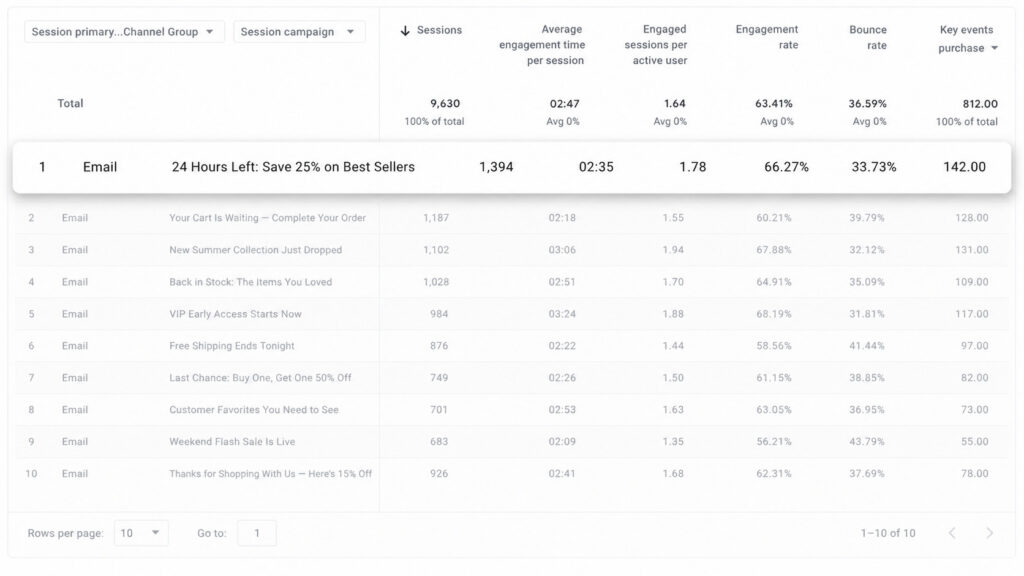
Once an email is sent, recipients clicking on any link are directed to the intended destination, but with the appended UTM data. This data is then captured by Google Analytics, where it is automatically organized. Marketers can access this invaluable information by navigating to the "Acquisition > Traffic acquisition" section in Google Analytics. By filtering the data by source/medium (specifically, aweber / email), users will see each individual email campaign listed under its respective subject line. This granular view allows for direct comparison of performance across different email sends, enabling marketers to identify which subject lines, offers, or content strategies are most effective in driving traffic, conversions, and ultimately, sales.
For instance, a campaign with the subject line "Flash Sale: 24 Hours Only!" will appear in Google Analytics as a distinct campaign, allowing marketers to analyze its specific contribution to website visits, e-commerce transactions, or lead form submissions. This level of detail empowers data-driven decision-making, moving beyond open rates and click-through rates to tangible business outcomes.
A Chronology of Innovation and Strategic Impact
The announcement on July 7, 2026, marks a pivotal moment for AWeber and its user base. While the development cycle for such a feature is typically several months, if not a year, this release reflects a growing industry trend towards automation and intelligent integration within marketing technology stacks. The increasing sophistication of AI and machine learning capabilities in recent years has made such "set-it-and-forget-it" solutions more feasible and reliable.
This move by AWeber builds on a foundation laid by Google Analytics, which has been the de facto standard for web analytics for over a decade. As digital marketing matured, the demand for deeper insights into campaign performance grew exponentially. Early integrations between ESPs and analytics platforms often required complex API setups or manual data exports. AWeber’s new feature represents a culmination of these efforts, pushing the industry towards more native, user-friendly solutions that reduce friction for marketers.
The Strategic Imperative: Why Automated Attribution Matters
The implications of AWeber’s automatic UTM tagging extend far beyond mere convenience. This feature is poised to significantly impact how small and medium-sized businesses (SMBs) approach their email marketing strategies, providing them with sophisticated analytical capabilities traditionally reserved for larger enterprises with dedicated analytics teams.
Enhanced Decision-Making for SMBs: SMBs often operate with limited marketing budgets and personnel. Manual UTM tagging is an extra, time-consuming step that can be easily overlooked or incorrectly implemented. By automating this process, AWeber empowers SMB owners and their small marketing teams to gain clear, actionable insights into which email content, promotions, or calls-to-action are truly resonating and driving revenue. This enables them to optimize future campaigns, allocate resources more effectively, and achieve a higher ROI on their email marketing efforts. According to recent industry surveys, over 60% of SMBs cite difficulty in measuring marketing ROI as a top challenge, a pain point directly addressed by this new feature.
Increased Efficiency for Marketing Agencies: For marketing agencies managing multiple client accounts, the new AWeber feature will be a game-changer for efficiency. The time saved from manual UTM tagging across dozens or hundreds of campaigns can be redirected towards strategic planning, content creation, or deeper analysis. Furthermore, the consistent and accurate data flow into Google Analytics will allow agencies to provide more transparent and compelling performance reports to their clients, demonstrating tangible results and strengthening client relationships. A hypothetical agency principal might comment, "This level of automation means we can spend less time on tedious data entry and more time on strategic insights, ultimately delivering better value to our clients."
Raising the Bar in the Competitive ESP Landscape: AWeber’s move sets a new benchmark for email service providers. Competitors such as Mailchimp, Constant Contact, and ConvertKit, which already offer various levels of integration with analytics platforms, may feel pressure to enhance their own attribution capabilities to match or surpass AWeber’s seamless automation. This could spur a wave of innovation across the industry, benefiting marketers universally. The trend towards ‘zero-configuration’ integrations is a clear indicator of where marketing technology is headed.
Fostering a Data-Driven Culture: By lowering the barrier to entry for robust analytics, AWeber is helping to foster a more data-driven culture among its users. Marketers will move beyond vanity metrics like open rates and focus more intently on conversion rates, average order value, and customer lifetime value directly attributable to email campaigns. This shift encourages continuous improvement and a more strategic approach to email marketing.
User Control and Customization
While the feature is designed for maximum automation and ease of use, AWeber has also ensured that users retain control. The automatic UTM tracking is enabled by default for all new and existing AWeber accounts, reflecting the company’s confidence in its value. However, marketers can easily adjust this setting for individual lists.
To manage the feature, users simply navigate to their AWeber list settings, locate the "List Settings" tab, and then access the "Advanced Settings." Within this section, a clear toggle allows users to turn the UTM tracking functionality on or off for that specific list. This flexibility ensures that users with highly specialized tracking needs or unique workflow requirements can customize their experience, while the majority can benefit from the default, hassle-free automation. The setting takes effect immediately upon the next email send, providing instant control over campaign data.
Conclusion: A New Era for Email Marketing ROI
AWeber’s introduction of automatic UTM parameter tagging marks a significant step forward in email marketing attribution. By eliminating the manual effort associated with tracking campaign performance, the feature empowers marketers, especially those in SMBs and marketing agencies, to gain clearer, more reliable insights into the effectiveness of their email strategies. This level of automated, granular data in Google Analytics will enable more informed decision-making, optimize resource allocation, and ultimately drive higher conversions and a demonstrable return on investment from email campaigns. In an era where every marketing dollar must be justified, AWeber has delivered a tool that promises to make email marketing more accountable, efficient, and profitable than ever before.








