The landscape of digital commerce and information retrieval has undergone a fundamental transformation, rendering traditional methods of website analysis increasingly obsolete. In the current 2026 digital ecosystem, the standard metrics of 2020—traffic volume, keyword rankings, and page load speed—remain necessary but are no longer sufficient to ensure business viability. As search engines evolve into answer engines and user journeys become fragmented across various Large Language Models (LLMs) and generative AI interfaces, the definition of website analysis has expanded. It now encompasses a complex matrix of discoverability, machine readability, brand credibility, and the minimization of conversion friction across non-linear paths.
The shift is driven by a radical change in how consumers interact with the internet. Buyers may now discover a brand through a Google Search, but they are equally likely to compare that brand against competitors inside a ChatGPT interface, read a synthesized summary in a Google AI Overview, or receive a direct recommendation from Perplexity. This multi-modal discovery process necessitates a new framework for website evaluation that prioritizes how both humans and machines interpret digital assets.
The New Visibility Paradigm: From SERPs to AI Citations
The primary shift in website analysis involves the transition from Search Engine Optimization (SEO) to a broader concept of Search and AI Visibility. For two decades, the goal of visibility was to secure a "blue link" on the first page of Google. However, data from industry analysts suggests a starkly different reality in 2026. Gartner previously predicted that traditional search engine volume would drop by 25% by 2026 as users migrated toward AI chatbots and virtual agents. This prediction has largely materialized, forcing a re-evaluation of what constitutes "visibility."
Supporting this shift, research from the Pew Research Center has highlighted a significant change in click-through behavior. Their findings indicated that users were 47% less likely to click on a traditional organic result when an AI summary was present. Specifically, click rates dropped from 15% in standard results to just 8% when an AI-generated overview provided the answer directly. Consequently, modern website analysis must now answer two distinct questions: how visible is the brand in traditional search, and how frequently is the brand cited as a source or recommendation by generative AI tools?
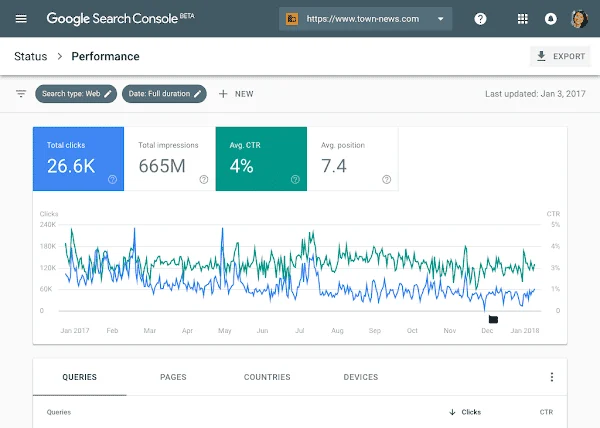
To address these questions, analysts are moving beyond Google Search Console’s Performance reports. While tracking impressions and Click-Through Rates (CTR) remains a staple, the focus has shifted toward "indexing health" and "machine readability." If a website’s technical architecture prevents an AI crawler from efficiently parsing its data, that brand effectively ceases to exist in the AI-driven recommendation layer. Analysts now manually audit how their brands appear in queries across platforms like ChatGPT, Gemini, and Copilot, moving from keyword tracking to "intent-based" discovery audits.
Technical Infrastructure and the Rise of Machine Readability
The second pillar of modern analysis is technical health, which has evolved from simple "site speed" to a comprehensive assessment of a site’s "crawlability" by diverse agents. In the past, technical SEO focused on Googlebot; today, it must account for the scraping and indexing behaviors of various LLM providers.
Technical audits in 2026 prioritize:
- Schema and Structured Data: Ensuring that every product, service, and article is wrapped in clear, semantic code that tells an AI exactly what the content represents.
- Core Web Vitals 2.0: While speed is a factor, the stability of the interface and the lack of intrusive elements are now critical signals for both user retention and search engine preference.
- API Integration: Evaluating how well the website’s data can be exported to third-party platforms that may serve as the actual point of sale.
The chronology of these technical requirements traces back to Google’s 2021 Page Experience Update, which set the stage for a user-centric web. By 2024, the integration of generative search forced websites to become more than just visual pages; they became structured databases that feed the global AI ecosystem.
Behavioral Analysis and the Science of Conversion Rate Optimization
Once a visitor lands on a site, the focus of analysis shifts to User Behavior and Customer Experience (CX). The modern Conversion Rate Optimization (CRO) audit is no longer a localized task of changing button colors; it is a 360-degree evaluation of the psychological barriers to a sale.
Analysts categorize behavior data into two streams:
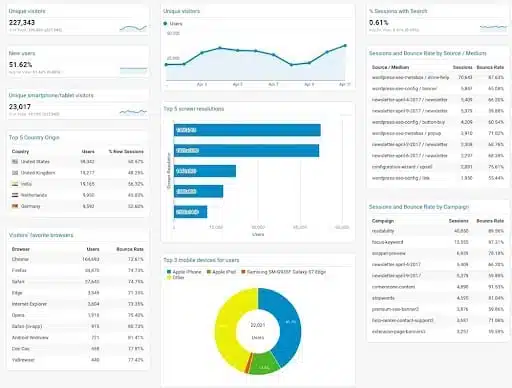
- Quantitative Data: Measured through tools like Google Analytics or Similarweb, this provides the "what." It tracks session duration, bounce rates, and the specific paths users take through a site.
- Qualitative Data: This provides the "why." Using session recordings and heatmaps, analysts observe where users experience "rage clicks" or where they abandon a form due to excessive friction.
A critical component of this analysis is "Messaging Resonance." In an era where AI can generate infinite content, human-centric messaging that builds trust is the primary differentiator. Analysts now conduct copy audits to ensure that the "scent of the search"—the promise made in an ad or an AI summary—matches the reality of the landing page. If there is a disconnect between the AI’s recommendation and the website’s actual content, the resulting "pogo-sticking" behavior signals to search engines that the site is low-quality.
Usability and the Nielsen Framework
To ensure that a website remains functional for a diverse global audience, usability analysis has returned to its roots: Heuristic Evaluation. Based on the ten principles developed by Jakob Nielsen, these audits identify design flaws that impede the user journey.
The ten heuristics remain the gold standard for expert reviews:
- Visibility of System Status: Keeping users informed about what is going on.
- Match Between System and the Real World: Using language and concepts familiar to the user.
- User Control and Freedom: Providing clear "emergency exits" for mistaken actions.
- Consistency and Standards: Following platform conventions.
- Error Prevention: Designing to prevent problems before they occur.
- Recognition Rather Than Recall: Making objects, actions, and options visible.
- Flexibility and Efficiency of Use: Catering to both novice and expert users.
- Aesthetic and Minimalist Design: Removing irrelevant information.
- Help Users Recognize, Diagnose, and Recover from Errors: Using plain language to explain issues.
- Help and Documentation: Providing easy-to-search information if needed.
Functionality assessments now include rigorous testing of links, buttons, and checkout flows across hundreds of device configurations, ensuring that the "discoverability" of functions remains high even as mobile interfaces become more complex.
Content Quality and the Trust Economy
In 2026, content is analyzed not just for its SEO value, but for its "Trust Signals." With the internet saturated by AI-generated text, search engines and users alike are looking for E-E-A-T: Experience, Expertise, Authoritativeness, and Trustworthiness.

Content analysis now involves auditing:
- Author Credibility: Are articles written by recognized experts with a verifiable digital footprint?
- Fact-Checking and Accuracy: Does the content align with the consensus of reputable sources, or does it hallucinate facts?
- Depth and Utility: Does the content provide a unique perspective that an AI could not easily synthesize from other sources?
The implications of this are profound. Websites that serve as "content farms" have seen their traffic decimated by AI overviews, which can summarize low-value information without requiring a click. High-value, original research and first-hand experience have become the only resilient content types.
The Strategic Roadmap for Website Analysis
A comprehensive website analysis is no longer a one-time event but a continuous cycle. The methodology adopted by leading digital firms involves a six-step roadmap:
- Objective Definition: Analysts must identify specific pain points, such as a drop in organic rankings or a high cart abandonment rate, to avoid "data drowning."
- Tool Selection: Utilizing a stack that includes SEO crawlers (Ahrefs, Semrush), behavioral tools (FigPii, Hotjar), and usability platforms (UserTesting).
- Roadmap Creation: Benchmarking current data against industry standards to set realistic KPIs.
- Data Collection: Gathering both quantitative and qualitative insights over a statistically significant period.
- Loophole Remediation: Prioritizing fixes based on their potential impact on the bottom line.
- Continuous Iteration: Establishing a culture of "perpetual auditing" to stay ahead of algorithm updates and shifting consumer habits.
Competitive Intelligence in a Fragmented Market
The debate over the necessity of competitive analysis has been settled in favor of rigorous benchmarking. In a market where attention is the scarcest resource, understanding a competitor’s strategy is vital. Analysts focus on three key areas:
- Organic Share of Voice: Tracking which keywords and AI-generated answers a competitor is dominating.
- Customer Demographics: Identifying underserved segments through audience intelligence tools.
- Paid Strategy: Analyzing competitor ad funnels to understand their customer acquisition costs and creative directions.
Broader Impact and Future Implications
The evolution of website analysis reflects a broader shift in the digital economy. We are moving away from a "destination-based" web toward a "distributed" web. In this new reality, a website acts as a central repository of truth that feeds various discovery layers.
The implications for businesses are clear: those who continue to view website analysis through the lens of 2020 metrics will find themselves invisible to the AI agents that now mediate the majority of consumer decisions. Conversely, brands that embrace a holistic approach—prioritizing machine readability, human trust, and frictionless experience—will thrive in the AI-dominated landscape of 2026 and beyond. The power of comprehensive website analysis lies not just in improving a site’s performance, but in ensuring its continued relevance in an increasingly automated world.