Google has recently refreshed its "Crawling infrastructure" documentation, introducing a pivotal new section titled "Optimize your crawl budget." This comprehensive update provides website owners and SEO professionals with actionable strategies to enhance the visibility of their pages to Google’s search engine bots. The fundamental premise is clear: for a page to be discoverable in Google’s vast index and subsequently appear in search results, it must first be effectively crawled. This latest guidance underscores the critical importance of efficient website architecture and content management in the ongoing digital landscape.
The introduction of the "crawl budget" concept acknowledges the immense scale of the internet and the finite resources Google dedicates to indexing it. In essence, a crawl budget dictates how many URLs Googlebot can and will crawl on a website within a given timeframe. A website that is poorly organized, technically deficient, or provides stale content will likely consume more of this budget on less important pages, or even struggle to have its entire inventory discovered. This can lead to fewer pages being indexed, directly impacting a website’s potential to rank and attract organic traffic. The updated documentation aims to empower site owners to maximize their crawl budget, ensuring their most valuable content receives the attention it deserves from Google’s automated systems.
Understanding the Crawl Budget: A New Framework for Website Accessibility
Google’s updated documentation emphasizes that every new website begins with a "conservative" crawl budget. This initial allocation is designed to be cautious, allowing Googlebot to discover and assess the site’s core content without overwhelming the website’s server resources. This cautious approach is a standard practice for Google, ensuring a stable and efficient crawling process across the web. For new websites, this means a gradual build-up of indexing rather than an immediate, comprehensive sweep.
As a website matures and demonstrates consistent activity, its crawl budget can naturally increase. Googlebot’s revisits are influenced by several factors, with regular content updates being a primary driver. When new content is added or existing content is refreshed, and crucially, when these updates are reflected in XML sitemaps, it signals to Googlebot that the site is dynamic and worth revisiting more frequently. This encourages a more robust and potentially larger crawl budget over time.
The documentation specifically advises a gradual approach to content updates. Instead of a sudden influx of numerous new pages, such as launching 100 new products in a single day, a more effective strategy involves a phased rollout, perhaps adding three products per day over a month. This approach allows Googlebot to comfortably discover and index new content without causing a surge in server load or diluting the impact of individual new additions. Consistent, incremental updates signal ongoing value and activity, which is favorably viewed by search engine algorithms.
Technical Foundations: Site Speed and Popularity as Crawl Budget Catalysts
A significant takeaway from the new guidelines is the direct correlation between a website’s load time and its crawl budget. It has long been an established SEO best practice that faster websites offer a superior user experience, and this principle extends to how efficiently search engine bots can navigate and index a site. Websites with slow loading speeds can frustrate Googlebot, leading to timeouts and incomplete crawls. Therefore, continuous monitoring and improvement of site performance are paramount. Tools like Google PageSpeed Insights and other performance testing platforms are invaluable resources for identifying and rectifying speed bottlenecks.
The documentation also highlights the role of page popularity in determining crawl frequency. Pages that garner a substantial number of inbound links, both from external authoritative sources and from within the website itself (internal linking), are perceived by Google as more important and authoritative. Consequently, Googlebot will prioritize crawling these popular pages more frequently. This underscores the enduring importance of robust link-building strategies, encompassing both off-site and on-site optimization, as key drivers for enhancing crawl frequency and, by extension, crawl budget.
Beyond link popularity, several other methods can significantly improve crawl frequency and speed. These include:
- Streamlined Navigation: A clear, logical, and intuitive website structure makes it easier for bots to discover all accessible pages. Deeply buried pages or complex navigation paths can be missed.
- Internal Linking Optimization: Strategically linking relevant pages within a website helps distribute link equity and guides bots to important content.
- Robots.txt File Management: Properly configured robots.txt files ensure that Googlebot is not inadvertently blocked from accessing important sections of the website. Conversely, disallowing crawling of unimportant or duplicate content can help conserve the crawl budget for valuable pages.
- Sitemap Submission and Maintenance: XML sitemaps act as a roadmap for Googlebot, listing all important URLs on a website. Keeping sitemaps up-to-date with new and modified content is crucial.
- Canonical Tags: Correctly implemented canonical tags prevent duplicate content issues, ensuring that Google indexes the preferred version of a page and doesn’t waste crawl budget on redundant URLs.
- Broken Link Management: Regularly identifying and fixing broken internal and external links ensures that crawl requests are not wasted on non-existent pages.
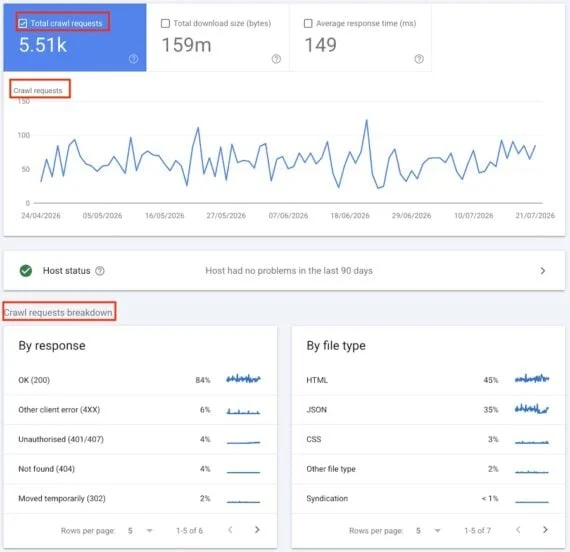
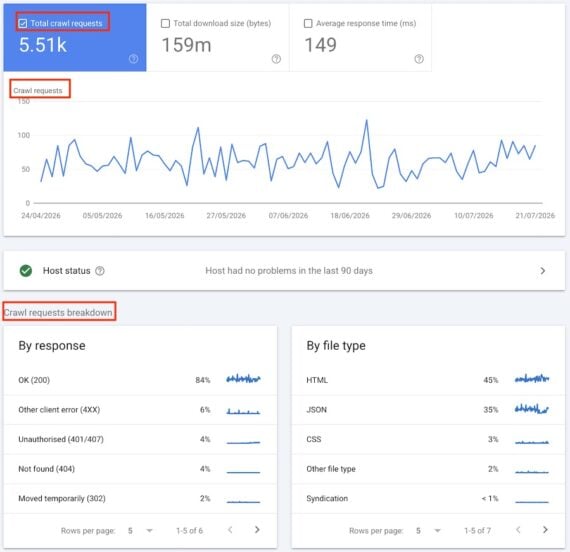
The accompanying screenshot of Google Search Console’s "Crawl stats" report further emphasizes the practical application of these concepts. This report provides invaluable data on how often Googlebot visits a website, how much data it downloads, and any errors encountered during the crawling process. Analyzing these statistics allows website owners to identify potential issues, such as unusually low crawl rates for important sections or a high number of crawl errors, and take corrective actions.
Navigating the Nuances: The "URL Caching" Recommendation and its Implications
A notable addition to the updated guidelines is the "URL caching" recommendation, specifically encouraging support for 304 (Not Modified) HTTP status codes. The rationale behind this is to conserve server bandwidth and resources. When a page hasn’t changed since its last crawl, returning a 304 status code signals to Googlebot that it can safely use its cached version, thereby avoiding the need to re-download the entire page. This is an efficient mechanism for both the website owner and Google.
However, as experienced SEO practitioners observe, this recommendation warrants careful consideration. While technically sound for resource management, blindly applying 304 status codes to all unchanged pages might have unintended consequences for search engine visibility. For pages that are critically important for organic search rankings, such as product pages or core content articles, a frequent 304 response could inadvertently signal to Google that the page is static and perhaps less relevant for frequent re-evaluation. This could potentially impact the page’s freshness in search results or, in extreme cases, even its indexing status if the signal is misinterpreted as a lack of ongoing relevance.
Therefore, a more nuanced approach is often recommended. Website owners might consider applying the 304 status code primarily to less critical pages. This could include pages with content that is inherently static or rarely updated, such as privacy policies, terms of service, or perhaps even expired product listings that are still maintained for historical reference. For pages that are subject to frequent updates, or those that are central to a business’s SEO strategy, it might be more prudent to allow Googlebot to re-crawl them more regularly, even if they haven’t undergone significant content changes. This ensures that any subtle updates or shifts in their perceived importance are promptly recognized by the search engine.
Broader Impact and Strategic Considerations
The intensified focus on crawl budget optimization by Google reflects an ongoing evolution in how search engines approach website indexing. As the volume of online content continues to explode, search engines are becoming increasingly sophisticated in allocating their crawling resources efficiently. This shift means that website owners can no longer afford to be passive about their site’s technical health and content strategy.
For businesses, a well-optimized crawl budget translates directly into improved search engine visibility, higher organic traffic, and ultimately, greater potential for conversions and revenue. Failing to address crawl budget issues can result in valuable content being overlooked by search engines, leading to missed opportunities and a competitive disadvantage.
The implications of this updated documentation extend across various aspects of website management:
- Technical SEO: It reinforces the importance of robust technical SEO practices, including site speed optimization, proper use of HTTP status codes, efficient site architecture, and effective sitemap management.
- Content Strategy: It highlights the value of a consistent and strategic approach to content creation and updates. Regularly publishing fresh, relevant content that is discoverable through sitemaps can significantly boost a site’s crawl budget.
- Website Design and Development: It emphasizes that website design should not only prioritize user experience but also be optimized for search engine crawling. This includes making content easily accessible through logical navigation and internal linking.
- E-commerce: For online retailers, optimizing crawl budget is critical for ensuring that product catalogs are fully indexed. Slow-loading product pages, poor categorization, or a lack of regular updates can lead to lost sales.
In conclusion, Google’s updated "Crawling infrastructure" documentation, particularly the "Optimize your crawl budget" section, serves as a vital reminder of the intricate relationship between website performance, content strategy, and search engine visibility. By understanding and actively managing their crawl budget, website owners can ensure that their most important content is discovered, indexed, and ultimately, ranked by Google, paving the way for enhanced organic search performance in an increasingly competitive digital landscape.