For more than four decades, Apple Inc. has meticulously constructed a corporate identity centered on the concept of total vertical integration. From the custom silicon in its chips to the proprietary code of its operating systems, the Cupertino-based giant has maintained that "control" is the essential ingredient for a premium user experience. However, the rapid ascent of generative artificial intelligence has forced a fundamental shift in this philosophy. As Apple struggles to modernize its virtual assistant, Siri, the company has found itself in an uncharacteristic position: relying on its primary rival, Google, to fill a critical technological void. This transition marks a significant departure from the "walled garden" strategy and signals a broader narrative challenge for a company that has long equated autonomy with excellence.
The Philosophical Crisis of the AI Era
Apple’s historical success was never just about hardware aesthetics; it was about the seamless orchestration of the entire ecosystem. By controlling the hardware, the software, the App Store, and the privacy architecture, Apple could guarantee a level of stability and security that competitors using fragmented systems could not match. In the context of Apple’s marketing, control was not merely a technical preference—it was the brand’s core promise to the consumer.
The emergence of Large Language Models (LLMs) and generative AI, led by the likes of OpenAI’s ChatGPT and Google’s Gemini, presented a unique threat to this model. Unlike traditional software updates, advanced AI requires massive computational power and vast datasets that often exist outside the traditional "on-device" boundaries Apple favors for privacy reasons. Siri, which was once a pioneering technology when it debuted on the iPhone 4S in 2011, has increasingly been viewed as a relic of an older era—useful for basic tasks like setting timers or checking the weather, but fundamentally incapable of the complex, context-aware reasoning defined by modern AI.
A Chronology of Apple Intelligence and the 2025 Delays
The trajectory of Apple’s AI strategy has been marked by ambitious promises followed by significant logistical hurdles. To understand the current state of Siri, one must look at the timeline of the "Apple Intelligence" initiative:
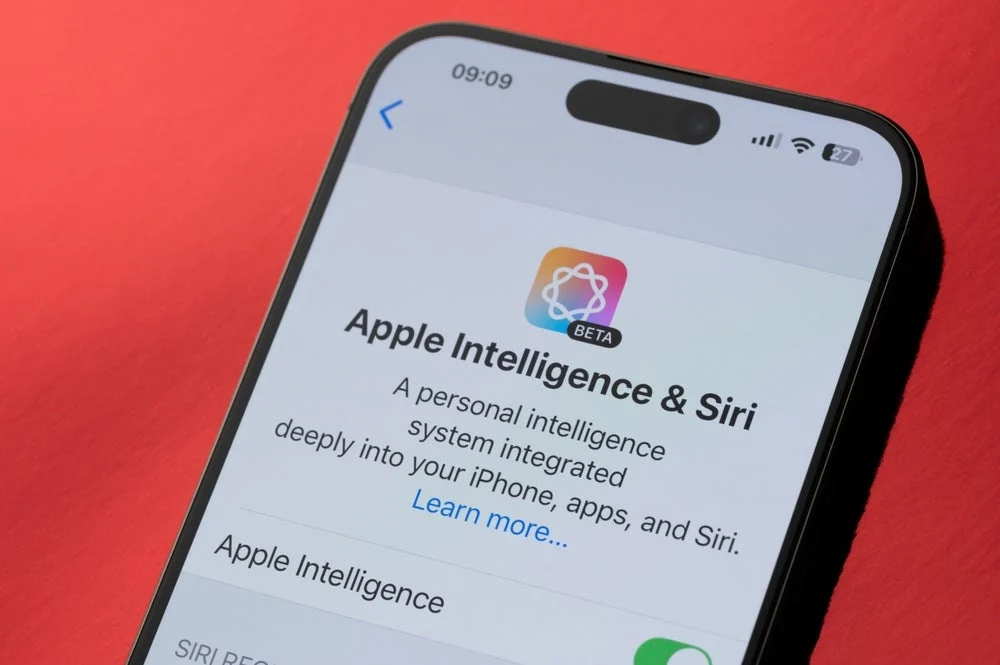
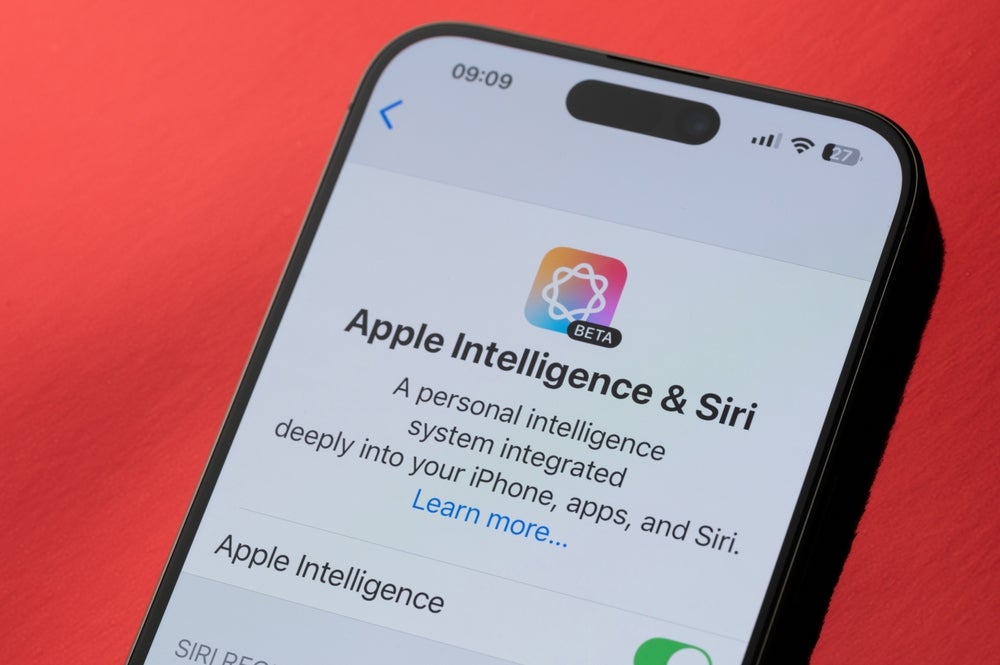
- June 2024: At the Worldwide Developers Conference (WWDC), Apple officially announced "Apple Intelligence." The suite of features promised a revamped Siri with better context understanding, the ability to take actions across different apps, and a more natural conversational interface.
- Late 2024: Initial rollouts of Apple Intelligence began in beta formats, focusing on writing tools and photo editing. However, the most anticipated "Advanced Siri" features remained absent from early releases.
- March 2025: Apple admitted that several of its most sophisticated AI capabilities would be postponed. Reports from Reuters and other industry observers confirmed that the deep integration features—specifically those allowing Siri to understand and control on-screen content across third-party applications—would not reach consumers until 2026.
- Mid-2025: Criticisms intensified as market analysts from The Wall Street Journal and various tech outlets pointed out that Apple’s AI features felt "weak" compared to the multimodal capabilities of GPT-4o and Gemini Ultra, which were already fully integrated into competing ecosystems.
These delays have created a strategic vacuum. For a company that prides itself on "it just works," the admission that Siri’s core upgrades are years away is a rare public acknowledgement of a competitive disadvantage.
The Google Partnership: A Strategic Necessity and a Narrative Risk
The most striking evidence of Apple’s AI struggle is its partnership with Google. During the 2024 announcements, Apple revealed that Siri would leverage Google’s Gemini for requests that required high-level creative writing or specialized knowledge beyond Apple’s own on-device models.
While this move was strategically pragmatic—allowing Apple to offer advanced AI without having to build a world-class LLM from scratch overnight—it created a philosophical contradiction. For years, Apple’s marketing has drawn a sharp line between its privacy-focused "on-device" processing and the data-hungry "cloud-based" models used by Google and Meta. By integrating Gemini into the heart of the iPhone, Apple effectively signaled that its own "control" was no longer sufficient to meet modern technological demands.
Industry analysts note that this partnership is more than a vendor relationship; it is a concession. To maintain Siri’s credibility as a viable assistant, Apple had to outsource its intelligence to the very company it has spent a decade criticizing for privacy lapses. While Apple has implemented "Private Cloud Compute" to ensure that user data remains secure during these hand-offs, the market perception remains clear: the company that built the world’s most successful "walled garden" had to open the gate to Google to stay relevant.
Technical Hurdles and the Competitive Landscape
Apple’s difficulties are rooted in both hardware and software limitations. Generative AI is resource-intensive. Early reports indicated that many of Apple’s AI features would require at least 8GB of RAM, a specification that excluded many older iPhone models still in active use. This created a fragmentation problem within Apple’s own lineup, forcing the company to balance innovation with the risk of alienating its massive install base.
Furthermore, while Microsoft and Google have pivoted their entire corporate structures around AI-first development, Apple has traditionally been a "product-first" company. The transition to AI-first requires a different kind of R&D—one focused on massive server farms and continuous model training rather than the annual hardware cycles Apple is accustomed to.
According to data from market research firms, Apple’s R&D spending has surged to over $30 billion annually, with a significant portion now dedicated to "generative AI." Yet, even with these resources, the company is playing catch-up in a field where OpenAI and Google have a multi-year head start in training data and infrastructure.
The "Leak" Strategy: Regaining Control Through Anticipation
As the narrative surrounding Siri and AI delays turned negative in early 2025, a curious phenomenon occurred: a sudden influx of highly detailed leaks regarding future Apple hardware.
Reports began circulating about a "Foldable iPhone" (codenamed V68), touchscreen MacBooks, and even sophisticated "Smart Glasses" (Project Atlas) designed to compete with Meta’s Ray-Ban collaboration. These leaks, often attributed to "supply chain sources," provided a convenient distraction from the AI setbacks.
In the world of high-tech communications, leaks are rarely accidental. For most companies, a leak is a failure of internal security. For Apple, however, leaks function as a secondary marketing engine. By allowing the media to obsess over future hardware—such as a cheaper MacBook or a revolutionary foldable device—Apple successfully shifted the conversation from "why is Siri failing today?" to "what amazing thing is coming tomorrow?"
This "sleight of hand" is a masterclass in narrative management. By leaning into the market’s obsession with its hardware future, Apple bought itself the time it needed to address its software present. The leaks didn’t fix Siri, but they ensured that Siri wasn’t the only thing the public was watching.
Broader Implications for the Tech Industry
The situation at Apple reflects a broader shift in the technology sector. The era of the "isolated platform" is ending. Even the most powerful companies in the world are finding that the complexity of generative AI requires collaboration and a departure from total vertical integration.
For Apple, the long-term challenge will be maintaining its brand premium while its core services are powered by third-party engines. If Siri becomes a mere "skin" for Google’s Gemini or OpenAI’s ChatGPT, Apple risks losing the "emotional contract" it has with its users—the belief that an Apple device is a fundamentally different and more private experience than any other.
Furthermore, the 2026 timeline for advanced Siri features puts Apple in a precarious position. By the time Apple’s AI is "fully realized," competitors will likely have moved on to the next generation of autonomous agents. The risk is not just that Apple is late, but that it is chasing a target that is constantly moving.
Conclusion: The Future of Apple’s Narrative
Apple remains one of the most profitable and influential companies in history, and its ability to refine and polish existing technologies remains unparalleled. However, the Siri-Google dilemma reveals a rare moment of vulnerability. The company’s reliance on a rival’s AI, coupled with strategic delays and the use of rumors to mask product gaps, suggests that the "control" narrative is under more pressure than ever before.
As Apple moves toward its 2026 targets, the tech industry will be watching to see if the company can reclaim its autonomy or if the "walled garden" has permanently changed its shape. For now, Apple is relying on its oldest and most reliable tool: the power of anticipation. Whether the reality of its AI future can live up to the rumors remains the defining question for the next era of the iPhone.