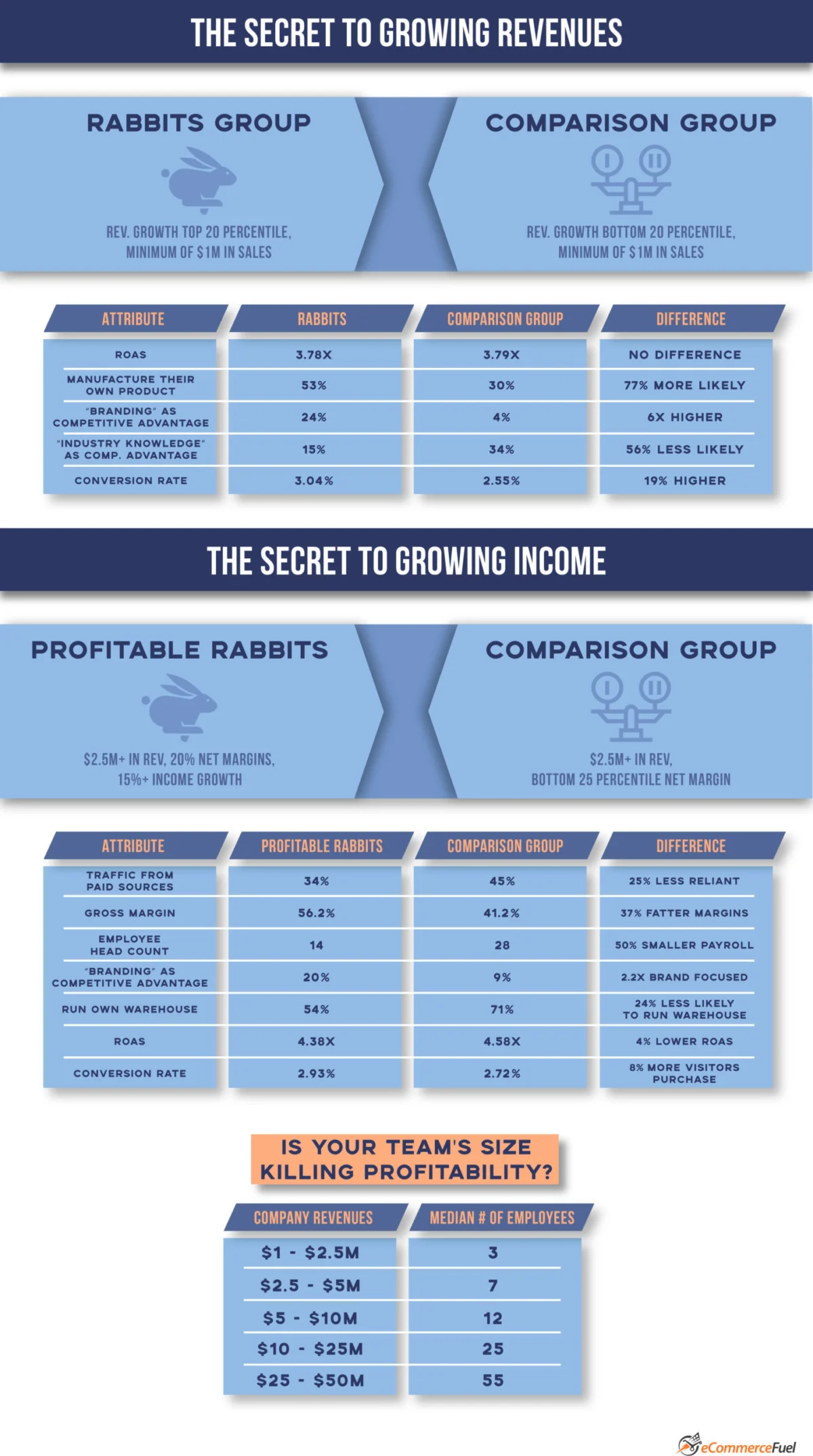
A common misconception in the e-commerce landscape is that scaling a business inherently requires a commensurate increase in headcount. This widely held belief, often reinforced by narratives of aggressive expansion and large teams, is being challenged by a growing body of evidence suggesting that operational leanness and strategic financial management can be far more potent drivers of profitability than sheer revenue growth or sophisticated marketing campaigns. This paradigm shift is not merely anecdotal; it is supported by data and the experiences of highly successful online retailers who prioritize efficiency and fiscal prudence.
The Tale of the Stressed Store Owner: A Catalyst for Re-evaluation
The impetus for this re-evaluation often stems from the very real challenges faced by business owners. Consider the case of a proprietor, known to industry observers, who managed a retail operation with 35 employees. While revenue streams were described as solid, the business consistently struggled with profitability margins that were tighter than desired. The owner, burdened by the relentless demands of managing a sizable team, experienced persistent stress, a common byproduct of juggling operational oversight with strategic business development. This situation is not unique; many e-commerce businesses find themselves in a similar predicament, where the perceived necessity of a larger workforce inadvertently constrains their financial potential.

In response to this persistent challenge, the owner made a series of decisive, albeit difficult, strategic adjustments. These included transitioning to a remote work model, outsourcing logistics to a third-party logistics (3PL) provider, and fundamentally restructuring the workforce by replacing a significant portion of full-time employees with freelancers and independent contractors. The outcome was a dramatic transformation: the business now operates with a core team of just one employee, augmented by eight contractors. This leaner structure has reportedly led to unprecedented profit levels and a significant reduction in the owner’s stress. This narrative, while singular, serves as a potent illustration of a broader trend observed within the e-commerce sector.
Empirical Evidence: The Data Behind Operational Leanness
This shift in operational philosophy is not confined to isolated success stories. An in-depth analysis of hundreds of e-commerce businesses, aimed at identifying the key differentiators between highly profitable ventures and those that struggle, revealed a surprising correlation. Contrary to initial expectations that superior marketing acumen would be the primary determinant of success, the research indicated otherwise. The difference in Return on Ad Spend (ROAS) between top-performing and bottom-performing businesses was found to be negligible. Furthermore, the stores achieving exceptional profitability were not necessarily excelling in areas like Facebook advertising or search engine optimization (SEO).
Instead, the critical differentiator emerged in operational efficiency. The data unequivocally showed that top performers maintained payrolls approximately half the size of their less profitable counterparts. They were also 25% more likely to outsource their warehouse operations and exhibited a 25% lower reliance on paid traffic. This suggests a fundamental principle: operational leanness consistently outpaced marketing cleverness in driving profitability. This finding is being further validated and refreshed in ongoing industry trend reports, with participation from e-commerce store owners encouraged to contribute to a more comprehensive understanding of these patterns.

Beyond Headcount: Defining True Lean Operations
The concept of "staying lean" is frequently misinterpreted as synonymous with staff reductions. However, true operational leanness extends far beyond managing headcount. It encompasses a critical examination of all business overheads. This includes evaluating the necessity of physical office spaces that may have been deemed essential prior to the widespread adoption of remote work, but now sit underutilized. Similarly, warehousing costs can be significantly optimized by partnering with 3PL providers who can often manage fulfillment more efficiently and at a lower price point. The pervasive issue of recurring SaaS subscriptions, often forgotten after initial sign-ups, also contributes to unnecessary overhead, with seemingly minor monthly charges accumulating into substantial annual expenses.
A crucial filtering mechanism for identifying areas for optimization lies in discerning what constitutes the core competencies of a brand. If a company’s unique selling proposition is rooted in exceptional design, retaining in-house design talent may be a strategic imperative. Conversely, if packing and shipping products is not a core competitive advantage, maintaining an in-house fulfillment operation may be an unnecessary expenditure. Successful store owners are not merely cutting costs indiscriminately; they are making deliberate decisions about where to allocate resources, focusing on activities that genuinely contribute to their brand’s unique value proposition and competitive edge.
The Uncomfortable Necessity of Proactive Decision-Making

The path to sustained profitability often necessitates engaging in difficult conversations. A widely cited principle suggests that an individual’s success in life is often measured by their willingness to confront and navigate challenging discussions. Many business leaders, however, tend to postpone these crucial dialogues until circumstances force their hand – typically during economic downturns, periods of cash flow scarcity, or when declining profitability reaches a critical threshold.
In contrast, the e-commerce businesses that are consistently achieving superior profits are characterized by their proactive approach to these conversations. They engage in strategic introspection before facing an existential crisis. This involves rigorously questioning the necessity of certain roles, distinguishing between hires made out of genuine need versus those driven by a perception of busyness. It also entails an honest assessment of existing tools and subscriptions, differentiating between those essential for operations and those retained out of habit. Crucially, these forward-thinking leaders often simulate drastic cost-cutting scenarios, asking themselves what would be eliminated if a 25% reduction in expenses were mandated immediately. The critical step is not just the contemplation but the subsequent implementation of these identified cuts, driven by intentional strategic planning rather than reactive necessity.
The Overlooked Lever: Strategic Tax Management
While operational efficiency is a significant factor, another equally potent, yet often neglected, lever for enhancing profitability lies in strategic tax management. For many business owners, taxes are perceived as a fixed cost, a percentage of income to be paid without much further consideration. However, a closer examination reveals that some businesses with comparable revenues and profits pay significantly less in taxes, not through illicit means or complex offshore schemes, but through deliberate and informed financial planning.

To illustrate the potential impact, consider two hypothetical store owners, both generating $2.5 million in revenue with a $250,000 profit, drawing the same salary and having similar family situations (married with three children). Assuming a marginal tax rate of approximately 30%, Owner A might pay $75,000 in taxes annually. Owner B, by contrast, could pay as little as $21,000. This substantial difference of $54,000 per year is achieved through a series of strategic tax-saving initiatives.
One key strategy is through profit-sharing contributions to retirement accounts, exceeding standard 401(k) limits and potentially saving around $13,500 annually. Another is the strategic donation of appreciated stock to charities. By donating assets that have increased in value, the owner avoids capital gains tax while still receiving a full deduction, potentially saving approximately $3,500. Maximizing Health Savings Accounts (HSAs) offers triple tax advantages, with a family contribution limit of $8,500 potentially saving around $2,550. A less commonly utilized but highly effective strategy involves paying children for legitimate work performed in the business. For example, paying each of three children $7,000 annually not only provides a deductible expense for the owner but also allows the children to invest in Roth IRAs, fostering long-term tax-free growth. This alone could save approximately $6,300.
Perhaps the most significant untapped opportunity for e-commerce businesses lies in inventory donations. Donating unsold or aging inventory to charities at its fair market value, rather than liquidating it at a loss, can yield substantial tax deductions. For instance, donating $60,000 worth of slow-moving inventory could result in tax savings of approximately $18,000. Collectively, these intentional strategies can result in savings of tens of thousands of dollars annually, significantly boosting after-tax profitability.
The "Invisible" Nature of Tax Optimization

The reason these tax optimization strategies often remain "invisible" to many business owners is the fragmented nature of tax reporting. Personal returns, business filings, brokerage statements, and payroll tax reports are often managed separately, preventing a holistic view of the overall tax burden. Consequently, owners may not realize the cumulative amount they are paying or consider avenues for reduction. While they may have competent accountants who ensure compliance, these professionals often operate reactively, processing information rather than proactively identifying savings opportunities.
Testing the Efficacy of Your Tax Advisor
A simple yet revealing test for assessing the value of one’s Certified Public Accountant (CPA) is to consider the last time they proactively presented a new tax-saving idea. Beyond accurate filing and responding to direct inquiries, a proactive CPA will reach out with suggestions tailored to the client’s specific situation. If such proactive engagement is not a regular occurrence, it suggests the accountant, while perhaps competent in basic compliance, may be costing the business significant sums in missed opportunities. The substantial financial differences observed between strategically managed and conventionally managed tax liabilities are not a result of complex financial engineering but rather a testament to intentional planning.
Conclusion: Prioritizing Profit Preservation

In the dynamic world of e-commerce, marketing metrics such as ROAS, Customer Acquisition Cost (CAC), and Lifetime Value (LTV) rightfully command significant attention. These are the metrics that dominate industry discussions and drive strategic focus. However, the most successful and profitable e-commerce businesses often achieve their financial success not by solely excelling in marketing, but by fundamentally prioritizing the preservation of their earnings. By adopting leaner operational models, embracing strategic outsourcing, and meticulously planning their tax liabilities, these businesses ensure that a greater portion of their hard-earned revenue translates into tangible profit. While enhanced marketing efforts are undoubtedly valuable, the ability to retain more of what has already been earned often represents a more potent and sustainable path to long-term financial prosperity.