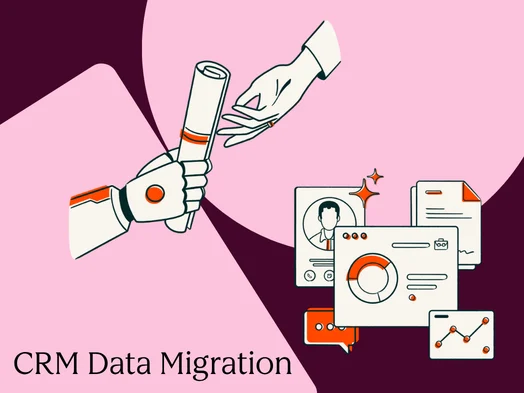
CRM data migration, the intricate process of transferring records, relationships, history, permissions, and interconnected workflows from one Customer Relationship Management (CRM) system to another, stands as a pivotal undertaking for businesses aiming for sustained growth and operational efficiency. Far from a mere technical data dump, a successful migration is a meticulously planned business change that underpins the entire revenue operation. When the foundational data within a CRM is compromised or incorrectly transferred, every subsequent process built upon it, from sales pipelines to customer service workflows, is at risk of breaking down, leading to significant operational disruptions and potential financial losses.
Understanding the Imperative: Why Businesses Migrate CRMs
The global CRM market, valued at approximately USD 68.3 billion in 2023 and projected to reach USD 157.6 billion by 2032, underscores the widespread reliance on these systems for managing customer interactions. Yet, despite their criticality, companies frequently embark on CRM migration journeys for a multitude of strategic reasons. Many organizations find their existing CRM systems, often legacy on-premise solutions or early cloud platforms, struggling to keep pace with evolving business needs. Scalability limitations, a lack of advanced features like AI-driven analytics or sophisticated automation, and prohibitive licensing costs are common drivers. Mergers and acquisitions also frequently necessitate CRM consolidation to unify customer data and streamline operations across disparate entities. The overarching goal is typically to enhance customer experience, improve data quality, boost operational efficiency, and gain a competitive edge through more sophisticated customer insights. The transition often represents a crucial step in a broader digital transformation initiative, moving towards more agile, integrated, and cloud-native solutions that can support future growth.
The Meticulous Journey: A Phased Approach to Migration Success
Industry experts consistently emphasize that successful CRM migrations are not born from haste or a purely technical perspective. They are the result of a structured, phased approach that treats migration as a critical business project with clear goals, constraints, and success criteria. The typical journey spans several critical phases, each demanding meticulous attention to detail and cross-functional collaboration.
Phase 1: Strategic Planning and Stakeholder Alignment
The bedrock of any successful migration is a comprehensive plan. This initial phase, often spanning two to three weeks, defines the project scope, identifies key stakeholders, assigns responsibilities, establishes timelines, and outlines decision-making protocols. Crucially, it involves creating a detailed RACI (Responsible, Accountable, Consulted, Informed) matrix for every major phase of the migration, particularly for go/no-go decisions. This clarity prevents ambiguity and ensures accountability. The plan also includes a phase map outlining the eight standard steps: plan, cleanse, map, sequence, test, migrate, validate, go-live, and hypercare. A vital component of planning is the establishment of sandbox environments. Running initial migrations in a sandbox, separate from production data, allows teams to rigorously test field mapping, identify transformation errors, and validate data integrity without risk to live operations. It’s often recommended to run sandbox migrations at least twice: an initial run to identify gaps and a subsequent run for validation baseline.
Risk management and change management are also paramount during this phase. Documenting known risks—such as data corruption, budget overruns, or user adoption challenges—allows for proactive mitigation strategies. Change management, often an underrated aspect, focuses on preparing users for the new system. A well-crafted communication plan, detailing what is changing, when, and why, helps alleviate anxiety and fosters smoother user adoption post-migration. Without adequate communication and training, even a technically perfect migration can falter due to user resistance or unfamiliarity.
Phase 2: The Criticality of Data Cleansing
Data cleansing is arguably the most impactful phase, and experts universally agree it must occur before the full CRM migration, not during or after. Neglecting this step is a primary cause of migration failures. Carrying dirty, duplicate, or incomplete data into a new system not only perpetuates existing problems but often amplifies them, making remediation significantly more challenging and costly. Studies from organizations like IBM have highlighted the substantial financial burden of poor data quality, estimating trillions of dollars in losses annually across industries.
This phase begins with a comprehensive data audit for each object type (contacts, companies, deals, tickets) to document record counts, data types, fill rates, and potential duplicates. This audit establishes a data quality baseline against which cleansing efforts can be measured. Deduplication is a time-consuming but crucial activity. Defining clear matching rules (e.g., exact email match for contacts, domain-level matching for companies) is essential. Normalization, another key aspect, involves standardizing data formats—such as phone numbers, country codes, and picklist values—to ensure consistency across the dataset. The establishment of "golden records" and survivorship rules dictates which data values take precedence when merging duplicate records, ensuring that the most accurate and recent information is retained. Modern CRM platforms often offer native deduplication workflows and data quality automation tools that can significantly streamline this process, enforcing survivorship rules at scale.
Phase 3: Precision in Data Mapping and Relationship Management
Field mapping is the process of aligning fields from the source CRM to their corresponding fields in the destination CRM. While seemingly straightforward, this stage often encounters bottlenecks due to the inherent differences in data models between various CRM platforms. A complete inventory of the source system’s objects and properties is required, documenting field names, types, and picklist values. This inventory forms the basis of a detailed mapping spreadsheet.
Common mapping conflicts include fields with no direct equivalent in the new system (requiring new custom fields), fields with differing data types (necessitating transformation logic), and picklist values that require standardization or consolidation. Beyond individual fields, relationship mapping is equally critical. This ensures that associations between different objects—such as contacts linked to companies, or deals tied to specific contacts and companies—are preserved. Migrating parent objects before child objects is a fundamental rule here; for example, companies must exist in the new system before contacts can be associated with them, preventing "orphaned records" with broken links.
Phase 4: Orchestrating the Migration Sequence
The order in which data objects are migrated is a technically vital decision that directly impacts data integrity. Deviating from the correct sequence is a common cause of orphaned records, which are data entries that lack their necessary parent associations. The core principle is to migrate parent objects before child objects. A standard recommended sequence often looks like this:
- Users: Establishing user accounts and their roles.
- Teams: Defining organizational structures.
- Companies/Accounts: The foundational entities.
- Contacts: Individuals associated with companies.
- Deals/Opportunities: Sales processes linked to contacts and companies.
- Tickets: Customer service interactions.
- Custom Objects: Any unique business-specific data structures.
- Activities: Historical interactions (emails, calls, notes).
Following this sequence helps maintain the hierarchical integrity of the data model. Post-migration, an association audit after each batch migration is recommended to quickly identify and remediate any orphaned records.
Phase 5: Navigating Historical Data and Integrations
-1.png)
A critical decision point is determining how much historical data to migrate. Attempting to transfer every historical activity and attachment is a frequent cause of project delays and budget overruns. A pragmatic approach involves evaluating historical data against criteria such as business criticality, compliance requirements, storage costs, and frequency of access. For most migrations, transferring 12-18 months of activity history into the new CRM, while archiving older data in a read-only store, strikes a balance between utility and efficiency. This strategy significantly reduces migration complexity and cost. Similarly, historical email import, while possible, is often high-effort with low ROI, especially when modern CRMs support automatic logging of future emails via inbox connections.
Integrations represent silent dependencies that frequently derail migrations. Before cutover, a comprehensive inventory of all revenue operations tools connected to the current CRM is essential. This includes marketing automation platforms, ERP systems, billing software, and customer service desks. Each integration’s data flows, endpoint requirements, and authentication methods must be documented. Smoke tests in the sandbox environment are crucial to validate that reconfigured integrations are functioning correctly before production cutover. Platforms with robust data hubs and native integrations, such as HubSpot’s Data Hub, can significantly simplify this process by offering streamlined reconnection or ongoing data synchronization capabilities.
Permission remapping is another vital security consideration. Instead of merely replicating existing permissions, migration offers an opportunity to rationalize the security model, aligning access with real user roles and organizational needs. This involves defining what objects users can see, which properties they can edit, and the scope of their access (team-scoped vs. global). Rigorous security testing with real user profiles before go-live ensures that data access is appropriately controlled.
Phase 6: Rigorous Validation and Rollback Strategies
Validation is the final critical checkpoint before go-live, and it is frequently underinvested in. It goes beyond a cursory glance to ensure "the data looks about right." A robust validation framework includes quantitative record counts (comparing source vs. destination totals), qualitative sampled spot checks, automated data comparisons, and user acceptance testing (UAT). UAT, involving actual end-users, is invaluable for catching real-world usability issues and data discrepancies that automated checks might miss.
Equally important, and often overlooked until a crisis strikes, is a meticulously planned rollback strategy. This plan, developed before migration begins, defines trigger conditions for a rollback (e.g., significant data loss, critical system failure), clear communication paths, and a time window for execution. It also necessitates secure backups of both source and destination data prior to migration. Keeping the source CRM in read-only mode for a period post-go-live provides a crucial reference point and a recovery path if unforeseen edge cases emerge.
Phase 7: Go-Live and the Hypercare Period
Go-live is not the culmination of the migration but rather the commencement of a critical stabilization period known as hypercare. On go-live day, three sequential actions are essential: freezing data entry in the source CRM, executing the final production data migration, and performing a "delta migration" to capture any new records or changes that occurred during the main migration window. Neglecting delta migration is a common pitfall leading to data loss in active business environments.
The hypercare period, typically lasting 2-4 weeks, is a structured support phase where the migration team actively monitors for errors, addresses user issues, and ensures automated workflows are functioning as designed. Best practices include dedicated support channels, daily stand-up meetings to review issues, proactive monitoring of system performance, and ongoing user training sessions. This focused attention helps to swiftly identify and rectify any lingering data quality issues or system anomalies that only emerge under real-world operational load, preventing them from becoming long-term data debts.
Beyond the Technical: Business Implications and ROI
The successful execution of a CRM data migration delivers profound business implications. Improved data accuracy and integrity translate directly into enhanced operational efficiency across sales, marketing, and customer service. Sales teams benefit from a unified view of customer interactions, leading to more personalized engagements and higher conversion rates. Marketing gains precise segmentation capabilities and more effective campaign management. Customer service teams can resolve issues faster with complete customer histories at their fingertips, boosting satisfaction and loyalty.
Strategically, a well-migrated CRM provides a scalable foundation for future growth, supporting new business initiatives and digital transformation efforts. It also offers a significant return on investment (ROI) through reduced manual effort, fewer errors, and improved decision-making driven by reliable data. The financial implications extend beyond initial costs, as the long-term benefits of a streamlined, data-rich environment far outweigh the investment. Conversely, a poorly executed migration can lead to data loss, operational downtime, financial penalties, damaged customer relationships, and a significant setback in competitive standing.
Leveraging Technology: Tools and Platforms for Streamlined Migration
The choice of CRM data migration tools depends on factors like data volume, technical resources, timeline, and mapping complexity. For smaller migrations (under 25,000 records, standard objects), native import tools offered by CRMs like HubSpot can suffice, providing in-UI field mapping. For more complex scenarios, dedicated data migration tools (e.g., Trujay, Migrate.io, Data2CRM) offer specialized functionalities for handling large volumes and intricate transformations. Integration Platform as a Service (iPaaS) solutions or Data Sync tools (like HubSpot Operations Hub) are invaluable for phased migrations and ongoing synchronization between systems, acting as a revenue operations platform. For highly bespoke requirements, custom API migrations built by developers offer the ultimate flexibility but come with higher development costs and technical complexity. Regardless of the tool, testing in a sandbox environment is paramount to uncover any quirks, rate limits, or encoding issues before production deployment.
Expert Perspectives and Industry Trends
Industry analysts frequently highlight that while the technical capabilities for CRM migration continue to advance, the human and process elements remain the most significant determinants of success. "The future of CRM migration will increasingly leverage AI and machine learning for predictive data quality and automated mapping," notes one expert, "but human oversight and strategic planning will always be indispensable." There’s a growing emphasis on "data governance as a continuous process" rather than a one-time event, ensuring data quality is maintained long after migration. Businesses are increasingly seeking platforms that not only facilitate migration but also provide robust data management and integration capabilities post-transition, solidifying the CRM as the single source of truth for customer data.
Conclusion: A Foundation for Future Growth
A well-executed CRM data migration is more than a technical upgrade; it is a strategic investment that provides a clean, reliable foundation for an organization’s future growth. The principles for success are universal: thorough planning, aggressive data cleansing, precise mapping and sequencing, rigorous testing and validation, and dedicated post-go-live support through hypercare. Neglecting any of these phases can lead to a "data debt" that compounds over time, undermining operational efficiency and hindering strategic objectives. Platforms like HubSpot’s Smart CRM and Data Hub are designed to simplify this complex journey, offering a unified data model, quality automation, and an integrated ecosystem that empowers businesses to migrate with confidence and maintain pristine data, ultimately fostering stronger customer relationships and sustainable competitive advantage.