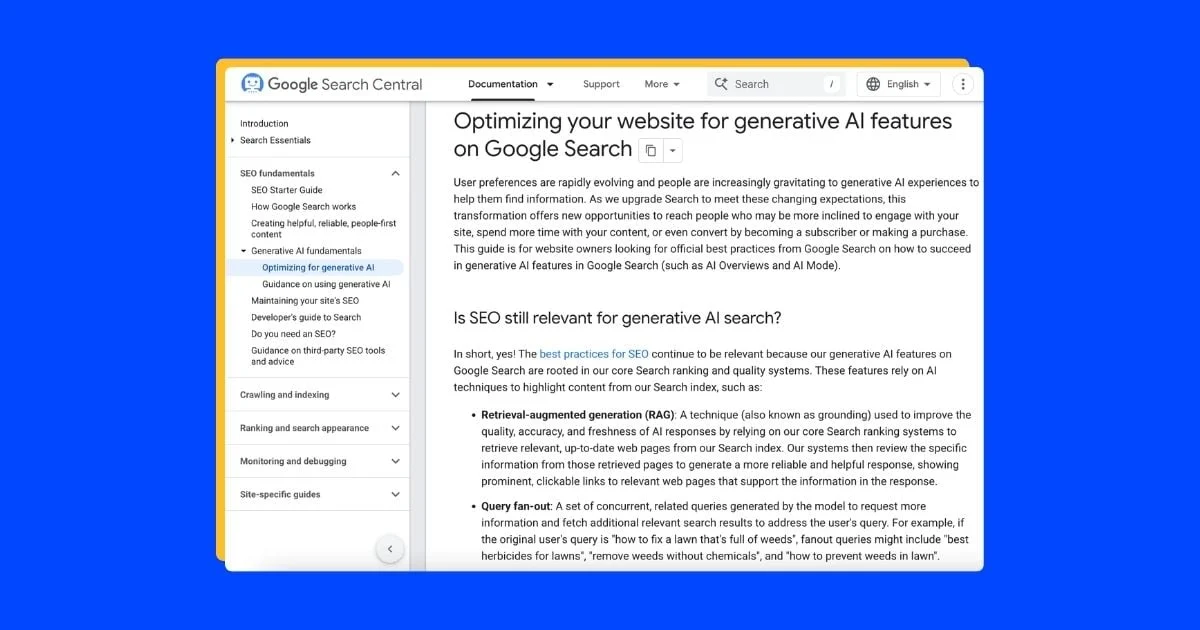
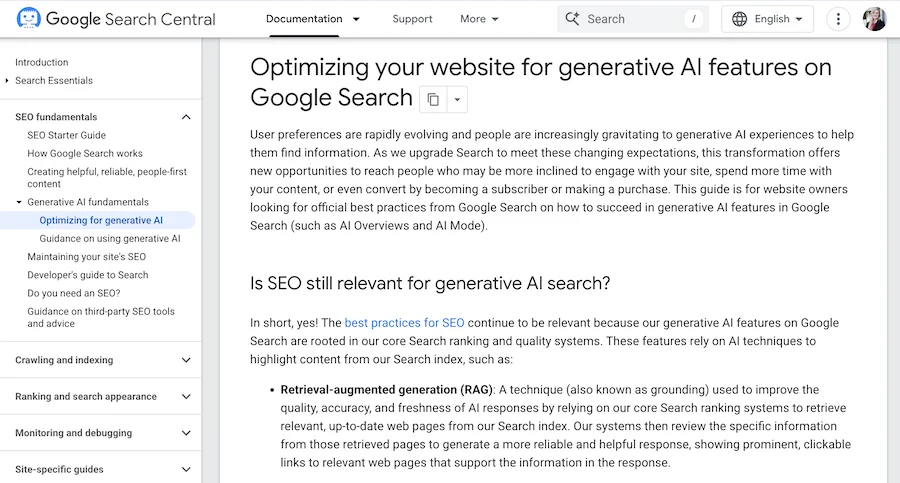
In a significant development for digital marketers and business owners alike, Google has officially clarified its approach to AI-powered search features, including AI Overviews and AI Mode. Released in late May 2026, the company’s comprehensive guidance, titled "Optimizing for generative AI features on Google Search," directly addresses long-standing speculation about the necessity of specialized "AI optimization" tactics. The verdict? The fundamentals of sound Search Engine Optimization (SEO) and robust local business practices are not only relevant but are the core pillars for success in the evolving AI search landscape.
The new resource, published on Google Search Central, aims to demystify how generative AI features function within Google Search and what businesses can do to ensure their content is discoverable and ranks effectively. This guidance comes after months of industry-wide discussion and experimentation following the widespread rollout of AI Overviews, a feature that summarizes search results with AI-generated content. The document emphatically answers the question that has been on many minds: Does SEO still matter for AI search? The answer, Google states unequivocally, is "yes."
For businesses that have invested heavily in specialized AI optimization services, such as the creation of llms.txt files, AI-specific content rewrites, or bespoke schema markup for AI search, Google’s announcement serves as a crucial course correction. The guidelines explicitly address these tactics in a "Mythbusting" section, signaling that they are not required and, in many cases, not beneficial for AI search visibility. This provides a clear directive for businesses to redirect their efforts toward proven strategies that have historically driven organic search success.
A Shift Towards Fundamentals: Google’s AI Search Philosophy
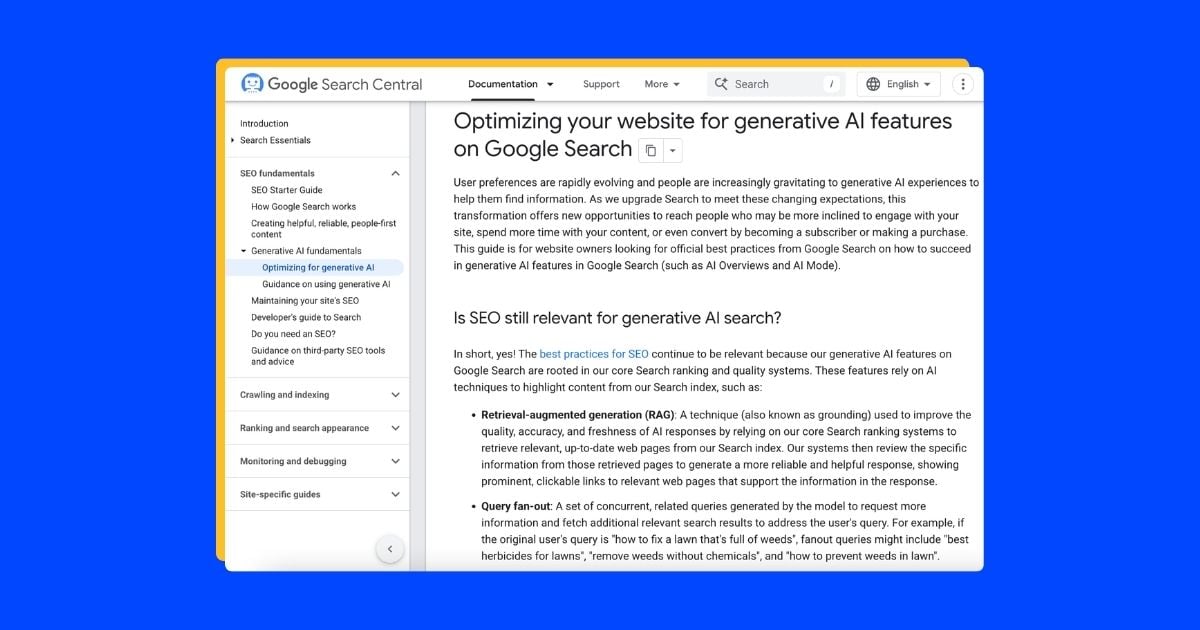
The core message from Google’s guidance is that AI Overviews and other generative AI features are not operating on a separate algorithmic plane. Instead, they leverage the same comprehensive Google Search index and ranking systems used for traditional search results. This means that the established principles of SEO—fast, accessible websites, content demonstrating genuine expertise, and strong local reputation signals—are the bedrock upon which AI search performance is built.
Nikiya Griffith, Director of Organic Growth at BX Studio, commented on the alignment between SEO and local search (GEO), noting, "We’ve seen that about 80% of the time, what’s good for SEO is good for GEO. Our most successful strategic initiatives over the last year have been ones where SEO and GEO were approached in unison as one holistic strategy. Of course, you still need to devote time and attention to the considerations that are unique to GEO or SEO, but overall, we really see GEO as an extension of good SEO." Google’s latest guidance reinforces this perspective, integrating local relevance as a critical component for AI search visibility.
The guidance highlights three overarching themes that are critical for success in AI-powered search: foundational SEO, demonstrable expertise, and trust and local relevance. These are not new concepts but rather a clarification and re-emphasis of signals that have always been important for ranking in Google Search, now applied to the context of generative AI. This offers a significant advantage to small and medium-sized businesses (SMBs) who have already been diligently working on these core areas, suggesting their existing efforts are more valuable than the burgeoning AI optimization industry might have led them to believe.
Key Pillars for AI Search Visibility
Google’s comprehensive document breaks down the essential elements for achieving visibility in AI-driven search results, emphasizing strategies that have a proven track record.
Foundational SEO: The Technical Backbone
Before AI systems can even consider content, they must be able to discover, access, and understand it. Google’s guidance reiterates the enduring importance of fundamental technical SEO. This includes:
- Crawlability and Indexability: Ensuring search engine bots can easily navigate and index website content.
- Site Structure: A logical and organized website architecture that aids in content discovery.
- Mobile Usability: A seamless and responsive experience for users on mobile devices, a critical factor for a vast majority of internet traffic.
- Page Speed: Fast-loading pages are crucial for user experience and are a known ranking factor. Slow loading times create barriers not only for human users but also for AI systems trying to process information efficiently.
- Internal Linking: Strategically linking between pages on a website helps distribute authority and guide both users and search engines through content.
These technical elements are presented not as separate concerns for AI search but as integral components that impact both traditional search rankings and how AI Overviews extract and present information. For a local business, such as a plumbing company in Phoenix, a slow mobile site or poor crawlability would hinder visibility in both traditional and AI-powered search results, underscoring the unified nature of these optimization efforts.
Content Built on Real Experience: The Power of Non-Commodity
A significant portion of Google’s guidance is dedicated to content quality, with a particular emphasis on what it terms "non-commodity content." This refers to content that transcends generic information readily available elsewhere and instead offers unique insights, firsthand accounts, and demonstrable expertise.
Google explicitly prioritizes content that goes beyond what can be compiled from a simple search engine query. An example illustrating this distinction is the difference between a generic summary of existing advice (commodity content) and a detailed, first-hand account of a specific experience, such as a homeowner’s detailed explanation of how they waived an inspection and saved money by understanding sewer line issues. The value lies not in the length or format of the content but in its originality and the genuine knowledge it conveys.
This emphasis presents a significant structural advantage for SMBs. A local HVAC technician in Cleveland, for instance, can provide unparalleled insights into how heat pumps perform during extreme weather events like polar vortexes, detailing specific settings, system configurations, and common failure points. This granular, experience-based knowledge is something a national publisher producing generic HVAC content cannot easily replicate. Similarly, a dental practice sharing detailed observations from hundreds of Invisalign appointments offers a depth of practical understanding that competitors might struggle to match.
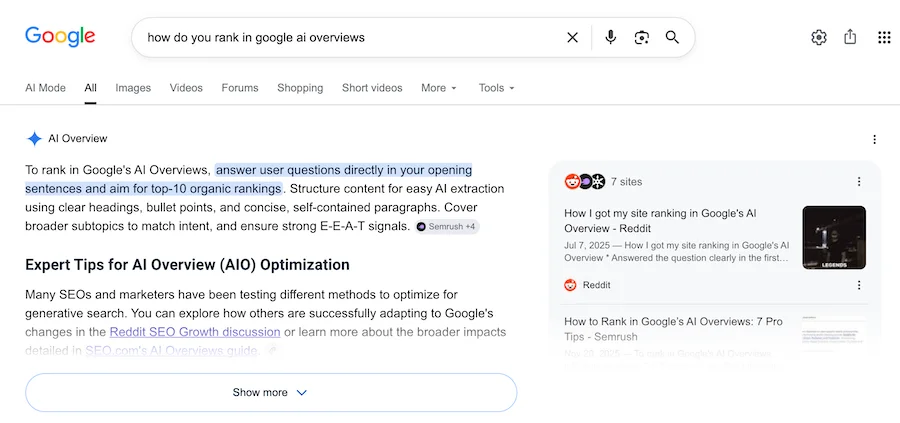
As Nikiya Griffith notes, "If you have genuinely unique insights to share, whether it’s in the form of expert quotes, original data, or something else, you’re going to have a much better chance of winning in organic and AI search. You still need to make sure you’re following best practices and formatting fundamentals, so your content can be easily crawled and gets discovered. But quality beats quantity if you’re aiming for long-term growth." Businesses that are closest to their customers and their specific problems are often in the best position to generate this kind of valuable, non-commodity content.
Local Relevance and Trust Signals: Building Credibility
Trust and local relevance are paramount, especially for businesses serving specific geographic areas. Google’s guidance underscores the importance of signals that build credibility and demonstrate local authority. These include:
- Google Business Profile (GBP): An optimized and accurate GBP listing remains a critical tool for local visibility.
- Reviews: Customer reviews, particularly those that detail specific services, outcomes, or unique customer experiences, provide valuable context for AI systems. A review stating "Arrived on time, fixed the leak" is useful, but a review detailing an emergency repair at 2 a.m. or a complex misdiagnosis by another company offers much richer information about a business’s capabilities and reliability.
- Citation Consistency: Ensuring that business name, address, and phone number (NAP) are consistent across all online directories and platforms strengthens trust signals. Inconsistencies can weaken a business’s perceived credibility.
- Local Mentions: Mentions of a business on other reputable local websites or publications can further bolster its local authority.
Maintaining citation consistency is a foundational task that pays dividends across both traditional and AI-powered local search results. By focusing on these trust signals, businesses can enhance their standing with both search engines and potential customers.
Mythbusting: What Not to Focus On for AI Search
Perhaps the most impactful part of Google’s new guidance is its "Mythbusting" section, which clearly delineates tactics that are unnecessary or unrewarded for AI search visibility. This information is crucial for businesses looking to avoid wasted time and resources.

llms.txt Files: An Outdated Concept
The llms.txt file, a markdown document intended to summarize a website’s content for AI systems, was a concept that gained traction in the SEO community. Proposed as a way for AI models to orient themselves without extensive crawling, industry analysis has shown its limited impact. A May 2026 study by Ahrefs revealed that a staggering 97% of existing llms.txt files received zero traffic, and AI retrieval bots accounted for only a small fraction of the minimal traffic observed. Importantly, AI bots did not appear to seek out llms.txt files that did not exist, indicating no significant penalty for their absence. Google’s guidance aligns with this data, stating that businesses do not need to create new machine-readable files or AI text files to appear in generative AI search. John Mueller, Google’s Search Advocate, has previously described llms.txt as a "temporary crutch" primarily for software developers, not for general business websites.
Content Chunking: Write for Humans, Not Bots
The practice of "chunking"—breaking content into small, discrete sections with the belief that AI systems prefer this format—is also addressed. Google clarifies that its systems are adept at understanding multiple topics within a single page and can surface relevant information without publishers needing to pre-segment their content. The advice is straightforward: content should be written for the human audience, with its length and structure dictated by the subject matter, not by perceived AI preferences.
AI-Focused Content Rewrites: Avoid Chasing Keywords
Businesses that have been actively rewriting existing content to incorporate "long-tail keywords" or "AI-retrieval phrases" are advised that this is largely unnecessary. Google’s AI systems possess a sophisticated understanding of synonyms and semantic meaning, meaning that content does not need to meticulously mirror every possible query variation. Pursuing these specific phrases is likely to yield diminishing returns.
Specialized AI Schema: Existing Markup Suffices
While structured data (schema markup) remains important for rich results like review stars, FAQ boxes, and local business details, Google explicitly states there is no need for specialized schema markup for AI search. The existing schema.org markup implemented for traditional search is sufficient. Businesses should focus on ensuring their structured data is accurate, validated, and reflects the content on the page. Nikiya Griffith warns of "schema slop," where AI-generated schema, if not expertly reviewed, can actually harm a website’s performance. The emphasis is on quality and accuracy of existing structured data, not on adding new, AI-specific markup.
Applying the Guidance: A Simple Question to Guide Your Efforts

Google’s guidance ultimately simplifies the complex landscape of AI search optimization into a single, actionable question that businesses can ask when evaluating their web pages: "Would a customer who already trusted your business find this genuinely useful?"
By adopting this customer-centric perspective, businesses can identify content that needs improvement. Pages that sound interchangeable with those of competitors are prime candidates for enhancement. Conversely, content that reflects a business’s unique approach to problem-solving and service delivery is already well-aligned with Google’s recommendations. The article concludes by reinforcing a timeless SEO principle: thin, generic content that offers little beyond what is already widely available will continue to underperform in AI search, just as it has in traditional search, but its visibility is now amplified.
The Consequence: Clarity and Renewed Focus
The most significant takeaway from Google’s AI search guidance is the clarity it provides. For the first time, businesses have a definitive, officially published reference from Google outlining what is evaluated across both traditional and AI-powered search experiences. This empowers businesses to critically assess any new "AI optimization" service pitched to them. If Google explicitly states a tactic is not required or beneficial, it provides a clear and conclusive answer.
The work that has historically driven search visibility—technical accessibility, demonstrable expertise, and local trust signals—remains the core strategy. The advent of AI in search has not altered these foundational requirements; rather, it has made getting them right more consequential. The message is clear: focus on the fundamentals, create valuable and unique content, and build trust with your local audience. This approach will not only ensure success in AI-powered search but will also fortify a business’s overall online presence.