On June 30, 2026, AWeber, a leading provider of email marketing and marketing automation solutions, announced the immediate availability of its new AI image editing features, marking a significant advancement in empowering businesses to create compelling visual content with unprecedented ease and efficiency. Initially launched within the AI Signup Form Builder, these sophisticated tools are slated for rapid integration into the AI Landing Page Builder and AI Email Builder, promising a holistic transformation of how digital marketers approach visual asset creation across various touchpoints. This strategic rollout underscores AWeber’s commitment to leveraging artificial intelligence to democratize high-quality design, enabling users to generate, modify, and optimize imagery with simple text prompts, thereby streamlining workflows and enhancing brand storytelling.
The Dawn of AI-Powered Visual Marketing: A Strategic Imperative
The integration of AI into image editing represents a critical evolution in digital marketing technology. In an increasingly visual-first digital landscape, compelling imagery is no longer merely an enhancement but a fundamental requirement for capturing audience attention, conveying brand messages, and driving engagement. Studies consistently show that content featuring relevant images receives significantly more views and higher engagement rates compared to text-only content. For small and medium-sized businesses (SMBs) and independent marketers, however, the creation of professional-grade visuals often presents substantial hurdles, including budget constraints for professional photography, lack of specialized design skills, and the time-consuming nature of traditional image editing software.
AWeber’s new AI image editing suite directly addresses these challenges by offering a powerful, yet intuitive, solution. The core premise is revolutionary: a single product shot or stock image can now be dynamically transformed to suit any marketing context or campaign requirement. This capability transcends basic filters or adjustments, moving into the realm of generative AI that understands context and intent described through natural language. This development positions AWeber not just as a marketing automation platform but as a comprehensive content creation hub, significantly enhancing the value proposition for its diverse user base.
AWeber’s Strategic Leap: A Timeline of AI Integration
AWeber’s foray into AI is not a sudden pivot but a methodical progression reflecting a long-term strategic vision. The company has steadily been integrating AI capabilities into its platform to simplify complex marketing tasks and empower users. The AI Signup Form Builder, where the new image editing features debuted, was itself an earlier innovation designed to help users quickly create effective lead capture forms. This was followed by the AI Landing Page Builder and the AI Email Builder, each leveraging AI to automate design, content generation, and optimization, reducing the technical barriers to entry for marketers.
The timeline of AWeber’s AI advancements can be summarized as follows:
- Early 2020s: Initial exploration and integration of AI for content generation (e.g., email subject lines, body copy suggestions).
- Mid-2020s: Launch of AI-powered builders, starting with the AI Signup Form Builder, followed by AI Landing Page Builder and AI Email Builder, automating structural and textual content creation.
- June 30, 2026: Official launch of advanced AI image editing capabilities within the AI Signup Form Builder, expanding AI’s role into visual asset manipulation and generation.
- Upcoming: Planned integration of these same image editing tools into the AI Landing Page Builder and AI Email Builder, promising a unified AI-driven content creation experience across the platform.
This phased approach demonstrates AWeber’s commitment to incremental innovation, ensuring that each new AI feature is robust, user-friendly, and strategically integrated to maximize impact for its users.
Unpacking the New AI Image Editing Capabilities: A Deep Dive into Features
The new AI image editing suite offers a range of functionalities designed to address common pain points in visual content creation. These capabilities are driven by sophisticated generative AI models that interpret text prompts to execute complex image manipulations.
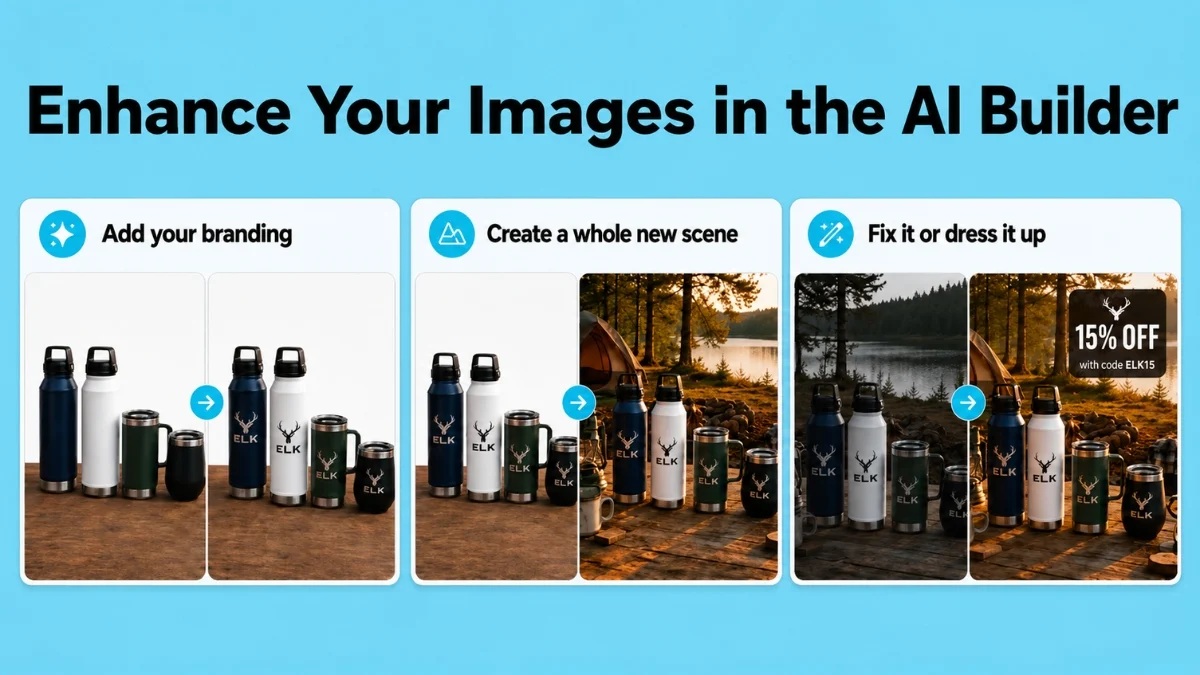
1. Enhancing Brand Consistency and Professionalism: Adding Branding
One of the most persistent challenges for businesses is ensuring brand consistency across all visual assets, especially when using stock photography or basic product shots. Traditionally, adding logos or brand elements required graphic design software and expertise. AWeber’s AI now allows users to simply describe the desired branding addition (e.g., "Add my logo to the top right corner," "Place a subtle watermark with our brand name") and the AI seamlessly integrates it into the image. This feature is invaluable for maintaining a cohesive brand identity, even for businesses without dedicated design teams. It transforms generic visuals into branded assets ready for immediate use, significantly reducing the time and effort involved in post-production branding.
2. Transforming Product Presentation with Dynamic Scenes: Contextualizing Products
A generic studio product shot, while clean, often fails to evoke the lifestyle or utility a product offers. Marketing effectiveness is greatly enhanced when products are shown in relevant, aspirational contexts. AWeber’s AI addresses this by enabling users to place products into entirely new scenes based on a text prompt. Imagine taking a plain shot of a coffee mug and, with a prompt like "Place this mug on a cozy kitchen counter with morning sunlight," instantly transforming it into an inviting lifestyle image. Or, a tech gadget photographed on a white background can be placed "on a modern desk setup with a laptop and plants." This capability allows marketers to create diverse visual narratives around a single product, catering to different target audiences and campaign themes without the need for expensive photoshoots or complex compositing. This dramatically increases the versatility of existing visual assets and enables rapid A/B testing of product presentations.
3. Effortless Image Correction and Refinement: Fixing Flaws
Imperfections in photographs are common, from suboptimal lighting and busy backgrounds to awkward crops and unwanted objects. Rectifying these issues traditionally demands proficiency in advanced photo editing software. AWeber’s AI simplifies this process, allowing users to "describe the fix." Prompts like "Improve the lighting to be brighter and softer," "Remove the cluttered background and replace it with a minimalist white wall," or "Recrop the image to focus on the product" can instantly transform flawed images into professional-grade assets. This capability not only saves considerable time and resources that would otherwise be spent on reshoots or manual editing but also lowers the barrier for producing high-quality visuals for every marketing campaign. The ability to refine images quickly means that marketers can maintain a higher standard of visual content across all their outreach efforts.
4. Crafting Engaging Promotional Messages: Adding Designed Text Overlays
Promotional overlays, call-to-action texts, or headlines are crucial for conveying specific messages within visual content. However, simply overlaying text can often look amateurish if not properly designed to integrate with the image. AWeber’s AI goes beyond basic text placement, allowing users to "add a text overlay that looks designed." Users can prompt the AI to "Add ‘Limited Time Offer’ in a stylish font matching the scene" or "Place a promo code ‘SAVE20’ subtly on the bottom right." The AI then generates text that is styled, positioned, and even blended with the image to appear as an intentional part of the design, rather than a superimposed element. This ensures that promotional messages are not only clear but also aesthetically pleasing, enhancing the overall professional appeal of the marketing collateral.
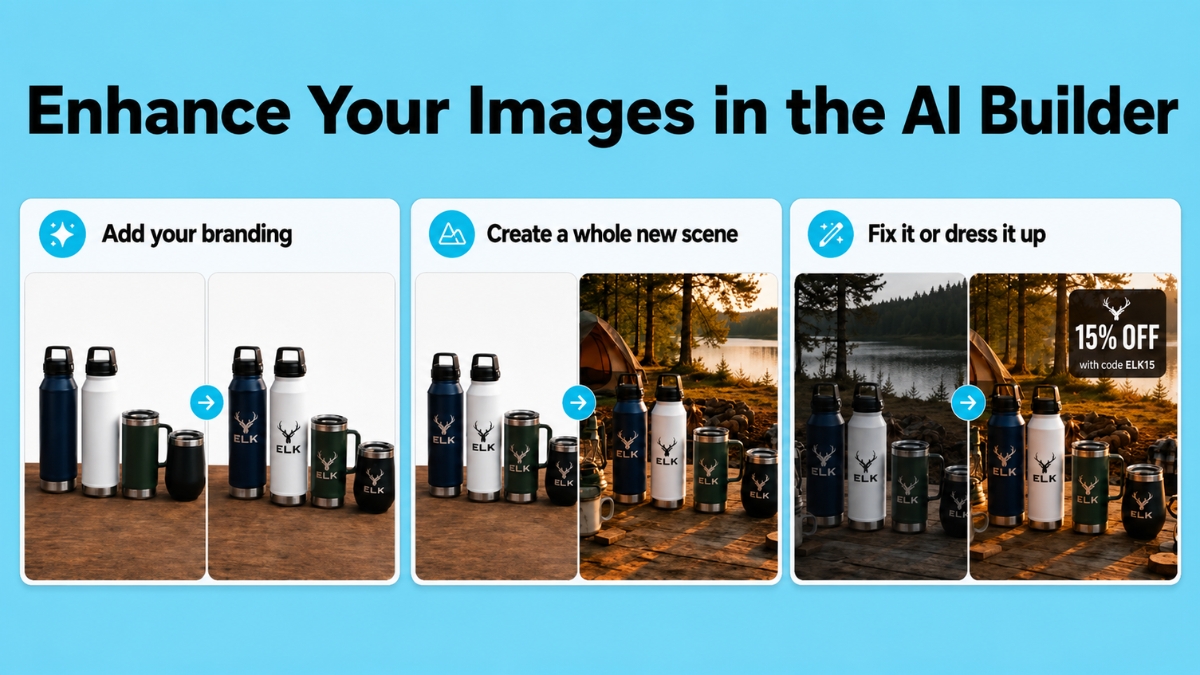
A critical aspect of this system is its non-destructive editing workflow. Each AI-generated edit is saved as a new, separate file, while the original image remains untouched in the user’s library. This provides marketers with the flexibility to experiment with various directions and revert to the original or previous versions without starting from scratch, fostering a culture of iterative design and rapid testing.
The Mechanics: How AWeber’s AI Works
The operational simplicity of AWeber’s AI image editing is central to its appeal. The process is straightforward:
- Add an Image: Users upload an existing image to the AI Signup Form Builder (or soon, the Landing Page or Email Builder).
- Describe the Change: Users input a text prompt detailing the desired modification.
The effectiveness of the AI is directly proportional to the specificity and clarity of the prompt. A vague request like "make it better" will yield less precise results than "enhance the vibrancy of the colors and add a subtle bokeh effect to the background." The system leverages advanced natural language processing (NLP) to understand user intent and powerful generative adversarial networks (GANs) or diffusion models to execute the visual transformation.
Beyond editing existing images, AWeber’s AI also offers an "Image Generate" feature. This allows users to bypass the need for an initial photo altogether. By simply describing what they want, the AI constructs an entirely new image from scratch. This capability is particularly useful for generating conceptual images, illustrations, or unique visuals when no suitable existing photograph is available, further expanding the creative possibilities for marketers.
Democratizing Design: Implications for Small Businesses and Marketers
The implications of AWeber’s AI image editing for small businesses and individual marketers are profound and multifaceted:
- Cost Savings: Eliminates or significantly reduces the need for expensive stock photo subscriptions, professional photographers, or graphic designers for routine visual tasks.
- Time Efficiency: Dramatically cuts down the time spent on image sourcing, editing, and optimization, allowing marketers to focus on strategy and campaign execution. What might take hours in traditional software can now be achieved in minutes.
- Enhanced Content Quality: Empowers users without design expertise to produce visually stunning and professional-looking marketing assets, leveling the playing field against larger competitors with extensive resources.
- Increased Content Velocity: Enables rapid creation of diverse visual content for various channels (social media, email, landing pages, ads), facilitating more frequent and timely campaigns.
- Improved A/B Testing: The ease of generating multiple variations of an image (e.g., different backgrounds, text overlays) allows for more effective A/B testing, leading to data-driven optimization of visual content for higher conversion rates.
- Accessibility: Lowers the technical barrier to sophisticated image manipulation, making advanced design tools accessible to a broader audience of marketers.
- Brand Storytelling: Facilitates more creative and consistent brand storytelling by making it easier to adapt visuals to specific narratives and campaign themes.
Industry analysts suggest that such AI-driven tools are crucial for the estimated 60% of small businesses that struggle with consistent, high-quality content creation due to resource limitations. By simplifying visual asset production, AWeber is not just offering a feature; it is providing a strategic advantage to its users in a competitive digital marketplace.
Industry Context and Competitive Landscape
AWeber’s launch of these advanced AI image editing features places it firmly at the forefront of AI innovation within the marketing technology (martech) sector. The broader martech landscape has witnessed an accelerating trend of AI adoption, with competitors also integrating various forms of AI for content generation, personalization, and automation. However, AWeber’s specific focus on comprehensive, prompt-based image manipulation and generation, integrated directly into its core marketing builders, offers a distinct competitive edge.
Many platforms offer basic image resizing or filtering, but the ability to fundamentally alter scenes, add branding with contextual awareness, and correct complex flaws through natural language prompts is a more advanced application of generative AI. This move puts pressure on other email marketing and marketing automation platforms to enhance their own visual content creation tools, signaling a broader industry shift towards more intelligent, user-friendly design capabilities. The market for AI in content creation is projected to grow exponentially, with tools that streamline visual production being particularly sought after. AWeber’s proactive approach positions it as a leader in delivering practical, impactful AI solutions to its user base.
The Road Ahead: Future Integrations and AWeber’s Vision
The immediate integration of these AI image editing features into the AI Landing Page Builder and AI Email Builder is a highly anticipated next step. This will ensure a seamless and consistent visual creation experience across a user’s entire marketing funnel. Marketers will be able to design a signup form with AI-edited images, then easily transfer and adapt those visuals for corresponding landing pages and email campaigns, maintaining visual consistency and brand coherence effortlessly.
Looking further ahead, AWeber’s vision appears to be one of continuous innovation, where AI acts as a co-pilot for marketers, automating mundane tasks and amplifying creative potential. Future enhancements could include more nuanced control over AI generations, deeper integration with brand guidelines for automated branding, and perhaps even predictive AI that suggests optimal image variations based on audience data and campaign objectives. The goal is to evolve the platform into an even more intuitive and powerful ecosystem where every aspect of digital marketing, from content creation to campaign execution and analysis, is intelligently supported by AI.
In conclusion, AWeber’s release of its advanced AI image editing capabilities on June 30, 2026, represents a pivotal moment in the evolution of digital marketing tools. By empowering marketers to create, modify, and optimize professional-grade visual content with simple text prompts, AWeber is not only enhancing its platform but also democratizing high-quality design and significantly boosting the efficiency and effectiveness of its users’ marketing efforts. This strategic move reinforces AWeber’s position as an innovator in the martech space, poised to meet the ever-growing demand for dynamic and engaging visual content in the digital age.