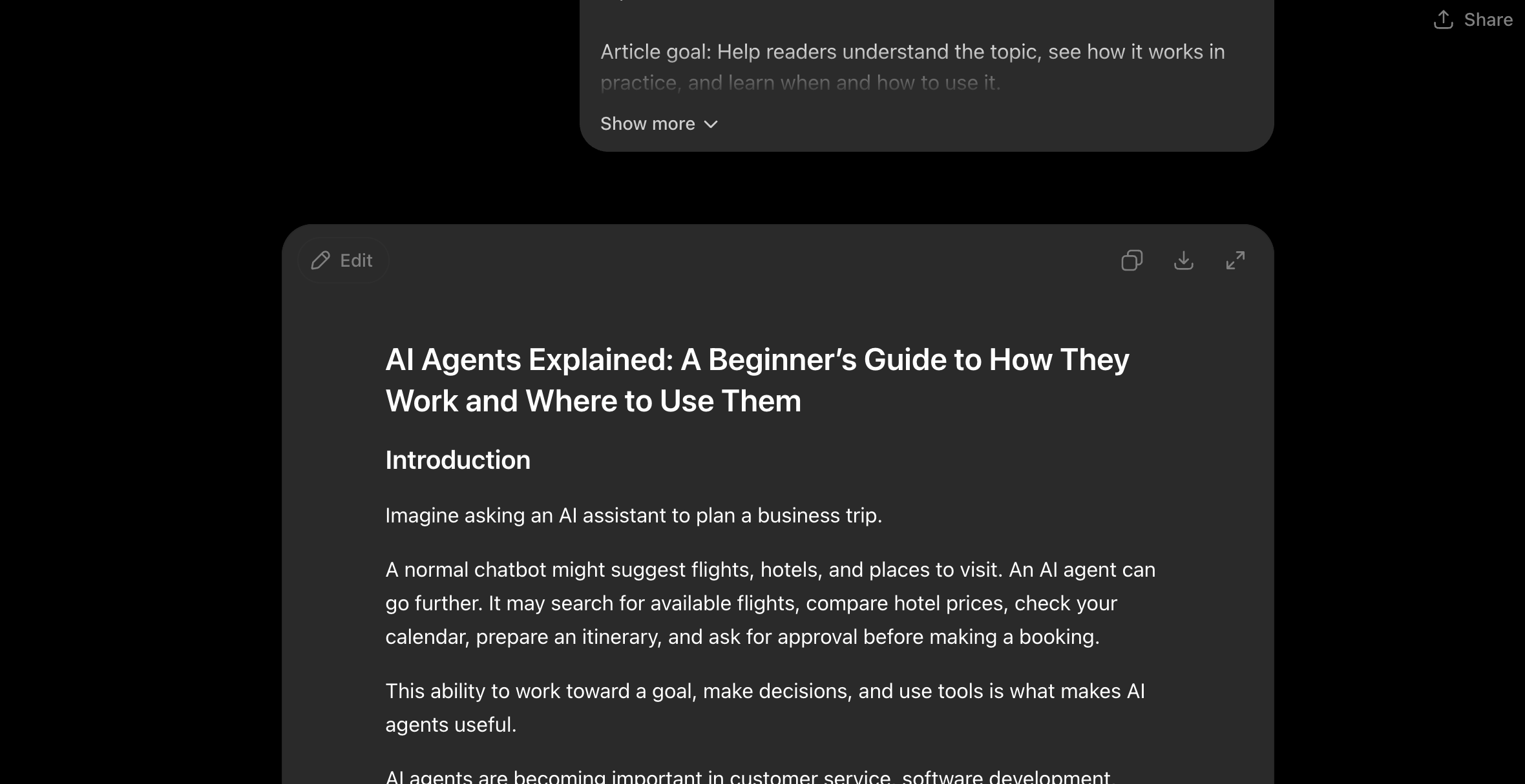
The rapid integration of Large Language Models (LLMs) into professional workflows has highlighted a significant challenge for enterprises: the variance in output quality based on the nuance of human instruction. As teams move from casual experimentation to high-volume production, the traditional method of manual, iterative prompting is proving inefficient. To address this, a sophisticated technique known as meta-prompting has emerged, fundamentally shifting the role of the human user from a direct task-manager to a system architect. Meta-prompting involves using an AI model to design, refine, and optimize the very prompts that will be used to execute subsequent tasks. This layered approach ensures that instructions are not only clear but also structured for maximum repeatability, scalability, and technical precision.
The Evolution of Prompt Engineering Methodologies
The journey toward meta-prompting is a direct result of the increasing complexity of AI interactions. In the early stages of LLM adoption, users relied on "zero-shot" or normal prompting—asking a question and receiving an answer. While effective for simple queries, this method often fails in corporate environments where a specific brand voice, structural format, or technical accuracy is required across thousands of iterations.
Following normal prompting, "few-shot" prompting became the standard for improving accuracy. By providing the model with three to five examples of a desired output, users could guide the model’s pattern recognition. However, even few-shot prompting requires significant manual effort to curate high-quality examples. "Chain-of-Thought" (CoT) prompting later introduced the concept of logical transparency, asking models to "think step-by-step." Meta-prompting represents the next logical step in this evolution. It utilizes the model’s inherent understanding of its own operational logic to build robust "prompt systems" rather than isolated commands.
The Strategic Framework of Meta-Prompting
Meta-prompting operates on the principle that an LLM is often the most qualified entity to understand what specific linguistic triggers and structural constraints lead to its best performance. The process typically follows a four-stage systematic workflow designed to minimize human error and maximize output consistency.
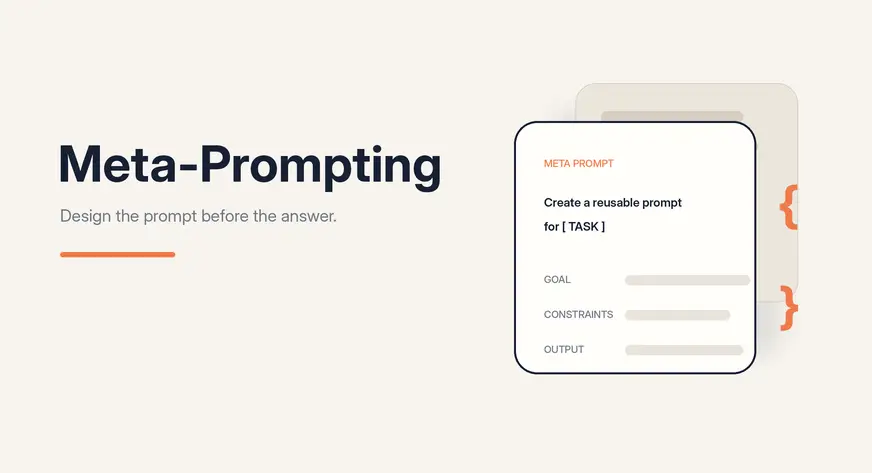
First, the user defines a high-level goal and identifies the necessary constraints. This involves specifying the target audience, the desired tone, and the required format (such as JSON, Markdown, or specific HTML tags). Second, the user employs a "Meta-Prompt" to instruct the AI to act as an expert prompt engineer. The AI is tasked with generating a comprehensive instruction set, often including system prompts, user templates with placeholders, and validation rubrics.
Third, the generated prompt is deployed in a controlled test environment. This allows the human architect to see how the AI-designed prompt handles various inputs. Finally, a refinement loop is established. If the output deviates from the desired standard, the human user provides feedback to the "Meta-Prompt" rather than the final output, allowing the AI to update the entire instruction system. This creates a scalable asset that can be used by non-experts across an entire organization.
Technical Enrichment and Supporting Data
Industry data suggests that the move toward structured prompting is a critical component of AI ROI. According to a 2024 report on enterprise AI adoption, organizations that implement standardized prompt libraries report a 40% reduction in "hallucination" rates and a 60% improvement in the speed of content production. Meta-prompting serves as the engine for creating these libraries.
By using an AI to design prompts, developers can incorporate advanced techniques that humans might overlook. For example, an AI-generated prompt might automatically include "negative constraints" (list of things not to do) and "delimiters" (characters like ### or """ used to separate different parts of the instruction). These technical nuances are known to help models like GPT-4o and Claude 3.5 Sonnet maintain focus on long-context tasks.
Furthermore, meta-prompting addresses the "reproducibility crisis" in AI content. In a professional setting, a marketing team cannot afford for every blog post to have a different structure. Meta-prompting enforces a "System Instruction" level of control, ensuring that whether the AI is writing about quantum computing or gardening, the structural integrity—introduction, use cases, FAQs, and conclusion—remains identical.
Comparative Analysis of Prompting Patterns
To understand the utility of meta-prompting, it is helpful to categorize the common patterns used by AI architects today:
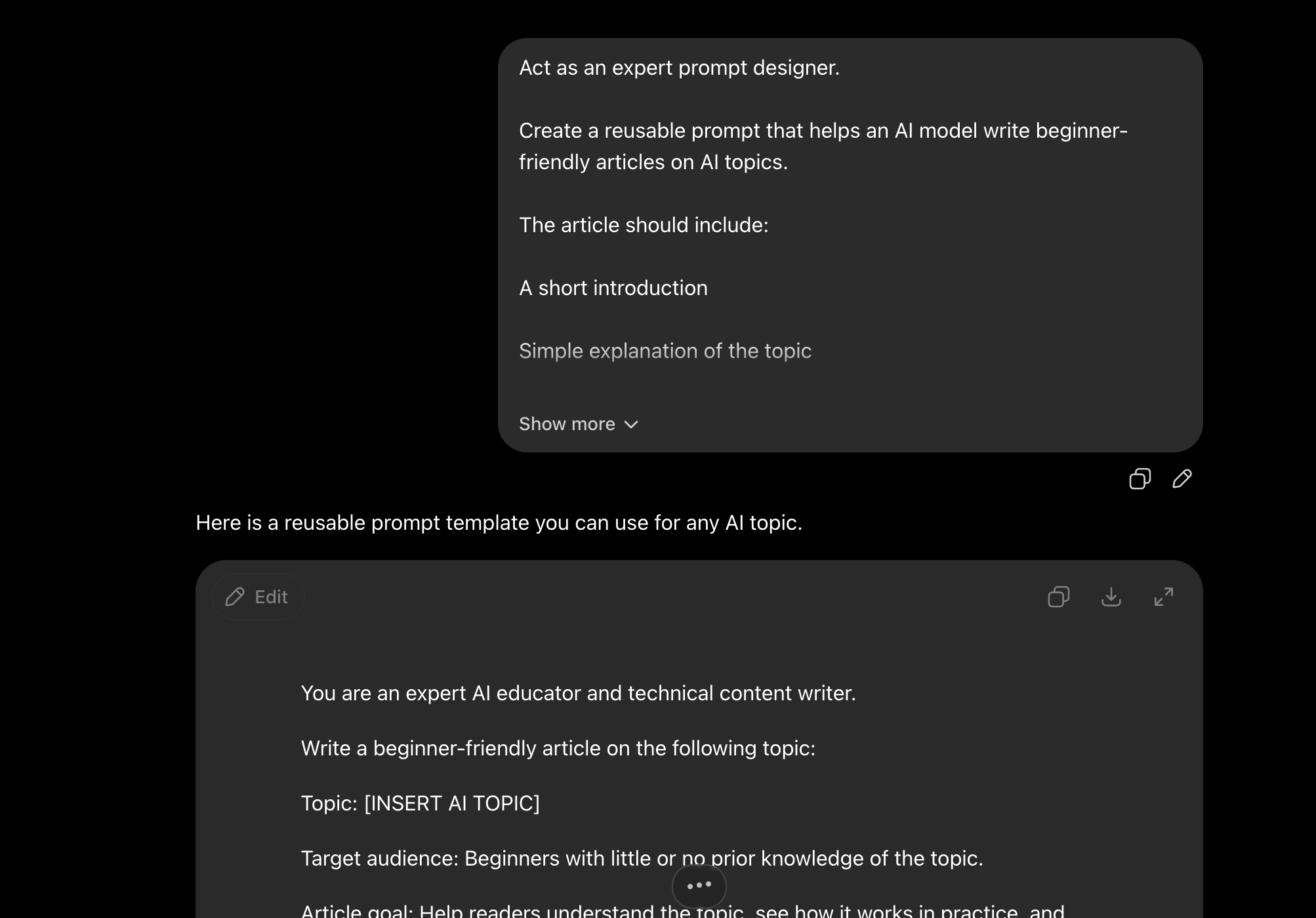
- The Prompt Generator: This is the most common use case, where a vague idea is transformed into a 500-word instruction set. For instance, a user might say, "I need to summarize legal documents." The meta-prompt turns this into a multi-layered instruction covering legal terminology, privacy constraints, and executive summary formatting.
- The Prompt Refiner: This pattern is used to troubleshoot failing prompts. If a prompt consistently produces overly verbose answers, the meta-prompting layer analyzes the existing instructions and rewrites them to prioritize conciseness.
- The Self-Critique Loop: This involves the model generating an output, evaluating that output against a rubric it designed itself, and then revising the output. This "recursive" meta-prompting is highly effective for complex coding or technical writing tasks.
- Agent Scaffolding: As the industry moves toward autonomous AI agents, meta-prompting is used to define the "reasoning steps" an agent must take before accessing external tools like search engines or databases.
Industry Implications and Expert Perspectives
The shift toward meta-prompting signals a professionalization of the AI field. Experts in the field of Natural Language Processing (NLP) suggest that "prompt engineering" as a manual task may eventually be replaced by "AI orchestration," where humans manage the high-level goals and AI manages the granular execution instructions.
"The goal is to move away from the ‘black box’ approach to AI," notes one industry analyst. "Meta-prompting allows us to see the logic the AI is using. When the model generates a checklist to validate its own work, it provides a layer of transparency that is essential for compliance-heavy industries like finance and healthcare."
Logically, this approach also mitigates the risk of "model drift." When LLMs are updated by their creators (e.g., moving from GPT-4 to GPT-4o), prompts that worked previously may yield different results. A meta-prompting system allows for rapid re-calibration, as the "Meta-Prompt" can be used to quickly generate a new, optimized instruction set tailored to the new model’s specific weights and biases.
Case Study: Content Scalability in Technical Journalism
Consider a news organization attempting to cover a high volume of technical releases. A standard prompt like "Write a report on this software update" will yield inconsistent results. By employing meta-prompting, the editorial team can create a "Technical Report Architect."
The resulting AI-generated prompt would include specific requirements:
- A mandatory section on "Backward Compatibility."
- A table comparing version specs.
- A tone requirement that is "objective but accessible."
- A validation checklist that ensures no marketing jargon is used.
Once this "Architect" prompt is created, any junior staffer can simply input the raw data from a software release, and the AI will produce a report that meets the organization’s exact standards every time. This scalability is what differentiates hobbyist AI use from enterprise-grade AI integration.
The Broader Impact on Workforce and Productivity
The adoption of meta-prompting has significant implications for the future of work. It reduces the barrier to entry for high-quality AI results. In the past, achieving professional-grade output required deep knowledge of prompt engineering. With meta-prompting, the AI itself acts as the consultant, leveling the playing field for employees across different technical skill levels.
However, this also places a new premium on "intent clarity." If a human cannot clearly articulate the goal and constraints to the Meta-Prompt, the resulting instructions will still be flawed. Therefore, the essential human skill of the future is not just "talking to AI," but "systemic thinking"—the ability to understand how a complex task can be broken down into a repeatable workflow.
Conclusion and Future Outlook
Meta-prompting represents a critical maturation of human-AI interaction. By leveraging the model’s capacity to design its own instructions, users can achieve a level of consistency, quality, and scale that is impossible through manual prompting alone. This technique transforms the LLM from a simple chatbot into a sophisticated design partner capable of building its own operational frameworks.
As AI models become more powerful, the "meta" layer will likely become the primary point of interaction. Instead of writing prompts, users will define "policies" and "objectives," and the AI will generate the entire prompt ecosystem required to fulfill them. For organizations looking to lead in the AI era, mastering meta-prompting is no longer an optional skill—it is the foundation of reliable, automated, and high-performance AI workflows. The transition from "writing prompts" to "designing prompt systems" is the defining shift of the current technological landscape, ensuring that AI remains a precise tool rather than an unpredictable assistant.