Social media marketing for financial services represents the strategic deployment of digital platforms to inform, engage, and support audiences, cultivate trust, and generate leads within an inherently regulated industry. This imperative applies broadly across the financial sector, encompassing traditional banks, credit unions, insurance companies, wealth management firms, and agile fintech innovators. What distinguishes this specialized field from general social media marketing is the delicate equilibrium required: financial brands must simultaneously appear approachable and authentic while strictly adhering to rigorous regulatory mandates, safeguarding sensitive client data, and fostering an advisory relationship built on unwavering trust. Each piece of public communication carries significant compliance implications, elevating strategy and robust governance to the same critical level as creative execution. When executed effectively, social media transforms into a powerful conduit for reaching individuals at nascent stages of their financial journeys and maintaining a prominent presence as their needs evolve.
The Evolving Landscape: Why Social Media is Indispensable for Financial Services

The shift in consumer behavior, particularly among younger demographics, has made social media an unavoidable frontier for financial institutions. Traditional advertising and communication channels are proving less effective in capturing the attention of digitally native generations who instinctively turn to online platforms for information and peer recommendations. This fundamental change necessitates a proactive and sophisticated social media presence for financial services companies.
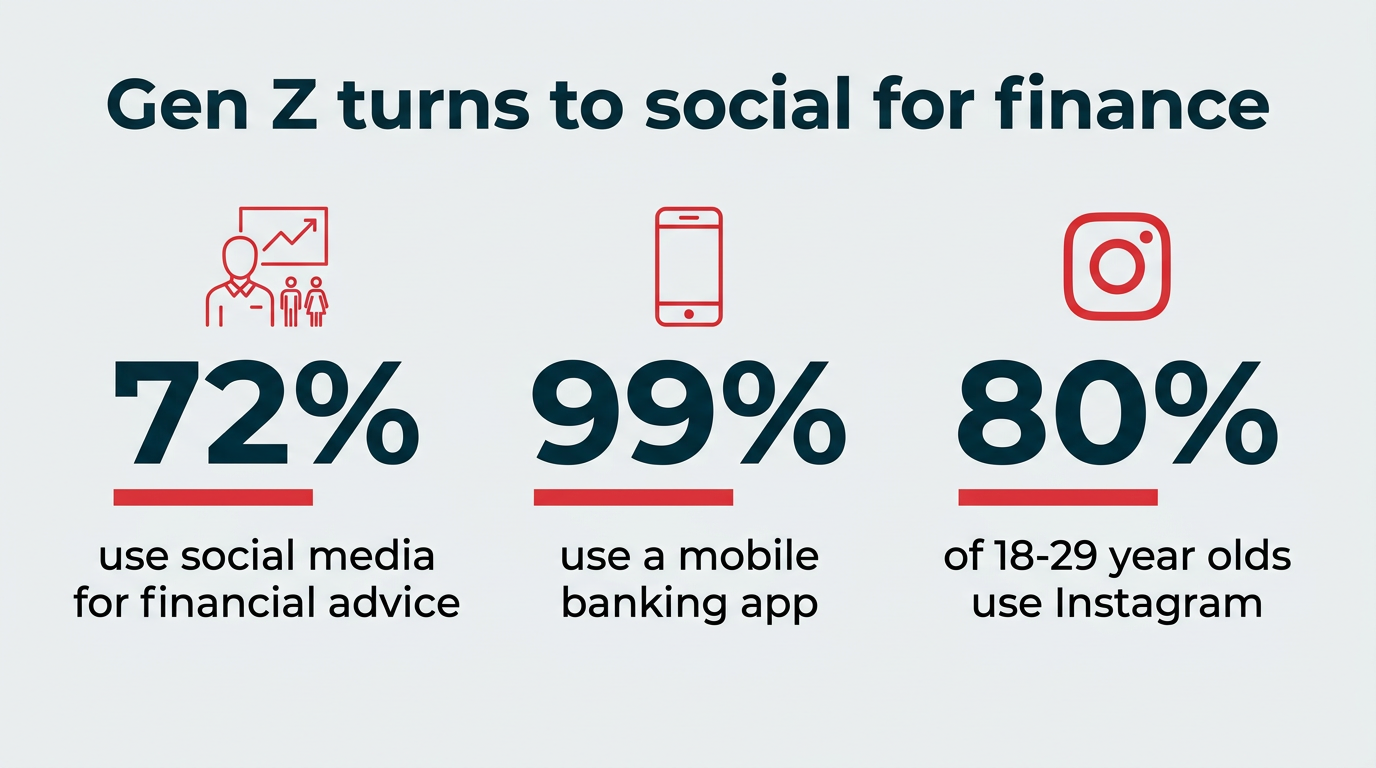
The primary impetus for financial services to embrace social media stems from its growing influence on how individuals, especially younger generations, educate themselves about financial matters and determine who to entrust with their assets. Data consistently illustrates this trend. For instance, Pew Research indicates that a substantial 80% of 18-29-year-olds are active on Instagram alone, highlighting the platform’s reach among this crucial demographic. This age group, Gen Z, is increasingly using social platforms to acquire financial literacy, coinciding with their entry into significant life stages that demand financial guidance, such as career establishment, homeownership, and family planning. A CNBC study reveals that 47% of Gen Z workers are proactively on track for a successful retirement, underscoring their engagement with long-term financial planning. Furthermore, 99% of Gen Z utilizes mobile banking applications to manage their finances, demonstrating their comfort and reliance on digital tools. Social media, therefore, often serves as the initial touchpoint for this audience seeking financial insights. Charles Schwab’s Modern Wealth Survey confirms that 72% of Gen Z relies on social media for financial advice, emphasizing the critical importance for financial institutions to engage with them early and authentically on these platforms.
Beyond demographic shifts, social media serves as a cross-functional utility within financial organizations, benefiting marketing, customer service, and sales teams alike. It is a channel for disseminating educational content, announcing new products, offering real-time customer support, and fostering a sense of community around financial wellness.

Core Benefits and Strategic Imperatives for Financial Institutions
Leveraging social media effectively offers a multitude of benefits for financial services firms, extending far beyond simple brand visibility.
-
Reaching New and Diverse Audiences: Social media provides unparalleled access to demographics that may not be reached through traditional channels. As highlighted, Gen Z and younger millennials are highly active and seeking financial information online. By developing tailored content strategies for platforms like Instagram and TikTok, financial brands can introduce themselves to these future clients, educating them on complex financial topics in accessible formats. This early engagement is crucial for building brand recognition and loyalty that can mature over time.
-
Strengthening Relationships and Fostering Social Selling: Trust is paramount in finance. Social media offers a unique avenue for building and nurturing relationships over extended periods. This process, often referred to as "social selling," involves engaging with prospects and clients in a non-transactional manner. Platforms like LinkedIn are particularly effective for observing professional milestones such as new jobs, retirements, or business launches. By offering genuine congratulations, sharing pertinent resources, or answering questions without immediately launching into a sales pitch, advisors can cultivate goodwill and position themselves as trusted resources. The long-term implication is that sales naturally follow from established relationships and demonstrated value, rather than aggressive outreach.
-
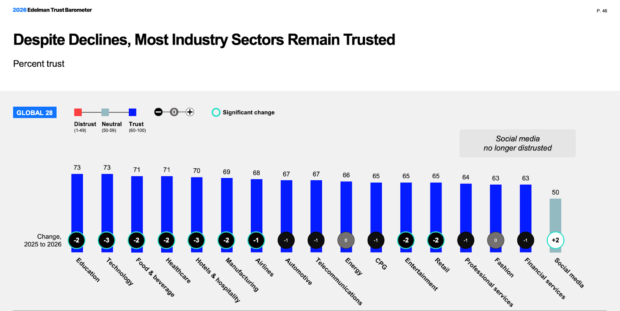
Building Trust and Highlighting Brand Values: In an era where consumers are increasingly conscious of corporate ethics, transparency about brand values is vital. Interest in sustainable investing, for example, is at an all-time high, with a Morgan Stanley report indicating that 99% of Gen Z and 97% of millennials express interest in such investments. Social media allows financial institutions to articulate their commitment to environmental, social, and governance (ESG) principles, thereby aligning with client values and enhancing confidence. While trust in financial services has improved over the last decade, the Edelman Trust Barometer consistently ranks it among the least trusted industries. Social media offers a direct channel to bridge this trust deficit by explaining decisions, engaging in dialogues about corporate values, and responding to public concerns with transparency and empathy.
-
Humanizing the Brand: Financial services can often be perceived as impersonal or intimidating. Social media provides a platform to inject personality and approachability into the brand. Featuring executives and employees on social media, for instance, can significantly humanize an organization. Research indicates that 82% of individuals are more inclined to trust a company when its senior executives maintain an active social media presence. This personal connection helps demystify financial concepts and makes the brand feel more accessible and relatable.
-
Gaining Industry and Customer Insights: Social media is an invaluable tool for market intelligence. By actively monitoring conversations, trends, and competitor activities, financial institutions can leverage social listening as an early warning system for emerging market shifts or new product launches. Integrated insights and listening applications, such as Lumen within Hootsuite Social OS, can identify these trends rapidly, revealing shifts in public sentiment or discussions around specific financial topics. Furthermore, social listening provides granular data on target audiences, including demographics, interests, and pain points, allowing firms to tailor products and communications more effectively. Analyzing proprietary social media data also provides crucial feedback on content performance, enabling continuous optimization of strategy.
-
Reducing Effort and Costs through Centralized Management: Managing social media across multiple teams, departments, and individual advisors in a regulated industry can be complex and resource-intensive. A shared social media management platform, like Hootsuite, streamlines operations. Employee advocacy tools, such as Parliament within Hootsuite Social OS, provide employees with access to pre-approved, compliant content ready for posting. This ensures consistent messaging, maintains brand integrity, and significantly reduces the compliance burden, leading to greater efficiency and peace of mind.
-
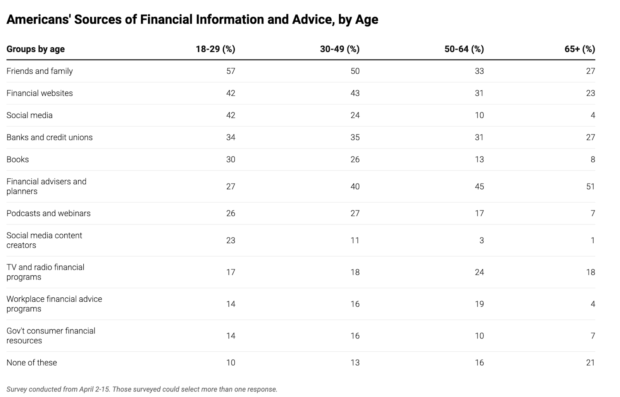
Driving Tangible Business Results: Ultimately, social media plays a direct and measurable role in influencing financial decision-making. A recent Gallup poll highlights that 42% of Americans under 30 obtain financial advice from social media, with 23% following personal finance content creators, often dubbed "finfluencers." This underscores the platforms’ direct impact on consumer choices. Even individuals who already engage with a financial advisor are influenced; approximately 45% of U.S. consumers with an advisor use social media to further their financial planning knowledge. For financial services, the opportunity extends beyond mere presence; it demands a strategic commitment to delivering helpful, compliant content at every stage of the customer journey, from initial awareness to ongoing support.
Platform-Specific Strategies for Financial Services
The optimal social media platform varies depending on the target audience, content style, and strategic objectives. Financial institutions must adopt a multi-platform approach, leveraging the unique strengths of each.
-
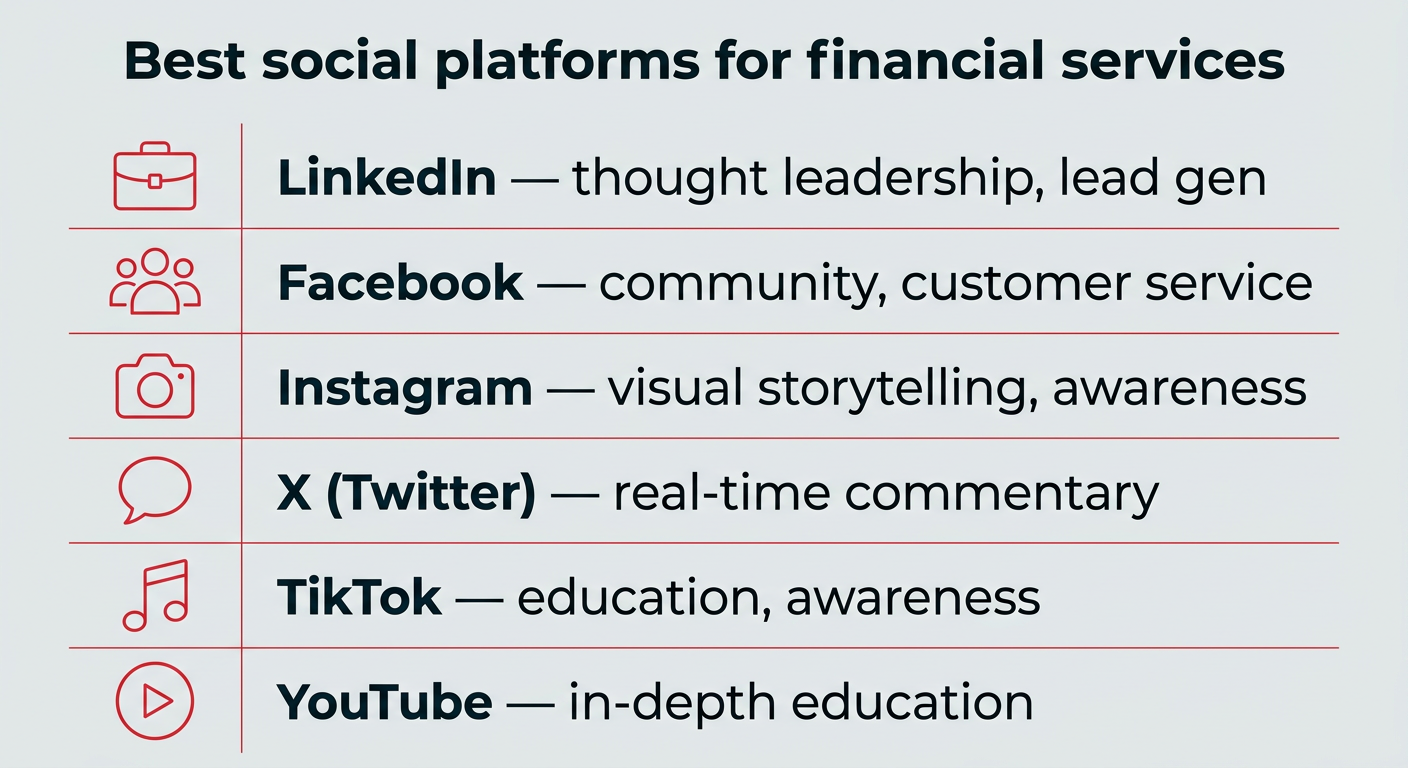
LinkedIn: The premier platform for professional networking, LinkedIn boasts a vast community of finance-minded professionals, with members twice as likely to seek financial advice there. It is ideal for thought leadership, lead generation, and showcasing corporate culture. Content typically includes long-form articles, market analyses, executive insights, and company news, positioning the brand as an industry authority. Leaders can amplify their reach by linking to more comprehensive content like whitepapers or research reports.

-
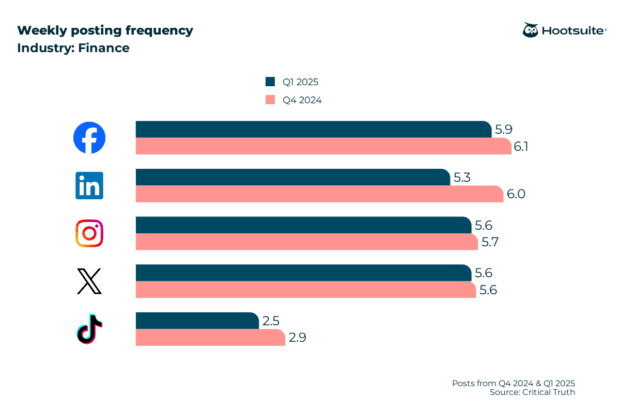
Meta (Facebook and Instagram): This dual-platform giant covers extensive ground. Facebook remains the most-posted-to platform for financial institutions, excelling in community building, customer service, and establishing local branch presence. Its messaging capabilities make it a vital support channel. Instagram, conversely, leads in engagement (3.8%) and follower growth (2.26%) within financial services benchmarks. It thrives on visual storytelling through Reels, images, and Stories, making it perfect for brand awareness, product showcases, and reaching younger audiences with dynamic, visually appealing content.
-
X (formerly Twitter): A fast-paced platform for real-time commentary and updates, X is best for timely reactions to market news, engaging in industry discussions, and crisis communication. It rewards concise opinions and strong points of view, allowing executives to share observations and spark broader conversations, thereby boosting engagement.
-
TikTok: Increasingly vital for reaching Gen Z and younger millennials, TikTok specializes in short-form video content. It offers a unique opportunity to explain complex financial topics in plain language through engaging, native-style videos, often incorporating humor and casual language. Given its evolving regulatory status in some regions, financial brands should diversify their strategy and have backup plans for audience engagement.

-
YouTube: As the leading platform for long-form video, YouTube is the ideal hub for in-depth educational content, webinars, podcasts, and explainers. Its content has a longer lifespan and significant SEO value, making it excellent for comprehensive guides, expert interviews, and building long-term trust through detailed information. Brands like Coinbase effectively use YouTube for webinars and tutorials.
Navigating the Regulatory Maze: Compliance and Risk Management
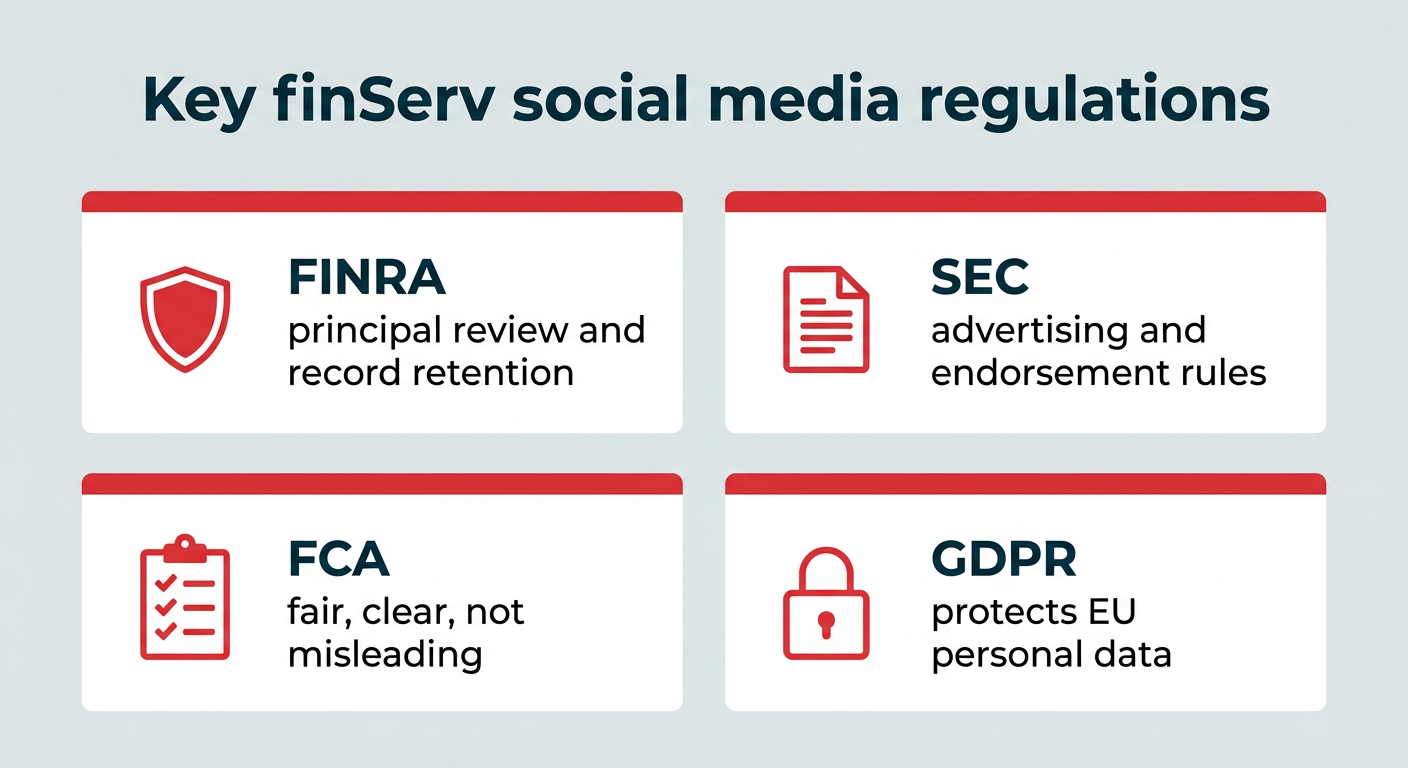
Social media compliance in financial services is a multi-faceted challenge, requiring strict adherence to numerous regulations, meticulous record-keeping, and proactive risk mitigation. The sheer volume of regulatory bodies—including FINRA, SEC, FCA, FFIEC, IIROC, PCI, AMF, and GDPR—demands a robust compliance framework.

- Regulatory Requirements:
- FINRA (Financial Industry Regulatory Authority): In the U.S., FINRA governs broker-dealers, requiring supervision and retention of social media communications, emphasizing that all business-related posts must be reviewed by a registered principal.
- SEC (Securities and Exchange Commission): The SEC oversees investment advisors and broker-dealers, with rules on advertising, testimonials, and record-keeping that extend to social media.
- FCA (Financial Conduct Authority): In the UK, the FCA mandates that financial promotions on social media must be clear, fair, and not misleading, and communications must be recorded.
- GDPR (General Data Protection Regulation): Applicable globally when dealing with EU citizens, GDPR imposes strict rules on data privacy and consent, impacting how personal information is handled on social media.
These regulations necessitate comprehensive compliance processes and specialized tools, especially for guiding independent advisors’ use of social media. Tools like Vigil, the compliance and governance layer in Hootsuite Social OS, are crucial for enforcing approval chains and policies across teams, ensuring that all communications meet legal standards. Engaging the compliance team early in strategy development is non-negotiable, as their guidance is critical for protecting the brand from legal and financial repercussions.
-
Archiving and Record-Keeping: A cornerstone of financial services compliance is the mandatory archiving of all business-related communications. FINRA, for example, requires these records to be stored for a minimum of three years. Social media management platforms with integrations to compliance solutions like Brolly and Smarsh automatically archive all social media interactions, including posts, comments, and direct messages, in a secure, searchable database. This ensures that firms can retrieve communications with their original context for regulatory audits or legal discovery.
-
Social Media Risks and Challenges: Beyond regulatory non-compliance, which can lead to hefty fines and enforcement actions, financial services firms face several inherent risks:

- Reputational Damage: In a low-trust industry, a single misstep, insensitive comment, or mishandled customer complaint on social media can quickly go viral, eroding public confidence and causing significant brand damage.
- Fraud and Impersonation: Scammers frequently create fake accounts mimicking legitimate financial brands to deceive customers, leading to phishing attacks, identity theft, and real financial harm. Robust monitoring and rapid response protocols are essential.
- Customer Privacy Violations: Inadvertently sharing or exposing personal financial information on social media, even unintentionally, can violate strict privacy laws (like GDPR, CCPA, or HIPAA for health-related financial products) and internal policies, leading to severe legal consequences and a loss of customer trust.
Mitigating these risks requires strong governance, continuous monitoring, stringent access controls, and a clear social media policy that is regularly updated and enforced.
Building a Robust Social Media Strategy: A Step-by-Step Guide
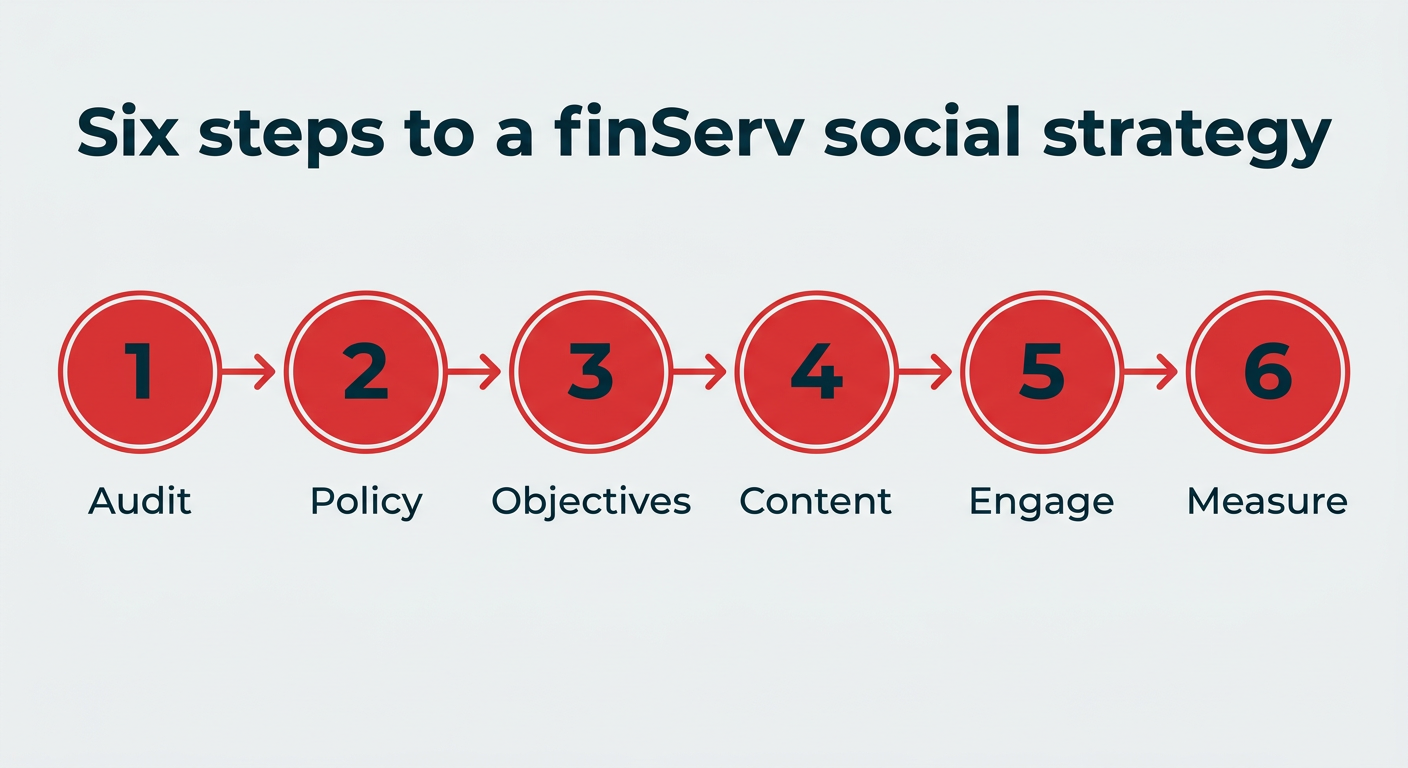
An effective social media strategy for financial services is built on a structured, iterative process designed to balance creativity with compliance.
-
Conduct a Comprehensive Social Media Audit: The initial step involves cataloging all existing social media profiles, including official brand accounts, departmental pages, and individual advisor accounts. Simultaneously, it’s crucial to identify and address any impostor or unauthorized accounts. This audit should also identify platforms where the brand currently lacks a presence, prompting the proactive claiming of brand handles, even if immediate posting isn’t planned. A structured audit template can help organize this critical information.
-
Implement a Rigorous Social Media Policy: A well-defined social media policy is the bedrock of compliant social media use. This document guides all social media activities within the organization, including those of advisors and agents. Its development should involve key stakeholders from legal, compliance, marketing, HR, and IT to ensure comprehensive coverage and consistent brand identity. The policy must clearly delineate roles and approval workflows—who can post, who reviews content, and the precise journey from draft to publication—to prevent confusion and delays. Crucially, the policy must address security protocols, including password management, access controls, and software update schedules, to mitigate real-world risks like data breaches.
-
Establish Clear Objectives and Define Your Target Audience: Before any content is created, financial institutions must clearly articulate what they aim to achieve through social media. Goals should be SMART (Specific, Measurable, Achievable, Relevant, Time-bound), linking directly to business outcomes such as brand awareness, lead generation, or improved customer service response times. Simultaneously, defining granular audience segments (e.g., retail banking clients, high-net-worth individuals, B2B partners) and mapping them to appropriate platforms and content strategies ensures that efforts are targeted and impactful.
-
Create Compliant, Engaging Content: The hallmark of successful financial social media content is its ability to balance education with engagement, all while adhering strictly to compliance guidelines. Content should be tailored to each platform’s strengths—e.g., long-form thought pieces for LinkedIn, short educational videos for TikTok, and in-depth webinars for YouTube. A meticulously planned content calendar ensures consistency and allows for pre-approval workflows. AI-powered tools can assist in content ideation and drafting, while platforms like Perch (in Hootsuite Social OS) facilitate content creation and route posts through necessary approval chains, ensuring brand consistency and compliance without impeding efficiency.
-
Engage and Nurture Relationships: Publishing content is only half the equation; active engagement is equally vital. Customers expect to interact with financial institutions on their preferred platforms, whether Facebook, Instagram, or messaging apps like WhatsApp. Social customer service tools are essential for managing inquiries across channels, and integrating these conversations with CRM systems is crucial for compliance, maintaining service level agreements, and comprehensive record-keeping. Unified customer care applications, such as Nest in Hootsuite Social OS, consolidate private messages, public comments, mentions, and reactions into a single workspace, integrating with leading CRMs like Salesforce and Microsoft Dynamics to provide context for personalized and compliant responses.
-
Measure, Report, and Optimize: The final, ongoing step involves tracking performance against established goals and using these insights for continuous improvement. Monitoring key metrics, such as reach, engagement, lead generation, and response times, allows firms to demonstrate tangible value to leadership. Analytics features within platforms like Hootsuite Social OS provide real-time insights across accounts, enabling teams to identify successful strategies and adapt underperforming ones. This iterative approach treats social media strategy as a dynamic, evolving process rather than a static plan.
Emerging Trends Shaping the Future of Financial Services Social Media in 2026
The landscape of social media in financial services is in constant flux, with several key trends poised to redefine strategies in 2026 and beyond.
-
AI-Powered Content Creation and Social Intelligence: Artificial intelligence is rapidly transforming how financial brands operate on social media. AI tools are accelerating content drafting, generating personalized recommendations, and providing real-time social listening capabilities. Platforms like Lumen are enhancing contextual intelligence, enabling teams to swiftly detect shifts in sentiment and anticipate potential crises. Wisdom, the AI orchestration layer in Hootsuite Social OS, integrates these insights directly into workflows, allowing for rapid, governed action. For a heavily regulated industry, this blend of speed and controlled processes offers a significant competitive advantage.
-
Short-Form Video and Creator Partnerships: The dominance of short-form video on platforms like TikTok, Instagram Reels, and YouTube Shorts continues unabated, and financial brands are increasingly leveraging this format. Finfluencers, personal finance content creators, play a significant role in this trend; 23% of Americans under 30 follow such creators. Financial services firms are forging partnerships with these influencers to explain complex products in digestible, relatable language, thereby reaching audiences who are often disengaged by traditional advertising.
-
Employee Advocacy as a Growth Channel: Financial services firms are recognizing the immense value of empowering their employees’ voices. Advisors and executives who share pre-approved, compliant content on their personal profiles are perceived as more credible and authentic than corporate accounts. Tools like Parliament simplify the scaling of employee advocacy programs, providing ready-to-post content while ensuring brand consistency and compliance. This strategy effectively transforms a large workforce into a powerful, authentic, and trusted growth channel.
Case Studies: Lessons from Successful Social Media Campaigns

Examining successful campaigns provides practical insights into effective social media strategies in the financial sector, often highlighting education, storytelling, and consistent engagement.
-
Current x MrBeast: Current, a mobile banking services provider, strategically partnered with high-profile influencers like MrBeast to enhance brand awareness among a younger demographic. Their ongoing collaboration on YouTube generated significant traction, leading to a substantial increase in app activity and visibility within the Apple App Store. The success of this campaign lay in its ability to meet a young audience on their preferred platform, utilizing a trusted creator to make the brand relevant, engaging, and highly shareable.
-
BNY Mellon #DoWellBetter: BNY Mellon’s #DoWellBetter campaign was designed to highlight the positive societal impact of its clients. Through compelling portraits and video interviews, the campaign showcased how intelligent investing and thoughtful wealth management facilitated clients in creating meaningful change. This strategy successfully leveraged real client stories to forge an emotional, human connection, a depth that pure product messaging often fails to achieve, thereby building trust and demonstrating shared values.

-
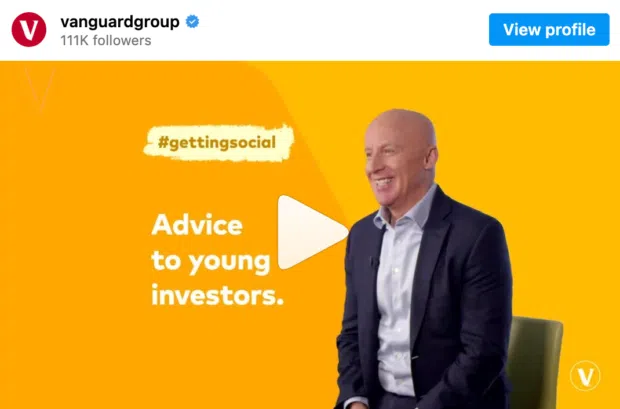
Vanguard Group #GettingSocial: Investment giant Vanguard Group established a weekly social video series, #GettingSocial, to provide clear, actionable insights on investing and other financial topics. The consistency of this series was a critical success factor; regular scheduling created a habit among followers, encouraging repeat engagement and positioning Vanguard as a reliable educational resource. These short-form videos delivered valuable takeaways efficiently, perfectly suiting the demands of busy audiences. Vanguard also strategically augmented this content with targeted social ads on related topics, creating a synergistic approach between educational and conversion-focused content.
Technological Enablers: The Role of Social Media Management Platforms
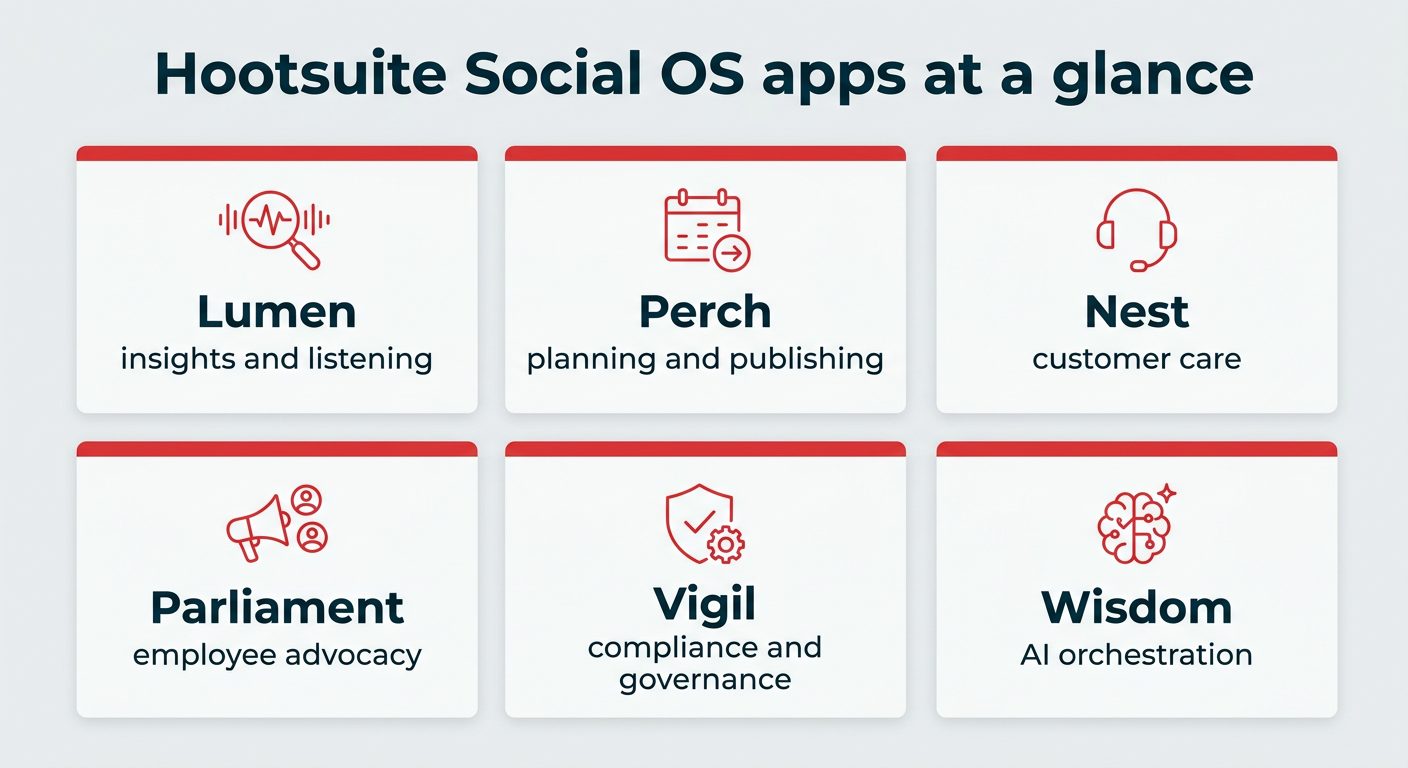
The complexity of social media management in financial services necessitates sophisticated technological solutions. Platforms like Hootsuite Social OS offer a connected ecosystem to manage social media safely and efficiently, from initial insights to publishing and ongoing compliance.
Key components of such platforms include:
- Lumen: An insights and listening app that provides contextual intelligence, enabling real-time trend spotting and early crisis detection.
- Perch: A content planning and publishing app that streamlines content creation and enforces approval workflows, ensuring brand consistency and compliance.
- Nest: A unified customer care app that centralizes private messages, public comments, and mentions, integrating with CRM systems for comprehensive customer relationship management and record-keeping.
- Vigil: A compliance and governance layer that enforces approval chains and policies, ensuring adherence to regulatory requirements and automatic archiving of communications.
- Wisdom: An AI orchestration layer that connects insights to action, facilitating faster, data-driven decision-making within governed workflows.
This integrated approach fosters operational coordination across marketing, customer care, compliance, and individual advisors, all within a single environment. The outcome is reduced risk, accelerated response times, and increased focus on activities that demonstrably drive business results and foster deeper client relationships.
Conclusion
Social media has transcended its initial role as a mere communication tool to become an indispensable strategic imperative for financial services. Navigating this dynamic landscape requires a sophisticated blend of creativity, technological enablement, and unwavering commitment to compliance. By embracing the power of digital platforms to educate, build trust, and engage authentically, financial institutions can effectively reach new generations, deepen existing relationships, and solidify their position in an increasingly competitive and digitally-driven market. The future of financial services marketing is undoubtedly social, demanding continuous adaptation, robust governance, and a human-centric approach to digital engagement.