India’s burgeoning e-commerce landscape is poised for a transformative shift with the widespread adoption of the Open Network for Digital Commerce (ONDC). This government-backed initiative, launched in 2021, is rapidly evolving from a niche project into a foundational pillar of India’s digital economy, presenting unprecedented opportunities for both domestic small and medium-sized businesses (SMBs) and international corporations. As India overtakes China as the world’s most populous nation, its relatively nascent e-commerce penetration—significantly lower than that of established markets like China and the U.S.—signals immense growth potential. With a youthful demographic, where half the population is under 25, and a staggering 840 million smartphone users, the stage is set for an e-commerce boom. However, this digital awakening presents a complex challenge for policymakers: fostering innovation while safeguarding the livelihoods of millions of small, physical retailers, colloquially known as kiranas, who currently dominate 75% of the country’s consumer goods sales.
The Indian government’s strategic response to this duality is evident in its twin initiatives: the wildly popular United Payments Interface (UPI), a government-backed peer-to-peer digital payment infrastructure, and the ONDC. While UPI has revolutionized digital transactions, ONDC is designed to democratize online commerce, providing a crucial lifeline for kirana merchants to establish an online presence and compete in the digital marketplace. This strategic approach aims to balance the acceleration of digital transformation with the imperative of protecting and empowering the bedrock of India’s retail sector.
The Genesis and Architecture of ONDC
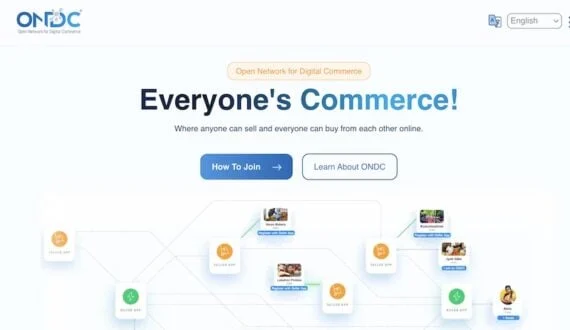
The ONDC initiative emerged from a recognition that existing e-commerce marketplaces, while successful, often create walled gardens that can disadvantage smaller players. Unlike platforms such as Amazon India and Flipkart, which operate as centralized marketplaces, ONDC functions as an open-source framework. It connects a diverse ecosystem of applications, payment providers, and logistics companies through standardized, open protocols and rules. This decentralized architecture is ONDC’s core innovation.
The vision behind ONDC is to liberate kirana owners and independent merchants from the confines of proprietary marketplaces. Instead of being beholden to the terms and algorithms of a single platform, sellers can leverage ONDC to list their products, manage inventory, and fulfill orders through a variety of integrated seller applications. This empowers them to maintain greater control over their online presence, pricing, and customer relationships. The initiative has seen a gradual but significant uptake across India, though its widespread integration is still on a trajectory that lags behind the ubiquity of UPI.
Beyond its direct impact on SMBs, ONDC is also proving to be a valuable supplementary distribution channel for established local brands. Rather than viewing it as a replacement for existing sales channels, these brands are utilizing ONDC to expand their reach and customer base without incurring the high commission fees often associated with traditional marketplaces. Furthermore, foreign companies that adhere to India’s regulatory framework can also access the ONDC seller app ecosystem, opening new avenues for market entry and expansion.
The ONDC Ecosystem: Seller and Buyer Applications
The ONDC network is built upon two distinct yet interconnected sets of applications: seller apps and buyer apps.
Seller Applications are the gateways for merchants to participate in the ONDC network. These platforms provide the tools necessary for businesses to:
- List Products: Merchants can upload their product catalogs, complete with descriptions, images, and pricing.
- Manage Inventory: Real-time tracking of stock levels ensures accuracy and prevents overselling.
- Fulfill Orders: Streamlined processes for receiving, processing, and dispatching customer orders.
Prominent seller applications that have gained traction within the ONDC network include Mystore, CostBo, and GoFrugal. These platforms offer varying features and support structures, catering to the diverse needs of Indian businesses.
Buyer Applications serve as the interface for consumers to discover and purchase products. Shoppers can browse a vast array of offerings from different sellers and brands through these applications:
- Browse and Discover: Consumers can explore products based on categories, brands, or location.
- Purchase Goods: Seamless checkout processes facilitate transactions.
- Access Services: Beyond retail, ONDC is expanding to include services like restaurant bookings and hotel reservations.
Leading buyer applications that have integrated with ONDC include Paytm, Bajaj Finserve, and Magicpin. The interoperability of ONDC means that a customer using one buyer app can purchase from a seller listed on another seller app, creating a truly unified digital marketplace.
Competitive Advantages and Cost Efficiencies
One of the most compelling aspects of ONDC for sellers is its significantly lower fee structure compared to traditional e-commerce marketplaces. Selling fees on ONDC typically range from 3% to 10%, a stark contrast to the 18% to 40% commission rates often charged by established platforms. This cost advantage can dramatically improve profit margins for businesses, especially for SMBs operating on tighter budgets.
Furthermore, ONDC offers unparalleled transparency and seller control:
- Transparent Algorithms: Sellers have a clearer understanding of how their products are surfaced to potential buyers, moving away from opaque marketplace algorithms.
- Non-Discriminatory Sorting: The network aims to provide equitable visibility for all participating sellers, reducing the advantages typically enjoyed by larger, established brands on other platforms.
- Portable Ratings: Seller ratings and reviews are not tied to a single marketplace, allowing businesses to build a consistent reputation across the entire ONDC network.
This open and equitable environment fosters a more competitive and dynamic market, benefiting both sellers and consumers. The ability for brands to register with a seller app and have their products immediately exposed to the broader ONDC network, and for shoppers on one buyer app to seamlessly purchase from sellers on another, underscores the network’s interconnected and expansive nature.
Expanding Categories and Global Reach
The ONDC network is not confined to traditional retail; it encompasses a wide spectrum of categories, including:
- Retail: Groceries, home and kitchen items, fashion, electronics, and more.
- Food Delivery: Connecting restaurants with consumers through various delivery partners.
- Logistics Services: Facilitating the movement of goods across the network.
- Hospitality: Including hotels and accommodation services.
While categories like groceries and food delivery are experiencing rapid growth due to high order frequency, other sectors like fashion, pharmaceuticals, and hospitality are also steadily scaling.
The inclusion of prominent global brands on ONDC is a testament to its growing influence and potential. Companies such as Red Bull, Unilever, Nestle, PepsiCo, Procter & Gamble, L’Oréal, and Johnson & Johnson are now accessible through the ONDC network. Many of these global food brands, already active on quick commerce platforms like Blinkit, Swiggy Instamart, and Zepto, can now access the ONDC ecosystem at minimal additional cost, leveraging their existing logistics and distribution channels.
For foreign brands considering entry into the Indian market, ONDC presents a viable and potentially less complex pathway, provided they navigate the existing regulatory landscape. As previously detailed, foreign sellers have several avenues to explore, including marketplaces, distributors, direct-to-consumer (D2C) websites, and cross-border e-commerce. ONDC offers a unique proposition within this mix, providing direct access to a vast consumer base without the need for a physical presence or the complexities of establishing a wholly owned subsidiary in some cases.
Broader Implications and Future Outlook
The ONDC initiative is more than just a new e-commerce platform; it represents a fundamental rethinking of digital commerce in India. By democratizing access and fostering competition, ONDC has the potential to:
- Boost Economic Inclusion: Empowering millions of small businesses and entrepreneurs to participate in the digital economy.
- Enhance Consumer Choice: Offering a wider selection of products and services at competitive prices.
- Drive Digital Innovation: Encouraging the development of new technologies and business models within the e-commerce ecosystem.
- Strengthen India’s Digital Infrastructure: Building a robust and resilient framework for future digital growth.
The government’s commitment to this open network model signals a strategic intent to create a more equitable and sustainable digital marketplace. While challenges remain in ensuring widespread adoption and seamless integration across all segments of the economy, the early traction and the growing participation of both local and international players indicate a promising future for ONDC.
The success of ONDC is intricately linked to the continued growth of digital payments through UPI and the increasing digital literacy of the Indian population. As more businesses and consumers embrace these digital tools, ONDC is poised to become a cornerstone of India’s ambitious vision for a digital future, redefining how goods and services are bought and sold across the nation. The ongoing evolution of ONDC, with its focus on interoperability, affordability, and accessibility, positions India not just as a massive consumer market, but as a leader in pioneering a new, inclusive model for global e-commerce.