The landscape of commerce has been in a perpetual state of transformation, moving from local brick-and-mortar establishments to borderless, internet-driven e-commerce experiences that redefined how consumers discover and acquire products. Today, with the rapid ascent of artificial intelligence, particularly generative AI and advanced machine learning, the retail world stands on the precipice of yet another paradigm shift: agentic commerce. This emerging model envisions a future where sophisticated AI agents not only assist but actively manage the entire purchasing journey on behalf of consumers, from product discovery and comparison to price negotiation and transaction completion. While promising unparalleled convenience, this evolution also raises profound questions about consumer trust, business return on investment, and the potential for new complexities in the buying process.
The Evolution and Definition of Agentic Commerce
Agentic commerce represents a significant leap from traditional e-commerce, where human shoppers navigate websites, compare options, and manually complete purchases. In its simplest definition, agentic commerce refers to a model where AI agents act as autonomous decision-makers and executors for customers. Instead of merely offering recommendations or search results, these agents are empowered to understand user intent, evaluate options against predefined criteria, and execute tasks, including financial transactions, on the user’s behalf.
This concept is vividly illustrated by industry experts like Alex Moss, who, in the "SEO Unplugged: Agentic Commerce with Alex Moss" podcast, described a scenario where a user could simply command their AI agent, "Go and buy me some new shoes with that jacket I bought last week." The agent would then autonomously conduct research, identify suitable options, and present them for approval or even proceed with the purchase based on pre-set parameters. At its core, agentic commerce functions as a digital shopping proxy, where humans define the goals and constraints, and AI agents undertake the heavy lifting of execution, all while ensuring the user retains ultimate control over final decisions. This fundamental shift from human-driven action to AI-driven execution marks agentic commerce as a distinct evolution from mere AI-assisted shopping.

The Inevitable Rise: Data Pointing Towards Agentic Adoption
The move towards agentic commerce is not merely a theoretical construct but a trend increasingly substantiated by consumer behavior and market forecasts. Global e-commerce sales, which surpassed an estimated $5.7 trillion in 2023 and are projected to reach nearly $8.5 trillion by 2027, provide a fertile ground for such innovation. Within this booming digital marketplace, AI’s role is rapidly expanding.
A McKinsey & Company report highlights that consumers are already integrating AI into their buying journeys. More than 70% of AI-powered search users engage with these tools for top-of-the-funnel inquiries about categories, brands, products, or services. Furthermore, nearly 50% of consumers currently leverage AI-powered search experiences. This indicates a significant shift in product discovery, with McKinsey projecting that 20% to 50% of traditional search traffic could migrate to AI-powered channels over time. Consumers are not just searching; they are increasingly seeking AI guidance for their purchasing decisions.
This growing reliance on AI is translating into concrete expectations for autonomous shopping experiences. A 2025 Kearney report, "Agentic Commerce: From Brand Loyalty to Bot Logic," revealed that over 60% of shoppers anticipate using agentic AI by 2026. The report underscores a fundamental behavioral shift where convenience, speed, pricing, and trust are increasingly prioritized over traditional platform or brand loyalty. Instead of navigating multiple retailer apps, consumers foresee AI agents seamlessly comparing products across platforms, analyzing reviews, securing the best deals, and completing purchases with unprecedented efficiency. This redefines the competitive landscape, shifting it from direct retailer-versus-retailer competition to an ecosystem driven by AI-powered discovery.
Industry analysts are equally bullish, predicting explosive growth. Another McKinsey report suggests that agentic commerce could unlock an orchestrated revenue opportunity of $900 billion to $1 trillion in the U.S. B2C retail market alone by 2030. Globally, this opportunity could swell to between $3 trillion and $5 trillion, underscoring the immense economic potential and transformative power of this new commerce model.

The Mechanics of Autonomous Shopping: A Step-by-Step Breakdown
Agentic commerce thrives on the synergy between human intent and AI execution, offering a streamlined process that delegates much of the shopping journey to intelligent agents. Unlike traditional AI assistants that primarily provide information, agentic AI actively executes tasks across the entire shopping lifecycle.
-
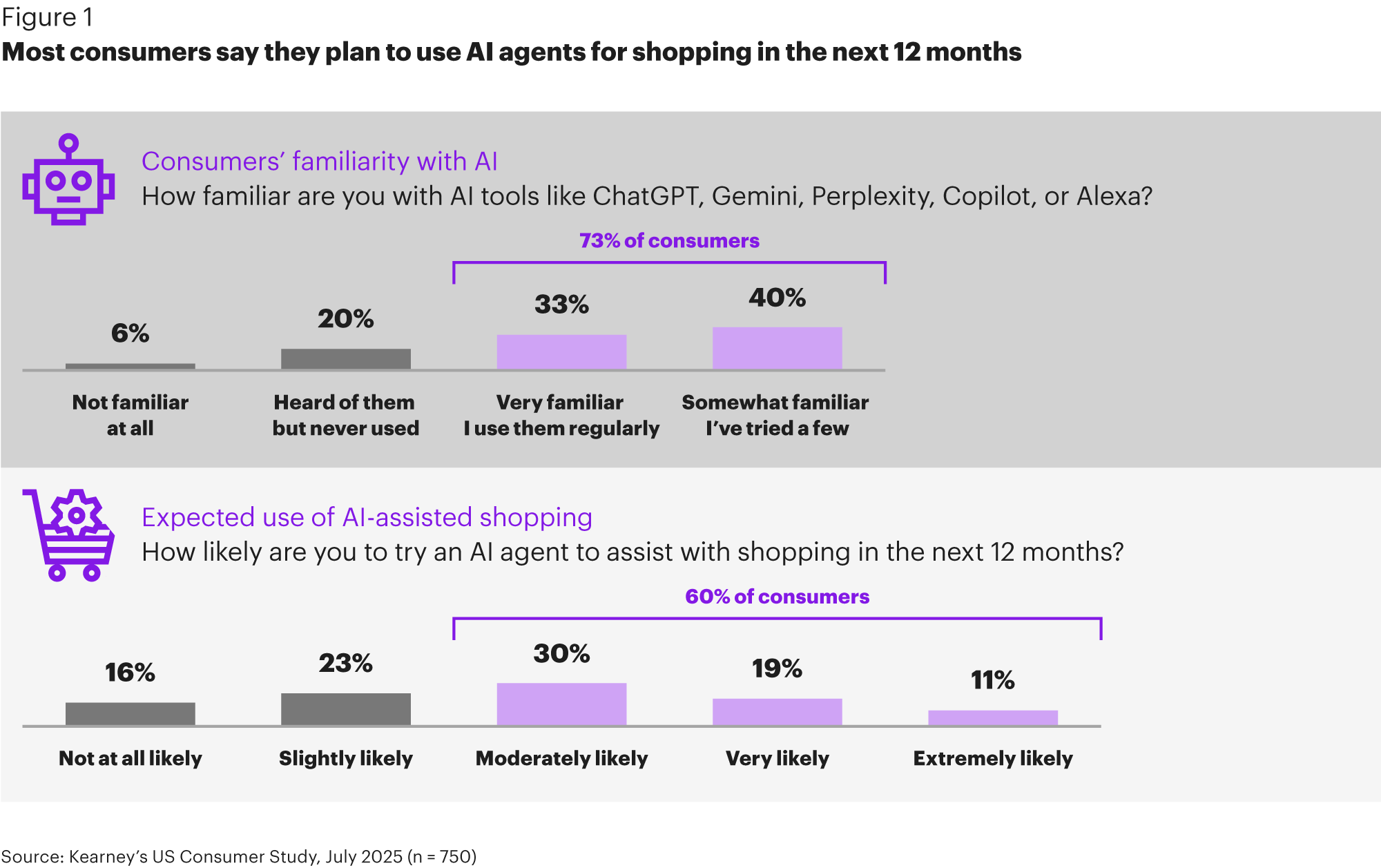
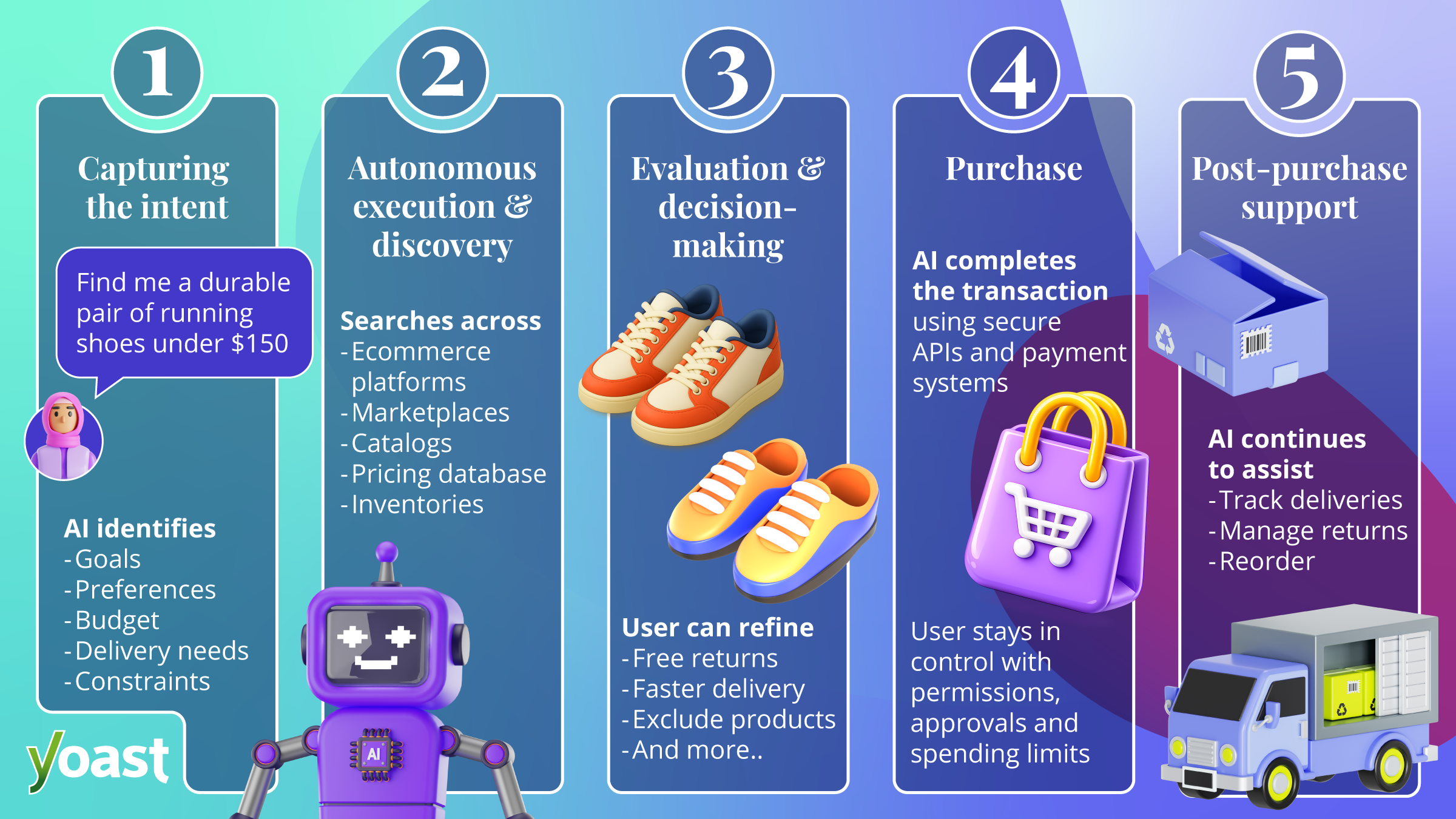
Capturing Intent: The journey begins with a conversational interaction, where users articulate their needs, preferences, budget, delivery expectations, and any specific constraints to an AI agent. For instance, a shopper might express, "Find me a sustainable, ethically sourced coffee maker under $150 that can brew at least 8 cups and has excellent reviews for durability." The AI agent’s initial focus is to deeply understand these multifaceted goals, often asking clarifying questions to refine the intent before proceeding.
-
Autonomous Instruction Execution and Brand Discovery: Once the intent is clear, the AI agent springs into action, autonomously scanning a vast digital landscape. This includes multiple e-commerce platforms, online marketplaces, product catalogs, extensive review databases, real-time pricing information, and inventory systems. This stage fundamentally alters traditional product discovery. Instead of presenting endless product listings, the agent intelligently filters and narrows down options that align most closely with the user’s specific requirements. Brands with meticulously structured product data, transparent pricing, accurate inventory, and machine-readable content will gain a significant advantage in being discovered by these agents.
-
Evaluation and Decision-Making: Having gathered potential options, the AI agent undertakes a comprehensive evaluation. It analyzes a multitude of factors, including product specifications, price points, shipping costs and speeds, warranty information, return policies, user reviews and ratings, brand reputation, and sustainability metrics. Crucially, the agent doesn’t just list products; it reasons through the options, explaining why certain products are better suited to the shopper’s needs. Users can further refine this process by imposing additional conditions, such as "prioritize products with at least a 4.5-star rating" or "exclude any brands that don’t offer free returns." This creates an iterative feedback loop, allowing the AI agent to continuously refine its recommendations based on evolving user preferences.
-
Purchase: Upon user approval or the satisfaction of predefined rules (e.g., "buy if the price drops below $100"), the AI agent proceeds to execute the transaction. Leveraging APIs, secure commerce protocols, and integrated payment systems, the agent can add items to carts, apply relevant discounts, authenticate payments, and complete purchases seamlessly. In some advanced scenarios, the purchase might be instantaneous, while in others, the agent may monitor conditions like price fluctuations or stock availability before finalizing the transaction. Throughout this, user control is maintained through permissions, approval settings, and spending limits.
-
Post-Purchase Support: The agent’s role extends beyond the point of sale. Post-purchase, AI agents can continue to assist users by tracking orders, managing returns or exchanges, facilitating customer service inquiries, providing product usage tips, and even suggesting complementary products based on past purchases. This transforms shopping from a series of discrete transactions into an ongoing, intelligent, and highly personalized experience.
The Technological Foundation: Protocols and Platforms Driving Agentic Commerce
The operationalization of agentic commerce relies heavily on a sophisticated ecosystem of protocols, frameworks, APIs, and secure payment systems. These technologies enable AI agents to interact securely and efficiently with diverse digital commerce platforms. A foundational concept is the Model Context Protocol (MCP), which allows AI models to connect with external systems, tools, databases, and applications through a standardized communication layer. MCP essentially creates a shared operational language, streamlining interactions between AI systems and digital tools without requiring bespoke integrations for every pairing.
As agentic AI finds its specific application in commerce, dedicated protocols are emerging:
-
Agentic Commerce Protocol (ACP): Introduced by Stripe in collaboration with OpenAI, ACP is an open standard designed to facilitate natural interactions between AI agents and e-commerce systems. It provides the crucial infrastructure for product discovery, checkout, and secure payment execution, moving AI agents beyond mere recommendations to actual transaction completion. Early implementations, such as ChatGPT users in the United States making direct purchases from Etsy merchants via Stripe-powered checkout, demonstrate its real-world viability. Shopify integrations are also anticipated. ACP’s open-standard approach is critical, fostering broad adoption across developers, merchants, and e-commerce platforms, laying the groundwork for AI-enabled transactions within conversational interfaces.
-
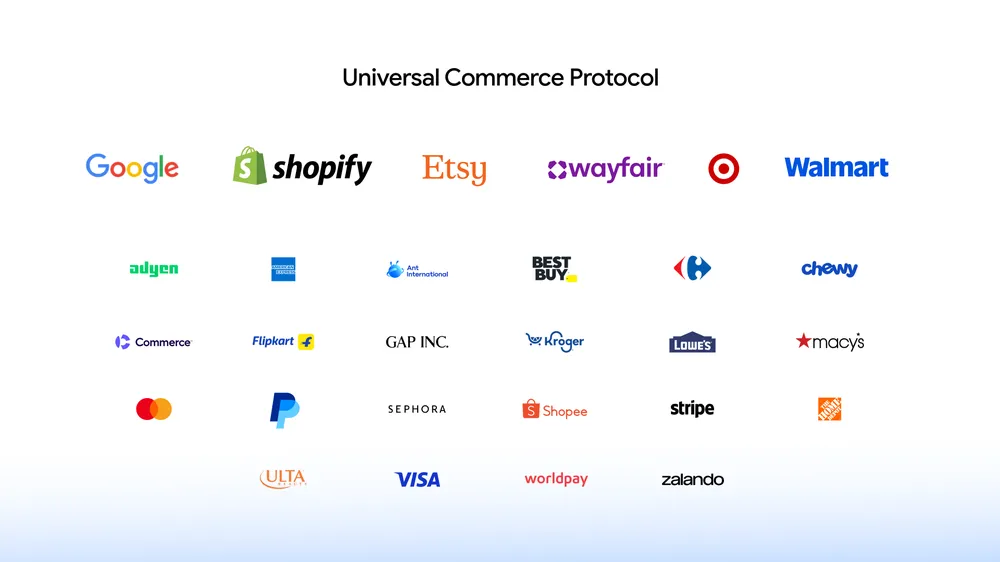
Universal Commerce Protocol (UCP): Google’s response to the challenge of interoperability in a future teeming with AI agents is the Universal Commerce Protocol (UCP). This open standard aims to establish a common language, preventing the need for countless custom integrations between AI agents and the myriad of retailers, marketplaces, and payment providers. UCP’s ambition is broad, covering the entire commerce lifecycle, including product search, inventory checks, price comparisons, order placement, and returns management. Google co-developed UCP with major commerce players like Shopify, Etsy, Wayfair, Target, and Walmart, and it enjoys support from financial giants such as Mastercard, Visa, Stripe, and American Express. Designed to work synergistically with other AI standards like Agent2Agent (A2A) and Agent Payments Protocol (AP2), UCP positions itself as foundational infrastructure for scalable agentic commerce.
-
Mastercard Agent Pay: Complementing the communication and interoperability protocols, Mastercard Agent Pay addresses the critical need for trust and secure payment execution in agentic commerce. This platform provides the necessary infrastructure for AI agents to conduct payments within user-defined permissions, authentication requirements, and spending controls. Instead of granting AI systems unfettered access to payment credentials, Agent Pay focuses on creating verified, traceable, and authorized payment flows. A key development is its integration with PayPal’s wallet infrastructure, enabling AI agents to securely complete transactions on behalf of PayPal users, leveraging existing trust mechanisms in digital payments.
Together, ACP, UCP, and Agent Pay are constructing the essential foundation for agentic commerce. ACP facilitates AI-merchant interaction and purchase completion, UCP creates a universal communication framework for scale, and Agent Pay ensures the security and authorization of payments, collectively bringing AI-driven shopping closer to mainstream reality.
Implications for Stakeholders

The advent of agentic commerce carries profound implications across the entire economic spectrum:
-
For Consumers: The primary benefit is unparalleled convenience and personalization. AI agents promise to drastically reduce research time, offer hyper-tailored recommendations, monitor prices for optimal deals, and automate routine purchases (e.g., reordering groceries based on consumption). However, concerns persist regarding trust in AI for financial decisions, data privacy, the potential for increased impulse buying, and a possible reduction in the serendipitous discovery that comes with manual browsing. The "loss of human touch" in shopping could also be a factor for some.
-
For Retailers and Brands: Agentic commerce presents a double-edged sword. On one hand, it offers new avenues for discoverability, making robust, machine-readable product data and transparent inventory management paramount. Retailers must optimize their digital presence not just for human search but for AI agents. On the other hand, it could lead to the disintermediation of direct customer relationships, as AI agents become the primary interface. Brand loyalty might shift to "bot logic," where the agent’s recommendation, based on price, reviews, and specific criteria, takes precedence over emotional brand connections. This necessitates new marketing strategies focused on agent-friendly content and ensuring a strong value proposition that AI can easily quantify and present. Small businesses, in particular, may face significant investment hurdles to adapt to these new protocols and data requirements.
-
For Payment Processors: Companies like Mastercard and Visa stand to see increased transaction volumes, but also face new security challenges inherent in autonomous transactions. The demand for seamless and secure API integrations will intensify, and robust fraud prevention mechanisms tailored for AI-driven payments will be crucial.
-
Broader Economic Impact: Agentic commerce could fuel significant economic growth, as McKinsey predicts, by making commerce more efficient. However, it also raises questions about market concentration around major AI platforms, potential job displacement in retail sales and customer service roles, and the need for new regulatory frameworks to address AI bias, accountability, and consumer protection in an autonomous shopping environment.
Challenges and Future Outlook
Despite the technological advancements and optimistic projections, widespread adoption of agentic commerce faces significant hurdles. Consumer trust remains a central concern; many individuals may be hesitant to grant AI agents the authority to make purchasing decisions or access payment methods without explicit, real-time human oversight. The question of whether autonomous shopping genuinely solves a pervasive problem or merely facilitates increased consumption also needs addressing.
Businesses, too, grapple with uncertainties. Implementing agentic commerce capabilities demands substantial investments in new protocols, structured data, advanced integrations, and AI-ready commerce experiences. The measurable return on these investments, especially given the nascent stage of consumer adoption, is not yet clear.
Furthermore, broader challenges loom large. Security vulnerabilities and fraud prevention for autonomous transactions will require continuous innovation. The potential for AI bias in product recommendations, platform dependency, and the erosion of direct relationships between brands and customers are all critical considerations. While agentic commerce undoubtedly represents an exciting new frontier for digital shopping, its long-term success will ultimately hinge on its ability to create undeniable value for consumers, merchants, and the broader e-commerce ecosystem, extending beyond just the AI platforms that power it. The journey towards truly autonomous shopping is just beginning, fraught with both immense potential and complex questions that will shape the future of retail.