A groundbreaking study conducted in partnership between marketing strategy group Warc and social media giant TikTok reveals a pivotal shift in the landscape of digital advertising: relevance has unequivocally surpassed sheer content volume as the most critical factor for marketing success. This finding, emerging from an extensive exploration into the influence of artificial intelligence (AI) tools on marketing workflows, underscores the irreplaceable role of human cultural intelligence in an increasingly automated creative sector. The report, titled "The New Creative Advantage: How Community Intelligence is Reshaping Creative Success in the Age of AI," suggests that while AI excels at accelerating production, its true potential is unlocked only when guided by a deep understanding of evolving community values and trends.
The Rise of Generative AI and Marketing Pressures
The advent of generative AI tools has dramatically reshaped the marketing industry over the past few years, ushering in an era of unprecedented efficiency and output potential. From automated content generation to sophisticated data analysis, AI has become an indispensable component for many marketing teams. This rapid technological evolution has placed considerable pressure on marketers to produce a greater volume of assets across various platforms, often at a faster pace than ever before. Brands, keen to maintain visibility and engage diverse audiences, have increasingly turned to AI to streamline content creation, accelerate campaign deployment, and optimize targeting.
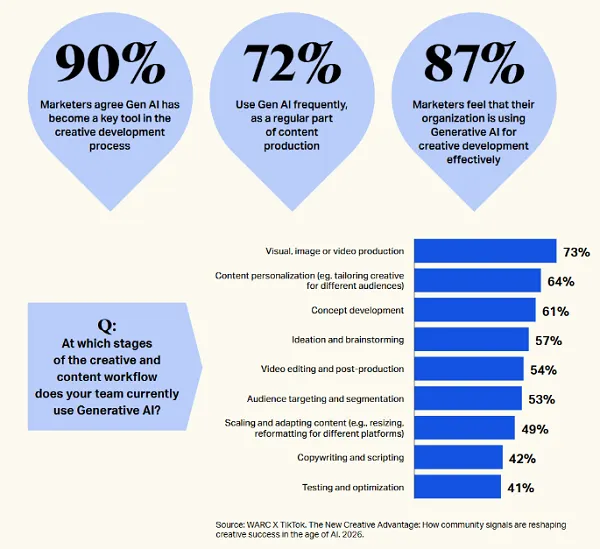
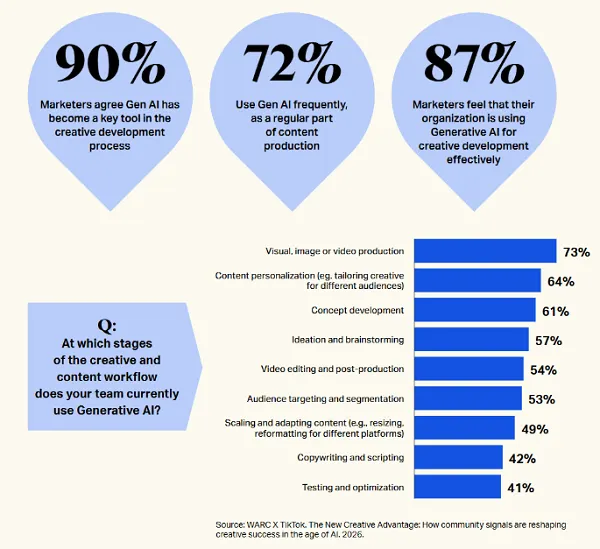
The Warc and TikTok study, which gathered feedback from 400 marketers across key global markets including the U.K., U.S., Australia, and Brazil, provides a comprehensive snapshot of this evolving dynamic. The diverse geographical representation of the survey respondents ensures a broad and nuanced understanding of how generative AI’s rise has impacted the creative advertising sector worldwide. Marketers overwhelmingly acknowledge the utility of AI tools in facilitating faster and expanded workflows, with a majority agreeing that AI has become an integral part of their creative processes. For tasks such as initial ideation, rapid prototyping, and producing variations of existing content, AI has proven to be a transformative asset, allowing teams to scale their efforts and experiment more freely.
The Irreplaceable Value of Relevance Over Volume
Despite AI’s undeniable prowess in generating content at scale, the report identifies a critical limitation: the struggle of AI tools to consistently produce content that is truly relevant and culturally resonant. "The brands winning today are not the ones generating the most content," stated Andy Yang, TikTok Global Head of Creative and Brand Ads, in the report. "They are the ones learning fastest from the people they serve. That speed of learning is what we call cultural intelligence: the ability to read what a community values, in the moment it is forming that value, and to respond with something that feels native rather than inserted."
This insight highlights a fundamental challenge in the current AI paradigm. While AI models can be trained on vast datasets to mimic human language and creativity, they often lack the nuanced understanding of human emotion, cultural context, irony, and emerging trends that define genuine relevance. Consumers today are increasingly discerning; they crave authenticity and content that speaks directly to their current interests and values, rather than generic advertisements. The sheer volume of content available online means that anything that feels "inserted" or out of touch is quickly ignored, contributing to ad fatigue and diminished campaign effectiveness.

The study’s findings corroborate broader industry trends indicating that while AI can handle the "what" and "how much" of content creation, the "why" and "for whom" often remain firmly in the human domain. A recent report by Statista projected that the global generative AI market, valued at approximately $15 billion in 2023, is expected to reach over $200 billion by 2030, underscoring the technology’s widespread adoption. However, alongside this growth, industry discussions frequently revolve around the challenge of maintaining brand distinctiveness and authentic connection in an AI-saturated content landscape.
AI’s Strengths and Critical Weaknesses in the Creative Workflow
Marketers surveyed in the study found AI tools highly useful for various production-oriented tasks, solidifying its role as a key component in the creative process. This includes tasks like background generation, basic image manipulation, and producing initial drafts of marketing copy. The ability to rapidly iterate on ideas and generate multiple versions of creative assets significantly reduces the time and resources required for campaign development.
However, a notable divergence emerged when evaluating AI’s utility for more nuanced tasks, particularly copywriting and scripting. For these functions, the perceived value of AI tools was considerably lower. This suggests that while AI can support the ideation phase and facilitate new ideas by generating prompts or outlines, it struggles with the subtle art of crafting compelling narratives, developing a distinct brand voice, or embedding emotional depth that resonates deeply with an audience. Simple automation systems, by their nature, cannot fully replicate the entire creative process, particularly aspects that demand profound human understanding and empathy.
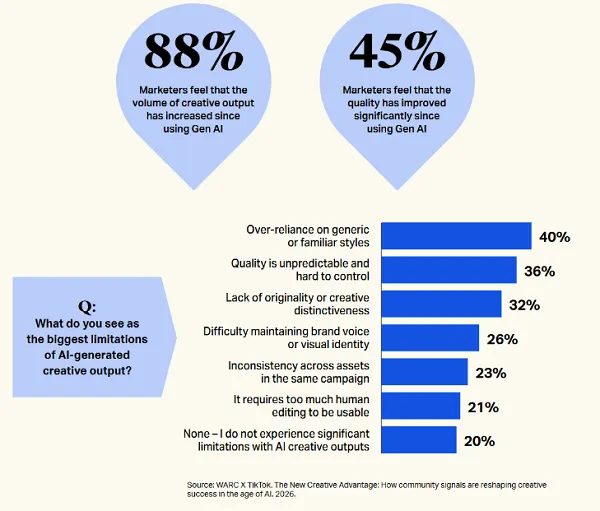
The report also delves into the inherent weaknesses of AI, with a significant concern revolving around its lack of creative originality. Generative AI models learn by identifying patterns in existing data; consequently, their outputs can sometimes feel derivative, predictable, or lacking the truly novel insights that characterize human innovation. This "echo chamber" effect, where AI regurgitates variations of what it has already seen, poses a substantial challenge for brands striving to differentiate themselves in competitive markets. True originality often stems from unique human experiences, cultural insights, and serendipitous connections that AI, for all its processing power, cannot yet replicate. Industry experts, such as those from the Cannes Lions International Festival of Creativity, have consistently emphasized the importance of groundbreaking, original ideas as the bedrock of award-winning advertising, a benchmark AI often struggles to meet independently.
The Solution: Integrating Cultural Insights to Enhance AI Output
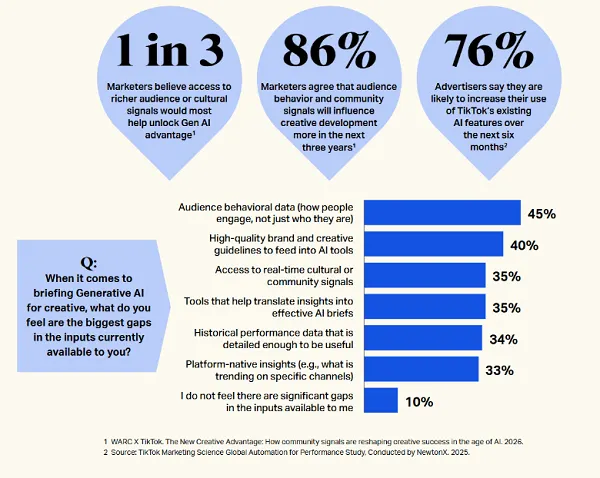
To bridge these gaps and address concerns regarding AI’s creative limitations, marketers in the study strongly advocated for the integration of more cultural insights. The consensus was that by feeding AI tools with a richer, more timely understanding of community values and emerging trends, the relevance and effectiveness of AI-generated outputs could be significantly improved. This approach moves beyond simply using AI for brute-force content generation and instead positions it as a sophisticated assistant that requires intelligent direction.
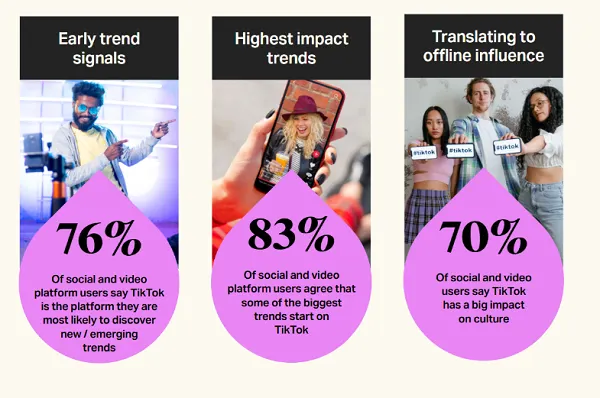
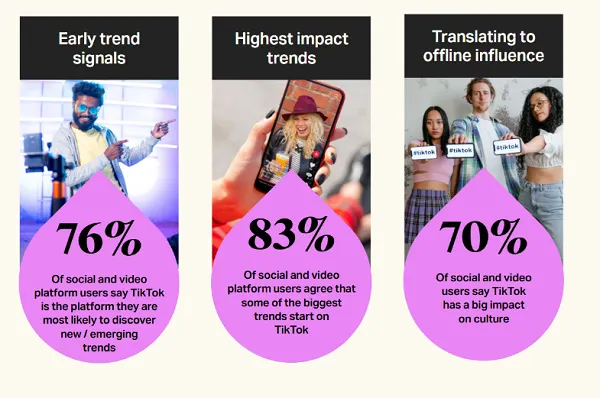
This is precisely where a platform like TikTok emerges as a critical enabler. TikTok, with its algorithm driven by real-time user engagement and its unparalleled ability to surface and amplify cultural trends, offers a unique window into the collective consciousness of diverse communities. The platform’s rapid trend cycles, user-generated content ethos, and highly engaged audience provide a constant stream of "cultural intelligence"—a live feed of what people care about, what resonates with them, and how they express themselves.
The study postulates that by leveraging TikTok’s cultural influence, marketers can guide their creative approaches more effectively. Understanding what’s gaining traction on TikTok—be it a particular sound, a visual aesthetic, a challenge, or a specific mode of storytelling—allows brands to align their content with prevailing cultural currents. This strategic integration helps marketers create content that feels native to the digital environment, authentically connects with target audiences, and sparks genuine conversations, rather than merely broadcasting messages.
For instance, a brand looking to launch a new product might observe a surge in popularity for a specific DIY aesthetic or a quirky sound on TikTok. By incorporating these elements into their creative brief for AI tools, they can instruct the AI to generate visuals, copy, or even video concepts that align with these trending themes. The AI then acts as a multiplier, rapidly producing variations of this culturally informed content, which can then be refined and curated by human marketers. This collaborative framework ensures that while AI handles the heavy lifting of production, the crucial spark of cultural relevance is provided by human insight, often informed by platforms like TikTok.
Refining Creative Briefs and Empowering Human-AI Synergy
The data from the Warc/TikTok study strongly indicates that by adopting this framework, marketers can refine their creative briefs to better align with what is genuinely resonating with audiences. Instead of generic instructions, briefs can be enriched with specific cultural cues, trend analyses, and community-driven insights. This specificity provides AI tools with the necessary context to generate outputs that are not just technically proficient but also culturally intelligent and relevant.
Furthermore, AI tools, when properly directed, can become incredibly adept at interpreting key signals from vast datasets of cultural information. They can identify patterns in engagement, predict emerging trends based on early indicators, and even analyze sentiment around specific topics. This analytical capability, combined with human strategic oversight, empowers marketers to make more informed and effective creative choices. For example, an AI could analyze the emotional tone of popular TikTok content related to a specific product category, providing insights that human copywriters can then use to craft more impactful messaging.
The full report offers in-depth breakdowns of each element discussed, providing practical insights into how marketers can better utilize data signals to drive their strategies. It outlines a clear roadmap for integrating community intelligence into the creative process, ensuring that AI serves as an enhancer of human creativity rather than a replacement.
Broader Implications: The Future of Marketing Roles and Strategy
The findings of this study carry significant implications for the future of marketing roles and overall brand strategy. It signals a shift where the value of a marketer lies less in their ability to churn out content and more in their capacity for strategic thinking, cultural interpretation, and empathetic connection. Marketers are evolving into "cultural curators" and "AI orchestrators," leveraging technology to amplify their human insights.
This new paradigm fosters a symbiotic relationship between human creativity and artificial intelligence. AI, as a complementary component, can significantly enhance community connection by enabling brands to react swiftly to cultural shifts and produce tailored content at speed. However, this is contingent on providing AI tools with the right context—context that can only be fully understood and provided by human intelligence rooted in cultural understanding. Platforms like TikTok are positioned as vital conduits for this cultural intelligence, bringing together the raw data of community engagement with the sophisticated processing power of AI to forge a more effective and resonant marketing strategy.
Beyond the immediate tactical benefits, this approach also addresses broader concerns about the ethical implications of AI in marketing, such as algorithmic bias and the risk of generic, inauthentic content. By prioritizing cultural insights and human oversight, brands can ensure that their AI-generated content remains respectful, inclusive, and genuinely reflective of the diverse audiences they aim to reach. This commitment to cultural intelligence not only drives better campaign performance but also reinforces brand authenticity and builds deeper trust with consumers in an increasingly digital and AI-driven world. The future of marketing is not about AI versus humans, but about how effectively humans can empower AI with their unique understanding of culture to create truly impactful and relevant experiences.