A meticulously crafted email campaign, featuring compelling copy and engaging design, is a significant investment for any organization. However, the brilliance of such a campaign is entirely negated if the emails fail to reach their intended destination: the recipient’s inbox. This fundamental challenge underscores the paramount importance of robust email infrastructure, the intricate, often unseen, backbone that dictates the success or failure of digital communication strategies. Without a meticulously built and maintained infrastructure, even the most innovative marketing efforts risk being relegated to the digital void of spam folders, rendering them ineffective and wasteful.
At its core, email infrastructure encompasses the entire technical ecosystem responsible for sending, routing, and delivering electronic mail. This complex system includes the designated sending domains, the network of servers that facilitate delivery, critical security protocols designed to verify sender legitimacy, and sophisticated monitoring tools that provide oversight. While often perceived as a technical, behind-the-scenes operation, the integrity of this foundation is the decisive factor between an email campaign that generates tangible results and one that languishes unseen, failing to achieve its objectives. The landscape of email communication has evolved dramatically, transforming what was once considered "best practice" into an absolute necessity for all senders, particularly those engaging in bulk email distribution.
The Evolution of Email Security and the Deliverability Imperative
The journey of email deliverability has been a dynamic one, shaped by an ongoing arms race between legitimate senders and malicious actors. In the early days of the internet, email protocols were largely open, designed for ease of communication rather than stringent security. This openness, while fostering rapid adoption, also created vulnerabilities that spammers quickly exploited. The sheer volume of unsolicited commercial email began to overwhelm inboxes, necessitating a concerted effort from internet service providers (ISPs) and mailbox providers (MBPs) to implement filtering mechanisms.
Initially, these filters were relatively unsophisticated, often relying on keyword analysis or simple IP blacklists. However, spammers adapted, employing increasingly clever tactics to bypass these rudimentary defenses. This led to the development of more advanced, reputation-based filtering systems, where an email sender’s history and behavior became crucial determinants of inbox placement. The pivotal shift, however, came with the widespread adoption of email authentication protocols, which moved beyond content analysis to verify the sender’s identity itself.
The early 2000s saw the introduction of Sender Policy Framework (SPF) and DomainKeys Identified Mail (DKIM), two foundational technologies aimed at combating email spoofing and ensuring message integrity. While initially recommended as voluntary measures, their importance steadily grew. By the early 2010s, Domain-based Message Authentication, Reporting, and Conformance (DMARC) emerged as a unifying policy layer, allowing senders to explicitly instruct receiving mail servers on how to handle emails that fail SPF or DKIM checks. This tripartite authentication system provided a robust framework for establishing sender trust.
A significant turning point occurred in early 2024, when major mailbox providers, notably Google (Gmail) and Yahoo, announced and began enforcing stringent new requirements for bulk senders. These mandates elevated email authentication from a recommended best practice to a mandatory prerequisite for successful email delivery. Senders failing to meet these authentication standards, including the implementation of DMARC with a policy stronger than ‘p=none’, face severe consequences, ranging from direct blocking of their emails to automatic routing into spam folders. This shift has underscored the urgency for businesses to re-evaluate and fortify their email infrastructure.
The Five Pillars of Inbox Success
Building a robust email infrastructure is not a one-time task but an ongoing commitment to best practices and vigilant monitoring. Here are the critical components:
1. Strategic Email Service Provider (ESP) Selection
The Email Service Provider (ESP) serves as the primary engine driving an organization’s entire email program. The choice of an ESP is a foundational decision that can significantly impact deliverability, scalability, and overall campaign effectiveness. Committing to an unsuitable platform can lead to costly operational inefficiencies and persistent deliverability issues. Therefore, a thorough due diligence process is essential, involving asking precise questions to ascertain whether a platform can adequately support long-term programmatic goals.
Key considerations when selecting an ESP extend beyond basic sending capabilities. Businesses must evaluate an ESP’s reputation management practices, its commitment to adhering to industry standards and regulatory compliance (such as GDPR and CCPA), and the sophistication of its anti-abuse teams. A reputable ESP will offer robust infrastructure, including dedicated IP addresses, comprehensive analytics dashboards, and integrated tools for list management and segmentation. Scalability is another vital factor; the chosen platform must be capable of handling fluctuating email volumes, from small initial warm-up campaigns to large-scale promotional blasts, without compromising performance. Furthermore, the quality of customer support and the availability of expert guidance on deliverability best practices are invaluable, particularly for navigating complex technical configurations and troubleshooting potential issues. Industry experts frequently advise businesses to scrutinize an ESP’s track record in maintaining high deliverability rates across various mailbox providers, as this directly reflects their investment in and understanding of the evolving email ecosystem.
2. Implementing a Dedicated Sending Domain Strategy
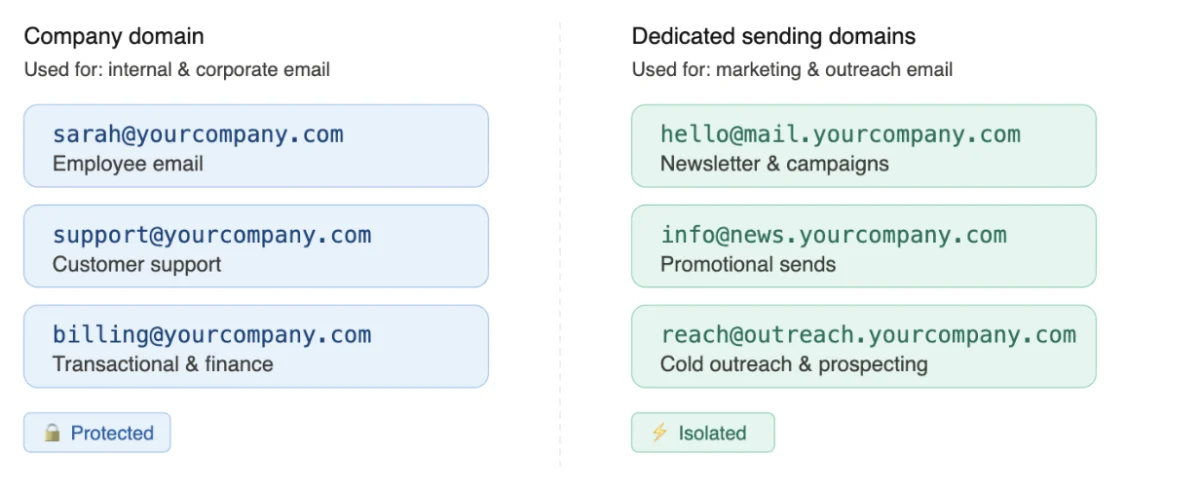
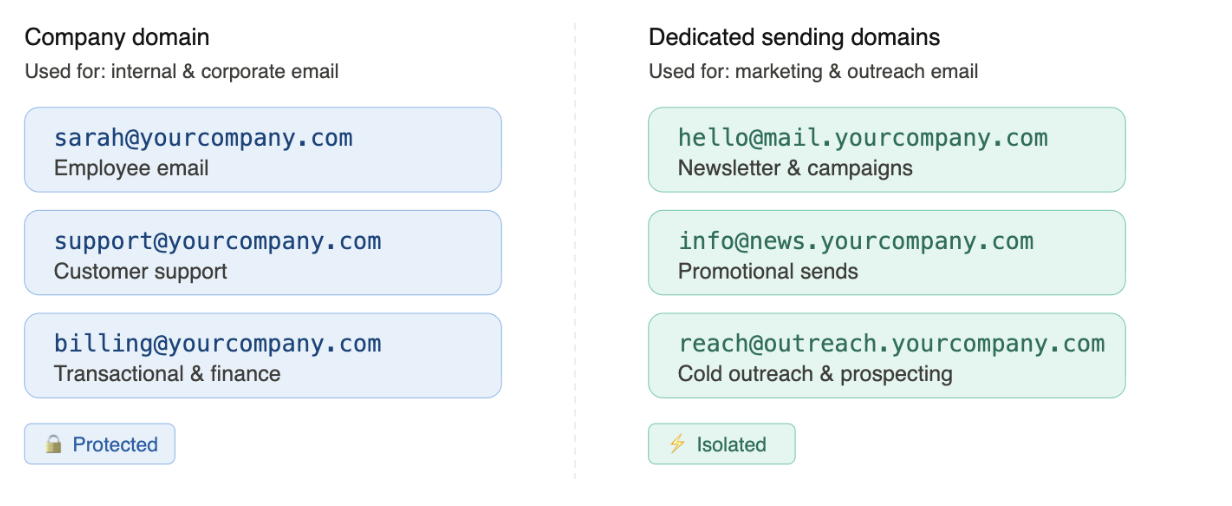
A crucial initial step in safeguarding email deliverability and brand reputation involves establishing a dedicated sending domain or subdomain specifically for marketing and bulk email communications. This practice separates transactional or core business email traffic from promotional outreach. The rationale is straightforward: if an issue arises with marketing emails, such as a sudden spike in spam complaints or an unfortunate blocklisting incident, the reputation of the primary company domain remains untarnished.
For instance, if a company’s main domain is yourcompany.com, which is used for all internal and critical business communications, it is advisable to configure a separate subdomain like marketing.yourcompany.com or news.yourcompany.com for marketing campaigns. Alternatively, some organizations opt for an entirely distinct domain, such as yourcompany-updates.com. This strategic segmentation creates an insulated environment, allowing organizations to build and manage a sender reputation from scratch for their marketing efforts without jeopardizing the integrity and deliverability of their corporate email. This isolation provides a controlled space to experiment with email strategies, manage list hygiene, and address any deliverability challenges without broader business repercussions.
3. The Mandate of Email Authentication Protocols
What was once a mere recommendation has unequivocally become a non-negotiable requirement for all bulk email senders. Major mailbox providers like Gmail, Yahoo, and Microsoft have tightened their enforcement of email authentication protocols, making them mandatory. Failure to configure these protocols correctly will not merely result in underperformance; it will likely lead to outright blocking of emails or direct routing to spam folders. These protocols are typically configured by an organization’s IT team or domain administrator:
-
Sender Policy Framework (SPF): SPF is a DNS-based authentication mechanism that allows a domain owner to specify which mail servers are authorized to send email on behalf of their domain. It works by publishing a special TXT record in the domain’s DNS, listing the IP addresses or hostnames of authorized sending servers. When an email arrives, the receiving server checks the SPF record for the sending domain against the IP address of the server that sent the email. If there’s a mismatch, it indicates a potential spoofing attempt. While effective, SPF has limitations, particularly when emails are forwarded.
-
DomainKeys Identified Mail (DKIM): DKIM provides a cryptographic authentication method, ensuring that the email content has not been tampered with in transit and that the email truly originated from the claimed sender. It involves digitally signing outgoing emails using a private key held by the sender’s mail server. The corresponding public key is published in the domain’s DNS records. Receiving mail servers use this public key to verify the digital signature. A successful DKIM check confirms the sender’s identity and the integrity of the message.
-
Domain-based Message Authentication, Reporting & Conformance (DMARC): DMARC acts as a policy layer built upon SPF and DKIM. It allows domain owners to instruct receiving mail servers on how to handle emails that fail SPF or DKIM authentication, and importantly, it provides a mechanism for senders to receive aggregate reports on their email authentication results. DMARC policies can be set to ‘none’ (monitoring only), ‘quarantine’ (send failed emails to spam), or ‘reject’ (block failed emails outright). For bulk senders, particularly after the 2024 mandates, a DMARC policy set to at least ‘quarantine’ or ‘reject’ is often required, ensuring that only authenticated emails from their domain reach the inbox. The reporting feature of DMARC is invaluable, offering insights into authentication failures, potential spoofing attempts, and overall email ecosystem health.
The confluence of these three protocols creates a robust framework for establishing sender legitimacy. Major mailbox providers, including Google and Yahoo, have explicitly stated that these protocols are now foundational for bulk senders, defining the baseline for trust in an increasingly complex digital communication environment.
4. The Art of Domain Warm-up: A Patient Approach
A newly established sending domain, even with perfect authentication, starts with zero reputation in the eyes of mailbox providers. Attempting to send a large volume of emails immediately from a fresh domain is one of the quickest ways to trigger spam filters and damage reputation irrevocably. Instead, a methodical and patient domain warm-up process is essential to gradually build trust with ISPs.
The warming process involves starting with a small volume of emails sent only to the most engaged segments of a contact list—individuals who have recently opened, clicked, or otherwise interacted positively with previous communications. A typical warm-up approach might begin with sending approximately 500 to 1,000 emails per day for the first few days. Every couple of days, the volume can be cautiously doubled, contingent upon maintaining low bounce rates and minimal spam complaints. If these metrics show any undesirable spikes, it is crucial to pull back on volume and reassess before proceeding. This iterative process allows mailbox providers to observe consistent, legitimate sending behavior from the new domain, gradually assigning it a positive reputation. This process typically spans several weeks, not days, as reputation is built on sustained positive interaction and adherence to best practices. While seemingly time-consuming, the sender reputation cultivated through a careful warm-up forms the bedrock upon which all future email marketing success rests.
5. Continuous Deliverability Monitoring: Beyond the Basics
A common misconception among senders is that an email reported as "delivered" by their ESP has successfully landed in the recipient’s primary inbox. However, industry data, such as Validity’s 2024 Email Deliverability Benchmark report, frequently reveals a significant gap: a substantial percentage of legitimate, permission-based marketing emails never reach the inbox, often ending up in spam folders or simply disappearing. This critical distinction highlights why active, continuous deliverability monitoring is not merely advisable but absolutely imperative.
Monitoring extends beyond basic bounce rates and requires a deeper dive into several key metrics. The spam complaint rate, for instance, should ideally be kept below 0.1% and certainly no higher than 0.3%. High complaint rates are a strong indicator to ISPs that recipients do not wish to receive emails from a particular sender, leading to severe reputation damage. Senders must also vigilantly track hard bounces (permanent delivery failures), monitor their status on various blocklists, and critically, leverage free feedback loops and postmaster tools provided by major mailbox providers.
Tools like Google Postmaster Tools, Microsoft SNDS (Smart Network Data Services), and Yahoo Sender Hub are indispensable resources. These platforms offer invaluable insights into how the major inbox providers perceive a sender’s reputation, including data on spam rates, IP and domain reputation, authentication failures, and feedback loop complaints. This information provides a far more accurate picture of inbox placement than an ESP’s "delivered" status alone, enabling proactive identification and remediation of issues before they escalate. Furthermore, understanding metrics such as open rates, click-through rates, and unsubscribe rates provides qualitative data on subscriber engagement, which indirectly influences sender reputation. Proactive monitoring allows organizations to detect early warning signs of deliverability issues, enabling swift corrective action and preventing long-term damage to their sender reputation and marketing effectiveness.
Broader Impact and Implications for the Digital Ecosystem
Investing in robust email infrastructure is not merely a technical exercise; it has profound implications for businesses, consumers, and the broader digital communication landscape. For businesses, the direct impact is measurable in terms of increased return on investment (ROI) from email marketing campaigns. When emails consistently reach the inbox, engagement metrics improve, leading to higher conversion rates, stronger customer relationships, and ultimately, greater revenue. Conversely, neglecting infrastructure can lead to substantial financial losses through wasted marketing spend, diminished brand perception, and missed opportunities for customer interaction. The competitive advantage gained by reliable deliverability cannot be overstated in a crowded digital marketplace.
From the consumer perspective, stricter authentication requirements and improved infrastructure lead to a cleaner, more relevant inbox experience. The reduction of unsolicited spam enhances trust in email as a communication channel and ensures that recipients receive the information they genuinely wish to see. This fosters a healthier digital environment where legitimate businesses can connect effectively with their audience, and users are less burdened by unwanted intrusions.
Looking ahead, the trend towards stricter email security and authentication is expected to continue. The increasing sophistication of AI-powered spam filters means that sender reputation and adherence to best practices will become even more critical. Businesses that proactively invest in their email infrastructure will be better positioned to adapt to these evolving standards, maintain high deliverability, and sustain effective communication strategies. Those that lag risk being left behind, their messages lost in the digital noise.
Conclusion
While setting up and maintaining a solid email infrastructure may not be the most glamorous aspect of email marketing, it is undeniably the most critical. The contemporary email landscape, characterized by increasingly stringent authentication requirements and sophisticated inbox algorithms, has created a widening chasm between senders who prioritize their infrastructure and those who do not. The cost of neglect is substantial, manifesting as lost leads, diminished brand trust, and wasted marketing resources.
By establishing the right foundational elements—selecting a capable ESP, implementing a dedicated sending domain strategy, rigorously configuring authentication protocols (SPF, DKIM, and DMARC), executing a patient domain warm-up, and committing to continuous, comprehensive deliverability monitoring—organizations can significantly enhance their chances of reaching their target audience. This strategic investment ensures that every meticulously crafted email campaign has the opportunity to fulfill its potential, connecting businesses with the people they intend to reach and driving meaningful engagement in a crowded digital world.