The fashion industry, intrinsically reliant on compelling aesthetics and dynamic messaging, finds a natural ally in email marketing. It serves as a direct conduit to shoppers, delivering curated new collections, timely promotional offers, and essential brand updates straight to their inboxes. A comprehensive 2024 e-commerce marketing report by Omnisend highlighted the disproportionate impact of automated emails, revealing that despite constituting merely 2% of total sends, they were responsible for an impressive 30% of all email revenue for e-commerce brands. This statistic underscores the profound efficacy of delivering the right message at the precise moment within the customer journey. This detailed analysis will explore the multifaceted nature of fashion email marketing, delve into the most effective campaign types, examine real-world examples, and outline a strategic framework for implementation within the dynamic fashion e-commerce ecosystem.
The Strategic Imperative of Email in Fashion E-commerce
Fashion e-commerce has witnessed exponential growth over the past decade, transforming how consumers discover, purchase, and interact with brands. Projections from Statista indicate the global fashion e-commerce market is expected to reach over $1 trillion by 2027, driven by increasing internet penetration, mobile shopping, and evolving consumer preferences for convenience and variety. Amidst this digital transformation, email marketing stands out as a foundational element, consistently delivering one of the highest returns on investment (ROI) among all marketing channels, often cited at an average of $38-$42 for every dollar spent. For fashion brands, where visual appeal and brand narrative are paramount, email provides a controlled environment to showcase products, tell stories, and nurture customer relationships beyond the transactional.
Industry experts widely acknowledge that email marketing’s enduring power lies in its permission-based nature. Unlike other channels where brands vie for attention, an email subscriber has explicitly opted in, indicating an inherent interest in the brand’s offerings. This pre-existing engagement makes email an exceptionally fertile ground for conversion and loyalty building. Marketing strategists consistently advise fashion brands to prioritize email as a core component of their digital strategy, recognizing its unique ability to drive both immediate sales and long-term customer lifetime value.
Evolution of Digital Engagement: From Catalogs to Clicks
The journey of direct-to-consumer fashion marketing has come a long way from its origins in printed catalogs. In the mid-20th century, mail-order catalogs were the primary method for brands to showcase collections directly to homes, meticulously designed with aspirational photography and detailed descriptions. With the advent of the internet in the late 20th century, these paper catalogs found their digital counterpart in early e-commerce websites. Email marketing emerged shortly thereafter, initially as a basic tool for broadcasting promotional messages.
The early 2000s saw a shift towards more regular email newsletters, though often generic and lacking personalization. However, as e-commerce technology matured and consumer data became more accessible, email marketing evolved rapidly. The mid-2010s brought sophisticated automation capabilities, allowing for triggered emails based on user behavior – welcome sequences, abandoned cart reminders, and post-purchase follow-ups became standard. Today, the integration of artificial intelligence (AI) and machine learning (ML) is pushing the boundaries further, enabling hyper-personalization, predictive analytics, and dynamic content that adapts to individual subscriber preferences in real-time, effectively bringing the bespoke experience of a personal shopper to the digital inbox.
Defining Fashion Email Marketing: Beyond the Inbox
![Fashion Email Marketing: 9 Best Practices and Examples [2026 ]](https://www.omnisend.com/blog/wp-content/uploads/2026/07/image-52-422x720.png)
At its core, fashion email marketing encompasses the strategic use of email to enable clothing and accessory brands to promote their products, cultivate customer loyalty, and ultimately increase sales. This broad definition includes both one-time "campaigns" – such as new collection announcements, seasonal sales, or holiday promotions – and highly effective "automated" emails. The latter category includes welcome series for new subscribers, abandoned cart recovery emails, post-purchase follow-ups that solicit reviews or suggest complementary items, and back-in-stock alerts for previously desired products.
What sets fashion email marketing apart is its inherent emphasis on aesthetics and brand narrative. Strong visuals, high-quality photography, and a consistent brand style are not merely supplementary but are as critical as the message itself. A well-crafted fashion email transcends a simple sales pitch; it aims to engage shoppers before, during, and after a purchase, maintaining a continuous dialogue that reinforces brand identity and builds enduring relationships. It’s about delivering an experience that mirrors the brand’s aesthetic and values, making the customer feel understood and valued. This approach helps brands stay connected with their audience, ensuring they remain top-of-mind for future purchases through relevant and engaging communications.
Core Pillars of Effective Fashion Email Campaigns
![Fashion Email Marketing: 9 Best Practices and Examples [2026 ]](https://www.omnisend.com/blog/wp-content/uploads/2026/07/image-53-388x720.png)
A truly robust fashion email marketing strategy employs a diverse array of email types, each precisely tailored to engage shoppers at distinct points in their purchasing journey. Each communication serves a clear purpose, guiding customers closer to their next interaction or purchase.
1. Visual Storytelling and Brand Identity:
In fashion, visuals speak volumes. Effective emails are instantly recognizable, integrating consistent brand elements like color palettes, typography, photography style, and tone of voice. This cohesive branding builds trust and familiarity. Rather than relying solely on discounts, leading brands like Amundsen often build campaigns around a lifestyle, using large, immersive images and narrative-driven product descriptions to create an emotional connection. This approach transforms a product into an experience, where the item naturally supports a broader story, making it more compelling than a simple promotional offer.
2. The Power of Personalization and Segmentation:
Recognizing that not all subscribers are alike, successful fashion email marketing tailors content to individual interests. Segmentation—dividing email lists by demographics (e.g., gender, age), past purchases, browsing behavior, or expressed preferences—allows brands to send highly relevant content. For instance, Ralph Lauren expertly segments its seasonal sale emails, offering distinct shopping paths for men, women, children, and home goods. This targeted approach bypasses the need for subscribers to sift through irrelevant products, directly guiding them to the most pertinent sections and significantly increasing click-through and conversion rates. Data consistently shows that personalized emails generate 6x higher transaction rates and revenue per email compared to generic blasts.
![Fashion Email Marketing: 9 Best Practices and Examples [2026 ]](https://www.omnisend.com/blog/wp-content/uploads/2026/07/image-54-275x720.png)
3. Leveraging Automation for the Customer Journey:
Automated email sequences are the unsung heroes of fashion e-commerce, driving significant revenue with minimal ongoing effort. These include:
- Welcome Series: Onboarding new subscribers with brand values, bestsellers, and an initial offer.
- Abandoned Cart Reminders: Re-engaging shoppers who left items in their cart. Brands like Gymshark excel here, displaying the exact product, price, and a clear call-to-action to complete the purchase, often coupled with reassurances about returns or support. Research indicates that abandoned cart emails can recover between 5% to 15% of lost sales.
- Post-Purchase Follow-ups: Enhancing customer satisfaction, soliciting reviews, and recommending complementary products.
- Back-in-Stock Alerts: Notifying customers when a previously desired, out-of-stock item becomes available again. Bonobos’ "Return of the Sweater Tee" campaign effectively uses this, not only announcing the return but also suggesting complementary items to boost average order value. These emails boast some of the highest conversion rates due to pre-existing purchase intent.
4. Urgency, Exclusivity, and Seasonal Relevance:
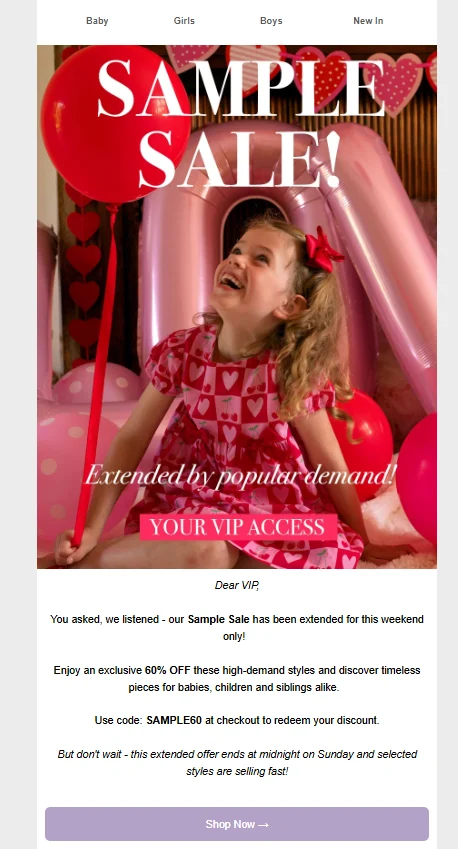
Creating a sense of urgency or exclusivity can significantly motivate purchases without resorting to aggressive discounting. This can involve offering early access to sales for VIP subscribers, member-only events, or limited-time offers. Rachel Riley’s "Archive Sale (VIP early access)" is a prime example, framing the promotion as an exclusive benefit for loyal customers and emphasizing its limited duration. Beyond promotions, timing campaigns to align with seasonal shifts, holidays, or cultural events is crucial. Net-a-Porter’s "Vacation Mode" campaign, which curates resort-ready pieces around the summer travel season, perfectly illustrates how seasonal themes can provide context and inspiration for new collections.
5. Social Proof and Community Building:
Consumers inherently trust the opinions and experiences of their peers more than direct brand messaging. Incorporating user-generated content (UGC) into email campaigns is a powerful way to build authenticity and social proof. Brands like Rouje actively encourage customers to share photos using branded hashtags (e.g., #LaVieEnRouje), then feature these real customer looks in their emails. This not only showcases products in a relatable, lifestyle context but also fosters a sense of community and brand advocacy, inviting new shoppers to envision themselves wearing the brand’s apparel.
6. Product Storytelling and Education:
Not every email needs to be a multi-product showcase. Focusing on a single product and elaborating on its unique qualities can be highly effective. Asphalte’s "The Ultimate T-shirt" campaign dedicates an entire email to explaining the fabric, design, and benefits of one item, using simple graphics to compare it to alternatives. This educational approach helps shoppers understand the value proposition, reducing friction in the buying decision. Similarly, Taylor Stitch combines aspirational lifestyle photography with detailed close-up shots of fabric textures for items like "The Brody Sweater Tee," providing a comprehensive sense of quality and fit without extensive copy.
Implementing a Robust Strategy: A Practical Framework
Building an effective fashion email marketing program does not require extensive technical expertise, especially with platforms designed for e-commerce. A structured approach ensures consistency and optimizes performance.
1. Template Selection and Brand Consistency: Begin by choosing a fashion-specific email template that aligns with the campaign’s objective, whether it’s a new collection launch, a sale, or style inspiration. Platforms like Omnisend offer ready-made layouts that save time. Crucially, establish a brand kit within the platform—uploading logos, setting brand colors, selecting fonts, and defining button styles. This ensures every email maintains a consistent aesthetic, fostering instant brand recognition among subscribers.
2. Content Creation and AI Assistance: Construct the email by integrating key visual elements like a compelling hero image, a concise headline, and product blocks that dynamically pull information (names, prices, images, links) directly from the e-commerce store. The layout should be clean, focused, and guide the customer towards a single, clear call to action. Modern platforms often include AI features that can generate initial drafts for subject lines or email body copy, which can then be refined to perfectly match the brand’s unique voice and tone.
3. Automated Workflows and Segmentation: Once individual campaigns are perfected, the next critical step is to configure core email automations. These automated workflows, covering welcome sequences, abandoned cart reminders, back-in-stock notifications, and post-purchase communications, ensure continuous customer engagement without manual intervention. Simultaneously, segment the subscriber list based on criteria such as gender, product categories browsed, or past purchase history. This enables highly targeted sends, delivering content most likely to resonate with each specific group and significantly boosting relevance and conversion rates.
4. Testing, Optimization, and Performance Monitoring: Before any email goes live, thorough testing is imperative. Preview the email across various devices (desktop, mobile) to ensure responsiveness and visual integrity. Verify that all links are functional and direct to the correct pages. Consider A/B testing elements like subject lines, calls-to-action, or hero images to identify what resonates best with the audience. After scheduling the campaign, diligently monitor key email marketing metrics such as open rate, click-through rate, conversion rate, and revenue per email. This continuous analysis provides valuable insights for ongoing optimization and refinement of the strategy.
Challenges and Future Outlook
While fashion email marketing offers immense potential, it is not without its challenges. Email fatigue, where subscribers become overwhelmed by too many messages, can lead to high unsubscribe rates. Additionally, evolving data privacy regulations, such as GDPR in Europe and CCPA in California, necessitate careful management of subscriber data and explicit consent, adding layers of complexity to campaign execution.
Looking ahead, the future of fashion email marketing is poised for further innovation. The integration of advanced AI and machine learning will enable even greater levels of hyper-personalization, delivering content that is not just relevant but predictive of individual customer needs and preferences. Interactive email elements, such as embedded quizzes, shoppable videos, or personalized product recommendations directly within the email, are becoming more prevalent, offering richer engagement experiences. Furthermore, the convergence of email with other marketing channels, creating truly omnichannel customer journeys, will be a key trend, ensuring a seamless and consistent brand experience across all touchpoints.
Conclusion: The Enduring Power of the Inbox
Fashion email marketing remains a cornerstone of successful digital commerce, seamlessly blending a clear product focus with compelling visuals and precise timing aligned with consumer buying behavior. The most effective campaigns prioritize simplicity, showcase products within aspirational contexts, and streamline the path to purchase for customers. This strategy is universally applicable, benefiting both emerging boutiques and established global retail brands, without necessitating overly complex setups.
Whether executing dynamic seasonal drops or delivering routine brand updates, the fundamental principles of engaging visual storytelling, intelligent personalization, and strategic automation hold true. By leveraging robust platforms and adopting a data-driven approach, fashion brands can transform their email communications from mere messages into powerful engines of engagement, loyalty, and sustainable revenue growth. The inbox, far from being a simple delivery mechanism, continues to be a vibrant and invaluable space for fashion brands to connect, inspire, and convert.