The digital marketing landscape has reached a critical inflection point where the cost of acquiring new traffic often outpaces the immediate revenue generated from those visitors. As customer acquisition costs (CAC) continue to climb across major platforms like Google, Meta, and LinkedIn, a growing number of enterprises are shifting their focus from volume-based traffic acquisition to conversion marketing. This strategic discipline, which prioritizes the optimization of existing traffic to drive specific business outcomes, has become the primary lever for maintaining profitability in an increasingly competitive online environment.
The Shift from Acquisition to Optimization
For much of the last decade, digital growth was synonymous with traffic growth. Businesses operated under the assumption that more visitors would naturally lead to more revenue. However, as the digital marketplace matured, the "leaky bucket" phenomenon became impossible to ignore. Companies spending thousands of dollars on search engine optimization (SEO) and pay-per-click (PPC) advertising often find that the vast majority of their visitors—sometimes as high as 98%—exit the site without taking any meaningful action.
Conversion marketing addresses this inefficiency directly. Rather than focusing on the top of the marketing funnel, it examines the "middle" and "bottom," where visitors decide whether to engage or depart. By refining the user experience and messaging on landing pages, businesses can effectively double their results without increasing their advertising spend. For example, moving a website’s conversion rate from 2% to 4% achieves the same revenue outcome as doubling the traffic, but usually at a fraction of the cost.
Defining the Core Metrics of Conversion Marketing
To implement a successful conversion marketing strategy, organizations must first establish a clear framework for measurement. This begins with the distinction between macro and micro conversions.
A macro conversion is the primary goal of a webpage—typically a purchase in an e-commerce context or a qualified lead submission for a B2B SaaS company. Micro conversions, on the other hand, are smaller steps that indicate a visitor is moving toward the primary goal. These might include signing up for a newsletter, downloading a whitepaper, or adding an item to a shopping cart. Tracking these incremental steps provides marketers with a more granular view of the customer journey and highlights exactly where the "friction points" exist in the conversion funnel.
The industry-standard calculation for success is the Conversion Rate (CR), defined as the number of conversions divided by the total number of visitors, multiplied by 100. While "good" conversion rates vary significantly by industry—with e-commerce typically seeing 2-3% and high-performing B2B landing pages reaching 10% or more—the consensus among experts is that internal benchmarking is more valuable than industry averages. The ultimate goal is continuous, incremental improvement over the previous quarter’s performance.
The Psychology of Action: Why Visitors Convert
At its core, conversion marketing is the application of behavioral psychology to digital design. Industry analysts point to several key psychological drivers that influence a user’s decision to act.

The Value Proposition
The most critical element of any high-converting page is a compelling value proposition. This is a concise statement that explains how a product solves a customer’s problem, delivers specific benefits, and tells the ideal customer why they should buy from this specific brand rather than the competition. Experts suggest that a value proposition must be "instantly understandable." If a visitor cannot grasp the benefit of an offer within the first five to ten seconds of landing on a page, the likelihood of a bounce increases by over 70%.
Usability and Friction Reduction
Site design and technical performance are no longer just "IT concerns"; they are fundamental marketing requirements. Data indicates that a one-second delay in page load time can lead to a 7% reduction in conversions. Furthermore, as mobile traffic now accounts for more than half of global web traffic, mobile-responsive design is a non-negotiable factor. Friction points—such as overly long forms, hidden navigation menus, or confusing checkout processes—serve as psychological barriers that prevent users from completing their journey.
Trust Signals and Social Proof
In an era of digital skepticism, trust is a prerequisite for conversion. Social proof, a term coined by psychologist Robert Cialdini, refers to the tendency of people to look to others for cues on how to behave. In marketing, this manifests as customer testimonials, case studies, industry certifications, and user reviews. High-converting websites often leverage specific, data-driven testimonials rather than generic praise. For instance, a quote stating, "This software reduced our overhead by 22%," is significantly more effective than one saying, "This is a great product."
Tactical Implementation: A/B Testing and Interactive Content
The transition from theory to results requires a rigorous tactical approach. Leading digital firms utilize a combination of A/B testing and rich media to engage audiences.
A/B testing, or split testing, involves showing two versions of a webpage to different segments of visitors to determine which one performs better. Modern marketers test various elements, including headlines, call-to-action (CTA) button colors, imagery, and form lengths. The key to successful experimentation is the "one-variable rule": by changing only one element at a time, marketers can definitively attribute a lift in conversions to that specific change.
Furthermore, the rise of interactive content—such as short explainer videos, calculators, and quizzes—has transformed landing page engagement. Statistics show that including a video on a landing page can increase conversion rates by up to 80%. These visual aids help distill complex information into digestible segments, building trust and maintaining the visitor’s attention longer than static text.
The Role of Data Analytics and Behavioral Feedback
A data-driven conversion strategy relies on more than just basic traffic numbers. It requires a deep dive into user behavior through tools like heatmaps and session recordings. Heatmaps, provided by platforms such as Hotjar or Microsoft Clarity, visualize where users click, how far they scroll, and what parts of a page they ignore. This "visual data" often reveals surprising insights, such as visitors clicking on non-linked images or failing to scroll far enough to see the primary CTA.
In addition to quantitative data, qualitative feedback from sales and customer support teams provides invaluable context. These "front-line" employees often have a list of the most common objections and questions from potential customers. By incorporating the answers to these questions directly into the landing page copy, marketers can pre-emptively address concerns and smooth the path to conversion.

Integration into the Broader Marketing Strategy
Conversion marketing does not exist in a vacuum; it is the connective tissue of a holistic digital strategy. Every marketing channel eventually leads to a conversion point. Whether a visitor arrives via a search engine, a social media ad, or an email campaign, the destination must be optimized to receive them.
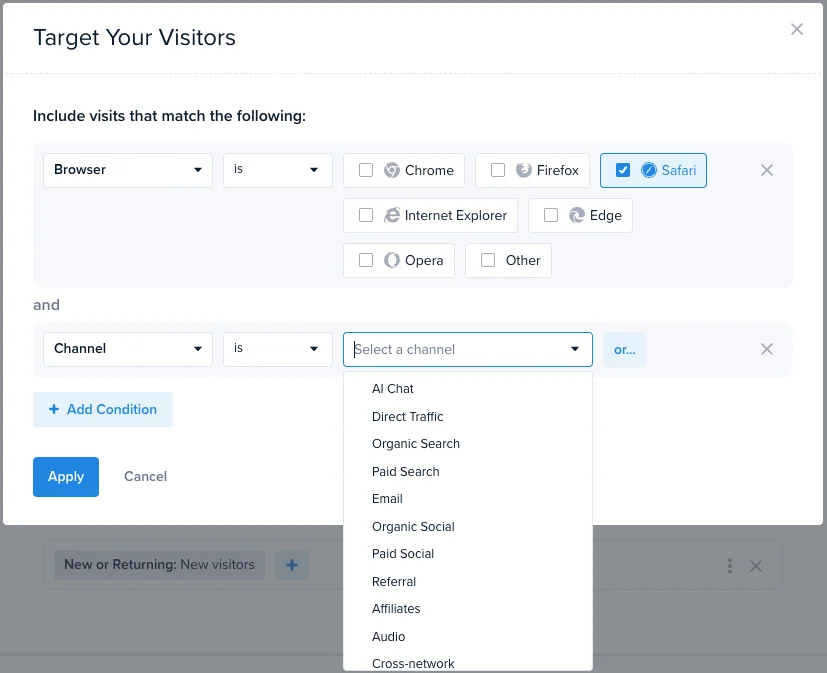
In 2025 and beyond, the integration of Artificial Intelligence (AI) is expected to further refine this process. AI-driven tools can now perform "smart routing," automatically directing visitors to the version of a page that is most likely to resonate with their specific demographic or browsing history. This level of personalization represents the next frontier of conversion marketing, moving from a "one-size-fits-all" approach to a "one-to-one" user experience.
Broader Impact and Economic Implications
The shift toward conversion-centric marketing has broader implications for the global digital economy. As companies become more efficient at converting traffic, the "winner-takes-all" dynamic of digital advertising begins to shift. Businesses that can afford to pay more for traffic—because they convert that traffic at a higher rate—will inevitably dominate the search and social auctions.
For small to medium-sized enterprises (SMEs), conversion marketing offers a path to compete with larger corporations. While they may not have the budget to outspend competitors on ads, they can out-optimize them on the landing page. This democratization of growth tools, fueled by no-code builders and automated testing platforms, allows smaller teams to achieve enterprise-level ROI.
Conclusion: The Continuous Cycle of Improvement
Conversion marketing is not a one-time project or a "set-and-forget" tactic. It is a continuous cycle of observation, hypothesis, testing, and refinement. As consumer preferences evolve and digital platforms change, the strategies used to engage them must also adapt.
The organizations that will thrive in the coming years are those that view every visitor not just as a statistic, but as a series of psychological needs and barriers to be addressed. By focusing on the quality of engagement rather than the quantity of traffic, businesses can build a sustainable, resilient growth engine that remains profitable regardless of rising advertising costs. The future of digital marketing belongs to those who can turn "interest" into "action" with the highest degree of precision.