In an increasingly digitized global economy, establishing a robust online presence is paramount for businesses of all sizes, from nascent startups to established enterprises. A foundational decision many entrepreneurs face revolves around the optimal digital infrastructure: whether to build a comprehensive website, deploy targeted landing pages, or strategically integrate both. This article delves into the distinct characteristics, strategic applications, and symbiotic potential of websites and landing pages, offering a comprehensive guide for businesses aiming to maximize their digital impact. The fundamental query – "Do I need a website? What should I use a landing page for? Do I need both?" – reflects a common dilemma among those seeking to carve out their niche on the internet and effectively engage with their target audience. Understanding the nuances of each digital asset is crucial for setting up for immediate and sustained success.
Defining the Digital Footprint: Websites Explained
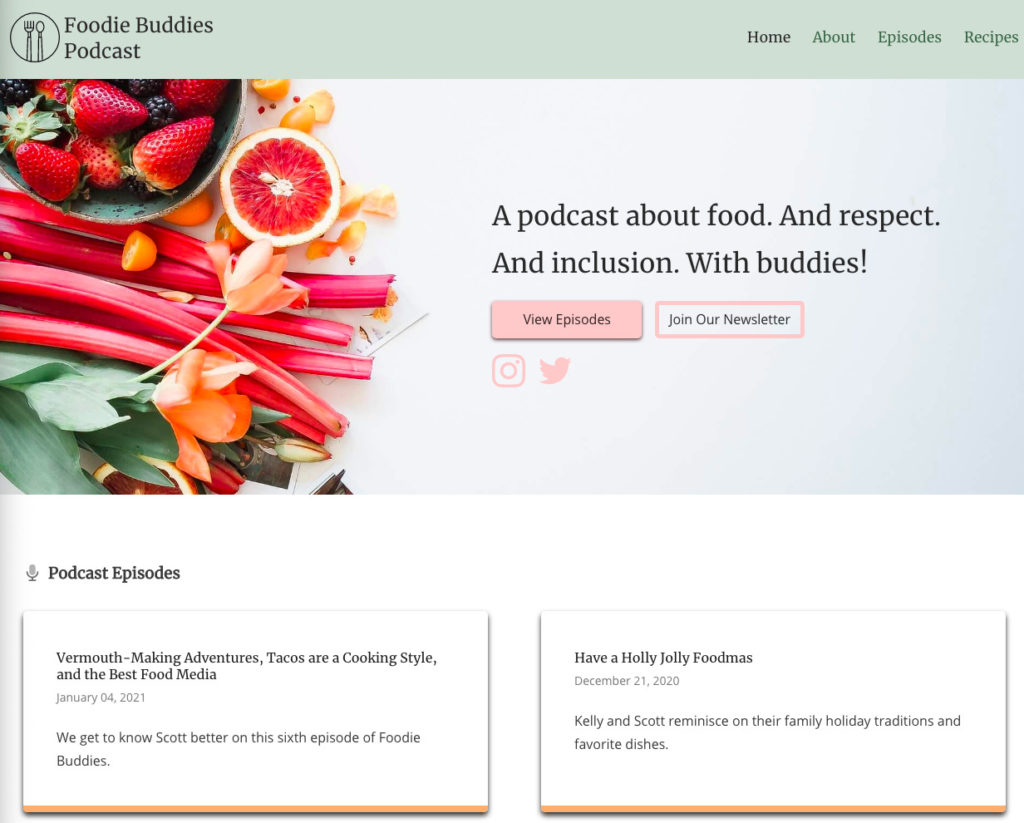
A website traditionally serves as a business’s comprehensive digital home, a multi-page repository of information designed for broad exploration and brand building. Typically comprising five or more distinct web pages, a standard website often includes a homepage, an "About Us" section detailing the company’s mission and history, dedicated pages for services or products, a blog or resources section for content marketing, and a "Contact Us" page. The primary objective of a website is to foster exploration, allowing visitors to browse extensively, learn about the business, find answers to various questions, and gradually build familiarity and trust over time.
For instance, a podcast like "Foodie Buddies" might utilize a website to offer a rich, multi-faceted experience. Visitors could easily navigate to learn about the hosts, access an archive of past episodes, read show notes, find related recipes, and explore merchandise. This holistic approach makes a website a one-stop shop for everything related to a business. However, this completeness comes with inherent costs. Websites generally demand significant investments in terms of time for development, financial outlay for design, hosting, and ongoing maintenance, and consistent effort for content updates and technical upkeep. According to industry data, the cost of developing a professional website can range from a few thousand dollars for a basic setup to tens of thousands for complex e-commerce or enterprise solutions, alongside recurring annual hosting and maintenance fees averaging several hundred to a few thousand dollars.
Precision in Digital Marketing: Landing Pages Unpacked
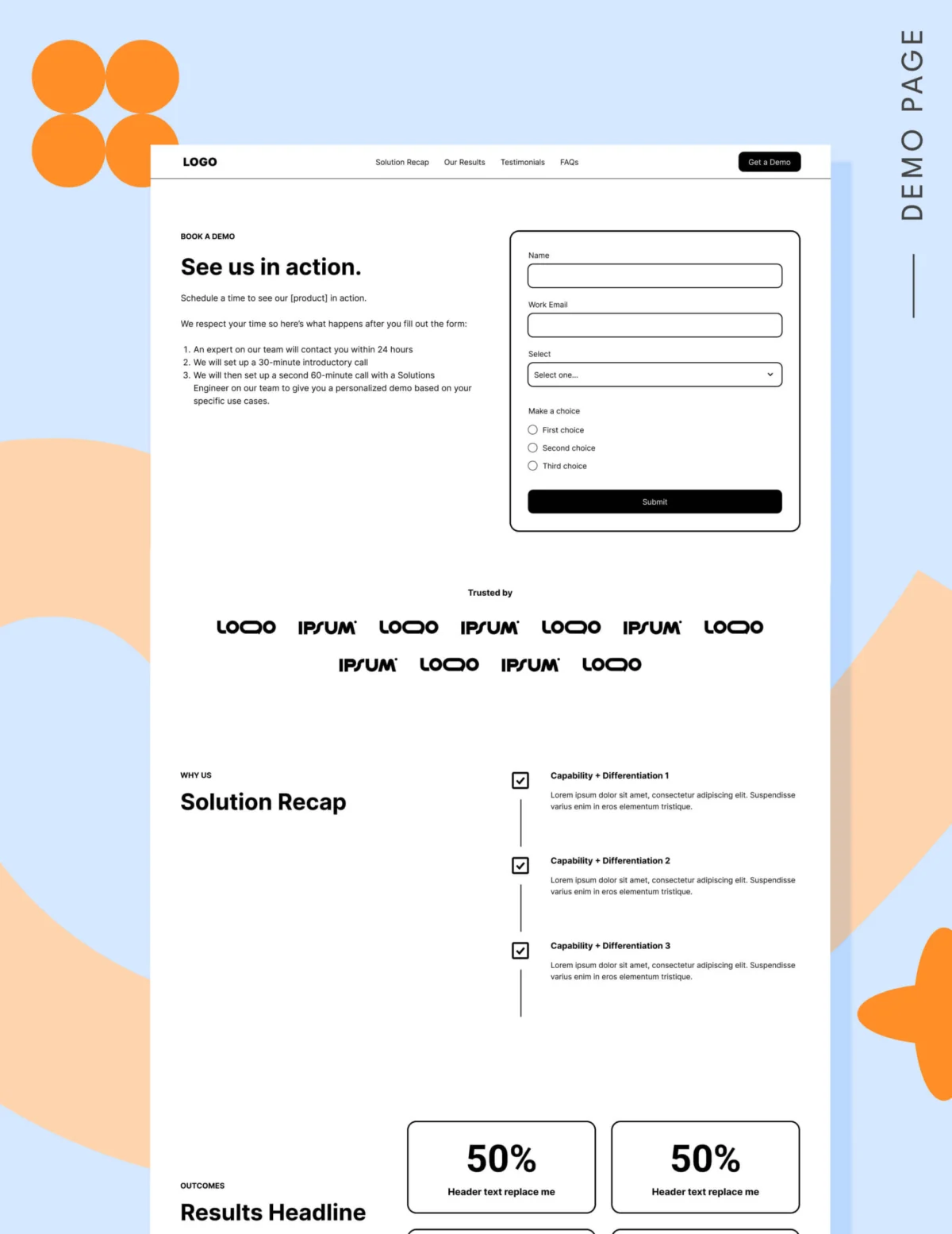
In stark contrast to the exploratory nature of a website, a landing page is a standalone web page meticulously designed with a singular goal and a solitary call to action (CTA). Characterized by limited or no navigation, a landing page funnels the visitor towards one specific conversion point, eliminating distractions. The user journey is typically linear: a visitor "lands" on the page, consumes the focused content, and is presented with a clear choice to take the intended action or depart.
Common objectives for landing pages include capturing email addresses for lead generation, facilitating the download of a lead magnet (e.g., an e-book or whitepaper), promoting a specific product or service with a direct purchase option, registering attendees for a webinar or event, or directing social media followers to multiple relevant links (a "link directory" or "link-in-bio" page). For example, the "Foodie Buddies" podcast, while having a comprehensive website, might also deploy a landing page specifically designed as a link directory for their social media bios. This single link could then direct followers to their latest episode, merchandise store, recipe index, or email signup form, streamlining the user experience from social media.
The highly focused design of landing pages translates into significantly higher conversion rates compared to general website pages. Without the multitude of links and information found on a website, visitors are not compelled to decide "where to click next"; the path is pre-determined. Industry benchmarks indicate that well-optimized landing pages can achieve conversion rates ranging from 5% to over 15%, substantially higher than the typical 1-3% conversion rate often observed on general website homepages or internal pages. This efficiency makes landing pages an indispensable tool for targeted marketing campaigns. Furthermore, landing pages are often quicker and more economical to build and deploy, with many email marketing platforms and dedicated landing page builders offering drag-and-drop interfaces that enable launch within hours or even minutes, often at a low or included cost with existing subscriptions.
Historical Context: The Evolution of Online Presence
The evolution of digital presence reflects the broader trajectory of the internet itself. In the early days of the World Wide Web, websites were predominantly static "brochure-ware" – digital versions of print catalogs, primarily serving as informational hubs. As internet penetration grew and technologies advanced, dynamic content, interactive features, and e-commerce capabilities emerged, transforming websites into complex platforms capable of processing transactions, hosting user communities, and delivering rich multimedia experiences.
The rise of sophisticated digital marketing in the 2000s, driven by search engines and social media, introduced the imperative for more targeted and measurable online interactions. Marketers realized that while a comprehensive website was crucial for brand authority and broad information dissemination, it often contained too many distractions for specific campaign goals. This recognition spurred the development and popularization of landing pages, designed specifically to capture leads, drive sales, or promote events with laser-like precision. Tools like dedicated landing page builders and integrated marketing platforms began to emerge, democratizing access to these powerful conversion assets. Today, the digital landscape is characterized by a symbiotic relationship where both websites and landing pages play distinct yet complementary roles within a cohesive digital strategy.
Comparative Analysis: Website vs. Landing Page – A Side-by-Side View
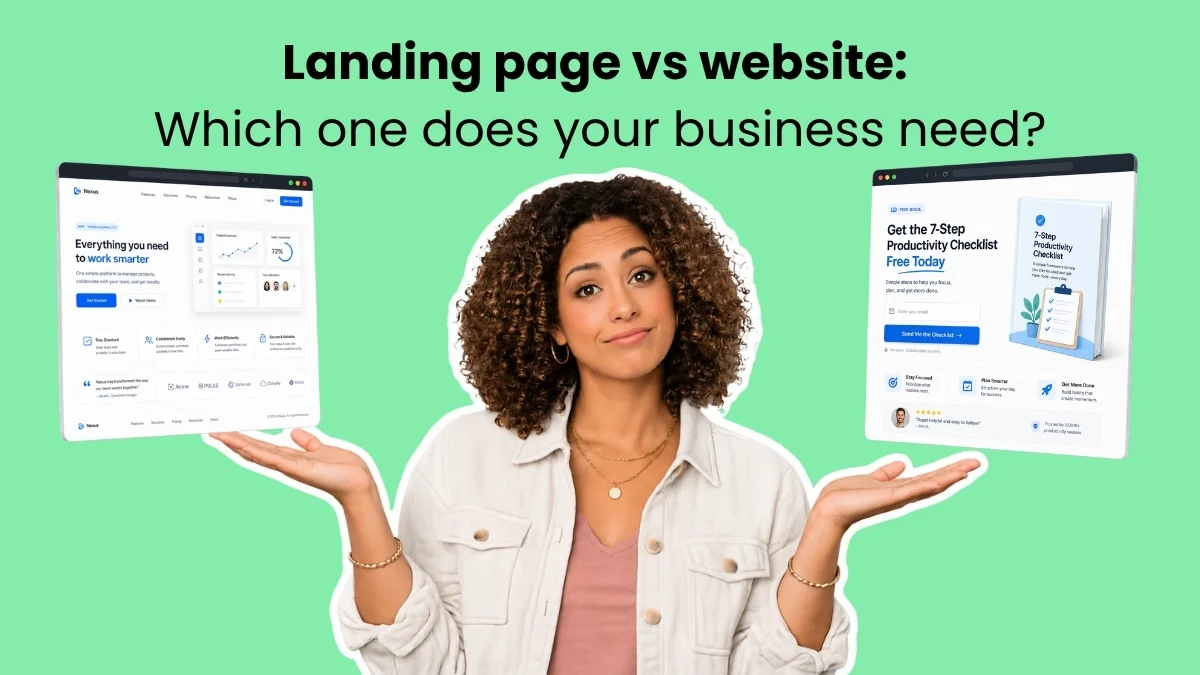
While both websites and landing pages are fundamental components of an online presence, their structural and strategic differences are profound. Thinking of a website as a continent – vast, interconnected, and offering diverse exploration – and a landing page as a focused island off its coast, provides a helpful analogy.
- Number of Pages: A website typically comprises five or more distinct pages (e.g., Home, About, Services, Blog, Contact), offering a broad array of information. A landing page is a singular, self-contained web page.
- Navigation: Websites feature a full menu and internal links, encouraging visitors to navigate freely between various sections. Landing pages, conversely, have minimal to no navigation, deliberately restricting external links to maintain focus on the primary call to action.
- Primary Goal: The overarching goal of a website is exploration, education, and comprehensive brand building. A landing page is designed for one specific action, such as lead capture, product purchase, or event registration.
- Calls to Action (CTAs): Websites often feature multiple CTAs spread across different pages, catering to various user intents and stages of the customer journey. A landing page focuses on a single, prominent CTA, leaving no ambiguity about the desired action.
- Time to Launch: Due to their complexity, websites typically require days to weeks, or even months, for full development and deployment. Landing pages can be built and launched rapidly, often within minutes to hours, utilizing user-friendly drag-and-drop builders.
- Cost Implications: Websites incur higher costs for design, development, content creation, hosting, and ongoing maintenance. Landing pages are generally more economical, frequently included as part of email marketing or digital marketing platform subscriptions.
- Best Use Case: Websites are ideal for established businesses with diverse offerings, extensive content, and a need for long-term organic search visibility. Landing pages excel in specific marketing campaigns, rapid list growth initiatives, A/B testing, and selling a single product or service.
- SEO Potential: Websites, with their rich content (especially blogs) and internal linking structure, are powerful tools for building long-term search engine optimization (SEO) authority and attracting organic traffic over time. While landing pages can be optimized for specific keywords, their single-page nature typically limits their broad organic search potential compared to a full website. They primarily serve traffic driven by paid ads, email campaigns, or social media.
The most critical distinction lies in the behavioral expectation they set: a landing page directs visitors towards a singular, immediate action, while a website invites them to explore and learn at their own pace.
Strategic Deployment: When to Leverage Each Tool
The decision to utilize a website, a landing page, or both is fundamentally strategic, dictated by specific business objectives, available resources, and the current stage of business development.
When to Prioritize a Website:
A website becomes indispensable when a business possesses significant depth and breadth that cannot be adequately contained within a single page. This includes:
- Established Businesses: Companies with multiple product lines, a diverse service portfolio, or a need to showcase extensive information.
- Comprehensive Brand Presence: Building long-term brand authority, credibility, and trust through a consistent and detailed online presence.
- Content Marketing Strategy: Housing a blog, resource library, or news section to attract organic traffic, educate the audience, and establish thought leadership.
- Diverse Visitor Intent: Catering to visitors with varied questions and interests, providing dedicated sections for each.
- Long-Term SEO: Investing in organic search visibility to attract a steady stream of passive traffic over time.
When to Opt for a Landing Page:
Landing pages are the tool of choice when focus and conversion are the paramount objectives. Their utility shines in scenarios such as:
- Specific Marketing Campaigns: Running paid advertisements (Google Ads, social media ads) where every click must lead to a specific action.
- Lead Generation: Offering a lead magnet (e-book, checklist, free trial) in exchange for contact information to grow an email list.
- Product or Service Launches: Creating excitement and driving immediate sales for a new offering.
- Event Promotion: Registering attendees for webinars, workshops, or conferences.
- Social Media Engagement: Serving as a "link-in-bio" directory to channel social media followers to various relevant destinations.
- Idea Validation: Testing a new offer or business concept quickly and cost-effectively before committing to a full website build.
- Startups with Limited Resources: Getting an online presence up and running rapidly without the initial investment or complexity of a full website.
It is crucial to recognize that one is not a replacement for the other; rather, they are often synergistic. Even businesses with robust websites frequently leverage dedicated landing pages for their marketing campaigns. Directing ad traffic or email promotions to a focused landing page rather than a busy homepage can significantly boost conversion rates, as the homepage often presents too many exit points and distractions from the campaign’s specific goal.
Expert Perspectives and Industry Trends
Digital marketing strategists consistently emphasize the critical role of conversion optimization in the contemporary online landscape. "The internet is no longer just about information; it’s about interaction and conversion," states a prominent digital analyst. "While a strong website builds your brand’s foundation, it’s the precision of landing pages that often drives immediate, measurable results for specific campaigns. Businesses that fail to differentiate between these two assets risk leaving significant revenue on the table."
Many small business owners echo this sentiment. "When I started my coaching business, I only had a landing page for email sign-ups," shared Sarah Chen, a life coach. "It allowed me to build an audience and validate my offerings before I invested in a full website. Now, my website provides the broader context, but my landing pages are still where the magic happens for new client acquisition." This practical approach highlights the accessibility and immediate impact of landing pages for new ventures. The trend towards integrated digital marketing platforms, which offer both website building capabilities and robust landing page creators (often alongside email marketing and CRM tools), further underscores the growing recognition of this dual necessity. These platforms aim to simplify the digital toolkit for businesses, providing a cohesive ecosystem for managing their online presence and marketing efforts.
The Power of Integration: Creating a Cohesive Digital Strategy
The most effective digital strategies often involve a sophisticated integration of both websites and landing pages. A website acts as the anchor, establishing brand credibility, housing extensive content, and providing a comprehensive resource for existing and potential customers. It serves as the authoritative source of information and a hub for content marketing efforts that drive long-term organic traffic.
Landing pages, conversely, function as specialized conversion engines within this ecosystem. They are the tactical assets deployed for specific campaigns, designed to capture immediate interest and guide visitors toward a desired action. For example, a blog post on a company website might introduce a complex topic, while a linked landing page offers a detailed guide or webinar on that topic in exchange for an email address. This seamless handoff allows businesses to nurture leads effectively.
Email marketing plays a pivotal role in bridging the gap between landing pages and the broader website. Once a lead is captured via a landing page, an automated email sequence can then deliver additional value, educate the subscriber further, build trust, and ultimately direct them to various sections of the website for deeper engagement or further purchases. This approach transforms a simple landing page into a powerful front door for a multi-stage customer journey. The use of "link-in-bio" landing pages on social media platforms is another prime example of this integration, allowing a single, trackable link to serve as a gateway to diverse content, promotions, and contact points housed on both landing pages and the main website.
Economic Implications and Accessibility
From an economic perspective, understanding the distinct roles of websites and landing pages allows for more strategic allocation of marketing budgets. For startups and small businesses, beginning with one or more landing pages offers a low-cost, high-impact entry into the digital marketplace. This accessibility has democratized online business, allowing entrepreneurs to test ideas and build an audience without the significant upfront investment traditionally associated with website development. Many platforms, such as AWeber, provide landing page builders with hosting and SSL certificates included in their standard email marketing plans, making it an extremely cost-effective solution.
As a business grows, the investment in a comprehensive website becomes a natural progression, supporting expanded offerings, content marketing, and long-term brand development. The initial success generated by landing pages can often fund the subsequent development of a more extensive website, representing a scalable approach to digital growth.
Conclusion: Navigating the Digital Landscape for Success
The strategic choice between a website and a landing page is not a matter of one being inherently superior to the other. Instead, it is a nuanced decision that hinges on a clear understanding of immediate business goals, target audience behavior, available resources, and the overall digital marketing strategy. A website excels at providing comprehensive information, building long-term brand authority, and supporting broad content marketing efforts. A landing page is unparalleled in its ability to drive focused conversions for specific campaigns, capture leads efficiently, and validate new ideas rapidly.
For many businesses, the most potent strategy involves a harmonious integration of both. A robust website serves as the authoritative digital anchor, while agile landing pages act as tactical conversion hubs, channeling specific campaign traffic towards desired actions. By judiciously deploying each tool, businesses can create a cohesive and highly effective online presence that both informs and converts, ensuring sustained success in the ever-evolving digital landscape. The key lies in understanding visitor intent and aligning the chosen digital asset with that intent, thereby optimizing every online interaction.