The European Union’s regulatory landscape for digital privacy is once again shifting, with recent guidance from French and Italian data protection authorities signaling a significant recalibration for email marketing. In March and April 2026, France’s Commission Nationale de l’Informatique et des Libertés (CNIL) and Italy’s Garante per la Protezione dei Dati Personali (Garante) issued clarifications regarding the use of tracking pixels in emails. These pronouncements are not new legislative acts but rather authoritative interpretations of existing rules, primarily the ePrivacy Directive—often dubbed the "cookie law"—and the broader General Data Protection Regulation (GDPR). The core message is unequivocal: email tracking, particularly through invisible pixels, is subject to the same stringent consent requirements that have long applied to web tracking, demanding marketers justify its use, limit its scope, and frequently obtain explicit user consent.
The Regulatory Framework: ePrivacy and GDPR’s Interplay
Understanding the gravity of this guidance necessitates a brief look at the foundational EU privacy laws. The ePrivacy Directive (2002/58/EC), predating the GDPR, specifically addresses the confidentiality of electronic communications. It mandates that accessing or storing information on a user’s terminal equipment (like a computer or smartphone) requires the user’s consent, unless strictly necessary for a service explicitly requested by the user. This is the bedrock principle behind the ubiquitous cookie consent banners on websites. The GDPR (Regulation (EU) 2016/679), effective since May 2018, complements ePrivacy by establishing a comprehensive framework for personal data processing, including requirements for lawful bases (such as consent), data minimization, purpose limitation, and data subject rights.
The interplay between these two regulations is critical. While the GDPR governs the processing of personal data, the ePrivacy Directive provides specific rules for certain types of electronic communications and the use of tracking technologies. Data protection authorities, including the European Data Protection Board (EDPB), have consistently held that tracking pixels, which collect data about email opens (e.g., IP address, device information, timestamp), fall under the scope of both. The latest guidance from CNIL and Garante merely clarifies that this long-standing interpretation extends robustly to the email environment, closing a perceived loophole where email tracking often operated with less scrutiny than its web-based counterparts.
The Genesis of the Guidance: A Chronology of Evolving Privacy
The journey towards this clarification has been incremental. The ePrivacy Directive’s original intent was to protect user privacy in electronic communications. However, its application to email tracking pixels remained a gray area for many businesses, often assumed to be covered by general marketing consent. The advent of GDPR in 2018 significantly raised the bar for consent, requiring it to be freely given, specific, informed, and unambiguous. Yet, the practical implications for email tracking were not universally adopted or enforced with the same rigor as cookie consent.
A significant precursor to the current regulatory push was Apple’s introduction of Mail Privacy Protection (MPP) in September 2021. MPP, a feature in iOS 15, iPadOS 15, and macOS Monterey, largely nullified the reliability of traditional email open tracking by preloading images, including tracking pixels, regardless of whether a user actually opened an email. This technological shift already forced marketers to re-evaluate their reliance on open rates. While MPP was a market-driven change, it highlighted the growing user demand for privacy and set the stage for regulators to formalize stricter requirements.
The CNIL and Garante guidance in early 2026 therefore represents a formalization of an accelerating trend. It underscores that privacy by design and default are no longer optional but mandated principles for all forms of digital engagement. This chronological progression — from foundational laws to technological shifts and finally to explicit regulatory clarification — paints a picture of an industry being brought fully into alignment with evolving privacy expectations.
Divergent Interpretations: France vs. Italy
While both CNIL and the Garante agree that tracking pixels access user device information, triggering ePrivacy rules and generally requiring consent, their interpretations of exemptions exhibit subtle yet critical differences. These nuances can significantly impact compliance strategies for businesses operating across the EU.
Both regulators acknowledge a limited "deliverability exemption"—though not a formal legal term. This exemption suggests that certain, narrowly defined uses of open tracking may not require consent. However, their definitions diverge:
-
France (CNIL): Narrow, Conditional Flexibility
The CNIL permits individual-level open tracking without explicit consent, but only under very strict conditions and for tightly scoped "deliverability purposes." These purposes are typically limited to identifying inactive recipients for list hygiene and suppressing future sends to reduce bounce rates and improve sender reputation. The constraints are substantial:- Data Minimization: Only minimal data, such as the last open date, should be stored. Extensive engagement history or behavioral profiles are prohibited under this exemption.
- Purpose Limitation: The data must not be repurposed for marketing, analytics, personalization, or segmentation beyond the narrow deliverability objective.
- Consent for Message: This exemption applies only to emails that the recipient has already explicitly requested or consented to receive, meaning the initial communication itself is lawful.
This approach grants a degree of operational flexibility for senders to maintain list health, but it severely limits the analytical and marketing utility of individual open data without consent.
-
Italy (Garante): Stricter than Most Realize
The Garante adopts a considerably more restrictive stance. The consent-free exemption is generally confined to aggregate, anonymized statistics. This means that tracking pixels should not allow for per-recipient identification. Instead, they should generate one shared pixel per campaign, with IP addresses and technical identifiers anonymized to prevent individual tracking. Individual-level open tracking typically requires explicit consent, with very limited exceptions for specific security or authentication use cases.
This position is a significant hurdle for most standard Email Service Provider (ESP) tracking models, which are architected to generate per-recipient open events by default. While CNIL’s framework can be met with robust data minimization and purpose limitation controls on the sender’s side, the Garante’s requirements often demand a fundamental architectural shift to aggregate-only tracking, or widespread implementation of consent-gated individual tracking. For businesses whose analytics and automation depend on individual engagement signals, Italy effectively pushes them squarely into consent territory.
These divergences highlight a potential for fragmentation within the EU’s privacy landscape, although both authorities draw from the same overarching ePrivacy and GDPR principles. Businesses with a significant audience in both France and Italy, or indeed across the EU, face the challenge of either adapting to the stricter standard across the board or implementing geographically differentiated tracking practices.
The Nuance of Consent: Beyond Email Opt-in
One of the most critical takeaways from the new guidance is a distinction that often catches marketers off guard: consent to send an email is not the same as consent to track it. Businesses can possess a perfectly valid legal basis (e.g., consent or legitimate interest) to send marketing emails, transactional notifications, or routine service messages, and yet still require separate, explicit consent to deploy tracking pixels within those very emails. This applies even to transactional emails, as the consent requirement pertains to the pixel accessing information on the user’s device, not the content or purpose of the message itself.
The CNIL is particularly explicit on this point: tracking consent can be mandatory even when the email itself does not require consent. While it may be possible to bundle these requests into a single, clearly articulated consent prompt—e.g., "Yes, send me updates and allow us to track opens to improve our content"—the default assumption that "they signed up, so we can track them" is now demonstrably unsafe.
Furthermore, the guidance reinforces the GDPR’s high bar for consent. Consent must be demonstrable, meaning companies must be able to prove who consented, when, and under what conditions. A contractual agreement alone, especially with third-party data providers, is insufficient. If a business’s email list includes rented contacts, partner-sourced addresses, affiliate leads, or data imported from sources outside its own direct sign-up flows, the burden of proof for individual, informed consent lies with the data controller. A clause in a contract stating that a partner collected consent is an important part of an accountability framework, but it does not, on its own, serve as evidence that each specific recipient genuinely gave informed consent to tracking. This demands meticulous record-keeping and robust vetting of data sources, a point that legal teams and compliance officers must urgently address, especially given the scale of third-party data use in some marketing ecosystems.
Technological Hurdles and Infrastructure Rework
The new guidance presents significant technological challenges, particularly concerning consent withdrawal. Both regulators stipulate that consent withdrawal must be easy and effective, even for emails already residing in a user’s inbox. This implies a profound shift: if a user withdraws consent today, and then opens an email sent three months prior, the tracking pixel embedded in that old email should not log an identifiable open event.
Achieving this requires a fundamental architectural change: the tracking pixel endpoint must dynamically check the user’s current consent status at the very moment of each open event. It must then adjust its behavior accordingly, logging the event for consenting recipients but not for those who have withdrawn consent. While the image associated with the pixel will still load (as this is inherent to email client functionality), the tracking behavior must change.
This is not a simple toggle within an existing email sending platform. Most current email systems, including those of major ESPs, were not initially designed with this level of dynamic, consent-aware pixel infrastructure. Bridging the gap between current architecture and what this guidance implies represents a substantial engineering undertaking, requiring significant development resources and time. This "infrastructure problem nobody designed for" means that ESPs, acting as data processors, will need to evolve their platforms, while their clients (data controllers) will need to provide the necessary consent signals.
The "Non-Human" Factor: Diluted Open Data
The practical application of the deliverability exemption, even in France’s more permissive form, hinges on the assumption that open data is a reliable signal for identifying inactive recipients. However, email open tracking has been "polluted" for years by non-human interactions. Apple Mail Privacy Protection (MPP), as mentioned, prefetches images, artificially generating opens. Security gateways routinely scan messages and trigger pixel loads automatically. Spam filters and various bots also generate activity before a human recipient ever sees a message in their inbox.
This creates a genuine tension in the regulatory guidance: regulators suggest that opens can be used to suppress inactive users without consent, yet opens are increasingly unreliable as indicators of human engagement. Furthermore, the very techniques required to filter out this non-human activity (e.g., sophisticated bot detection, IP analysis) may themselves involve individual-level data processing that would, paradoxically, require consent.
This "vicious cycle"—where cleaner data is needed for compliance, but cleaning the data itself might require consent—is a significant unresolved challenge. Regulators have not yet fully addressed this practical dilemma, and its implications for the feasibility and utility of consent-exempt deliverability tracking are considerable. Marketers are left in a quandary: how to maintain a clean list for deliverability purposes if the very signals used to do so are either unreliable or subject to new consent requirements?
Impact on Analytics and Marketing Strategies
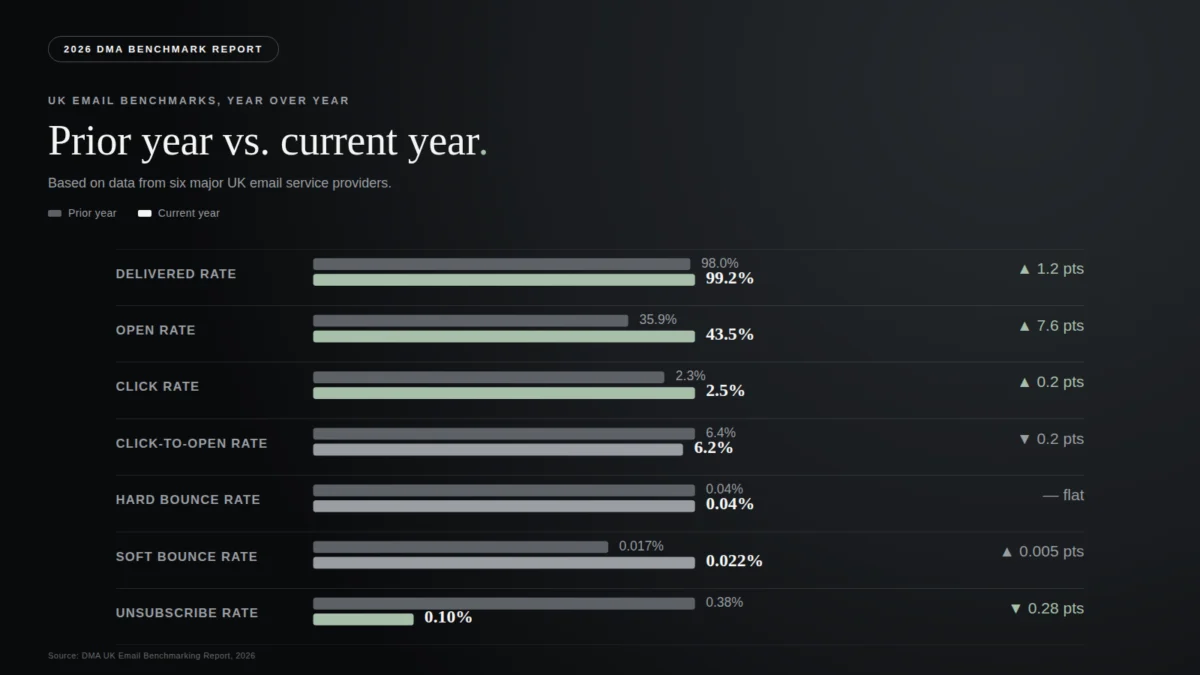
The cumulative effect of these changes on email analytics and marketing strategies will be profound, rendering open rates less reliable and more selective. If open tracking becomes primarily consent-gated, marketers will only receive data from recipients who explicitly opted into being tracked. This population is likely to be small and self-selecting, skewed towards the most engaged subscribers. Consequently, this data will be statistically unreliable for drawing conclusions about a broader audience, leading to biased and potentially inflated metrics when layered with machine-generated opens.
Practically, this impacts a wide array of marketing functions:
- Automation: Open-based automation triggers (e.g., "if not opened in 3 days, send a reminder") will become less effective.
- Re-engagement Flows: Identifying inactive users for re-engagement based on open data will be compromised.
- Subject Line Testing: A/B testing for subject lines based on open rates will yield skewed results.
- Segmentation and Personalization: User segments and personalized content driven by open behavior will lose accuracy.
- Engagement Scoring: Models that heavily weigh open data will need significant re-evaluation.
While these functions won’t "break overnight," their effectiveness will degrade significantly if programs continue to lean heavily on open data. This shift isn’t entirely novel; opens were already becoming noisy due to MPP and other factors. Now, they are becoming selective and noisy. The most resilient email programs will be those that have already begun to pivot towards more intentional signals: clicks, conversions, replies, and other explicit user actions that genuinely indicate engagement and intent. This regulatory push accelerates a trend already underway, forcing marketers to focus on deeper, more meaningful interactions rather than passive metrics.
Broader EU and International Implications
The CNIL and Garante guidance, while specific to France and Italy, sets a precedent that is likely to ripple across the entire European Union. Given that both authorities draw upon the same EDPB frameworks and interpret the same ePrivacy and GDPR texts, it is a reasonably safe prediction that other EU member state regulators will issue similar guidance over time. For many senders, the most pragmatic and legally sound path may be to align with the stricter Italian standard across all EU sending. This approach would minimize fragmentation, reduce the risk of navigating disparate national requirements, and proactively position businesses for future regulatory harmonisation.
Beyond the EU, the trend towards greater transparency and consent in digital tracking is global. In the UK, the Privacy and Electronic Communications Regulations (PECR) and guidance from the Information Commissioner’s Office (ICO) impose comparable requirements for cookie-like technologies, including tracking pixels. Senders with audiences in Canada, the US, or other markets must also consider their obligations under legislation such as CASL (Canada’s Anti-Spam Legislation), CAN-SPAM (US), and emerging state-level privacy laws like the California Consumer Privacy Act (CCPA) and its derivatives. While these laws have their own specific nuances, the overarching global trajectory is towards enhanced user control and explicit consent for data collection and tracking. The EU’s proactive stance on email tracking is thus a leading indicator of a worldwide shift.
Industry Reactions and Compliance Challenges
While no official industry statements were part of the original brief, it is logical to infer a range of reactions. Digital marketing associations and email service providers are likely grappling with the implications. Many will express concerns over the operational complexity and potential impact on marketing effectiveness, particularly for smaller businesses that lack dedicated legal and compliance teams. Industry bodies may advocate for harmonized EU-wide guidance to prevent fragmentation and simplify compliance.
Privacy advocates, on the other hand, will likely welcome the clarifications, viewing them as a necessary step to uphold fundamental privacy rights in an area that has historically lacked sufficient transparency. They might highlight the importance of empowering users with control over their data, aligning email practices with broader web privacy standards.
For individual businesses, the compliance challenges are multi-faceted:
- Legal Scrutiny: Increased need for legal counsel to interpret guidance and adapt consent flows.
- Technical Overhaul: Significant investment in re-architecting tracking infrastructure or adopting new ESP capabilities.
- Data Management: Enhanced requirements for documenting consent, managing withdrawal requests dynamically, and auditing data sources.
- Strategic Re-evaluation: A fundamental shift in how email marketing success is measured and optimized, moving away from open rates.
Recommendations for Businesses
Given the evolving landscape, businesses must adopt a proactive, rather than reactive, approach:
- Audit Open Data Usage: Map precisely where open data feeds into systems, including automation triggers, analytics dashboards, segmentation, personalization logic, and deliverability decisions. Understand which decisions would degrade if this signal becomes consent-gated or narrower.
- Review Consent Flows and Privacy Documentation: Assess current sign-up forms and privacy policies. Do they explicitly mention email tracking? Is consent for tracking collected at the point of email address capture where possible? Ensure descriptions are clear, specific, and unambiguous, as required by GDPR.
- Validate List Origins and Consent Proof: For any email addresses not obtained through direct, explicit sign-up forms (e.g., rented lists, co-registrations, partner-provided data), verify that demonstrable, individual consent for tracking exists. A contractual clause is not sufficient; verifiable evidence for each recipient is required.
- Identify EU Exposure: Prioritize compliance efforts based on audience concentration in France and Italy, given their immediate enforcement plans. Consider adopting the stricter standard across all EU operations for simplicity and future-proofing.
- Evaluate Tracking Enablement: Do not hastily disable all open tracking without a thorough understanding of its implications. Analyze the full picture of how the guidance affects your specific use cases before making a decision. In some cases, disabling tracking might create operational problems without improving compliance if the underlying issue is lack of consent for legitimate tracking purposes.
- Engage with Legal and Technical Teams: Foster close collaboration between legal, marketing, and IT departments to develop a comprehensive compliance strategy that addresses both legal interpretations and technical implementation.
The Evolving Landscape of Digital Privacy
This guidance marks a significant milestone, indicating that email is now fully entering the same regulatory model that web tracking has navigated for years: clearer purpose, greater transparency, and more robust user control. The key difference for email is that, unlike web tracking which often reacted after regulation was in place, email marketers have a window to prepare.
The shift away from passive open rate metrics towards intentional signals—clicks, conversions, replies, and other explicit user actions—was already underway, driven by technological changes like Apple MPP. This regulatory clarification simply formalizes and accelerates that transition. While there are no widespread enforcement campaigns immediately, the direction is undeniable: the gap between current email tracking practices and regulatory expectations is real, and bridging it will require time, cross-functional coordination, and some fundamental architectural rethinking.
The good news is that businesses can see this coming. Proactive adaptation, rather than reactive scrambling, offers a genuinely better position for navigating the future of digital marketing in a privacy-first world.