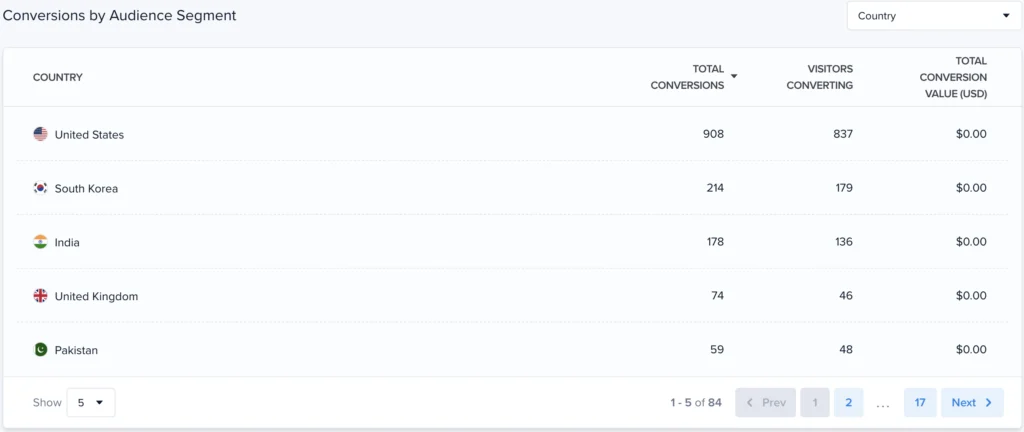
Digital optimization platform Crazy Egg has officially released a significant update to its conversion tracking suite, introducing the ability for users to analyze conversion performance through the lens of specific audience segments. This new functionality allows website owners, marketers, and user experience (UX) designers to break down conversion data by various visitor characteristics, providing a deeper understanding of which demographics and technical setups yield the highest return on investment. By identifying high-performing segments, businesses can more effectively allocate their advertising budgets and refine their site design to address friction points for underperforming groups.
The update is designed to integrate seamlessly with existing workflows, requiring no additional tracking code or manual configuration for users who have already established conversion goals within the platform. The "Conversions by Audience Segment" report is now a standard feature, offering a retrospective look at data, as the system automatically applies these segments to previously recorded conversion events. This move signals a strategic shift for Crazy Egg, moving beyond its foundational heatmap technology to offer a more robust, holistic analytics solution that competes with enterprise-level conversion rate optimization (CRO) tools.
Technical Implementation and User Interface
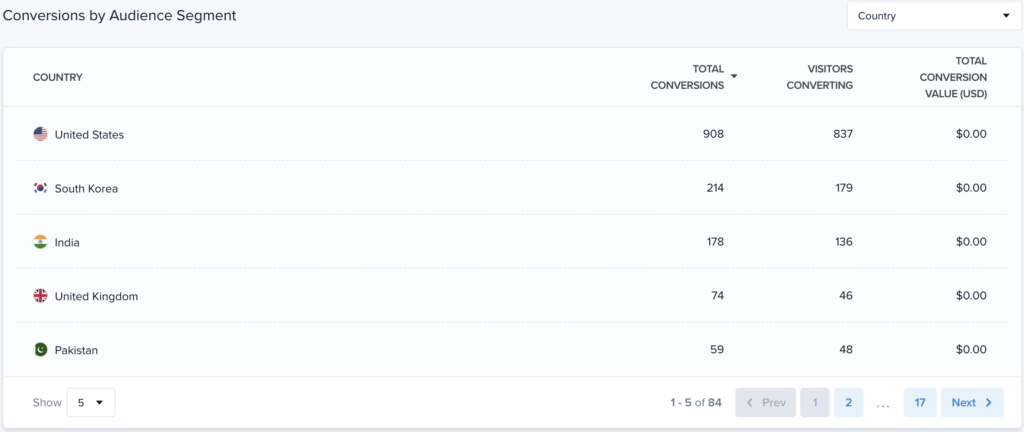
The integration of audience segments into the conversion report allows for a multidimensional view of user behavior. To access these insights, users navigate to the "Conversions" section of the Crazy Egg dashboard and select a specific conversion name. The platform then generates a detailed report where the "Conversions by Audience Segment" data is situated at the base of the page. This layout is intended to provide a logical flow from high-level conversion totals to the granular details that explain those numbers.
Key segments now available for analysis include device types, such as mobile, desktop, and tablet; browser types, including Chrome, Safari, Firefox, and Edge; and operating systems. Furthermore, the tool distinguishes between new and returning visitors and categorizes users by their referral source. This level of granularity is critical for modern digital marketing, where a single website may perform radically differently across various technical environments or traffic channels.
Historical Context of Behavioral Analytics
Founded in 2006 by Hiten Shah and Neil Patel, Crazy Egg was a pioneer in the visual analytics space. At its inception, the platform focused primarily on heatmaps—visual representations of where users clicked on a page. This was revolutionary at the time, as it offered a more intuitive way to understand user intent than the tabular data provided by tools like Google Analytics. Over the last two decades, the field of behavioral analytics has evolved from simple click-tracking to complex journey mapping and session replays.
The introduction of segmented conversion data represents a natural evolution in this timeline. As the digital marketplace has become more saturated, the "one-size-fits-all" approach to web design has become obsolete. Organizations now require tools that not only show what is happening on a site but specifically who is making it happen. The chronology of Crazy Egg’s development shows a consistent move toward this goal: first with heatmaps, then with Scrollmaps, followed by A/B testing capabilities, and now, advanced conversion segmentation.
Supporting Data and the "Segmentation Gap"
The necessity for this update is underscored by industry data regarding global conversion rates. According to recent benchmarks in the e-commerce sector, the average conversion rate typically hovers between 2% and 3%. However, when this data is segmented, the disparities become clear. For instance, desktop conversion rates are frequently double those of mobile devices, despite mobile traffic often accounting for over 50% of total web visits.
By providing specific data on these segments, Crazy Egg addresses what analysts call the "segmentation gap"—the space between knowing a site is underperforming and knowing exactly which subset of the audience is struggling. If a business discovers through the new Crazy Egg report that its conversion rate is 5% on Chrome but only 0.5% on Safari, it can direct its technical team to investigate browser-specific rendering issues or checkout bugs that were previously invisible in an aggregated data view.
Inferred Strategic Implications for Marketing and UX
The release of this feature carries significant implications for various departments within a corporate structure. For Marketing Departments, the ability to see conversion rates by referral source allows for a more precise calculation of Customer Acquisition Cost (CAC). If traffic from a specific social media platform has a high click-through rate but a zero percent conversion rate according to the audience segment report, the marketing team can immediately pivot their strategy to more profitable channels.
For UX and UI Designers, the data serves as a roadmap for optimization. If the "Conversions by Audience Segment" report indicates that tablet users are failing to convert, designers can use Crazy Egg’s other tools, such as session recordings, to watch how tablet users interact with the site. This combination of quantitative data (the conversion rate) and qualitative data (the recording) provides a comprehensive view of the user experience.
From a management perspective, this update aligns with the growing demand for data-driven decision-making. Chief Marketing Officers (CMOs) are increasingly under pressure to justify every dollar of spend. Having a tool that provides an automated, retrospective look at conversion segments reduces the time spent on manual data manipulation in spreadsheets, allowing teams to focus on implementation rather than just analysis.
Comparison with the Competitive Landscape
The launch of these features places Crazy Egg in closer competition with other major players in the CRO space, such as Hotjar, Contentsquare, and VWO. While Google Analytics 4 (GA4) provides extensive segmentation, it has been criticized by some users for its steep learning curve and complex interface. Crazy Egg’s approach appears to be focused on accessibility—presenting the data in a way that is immediately actionable without requiring a degree in data science.
Unlike some enterprise tools that require complex "tagging" of every event, Crazy Egg’s emphasis on "no new tracking" for this update is a strategic differentiator. It appeals to small-to-medium enterprises (SMEs) and agile teams within larger organizations that need to move quickly without waiting for lengthy development cycles to implement new tracking codes.
Broader Impact on Digital Optimization
As privacy regulations like GDPR and CCPA continue to evolve, the reliance on third-party cookies is diminishing. This shift is forcing businesses to rely more heavily on first-party data and on-site behavioral analytics to understand their customers. Tools that analyze how users interact with a site in an anonymized, aggregated, but segmented way are becoming essential components of the modern "MarTech" stack.
The "Conversions by Audience Segment" feature is more than just a technical update; it is a response to a more complex, fragmented digital world. In an era where a user might discover a brand on a mobile device via a social media ad, research it on a desktop via organic search, and finally convert on a tablet, understanding the performance of these individual touchpoints is the only way to maintain a competitive edge.
Conclusion and Future Outlook
The rollout of segmented conversion tracking is expected to be followed by further refinements to Crazy Egg’s filtering capabilities. Industry analysts suggest that the next logical step for the platform would be the integration of artificial intelligence to provide "automated insights"—where the system not only shows the segments but actively alerts the user to significant anomalies or opportunities within the data.
For now, the current update provides a necessary level of transparency for digital operators. By bridging the gap between "who" is visiting and "what" they are achieving, Crazy Egg has strengthened its position as a vital tool for businesses looking to optimize their digital presence. The ability to look back at historical data with these new segments ensures that users can begin deriving value from the update immediately, marking a significant milestone in the platform’s nearly twenty-year history of web analytics innovation.