The fundamental way consumers discover and interact with brands has undergone a seismic shift, moving away from traditional search engines towards conversational AI platforms like ChatGPT. This evolution, still in its nascent stages, presents both unprecedented opportunities and significant challenges for marketers. As clients increasingly inquire about investing in ChatGPT advertising, a proactive approach to understanding this new medium is paramount. Initial explorations and rigorous testing have begun to illuminate the unique dynamics of advertising within this rapidly developing ecosystem.
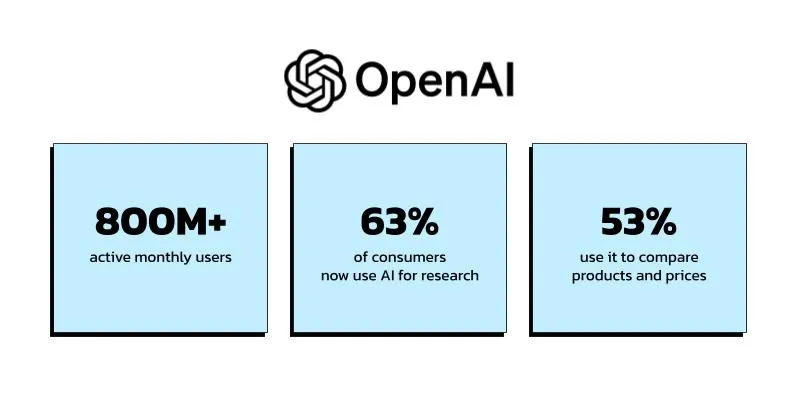
The immediate question for brands is no longer if they should be present on ChatGPT, but how to effectively engage users within its conversational interface. The platform boasts an astonishing user base, with over 800 million monthly active users, representing roughly a tenth of the global population. This burgeoning community generates approximately two billion prompts daily, with a substantial 70 percent of all AI assistant traffic originating from ChatGPT. Crucially, a significant portion of these users, 63 percent, leverage AI for research and discovery, while 53 percent utilize it for product and price comparisons. This signifies a powerful migration of the "consideration" phase of the consumer journey into a space where brands previously lacked direct access, demanding innovative advertising strategies.
The Advent of Conversational Advertising: Understanding the ChatGPT Ad Unit
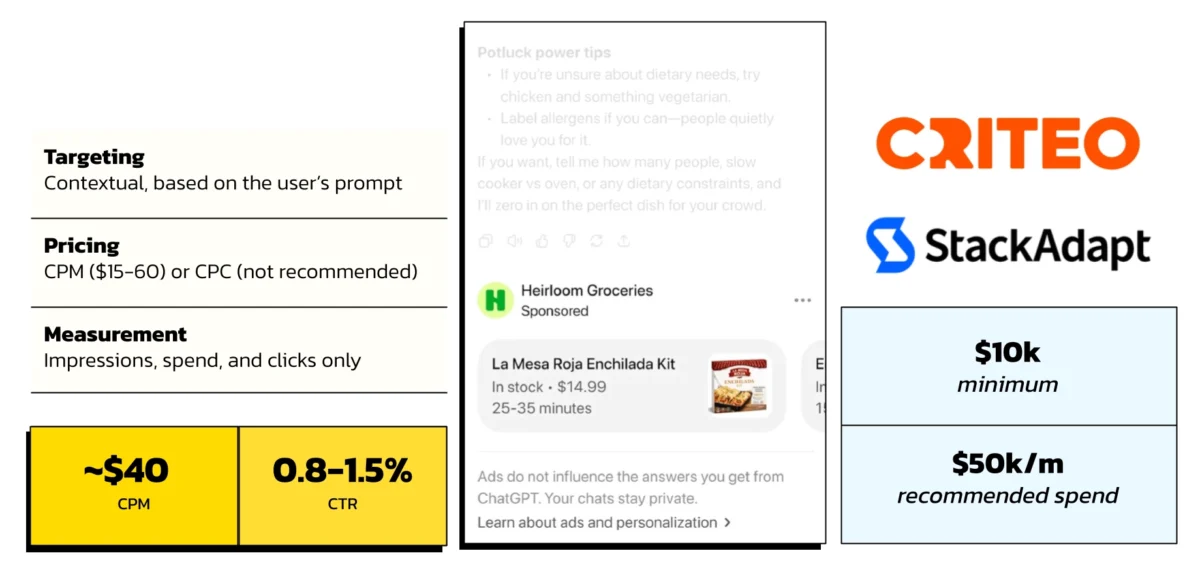
At present, advertisements on ChatGPT are integrated subtly, appearing below the AI’s response in a clearly marked "Sponsored" box. This unit comprises a simple yet impactful format: a single 1:1 image, a compelling headline, a concise description, and a direct click-through link to the brand’s website. The targeting mechanism, however, operates with a bluntness that contrasts sharply with the sophisticated audience segmentation familiar to most digital marketers. Currently, advertising is strictly contextual, meaning ads are served based solely on the user’s prompt. There is no granular audience targeting, no demographic overlays, and limited geographical control. The sole determinant of whether an ad is displayed is its direct relevance to the user’s query.
This contextual approach, while seemingly basic, necessitates a recalibration of creative strategy. Brands must meticulously align their ad content with the specific language and intent of user prompts. For instance, a query about "sustainable running shoes" would trigger ads for eco-friendly footwear brands that explicitly mention sustainability in their messaging and imagery. This direct correlation between prompt and advertisement is the linchpin of successful engagement in this new ad environment.
Unlocking Cost Efficiency: The Power of Niche, Prompt-Aligned Creative
The pricing structure within ChatGPT advertising is an area where early testing has significantly reshaped perspectives. OpenAI employs an opaque relevancy model coupled with a proto-auction system, which, in practice, results in a bifurcated pricing landscape. Bidding on highly specific, niche prompts with minimal competition can yield a Cost Per Mille (CPM) as low as $15. Conversely, competing for more general prompts in crowded spaces can drive CPMs up to $60. Across a range of brands and prompt categories, observed CPMs typically fluctuate between $25 and $35, contingent on the specificity of the messaging. Internal testing by agencies has indicated that costs can lean closer to the $40 CPM mark, underscoring the importance of strategic bidding.

The overarching lesson derived from these tests is that precision is rewarded. The more seamlessly a brand’s creative assets align with the user’s prompt, the greater the cost efficiency. While cost-per-click (CPC) bidding is an option, its effectiveness is currently limited due to the opaqueness of the underlying methodology. Agencies have found that bidding on a CPM basis and allowing clicks to organically emerge often results in a more favorable cost per click. This suggests a strategy focused on maximizing relevant impressions rather than aggressively pursuing individual clicks.
The Measurement Conundrum: Building a Framework for Intent
The most significant constraint in the current ChatGPT advertising landscape is the limited measurement capabilities. At present, advertisers primarily receive data on impressions and clicks, with minimal insight into deeper engagement or conversion metrics. There is no direct conversion optimization functionality available, meaning advertisers cannot instruct the platform to optimize for specific desired outcomes such as purchases or sign-ups.
However, advertisers can indirectly assess the quality of traffic by measuring the "knock-on effects" of these clicks once users land on their websites. The critical question to answer is whether click-throughs originating from ChatGPT demonstrate higher user intent compared to traffic from traditional channels like native ads, display, video, social media, or search. By leveraging pixel tracking and conversion data, marketers can share this information with partners to gain a more comprehensive understanding of user behavior.
Early indications regarding the quality of traffic are encouraging. Click-through rates (CTRs) are reportedly comparable to those of native ads, a robust signal for a format still in its infancy. The practical implication of this finding is the imperative to establish a robust evaluation framework before committing advertising spend. Marketers must define how they will measure and compare user intent from ChatGPT against on-site interactions from other channels. This proactive planning is essential for making informed investment decisions.
Navigating the Pathways: Three Routes to ChatGPT Advertising
Currently, there are three primary avenues for brands looking to advertise on ChatGPT:
-
Criteo: This platform is particularly well-suited for e-commerce and CPG clients due to its commerce-focused capabilities and ability to integrate product feeds. This allows for the simultaneous creation and deployment of thousands of ads. Criteo typically recommends a monthly investment ranging from $50,000 to $100,000.
-
StackAdapt: This platform offers additional features, including some incentives and geo-targeting options, albeit with less granularity than traditional platforms. StackAdapt generally suggests a monthly budget of around $50,000.
-
Direct to OpenAI: For brands with substantial budgets and a desire for direct integration, advertising directly through OpenAI is an option. However, this route carries a significant minimum commitment, approximately $250,000 per month.
The choice of pathway hinges on specific campaign objectives. While there is limited data on the optimal use cases for ChatGPT advertising, its inherent ability to reach users during moments of high consideration is undeniable. Therefore, upfront clarity on how brands intend to guide these high-intent users to their sites and how they will measure the subsequent impact is crucial. These strategic decisions should dictate budget allocation, rather than the other way around.
The Evolving Landscape: Future Projections and Strategic Advantages
The current state of ChatGPT advertising—a young format with blunt targeting and thin measurement—has not precluded its effectiveness in early testing. Crucially, the migration of consumer consideration into conversational AI is an unstoppable trend, regardless of brand readiness. The pertinent question for marketers is not whether to engage, but rather how much to invest in testing while the foundational rules of this new advertising frontier are still being established.
The trajectory of ChatGPT advertising is likely to mirror the development of programmatic advertising over the past decade. Audience targeting capabilities are anticipated to be introduced, leveraging OpenAI’s vast trove of user data, which would represent a significant missed opportunity if left untapped. Conversion optimization will undoubtedly follow, enabling platforms to drive specific user actions. As more brands enter the space, CPMs will inevitably rise due to increased competition. The auction mechanisms are expected to become more transparent, and over time, the format will likely evolve to resemble more established advertising channels.
Brands that proactively engage and test within this emerging ecosystem now will gain a significant advantage as the format matures. This lead is fleeting, as CPMs are projected to increase and competition intensifies. Early adopters have the opportunity to gather invaluable insights, refine their strategies, and build a foundational understanding that will be critical for sustained success in the conversational AI advertising era. The ability to learn and adapt in real-time will be the key differentiator for those aiming to capture market share and consumer attention in this rapidly transforming digital landscape. The investment in early experimentation, therefore, is not merely a foray into a new channel but a strategic imperative for future-proofing marketing efforts.