

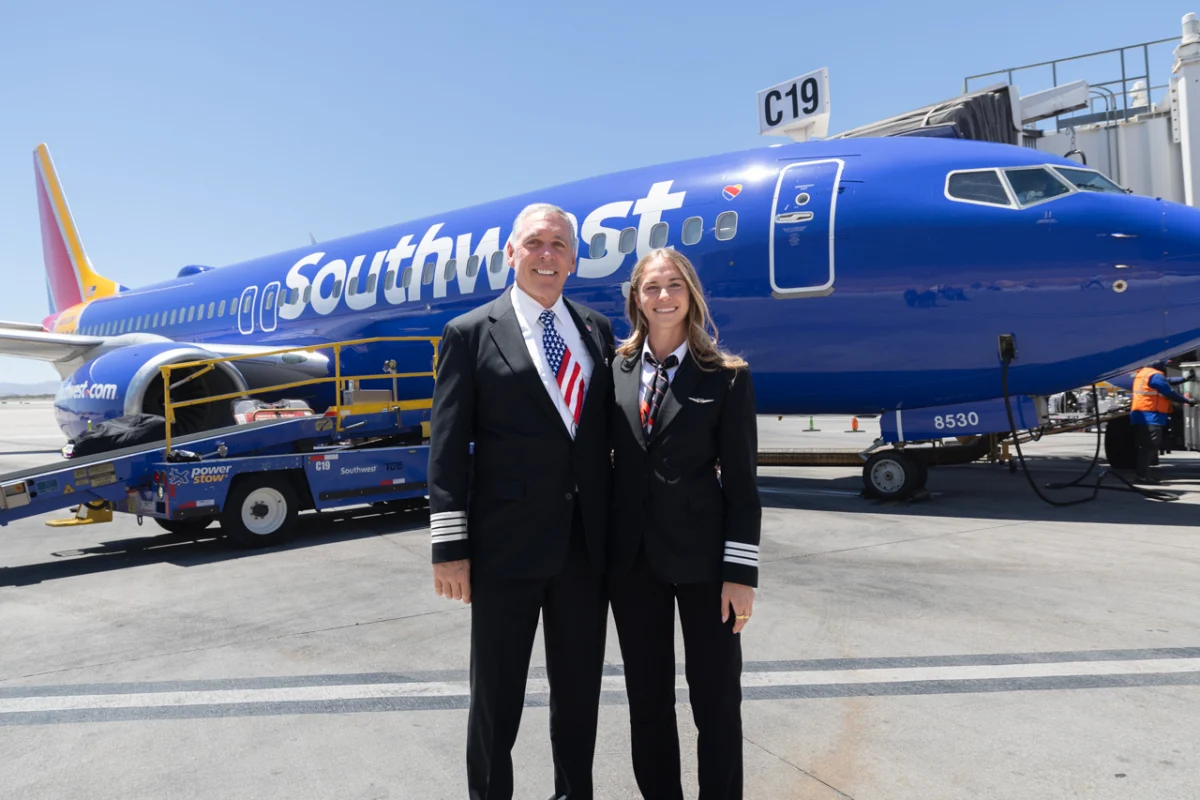
The intersection of personal milestones and corporate branding often risks feeling manufactured, yet Southwest Airlines recently demonstrated how authentic human connection can transcend traditional marketing to achieve massive global reach. When Captain Jim Curtis taxied his Boeing 737 toward the gate for the final time on May 28, the event marked more than just the conclusion of a decades-long career. It represented the culmination of a meticulously planned but emotionally genuine narrative that Southwest Airlines leveraged to generate more than 36 million social media impressions. By pairing the retiring captain with his daughter, First Officer Julia Curtis, in the cockpit, the airline created a "fini flight"—the aviation industry term for a pilot’s final trip before mandatory retirement—that resonated far beyond the tarmac, eventually becoming one of the most successful digital campaigns in the company’s history.
The success of the campaign was not a matter of serendipity but rather the result of long-term internal tracking and cross-departmental collaboration. The narrative began months prior to the flight, rooted in Southwest’s recruitment and employee engagement initiatives. Julia Curtis had already gained internal recognition when she joined the airline in February as its 200,000th employee. This milestone had previously been highlighted on Southwest’s social channels, establishing her as a familiar face to the brand’s online community. Recognizing that her father, Captain Jim Curtis, was approaching the Federal Aviation Administration’s (FAA) mandatory retirement age of 65, the airline’s communications and operations teams began coordinating to ensure the father and daughter could share the cockpit for his final professional descent.
Strategic Planning and Internal Coordination
The logistics of pairing specific crew members are notoriously complex in the airline industry, governed by strict scheduling bids, seniority protocols, and safety regulations. To make the "fini flight" a reality, multiple departments within Southwest Airlines, including Flight Operations and Human Resources, worked in tandem. Julia Curtis was a graduate of Destination 225°, Southwest’s proprietary pilot pathway program. This program is designed to address the ongoing global pilot shortage by partnering with flight training organizations and universities to create a streamlined pipeline for aspiring aviators. By highlighting Julia’s journey alongside her father’s retirement, the airline was able to subtly promote its recruitment efforts while focusing on a heartfelt family story.
Ashley Persons, Southwest’s Managing Director of External Communications and Social Media Strategy, noted that the airline had been following Julia’s progression through the company for months. The goal was to align her training completion with her father’s retirement window. "We wanted that moment to happen for them," Persons stated, emphasizing that the airline views such instances as "magic" when operational pieces align perfectly with human interests. This internal synergy allowed the communications team to be present on the ground and in the air on May 28 to document the event without disrupting the authenticity of the experience.
The Social-First Distribution Strategy
Rather than leading with a traditional press release or a high-budget television commercial, Southwest opted for a social-first distribution strategy. The airline held the footage and photos for nearly three weeks, strategically waiting for Father’s Day weekend to maximize emotional impact. By releasing the content on social media platforms first, the airline allowed the audience to discover and share the story organically, fostering a sense of community rather than consumption.
The results were immediate and record-breaking for the brand. Across Southwest’s digital ecosystem, the story generated over 36 million impressions. On Facebook, it climbed to the position of the eighth most-viewed story in the company’s history. On Instagram, it became the second most-viewed story since the latter half of 2024, and on TikTok, it secured the rank of the fifth most-viewed story the airline has ever produced. These metrics underscore a shift in consumer behavior, where audiences are increasingly drawn to "micro-moments" of genuine human interaction over polished corporate messaging.
The organic spread of the video meant that Southwest did not need to aggressively pitch the story to major news outlets. The viral nature of the social posts acted as a beacon for traditional media. More than 200 media outlets eventually covered the story, including high-profile features in People magazine, segments on The Today Show, and coverage on Fox News. The airline was prepared for this influx, having B-roll footage and high-resolution photography ready for immediate distribution, which allowed them to capitalize on the news cycle while it was at its peak.
The Power of Relatability and Human Detail
A critical component of the campaign’s success was the inclusion of unscripted, relatable details. During the flight, Julia Curtis took to the aircraft’s intercom to address the passengers, sharing a list of reasons why her father was her hero. Among the sentimental tributes was a humorous acknowledgment that her father still paid for her cellular phone plan. This specific detail was cited by the communications team as a turning point that made the story universally relatable.
"That’s one of those things that just makes everyone laugh because we’ve all had those conversations," Persons explained. In the field of public relations, these "ordinary details" often serve as the bridge between a unique professional milestone—such as flying a commercial jet—and the everyday experiences of the general public. While few people know what it is like to retire as a Boeing 737 captain, almost everyone understands the dynamics of family support and the transition into adulthood.
This focus on human-centric storytelling comes at a time when the marketing industry is increasingly saturated with artificial intelligence and tech-heavy creative assets. Southwest’s decision to lean into a raw, emotional narrative provided a stark contrast to the trend of AI-generated content. The campaign served as a reminder that in a digital-first world, the "human element" remains the most potent tool for brand affinity.
Quantitative Impact and Brand Affinity
The 36 million impressions generated by the Curtis retirement story represent more than just vanity metrics; they signify a deepening of "brand affinity." For Southwest, a company that has historically branded itself around the concept of "LUV" (its ticker symbol on the New York Stock Exchange), this campaign was a direct embodiment of its corporate values. The airline’s strategy is built on the premise that its employees are its greatest brand ambassadors. By showcasing a multi-generational employee story, Southwest reinforced its image as a family-oriented, "people-first" employer.
The data reveals a significant tail-end to the campaign’s reach. Even after the initial Father’s Day weekend surge, the story continued to gain traction. Since June 26, the airline recorded an additional 4 million impressions and approximately 50 new media mentions. This longevity suggests that the content possessed "evergreen" qualities, continuing to appear in algorithmic feeds long after the initial upload.
Broader Implications for the Marketing Industry
The Southwest Father’s Day campaign offers several key takeaways for brands looking to navigate the modern media landscape. First, it highlights the importance of "knowing your people." By maintaining a pulse on employee milestones, companies can identify storytelling opportunities that are already inherent within their organization, rather than trying to manufacture them from the top down.
Second, the campaign underscores the necessity of breaking down silos between departments. The coordination between the communications team and flight operations was essential to ensure the story could be captured. Without the operational willingness to schedule Julia and Jim together, the PR opportunity would not have existed.
Third, the strategy demonstrates the effectiveness of a "pull" rather than "push" media relations model. By creating content that was inherently shareable and emotionally resonant, Southwest forced the media to come to them. This approach often results in more favorable and extensive coverage than traditional pitching, as journalists are reacting to a proven public interest.
Conclusion: Connecting People to Moments
As the aviation industry continues to face challenges ranging from pilot shortages to fluctuating fuel costs, Southwest Airlines’ ability to pivot the conversation toward its internal culture remains a competitive advantage. The retirement of Captain Jim Curtis was a singular event in the life of one family, but through strategic documentation and thoughtful distribution, it became a global touchstone for the brand.
The campaign effectively communicated the airline’s mission statement of "connecting people to the moments that matter." By allowing a father and daughter to share a final professional milestone and then sharing that milestone with the world, Southwest Airlines moved beyond being a mere service provider and positioned itself as a facilitator of human connection. In an era of high-speed digital consumption, the Curtis family’s story proved that a simple, heartfelt moment in a cockpit can still capture the world’s attention.









