Elon Musk’s aerospace enterprise, SpaceX, has officially rebranded as SpaceXAI, a strategic move that solidifies the comprehensive merger of his ambitious ventures: SpaceX, the artificial intelligence firm xAI, and the social media platform X. This significant corporate restructuring, formally announced on Monday, culminates a series of integrations aimed at consolidating Musk’s diverse technological interests under a single, unified banner. The newly formed entity, now encompassing a vast array of cutting-edge technologies from orbital rockets to advanced AI and global social networking, positions itself as a singular force in the global technology landscape, driven by a vision of interconnected innovation and unprecedented scale.
The Genesis of SpaceXAI: A Vision of Integrated Innovation
The rebranding of SpaceX to SpaceXAI is not merely a cosmetic change but a profound structural evolution reflecting Elon Musk’s long-articulated vision for a deeply integrated technological ecosystem. Musk has consistently spoken of creating an "everything app" and a future where artificial intelligence is seamlessly woven into humanity’s most ambitious endeavors, from space exploration to daily communication. This consolidation represents a tangible step towards realizing that vision, bringing together companies that, while seemingly disparate, share a common thread of pioneering technological advancement and a reliance on vast data streams and computational power.
SpaceX, founded in 2002, has revolutionized space travel with its reusable rockets and the Starlink satellite internet constellation, establishing itself as a leader in commercial spaceflight. xAI, launched in July 2023, entered the fiercely competitive artificial intelligence sector with the stated goal of understanding the true nature of the universe, introducing its conversational AI, Grok. Meanwhile, X, the platform formerly known as Twitter, acquired by Musk in October 2022 and rebranded in July 2023, serves as a global public square and a rich source of real-time data. The integration of these entities under the SpaceXAI umbrella suggests a future where the data generated by X feeds xAI’s algorithms, which in turn could enhance SpaceX’s operational efficiency, satellite capabilities, and autonomous systems.
A Chronology of Consolidation: Weaving the Corporate Tapestry
The path to SpaceXAI has been a complex and rapid series of corporate maneuvers, reflecting Musk’s characteristic pace of execution. The foundational step was the acquisition of Twitter for $44 billion in October 2022. Following this, Musk swiftly moved to transform the company, rebranding it to X in July 2023, signaling his intent to evolve it beyond a mere social media platform into an "everything app."
In July 2023, Musk formally launched xAI, a separate entity dedicated to developing advanced artificial intelligence. The initial capital for xAI came from a significant seed round, reportedly involving high-profile investors, underscoring the substantial investment required to compete in the AI domain. The firm quickly began recruiting top talent from industry giants like Google DeepMind and OpenAI, embarking on an ambitious trajectory to develop AI systems capable of rivaling existing market leaders.
The first major internal consolidation occurred in March 2025, when the X app officially merged with xAI. This integration was strategically crucial, positioning X as a primary data intake mechanism for xAI’s burgeoning AI models, particularly Grok. The vast, real-time dataset from X’s millions of users offered xAI an unparalleled resource for training and refining its AI, giving it a potential competitive edge against rivals that might lack such direct access to diverse, dynamic human interaction data.
Subsequently, in February of the current year (inferred 2026 based on the IPO timeline mentioned), xAI, now encompassing the X platform, merged with SpaceX. This pivotal merger brought the entire ecosystem under the financial and operational umbrella of SpaceX. This move was closely followed by SpaceX’s highly anticipated Initial Public Offering (IPO), which concluded with the full exercise of underwriters’ options to purchase additional shares, injecting a substantial new pool of capital into the combined entity. The success of the IPO underscored investor confidence in SpaceX’s core business and, by extension, the expanded vision for SpaceXAI. The official rebranding of SpaceX to SpaceXAI then followed on Monday, signaling the completion of this intricate corporate restructuring.
Financial Underpinnings: The Drive for Capital and Stability
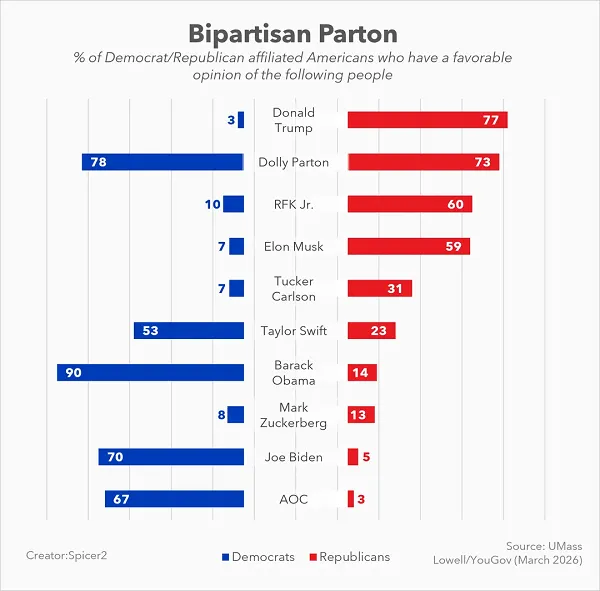
A critical driver behind this extensive consolidation appears to be financial synergy, particularly the need to stabilize and fund the capital-intensive endeavors of X and xAI. The original article highlights that X, formerly Twitter, faced significant financial headwinds following its acquisition. The dramatic changes implemented under Musk’s ownership led to a substantial exodus of advertisers, drying up a primary revenue stream. Reports indicated that X was running out of money, with its advertising intake plummeting by an estimated 50-60% in the year following the acquisition, resulting in billions of dollars in losses. The company’s valuation, according to Fidelity, which holds a stake in X, also saw a considerable decline from the $44 billion Musk paid.
Similarly, xAI, despite its ambitious goals and high-profile talent, also encountered significant financial challenges. Developing cutting-edge artificial intelligence models like Grok requires immense computational resources, vast data centers, and a continuous stream of top-tier engineers and researchers, all of which come at a staggering cost. The firm was reportedly burning through billions of dollars as it strove to build out its AI infrastructure and compete directly with established giants such as OpenAI, Google DeepMind, and Anthropic. This intense capital expenditure without immediate, substantial revenue generation put immense pressure on xAI’s independent financial viability.
The merger with SpaceX provided a crucial lifeline. SpaceX, with its robust contracts from NASA and the U.S. military, its burgeoning Starlink revenue, and a track record of impressive growth, presented a more financially stable anchor. Its successful IPO further solidified this position, providing a fresh influx of capital that could be strategically allocated to support the cash-negative operations of X and xAI. This consolidation effectively pooled the financial risks and resources, channeling the substantial capital and future revenue potential of SpaceX into sustaining the broader integrated vision. The move transforms what were individually challenging financial projects into components of a larger, more diversified, and better-capitalized enterprise.
Synergies and Strategic Intent: Unpacking the Rationale
The strategic rationale behind forming SpaceXAI is multifaceted, extending beyond mere financial exigency. Elon Musk’s long-standing vision revolves around creating tightly integrated technological ecosystems where different components mutually reinforce each other.
- Data Leverage for AI: X (formerly Twitter) is an unparalleled source of real-time, diverse, and globally relevant human conversation data. This data is invaluable for training and refining large language models (LLMs) and other AI systems. By merging X with xAI, Musk ensures that xAI has proprietary, direct access to this massive data stream, potentially giving Grok a unique advantage in understanding current events, nuanced human communication, and evolving cultural trends. This direct data pipeline minimizes reliance on third-party data licensing, which can be costly and restrictive.
- AI Enhancement for X and SpaceX: In return, xAI’s advanced AI capabilities can significantly enhance both X and SpaceX. For X, AI can improve content moderation, personalization of feeds, ad targeting, and introduce more sophisticated features, potentially drawing back users and advertisers. For SpaceX, AI can optimize rocket launch sequences, improve satellite constellation management (e.g., Starlink beamforming and traffic management), enhance autonomous docking procedures, and contribute to the development of future interplanetary missions, including advanced robotics for Mars colonization. The interplay between xAI and SpaceX’s engineering challenges could accelerate breakthroughs in both fields.
- The "Everything App" Vision: The merger reinforces Musk’s ambition for X to become an "everything app" – a comprehensive platform offering communication, financial services, commerce, and potentially more. Integrating AI from xAI is crucial for this vision, enabling sophisticated personalization, fraud detection, and automated services. The connection to SpaceX, while less direct for daily users of X, adds a layer of futuristic allure and a pipeline for potentially integrating advanced communication or location-based services via Starlink.
- Consolidated Control and Efficiency: By bringing these entities under one corporate roof, Musk consolidates his control and simplifies governance. This allows for more streamlined decision-making, faster resource allocation, and a unified strategic direction, minimizing potential conflicts of interest or redundant efforts across separate companies. It also enables cross-pollination of talent and technology, fostering a collaborative environment where innovations from one division can rapidly benefit others.
As Nikita Bier, X’s head of product, succinctly, if somewhat humorously, summarized the new corporate lineage: "X App (Formerly Twitter), Acquired by xAI, a Product by SpaceXAI, a division of SpaceX." While seemingly convoluted, this official naming structure reflects the intricate layers of mergers and acquisitions that have shaped the entity, and also serves a practical purpose in clarifying the relationship for a public still largely accustomed to referring to X as Twitter. It underscores the complexity inherent in Musk’s corporate strategy but also the deliberate intent to create a cohesive, if multi-faceted, technological powerhouse.
The "Everything App" and AI Ambitions: Competing on a Grand Scale
Elon Musk’s long-standing fascination with artificial intelligence and his vision for X as an "everything app" are central to understanding the formation of SpaceXAI. The integration of xAI and X into the larger SpaceX entity is designed to create a powerful feedback loop. The immense real-time data generated by X’s global user base provides xAI with an unparalleled training ground for its AI models, including Grok. This access to diverse human communication, cultural trends, and breaking news allows Grok to develop a nuanced understanding of the world, potentially giving it an edge over competitors.
xAI’s primary mission, as articulated by Musk, is to "understand the true nature of the universe," a philosophical underpinning that drives its scientific and engineering efforts. Its conversational AI, Grok, stands in direct competition with established models like OpenAI’s ChatGPT, Google’s Gemini, and Anthropic’s Claude. The AI landscape is characterized by intense research and development, requiring massive investments in computing infrastructure, talent acquisition, and data processing. By leveraging the financial strength of SpaceX and the data repository of X, xAI aims to accelerate its progress and assert its position as a leading force in general artificial intelligence.
For X, the integration of xAI means a future where the platform is not just a social network but an intelligent assistant. AI can enhance user experience through more personalized content feeds, advanced search capabilities, sophisticated moderation tools to combat misinformation and spam, and potentially enable new features like AI-powered content creation or intelligent financial services. The long-term ambition is for X to become indispensable, serving a wide array of user needs, much like WeChat in China, but on a global scale and with a deeper integration of advanced AI.
Moreover, the AI capabilities developed by xAI are not limited to consumer applications. They are expected to have profound implications for SpaceX’s core operations. From optimizing satellite deployment and maintenance for Starlink to enhancing the autonomy and decision-making capabilities of Starship during complex space missions, AI can drive efficiencies, reduce risks, and unlock new possibilities in space exploration. This symbiotic relationship between AI, social data, and aerospace technology forms the core strategic advantage that SpaceXAI aims to cultivate.

Investor Sentiment and Market Reactions: Betting on Vision and Execution
The formation of SpaceXAI and its successful IPO have generated a complex mix of investor sentiment. On one hand, there is undeniable excitement surrounding Elon Musk’s track record of innovation and his ability to disrupt industries. Investors are betting on his perceived genius, foresight, and the potential for his companies to become global leaders in critical future technologies – space, AI, and digital communication. The capital markets have shown a willingness to invest heavily in Musk’s ventures, often based on long-term speculative bets and future projections rather than immediate profitability. The strong demand for SpaceX’s IPO, despite the inclusion of financially challenged entities, is a testament to this confidence.
However, skepticism also abounds. Critics point to the significant financial losses incurred by X and xAI, questioning the long-term sustainability of merging these cash-negative projects into a larger, albeit well-capitalized, entity. The consolidation strategy, while providing immediate financial relief, also concentrates risk. If X fails to significantly improve its revenue streams or if xAI struggles to achieve profitability in the hyper-competitive AI market, the financial burden could eventually impact SpaceX’s otherwise robust balance sheet.
Furthermore, the complexity of the corporate structure, as highlighted by Nikita Bier’s description, raises questions about transparency, governance, and potential internal conflicts of interest. Managing three distinct, yet deeply integrated, technological enterprises under a single leadership structure presents formidable challenges. Analysts will be closely watching for how SpaceXAI balances the demands of space exploration with the rapid development cycles of AI and the dynamic nature of a global social media platform. The market’s reaction will ultimately hinge on SpaceXAI’s ability to demonstrate tangible synergies, achieve profitability across its divisions, and continue to innovate at a pace that justifies its ambitious valuation.
Challenges and Future Outlook: Navigating Uncharted Territories
While the formation of SpaceXAI represents a bold strategic move, it also introduces a unique set of challenges and uncertainties. The primary hurdle remains the financial viability of X and xAI. While SpaceX’s IPO has provided a significant capital infusion, the expectation is that these divisions will eventually become self-sustaining. X needs to rebuild its advertiser relationships, diversify its revenue streams beyond advertising (e.g., subscriptions, commerce, financial services), and restore user trust. xAI must deliver on its promise of groundbreaking AI, develop monetizable applications, and carve out a defensible market position against well-funded and technologically advanced competitors. If these projects continue to operate at a significant loss, the burden on SpaceX’s resources could become unsustainable in the long run.
Operational complexity is another significant challenge. Integrating the distinct cultures, engineering methodologies, and regulatory requirements of a space company, an AI research firm, and a social media platform is an immense undertaking. Ensuring seamless collaboration, preventing internal friction, and optimizing resource allocation across such diverse operations will require exceptional leadership and management.
Moreover, regulatory scrutiny is likely to intensify. A combined entity with significant influence in space, AI, and global communication could attract increased attention from antitrust regulators, data privacy advocates, and governments concerned about market dominance and the spread of information. Navigating these complex regulatory landscapes will be crucial for SpaceXAI’s sustained growth and global acceptance.
The future of SpaceXAI will largely depend on Musk’s ability to translate his ambitious vision into concrete, profitable realities across all three core divisions. If the synergies materialize as intended—with X feeding xAI’s intelligence, xAI enhancing both X and SpaceX’s capabilities, and SpaceX providing the financial backbone and long-term vision—SpaceXAI could indeed become a dominant force in the 21st century. However, if the financial drain persists and the operational complexities prove insurmountable, this grand experiment in corporate consolidation could face significant headwinds. The world will be watching to see if this unified titan can successfully navigate the uncharted territories of integrated space, AI, and social technology.