The global technology landscape is currently undergoing a fundamental transformation driven by a heightened focus on user data privacy. Over the past several years, the industry has transitioned from a permissive "wild west" of data collection to a more regulated and transparent environment. Leading this shift are the world’s most influential technology conglomerates—Google, Meta, and Apple—each responding to a growing public demand for greater control over personal digital footprints. While the movement toward privacy is a victory for consumer rights, it has introduced unprecedented challenges for the digital advertising ecosystem, which for decades has relied on granular user data to drive revenue and measure campaign efficacy.
The catalyst for this accelerated change occurred in April 2021 when Apple released iOS 14.5. This update was not merely a routine software patch; it introduced a suite of privacy-centric features that fundamentally altered the mechanics of mobile advertising. Central to this update was the App Tracking Transparency (ATT) framework, a policy that mandates applications to explicitly ask for user permission before tracking their activity across other companies’ apps and websites. Alongside ATT, Apple introduced "Privacy Nutrition Labels" on the App Store, providing users with a simplified, standardized summary of an app’s data collection practices. This move towards transparency forced a reckoning for advertisers who had previously operated with nearly unfettered access to mobile identifiers.
A Chronology of Privacy-First Infrastructure
The path to the current privacy-centric era can be traced through a series of strategic milestones established by Apple, which has positioned privacy as a core product differentiator.
In June 2020, at its Worldwide Developers Conference (WWDC), Apple first announced the intention to implement App Tracking Transparency. The announcement sent shockwaves through the advertising industry, leading to significant pushback from platforms like Meta (then Facebook), which argued that the change would harm small businesses’ ability to reach customers. Due to the magnitude of the change, Apple delayed the implementation to give developers more time to adapt.
By April 26, 2021, iOS 14.5 was officially released to the public. The immediate aftermath saw a dramatic decline in the availability of the Identifier for Advertisers (IDFA). Data from analytics firms like Flurry indicated that by May 2021, only about 9% of U.S. users had opted into tracking. This lack of data meant that advertisers could no longer accurately attribute conversions to specific ads or build detailed profiles for retargeting.
In June 2021, Apple doubled down on its privacy roadmap by unveiling iOS 15. This update, released in September 2021, expanded the privacy focus from app tracking to include email and web browsing. Features such as Mail Privacy Protection and iCloud+ Private Relay represented the next phase of Apple’s strategy to insulate user behavior from third-party monitoring.
Technical Analysis of iOS 15 Privacy Features
While iOS 14.5 targeted the "IDFA," iOS 15 introduced more nuanced tools that impacted different facets of the marketing funnel, particularly email marketing and web analytics.
Mail Privacy Protection (MPP)
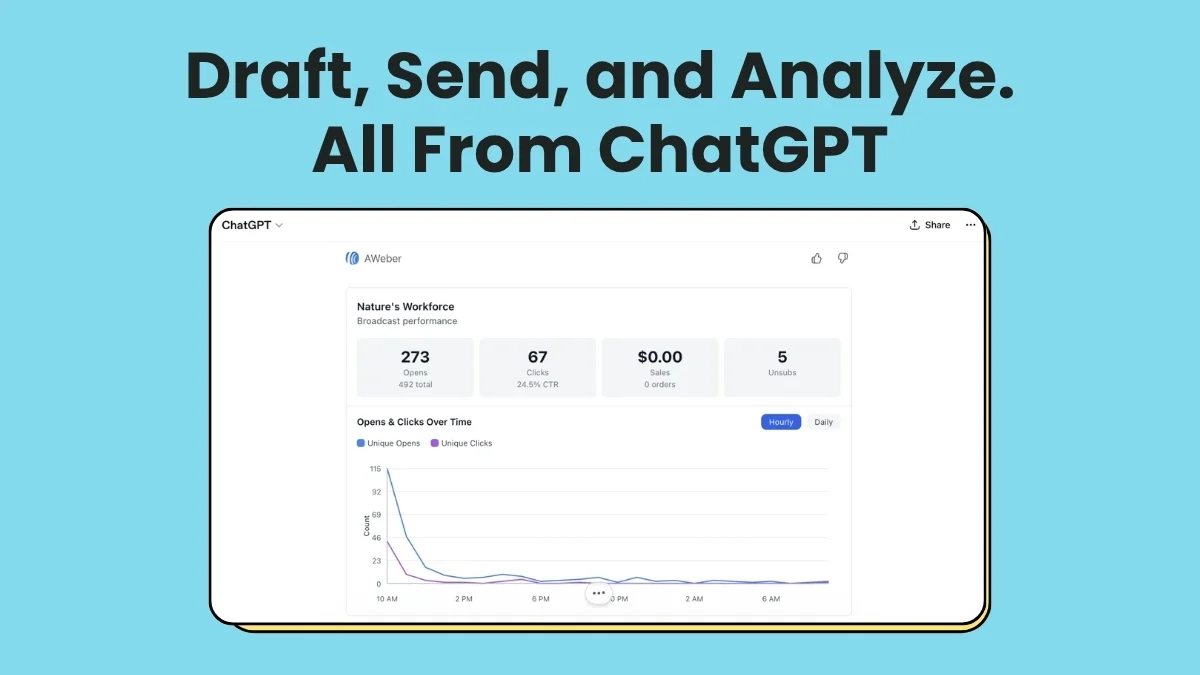
Email marketing has long relied on "tracking pixels"—invisible 1×1 images embedded in emails—to determine if and when a recipient opened a message. When the pixel is downloaded from a server, the sender receives information including the open time, the user’s location via IP address, and the device used.
With iOS 15, Apple’s Mail app began routing all remote content through a proxy server. This means that Apple downloads the tracking pixel automatically in the background, regardless of whether the user actually opens the email. For marketers, this has rendered "open rates" largely unreliable for Apple Mail users. Furthermore, the use of proxy servers masks the user’s true IP address, preventing marketers from determining the recipient’s precise geographic location. It is important to note that this change only affects the Apple Mail app; users accessing Gmail or Outlook on an iPhone via those specific apps are not subject to MPP unless those providers implement similar measures.
The App Privacy Report
Building on the "Nutrition Labels," the App Privacy Report provides a centralized dashboard within the iPhone’s settings. It allows users to see how frequently apps have accessed sensitive permissions—such as the camera, microphone, contacts, and location—over the past seven days. Crucially, it also lists the third-party domains that apps are communicating with, shedding light on the "behind-the-scenes" data sharing that often occurs between apps and ad networks.
iCloud+ and the "Private Relay"
For subscribers to Apple’s paid iCloud+ service, iOS 15 introduced "Private Relay." This service functions similarly to a Virtual Private Network (VPN) but utilizes a dual-hop architecture. When a user browses using Safari, their DNS requests are encrypted, and their IP address is masked by two separate internet relays. This prevents any single party—including Apple and the network provider—from knowing both who the user is and what website they are visiting. For advertisers, this further erodes the ability to create fingerprinting profiles based on IP addresses.
Hide My Email
Another iCloud+ feature, "Hide My Email," allows users to generate unique, random email addresses that forward to their personal inbox. This allows users to sign up for newsletters or services without revealing their primary email address. If a user begins receiving spam or no longer wishes to hear from a brand, they can simply delete the random address, effectively severing the connection without compromising their main identity.
Quantifying the Impact: Data and Industry Reactions
The financial and operational impact of these changes has been profound. Meta, in a 2022 earnings report, estimated that Apple’s privacy changes would result in a $10 billion revenue hit for the year. The primary reason for this loss is the degradation of "signal"—the data points used by algorithms to optimize ad delivery to the users most likely to convert.
Data from various industry trackers shows that while opt-in rates for tracking have slowly climbed from the initial 5-10% to approximately 15-25% as of 2023, the vast majority of users still choose to "Ask App Not to Track." This has led to a significant increase in Customer Acquisition Costs (CAC) for brands that relied heavily on social media advertising.
Industry reactions have been polarized. Mark Zuckerberg, CEO of Meta, initially characterized Apple’s moves as self-serving, suggesting that Apple was using privacy as a pretext to gain an advantage in the services and advertising space. Conversely, Tim Cook, CEO of Apple, has maintained that "privacy is a fundamental human right," arguing that users should have the final say in how their data is monetized.
Google has taken a middle-ground approach. While it has announced its own "Privacy Sandbox" for Android, it has moved more slowly than Apple, attempting to balance user privacy with the needs of an advertising ecosystem that generates the bulk of its revenue.
Broader Implications and Strategic Adaptation for Advertisers
Despite the initial alarm, the consensus among industry experts is that while the "old way" of advertising is dying, digital marketing remains a viable and essential field. However, it requires a shift in strategy from "deterministic" tracking (knowing exactly who a person is) to "probabilistic" modeling and "first-party" data collection.
The Shift to First-Party and Zero-Party Data
With third-party data becoming less reliable, brands are now focusing on building direct relationships with their customers. First-party data—information collected directly from a brand’s own channels (websites, apps, CRM systems)—has become the new gold standard. Furthermore, "zero-party data," which is data that a customer intentionally and proactively shares with a brand (such as preferences or survey responses), is being used to personalize experiences without invasive tracking.
Aggregated Event Measurement and Privacy-Enhancing Tech
In response to iOS 14.5, Meta introduced Aggregated Event Measurement (AEM), a protocol that allows for the measurement of web events from iOS devices while adhering to Apple’s privacy constraints. Similarly, advertisers are increasingly turning to server-side tracking, which moves the data processing from the user’s browser to a secure server, offering more control over what data is shared with third parties.
The Death of Vanity Metrics
The disruption of email open rates and precise click-through attribution has forced marketers to look at "bottom-line" metrics. Instead of focusing on opens, email marketers are now prioritizing click-to-purchase rates and overall revenue generated from campaigns. In social media advertising, the focus has shifted toward "Marketing Mix Modeling" (MMM), a statistical analysis technique used to estimate the impact of various marketing tactics on sales.
Future Outlook: A New Normal
The trajectory established by iOS 14.5 and iOS 15 is irreversible. Regulatory bodies, such as those enforcing the GDPR in Europe and the CCPA in California, are increasingly aligned with the privacy-first technical changes implemented by big tech.
For digital advertisers, the takeaway is that the landscape is no longer static. Success in the current era depends on technical agility and a commitment to transparency. The "ripple effect" mentioned during the infancy of iOS 14.5 has become a tidal wave, redefining digital advertising as a discipline that must respect the boundaries of the consumer.
Ultimately, these changes may lead to a healthier ecosystem. While it is more difficult to track users, the necessity of building trust and delivering genuine value has never been higher. Brands that can navigate these technical hurdles while maintaining a high standard of data ethics are likely to emerge as the leaders in a post-tracking world. The era of "surveillance capitalism" is giving way to an era of "permission-based marketing," and for the consumer, that is a significant step forward.