


The maturity of a corporate experimentation program is no longer measured solely by the number of tests conducted per month, but by the depth of its integration within the broader enterprise technology stack. For modern experimentation teams, the distinction between a basic testing tool and a comprehensive optimization platform lies in the tool’s ability to communicate with analytics suites, Customer Relationship Management (CRM) systems, Customer Data Platforms (CDPs), and marketing automation software. Without these deep-rooted connections, experimental data remains siloed, resulting in fragmented insights, disconnected customer workflows, and a failure to tie front-end changes to long-term business outcomes like lifetime value and retention.
The Evolution of Experimentation: From Silos to Ecosystems
In the early era of digital optimization, A/B testing was often a localized activity, frequently confined to a single department or a specific set of landing pages. Tools were selected based on their ease of deployment, often via a single line of JavaScript. However, as digital ecosystems have grown in complexity, the "silo effect" has become a significant barrier to growth. Industry data suggests that organizations with highly integrated data stacks see a significantly higher return on investment from their experimentation efforts compared to those using standalone tools. This is because integration allows for "closed-loop" optimization, where data from one system informs the hypotheses and targeting of another.
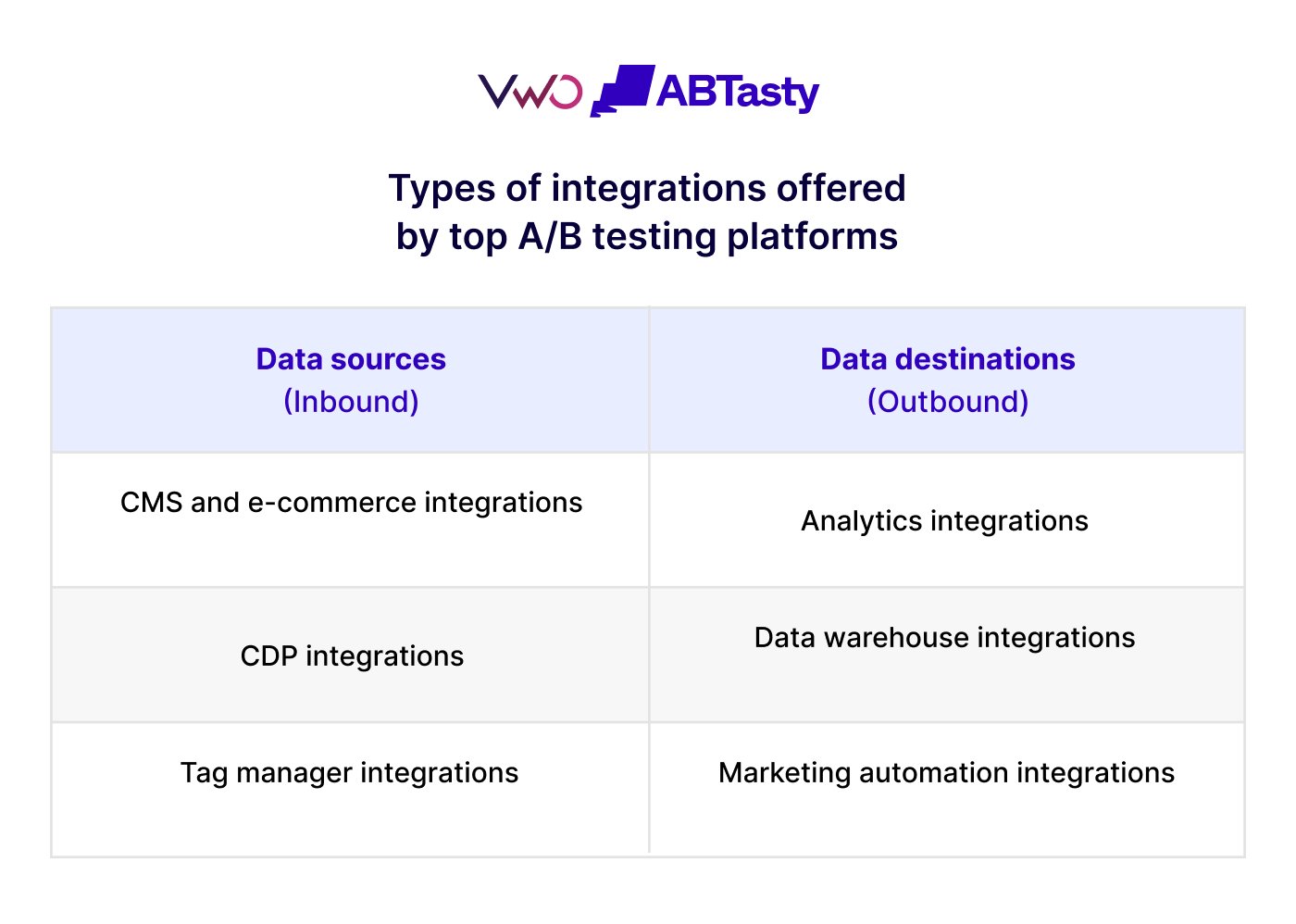
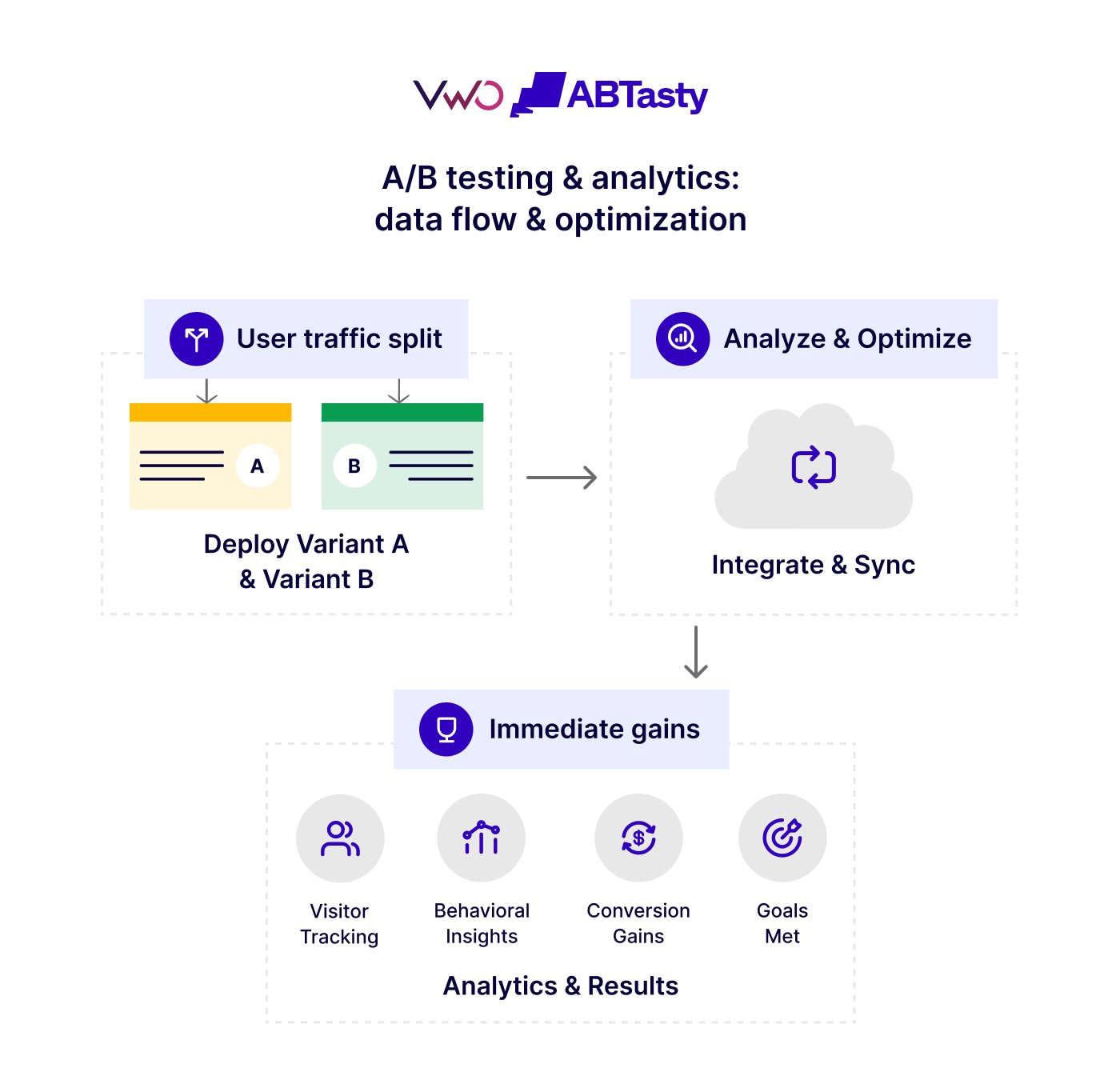
The current landscape of A/B testing is defined by the need for high-fidelity data exchange. Experiments rely on diverse inputs, including behavioral signals, user attributes, and historical campaign data. Conversely, the outcomes of these experiments must flow seamlessly into data warehouses and analytics platforms to ensure that stakeholders across the organization—from product managers to financial analysts—are looking at a single version of the truth.
The Categorization of Essential Integrations
To evaluate the fitness of an A/B testing platform, it is necessary to categorize integrations based on the specific utility they provide to the optimization workflow.
1. Analytics and Behavioral Insights
Analytics integrations represent the foundational layer of any testing stack. By connecting experiment data (campaign IDs, variation assignments, and visitor IDs) to platforms such as Google Analytics 4 (GA4), Adobe Analytics, Mixpanel, and Amplitude, teams can analyze test results through the lens of complex user behavior.
Modern platforms, such as VWO and AB Tasty, have moved toward bi-directional or "two-way" integrations. In this model, the testing tool pushes experiment data to the analytics platform for deep-dive segmentation, while the analytics platform pushes user cohorts back to the testing tool. This allows for highly specific targeting, such as running an A/B test exclusively for users who have visited a specific product category three times in the last week but have not yet made a purchase.
2. CRM and Revenue Attribution
CRM integrations, specifically with leaders like Salesforce and HubSpot, bridge the gap between digital interactions and business revenue. While a testing tool can track a "button click," a CRM integration can track whether that click eventually led to a qualified lead, a closed deal, or a high-value contract.
By tying test variants to individual lead records, marketing teams can verify the quality of the conversions they are generating. This prevents "false positives" where a variant might increase the number of sign-ups but decrease the overall quality of the leads entering the sales pipeline.
3. Customer Data Platforms (CDP) and Identity Resolution
As privacy regulations tighten and third-party cookies phase out, the role of CDPs like Segment, Tealium, and mParticle has become critical. CDP integrations enable identity resolution across devices and channels. When a testing platform is connected to a CDP, an experiment running on a mobile app can recognize the same user when they visit the website on a desktop, ensuring a consistent experience (e.g., showing the same discount offer) and preventing data contamination.
4. Data Warehouse and "Warehouse-Native" Testing
For enterprise organizations, the data warehouse (Snowflake, BigQuery, Redshift) is the ultimate source of truth. Data warehouse integrations allow raw experiment events to be piped directly into the company’s internal infrastructure. This is essential for warehouse-first teams that perform custom statistical modeling or need to join experiment data with sensitive offline data that cannot be uploaded to a third-party testing vendor.
The Frontier of Artificial Intelligence: MCP and LLM Integration
A significant technological shift is currently underway with the introduction of LLM (Large Language Model) integrations via the Model Context Protocol (MCP). This allows AI assistants like Claude, ChatGPT, and Gemini to securely access experiment data and optimization insights through natural-language interfaces.
The implications of this are profound for workflow efficiency. Instead of manually pulling reports, a CRO (Conversion Rate Optimization) Director can ask an AI assistant, "Which variations are currently outperforming the baseline for our high-value segments?" The AI, connected via MCP, can retrieve real-time data from the testing platform and provide a summarized analysis.
Emily Isted, Director of CRO at Hype Digital, noted in a recent industry discussion that the centralization of data through MCPs has revolutionized cross-silo work. By bringing together data points from Google Ads, Meta Ads, and VWO testing data into a centralized AI interface, teams can strategize based on a holistic view of the customer journey rather than isolated metrics.
Technical Challenges and Strategic Mitigation
While the benefits of an integrated stack are clear, the implementation process is fraught with technical challenges that can undermine test integrity if not managed correctly.
Data Discrepancy and Latency: One of the most common issues is the mismatch of data between the testing tool and the analytics platform. This often occurs due to differences in how sessions are defined or how "flicker" (the brief flash of original content before the variant loads) is handled. To mitigate this, organizations must establish a "Primary Reporting Source" and align all tracking definitions across the stack before launching high-stakes experiments.

Identity Resolution Gaps: When testing tools track anonymous visitors and CRMs track known users, a "blind spot" is created. Without a shared unique identifier (UID), it is impossible to track a user’s journey from an anonymous experiment participant to a loyal customer. Implementing a robust data layer or utilizing a CDP is the standard industry solution for closing these gaps.
Performance and Page Speed: Every integration adds weight to the page load. In an era where Core Web Vitals are a ranking factor for SEO and a driver of user experience, "tag bloat" is a serious concern. Leading platforms are increasingly moving toward server-side testing and asynchronous loading to minimize the impact on the Document Object Model (DOM) and ensure that the testing script does not slow down the user’s experience.
Comparative Landscape of Top Platforms
The market for A/B testing is diverse, with different platforms catering to different levels of technical maturity:
| A/B Testing Platform | Primary Integration Strength | Target Audience |
|---|---|---|
| VWO / AB Tasty | Broad ecosystem, bi-directional GA4, MCP for AI | Mid-market to Enterprise |
| Optimizely | Deep CMS and Digital Asset Management (DAM) | Large Enterprise / Full-stack |
| Convert Experiences | Privacy-focused, lean integration with GA4 | SMB to Mid-market |
| Kameleoon | Strong CRM and CDP connectivity | Data-driven Enterprise |
| Statsig / GrowthBook | Warehouse-native, developer-centric | Engineering-heavy startups |
Best Practices for Building an Integrated Stack
Building a resilient experimentation stack requires a phased approach:
- Audit the Current Stack: Identify the tools already in use for analytics, CRM, and email marketing. The testing tool must, at a minimum, have native or API-based connectors for these "Big Three."
- Standardize the Data Layer: Before adding more tools, ensure that your website’s data layer is clean and consistently named. This ensures that when an "Add to Cart" event is fired, it is interpreted the same way by every tool in the stack.
- Prioritize Server-Side Capabilities: As performance becomes more critical, ensure the platform supports server-side testing. This allows for more complex experiments (like testing different search algorithms) without impacting front-end performance.
- Document and Monitor: Integrations are not "set and forget." API updates can cause silent failures. Organizations should maintain a "System Map" and conduct quarterly audits to ensure data is still flowing correctly between nodes.
Conclusion: The Future of Integrated Optimization
The future of digital optimization is moving away from isolated A/B tests toward a continuous, integrated loop of insight and action. As platforms like VWO and AB Tasty continue to expand their integration capabilities—particularly in the realm of AI and data warehouses—the barrier between "experimentation data" and "business data" will continue to dissolve.
Ultimately, the goal of an integrated stack is to empower teams to make decisions based on the totality of the customer experience. When a winning variant is identified, its impact should be visible in the analytics dashboard, the CRM lead record, and the data warehouse revenue report. This level of transparency not only validates the CRO team’s efforts but also provides the executive leadership with the confidence to invest further in data-driven growth strategies. For organizations looking to remain competitive in an increasingly digital-first economy, the question is no longer whether to integrate, but how quickly they can build a unified optimization ecosystem.







