During peak sending periods, such as the crucial weeks leading up to major elections, the ability of commercial emails to reach the inbox is not solely determined by the quality of an individual sender’s program. Instead, it is profoundly influenced by the broader email ecosystem, including the intense, high-volume activity generated by political campaigns. This phenomenon creates significant pressure on mailbox providers (MBPs), leading to reduced inbox placement rates, increased spam filtering, and even outright email rejection for legitimate commercial messages. Understanding these dynamics is critical for marketers aiming to protect their deliverability and revenue during politically charged times.
The Escalating Role of Email in Modern Political Campaigns
In contemporary political landscapes, email has cemented its position as an indispensable tool for candidates, political parties, and Political Action Committees (PACs). Far beyond simple communication, email serves as the primary conduit for a multitude of campaign objectives: fundraising, voter mobilization, volunteer recruitment, and the rapid dissemination of policy positions and urgent calls to action. As election day approaches, the frequency of these political emails escalates dramatically, often reaching four or more messages per day from a single program. This relentless barrage is designed to capture attention, instill urgency, and drive specific behaviors, from donating to voting.
However, the strategies employed by political mailers frequently diverge from the best practices adhered to by commercial senders. Political campaigns often prioritize reach and immediacy over list hygiene and subscriber engagement metrics, sometimes acquiring large lists through less scrupulous methods or employing aggressive language and minimal targeting. This approach, while effective for some campaign objectives, often results in elevated spam complaint rates and low engagement from a significant portion of recipients, contributing to a substantial amount of "noise" in the collective inbox. This high-volume, often low-quality sending behavior places immense strain on the infrastructure and algorithms of major mailbox providers like Gmail, Microsoft (Outlook), Apple, and Yahoo, collectively known as MAGY, which account for approximately 90% of a typical US B2C email program’s audience.
Mailbox Providers Under Pressure: The Mechanics of Deliverability Degradation
Mailbox providers operate with a primary objective: to protect their users’ inboxes and ensure a positive user experience. When confronted with an unprecedented surge in email volume, such as during an election cycle, MBPs quickly approach their operational capacity limits. To manage this overload and maintain service stability, they activate a series of protective measures. These include increasing "throttling," which slows down the acceptance rate of incoming mail, and issuing "deferrals," where emails are temporarily rejected and require the sender to retry later. More critically, MBPs enhance their spam filtering mechanisms, leading to a higher proportion of emails being diverted to recipients’ junk folders or, in severe cases, being rejected outright without ever reaching an inbox.
The efficacy of these measures is heavily influenced by a sender’s reputation. High-quality senders, characterized by consistent engagement, low complaint rates, and adherence to email best practices, are generally prioritized for better processing and inbox placement. Conversely, lower-quality senders, or even otherwise reputable senders caught in the crossfire of systemic overload, experience delivery delays, increased spam placement, or outright rejection. This systemic stress means that even the most meticulously managed commercial email programs can see their deliverability suffer, not due to their own failings, but because of the external environment.
The 2024 Presidential Election: A Stark Deliverability Case Study
To quantify the real-world impact of election-driven email surges, Validity, leveraging its Intelligence Network, conducted a comprehensive analysis of deliverability data for US senders in the weeks leading up to the 2024 presidential election. The findings were unambiguous and underscored the significant challenges faced by commercial marketers.
Chronology of Impact:
The heightened political email activity typically begins weeks before election day, steadily increasing in volume and intensity. The peak pressure point identified in the 2024 analysis was the single week immediately preceding election day, where campaign emails reached their zenith. This period served as a critical stress test for the entire email channel.
Key Data Insights from 2024:
The analysis revealed a marked deterioration in email deliverability across the board. Average inbox placement rates across the four major mailbox providers (MAGY) plummeted by more than 5% during the week before election day. Crucially, this decline was not confined to political mailers; it impacted all legitimate, permission-based email marketing activity, indicating a systemic issue affecting the entire ecosystem.
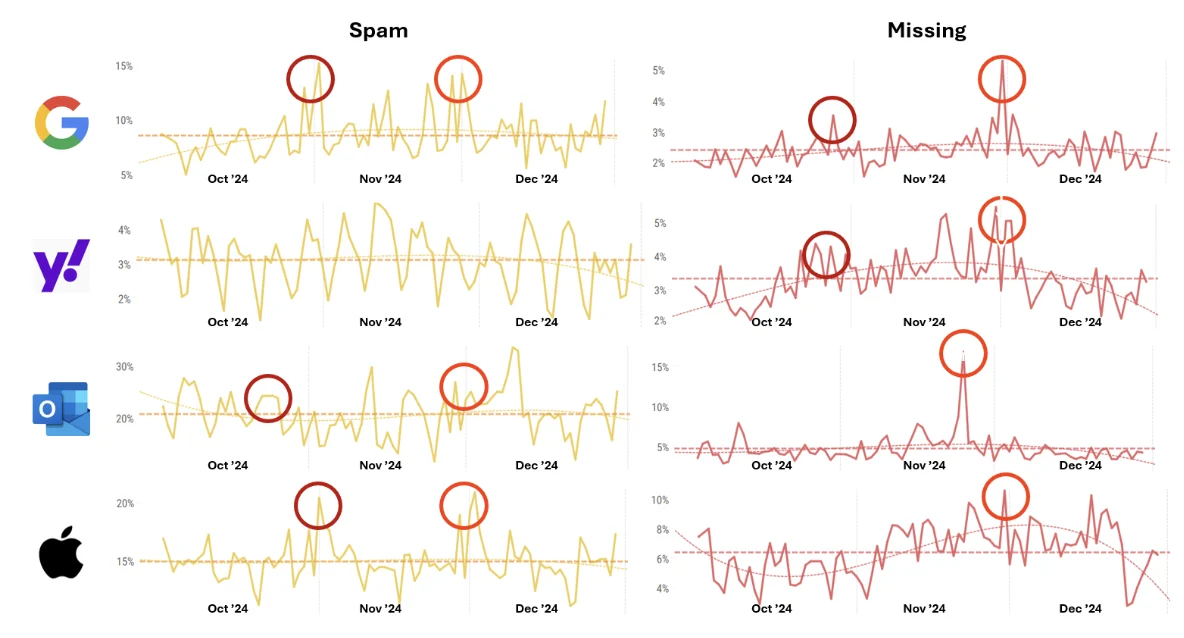
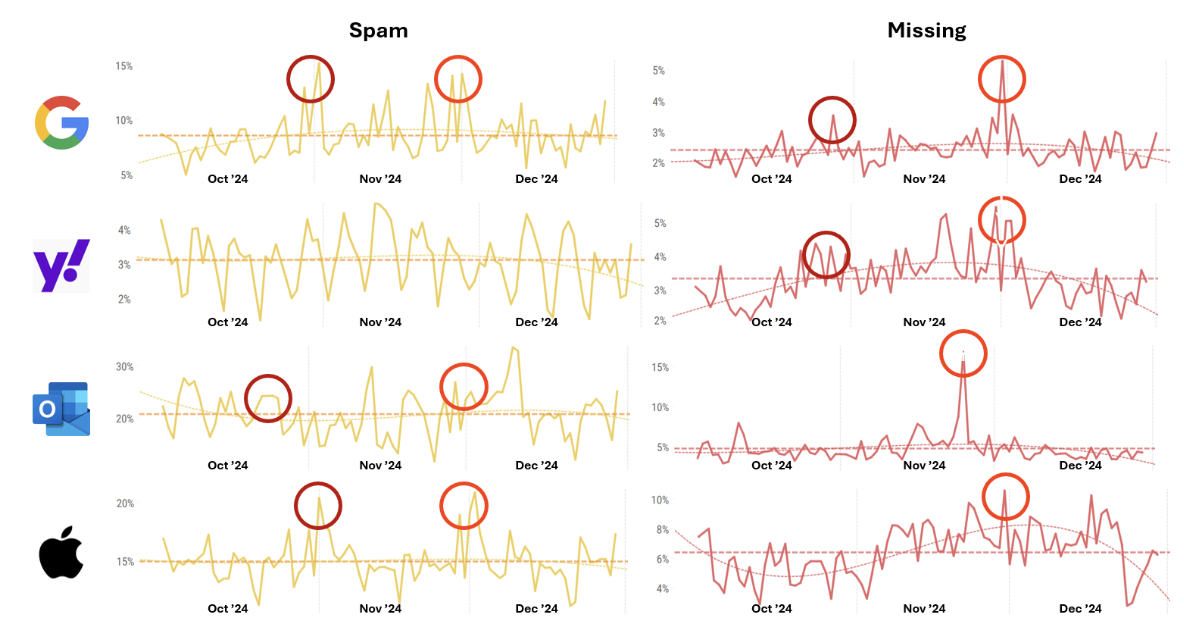
To understand the mechanisms behind this decline, Validity examined the two primary forms of non-delivery: mail placed in recipients’ junk folders (Spam) and mail rejected outright (Missing). Both categories spiked sharply during election week. Comparing this period to the Q4 2024 quarterly benchmark, and then against the notoriously high-volume Black Friday and Cyber Monday periods, the data provided compelling evidence:
| Weighted Avg. | Q4 ’24 Benchmark | Election Week | Black Friday | Cyber Monday |
|---|---|---|---|---|
| Spam | 9.2 percent | 13.6 percent | 13.1 percent | 13.1 percent |
| Missing | 3.1 percent | 4.1 percent | 5.5 percent | 4.3 percent |
| Combined | 12.3 percent | 17.6 percent | 18.5 percent | 17.4 percent |
The combined non-delivery rate during election week reached 17.6%, representing a 1.5x increase over the quarterly benchmark of 12.3%. This figure was almost identical to the pressure observed during Black Friday (18.5%) and Cyber Monday (17.4%), periods universally acknowledged as the most challenging for email deliverability.
Financial Implications:
The tangible financial impact of this widespread deliverability degradation was staggering. With average US sending volumes hovering around 10 billion emails per day, a 5% drop in inbox placement translates to nearly half a billion additional emails failing to reach the inbox every single day. Using an average estimated value of $0.11 per email (based on Klaviyo benchmarks), this represents approximately $50 million per day in lost potential revenue for commercial senders. This substantial loss was not attributable to marketers making errors but was a direct consequence of the overwhelming engagement pressure created by the election on the entire email channel.
The Root Cause: Subscriber Engagement Signals and Complaint Spikes
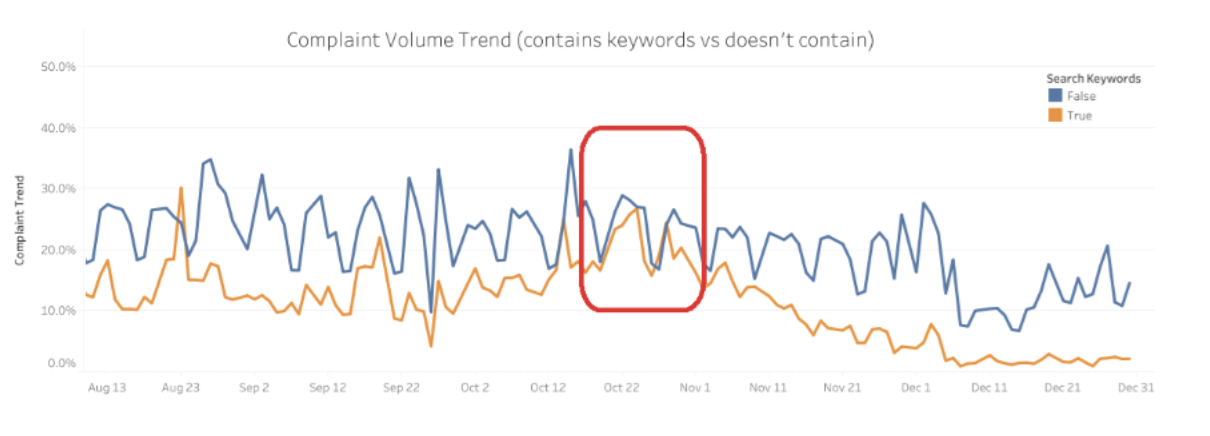
The fundamental reason behind this phenomenon lies in how major mailbox providers, particularly Gmail, are highly responsive to subscriber engagement signals. Positive interactions – such as clicks, forwards, and replies – are interpreted as indicators of high-quality programs whose subscribers genuinely desire to receive messages. Conversely, negative signals – including spam complaints, marking emails as deleted-unread, or unsubscribing – push mail toward the spam folder.
Validity’s analysis of complaint data, achieved by tagging emails with common political terms ("election," "vote," "donate," "president"), clearly illustrated that both political and non-political senders experienced above-average complaint rates in the pre-election period. Alarmingly, the peaks in spam complaints observed during the pre-election window were higher than those recorded during the Black Friday/Cyber Monday period four weeks later. This inference is stark: political campaigns do not merely generate complaints for themselves; they contribute significantly to an overall increase in negative sentiment and engagement across the entire email channel, creating a ripple effect that impacts all senders.
Political mailers are often criticized for their aggressive tactics, including high sending frequency, emotionally charged language, and minimal list segmentation or targeting. These practices are direct contributors to the elevated spam complaints. However, the data also presented an interesting nuance: donation-focused emails from political programs generated spam complaints at one-third the rate of content and news emails from the same senders. This suggests that the direct fundraising mechanics themselves were less of a problem than the way political content and news were framed and presented, potentially indicating that transactional or clear-ask emails, even in a political context, are perceived differently by subscribers than general informational or persuasive content.
Commercial Senders’ Strategic Responses in 2024
Observing the impact of the 2024 election, many commercial senders proactively adjusted their strategies. Validity customer data showed a striking trend: average daily campaigns dropped by 5-10% in the four weeks leading up to election day. Many brands opted to scale back their email volume, only ramping up again once the election dust had settled. This reactive approach aimed to mitigate the risks associated with a congested and volatile email environment.
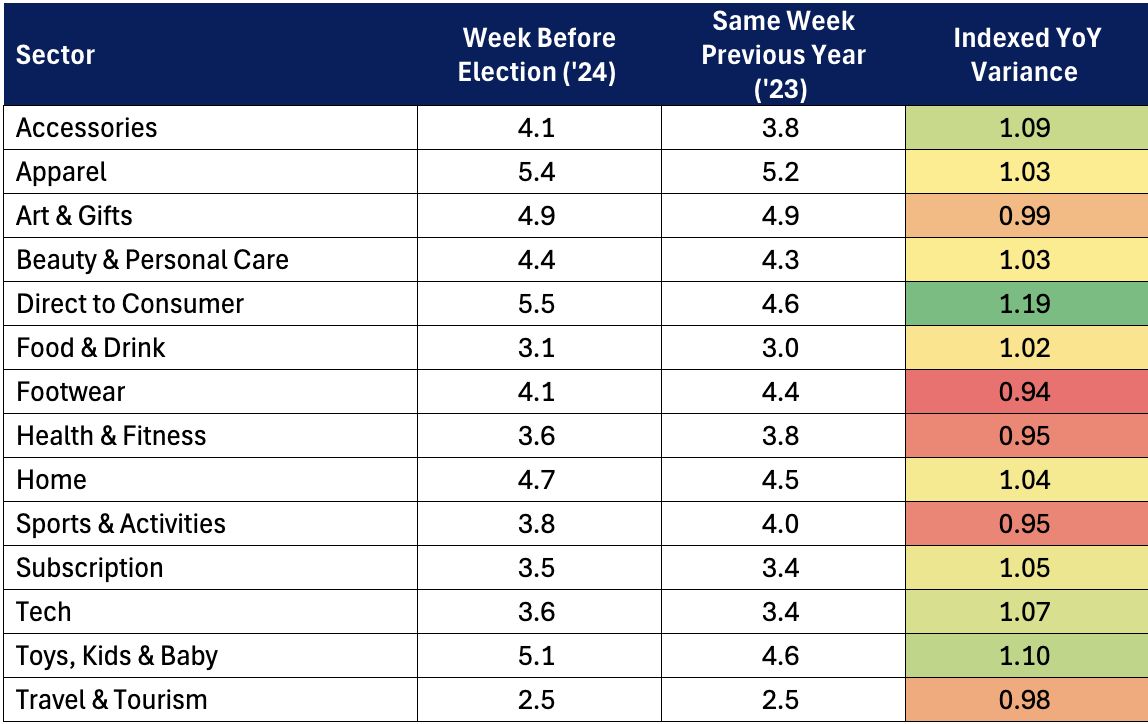
However, this response was not uniform across all sectors. A comparison of sending frequency in the week immediately before the 2024 election with the same week in 2023 (a non-election year) revealed nuanced sector-specific adjustments:
- Increased Activity: Direct-to-Consumer (D2C) brands, Toys/Kids/Baby, and Accessories all increased their email activity during election week. This could be attributed to these sectors perceiving less direct competition from political messaging or identifying unique opportunities to engage consumers during a period of heightened online activity.
- Reduced Activity: Footwear, Health & Fitness, and Sports & Activities sectors largely pulled back their email volumes. These industries may have been more sensitive to the potential for subscriber fatigue or perceived a higher risk of their messages being lost in the electoral noise.
For sectors that under-indexed in 2024, the upcoming 2026 midterms may represent an opportunity to refine their strategies and potentially do more, armed with a clearer understanding of the deliverability landscape and the specific challenges presented by political email surges.
Anticipating 2026 Midterms: An Evolving Landscape
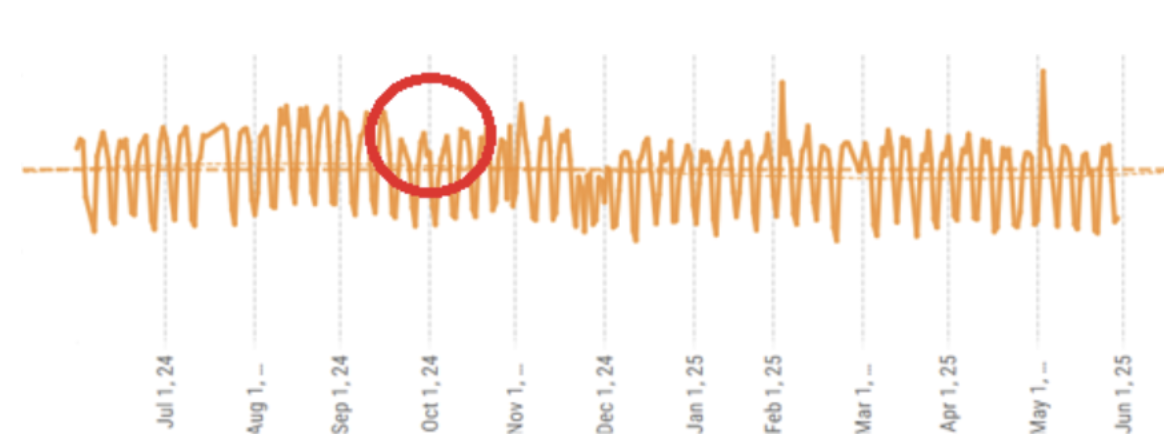
Looking ahead to the 2026 midterms, several developments since 2024 could influence the email deliverability environment, potentially altering the challenges and opportunities for commercial senders.
1. Declining Global Inbox Placement Rates:
A significant factor is the overall trend in inbox placement rates (IPRs). After reaching a high-water mark of 87.2% last year, global IPRs have shown a downward trend, settling at 84.5% for Q2 2026. This means that the starting point for commercial senders heading into this election cycle is already softer. A lower baseline IPR implies that the additional pressure from political email surges could lead to even more pronounced drops in deliverability unless proactive measures are taken. Marketers must recognize that the competitive landscape for inbox space is becoming increasingly challenging, independent of specific high-volume events.
2. Tightened Bulk Sender Requirements:
Perhaps the most significant development is the widespread implementation of significantly tightened bulk sender requirements by major MBPs, particularly Google and Yahoo, which rolled out new rules in early 2024. These requirements mandate strict email authentication (SPF, DKIM, DMARC), offer easy one-click unsubscribe options, and enforce clear spam complaint thresholds. Non-compliant senders now face a much higher likelihood of their emails being blocked or filtered directly to spam. This shift could actually benefit commercial senders. Political mailers, notorious for generating high complaint rates and sometimes lax authentication practices, may find a much larger share of their volume suppressed before it can significantly affect inbox sentiment for everyone else. This regulatory tightening acts as a crucial gatekeeper, potentially reducing the overall "noise" and protecting the integrity of the email channel to some extent.
3. The Rise of AI-Powered Inbox Features:
Over the past 18 months, major MBPs have rolled out a wave of AI-powered inbox features designed to enhance user experience and engagement. Examples include Gmail’s relevance-sorted Promotions tab, Gemini for Gmail, and Microsoft Copilot. These intelligent tools are designed to nudge subscribers toward more conversational, high-engagement inbox experiences, prioritizing content that is most relevant and desired. Consequently, low-engagement senders, or those whose content consistently triggers negative signals, become less visible in the inbox. If political mailers, due to their aggressive tactics and often broad targeting, cannot generate strong positive engagement signals, these AI systems are likely to filter them more aggressively before they even reach the primary inbox at scale. This enhanced filtering by AI could lead to less visibility for political campaigns and, as a result, less pressure on the email channel overall, providing a potential buffer for commercial senders.
Navigating the Election Season: Strategic Recommendations for Commercial Marketers
Given the persistent challenges and the evolving landscape, commercial senders need a sophisticated strategy to navigate election seasons effectively.
1. Prioritize Core Deliverability Health:
The best defense remains a strong offense. Marketers must consistently maintain a robust sender reputation through meticulous list hygiene, regular segmentation, and sending only to highly engaged subscribers. Personalization, relevant content, and clear calls to action are paramount to fostering positive engagement signals (opens, clicks) and minimizing negative ones (spam complaints, unsubscribes). Investing in tools that monitor deliverability metrics in real-time is essential for early detection of issues.
2. Strategic Timing and Volume Adjustment:
Instead of a blanket reduction in sending volume, a data-driven approach is recommended. Marketers should analyze their own historical performance during high-volume periods, including past elections if data is available. This allows for targeted adjustments, perhaps reducing volume for less critical campaigns while maintaining or even increasing for high-performing segments or promotions. Understanding audience behavior and peak engagement times can help optimize sending schedules to cut through the noise.
3. Creative and Non-Partisan Engagement:
Scaling back during election season isn’t the right call for every brand. For some, it presents a genuine opportunity to align with universal themes of choice, freedom, and civic duty that resonate broadly with consumers. Brands that successfully leaned into election themes in 2024 did so with caution and creativity:
- Non-Partisan Stance: They avoided taking political sides or endorsing candidates.
- Light-hearted Approach: Messaging was kept light, often employing clever wordplay or humor that landed across the political spectrum.
- Natural Brand Connection: The most effective campaigns found an authentic link between voting or civic engagement and their own products or brand values. Examples included patriotic product tie-ins, public service announcements encouraging voting, or playful references to "making your voice heard" in a consumer context.
The key guardrail here is brand fit and audience understanding. Overtly political messaging carries the significant risk of alienating a substantial portion of your audience. While smaller businesses might be more risk-averse regarding potential brand exposure, larger brands generally opted to stay focused on their core business and Black Friday preparations in 2024.
4. Continuous Monitoring and Agility:
The email landscape is dynamic. Marketers must continuously monitor their key performance indicators (KPIs), including inbox placement rates, spam complaint rates, open rates, and click-through rates, throughout the election period. Being agile enough to adjust sending strategies, content, and frequency based on real-time data is crucial for mitigating negative impacts and capitalizing on unexpected opportunities.
The Bottom Line: Vigilance and Strategy are Key
The data from the 2024 election makes a compelling case: election season is a significant deliverability pressure point for all email senders, not just political mailers. Inbox placement drops, complaint rates spike, and this pressure peaks well before the critical Black Friday period. The best defense for commercial senders remains unwavering commitment to maintaining a strong sender reputation, cultivating a healthy, engaged list, and developing a clear, data-informed timing strategy heading into November.
While there is reason to believe that the 2026 midterms may be somewhat less disruptive due to tightened bulk sender requirements and the increasing influence of AI in inbox filtering, this optimism should not lead to complacency. Continuous vigilance and proactive monitoring of email metrics are essential. For brands contemplating creatively engaging with election themes, the lessons from 2024 are clear: keep messaging light, non-partisan, and authentically rooted in your products or brand values. As a general rule, civic pride travels well; overt partisan politics does not, and risks alienating a diverse customer base.
For a deeper dive into global and industry-specific email deliverability trends, commercial marketers are encouraged to consult resources like the 2026 Email Deliverability Benchmark report, which offers valuable insights to benchmark performance and refine strategies. The evolving email ecosystem demands continuous learning and adaptation to ensure messages consistently reach their intended audience.