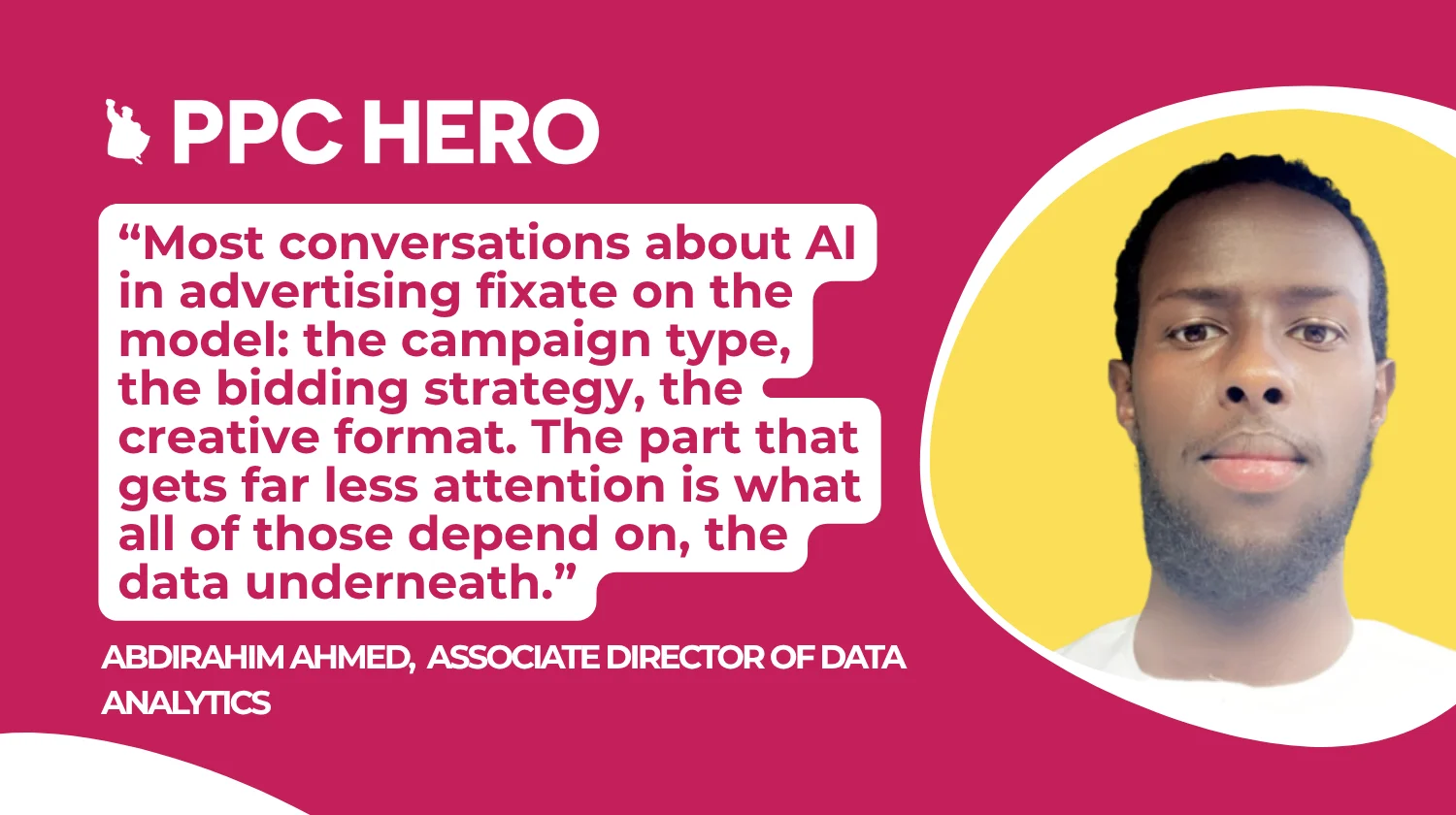
The prevailing narrative surrounding artificial intelligence in advertising often centers on the sophisticated models and automated strategies: the intricate campaign types, the dynamic bidding algorithms, and the innovative creative formats. However, a critical underpinning of these advancements, the very data that fuels them, receives significantly less attention. Google’s powerful automation tools, including Smart Bidding, Performance Max, and Demand Gen, are entirely reliant on conversion signals. When these signals are weak or incomplete, the system’s ability to optimize effectively is severely compromised, leading to misdirected efforts or a complete lack of discernible results.
The Invisible Measurement Chasm: A Growing Challenge for Advertisers
The erosion of reliable advertising data has been a gradual process, making it easily overlooked by many organizations. The phasing out of third-party cookies by major browsers like Safari and Firefox, which collectively account for approximately 21% of global internet traffic, has already rendered a significant portion of user activity far less accurately measurable than in previous years. Apple’s introduction of App Tracking Transparency (ATT) in 2021, while a landmark privacy initiative, resulted in opt-in rates for tracking ranging between 15% and 25%. This means the majority of Apple users are effectively invisible to traditional in-app tracking mechanisms. Further compounding these challenges are the widespread adoption of ad blockers, which strip tracking tags before they can execute, and the default configuration of the Google Tag, which often loads from third-party domains that privacy-focused tools are designed to intercept. Each of these factors contributes to a widening chasm in data visibility.
The ramifications of this data deficit extend far beyond mere reporting inaccuracies. The core functionality of intelligent bidding strategies, such as Google’s Smart Bidding, is their capacity to learn from conversion data. When this data stream is incomplete, the AI struggles to discern which clicks, audience segments, or ad placements are genuinely driving desired outcomes. Consequently, the system begins to bid in the dark, making decisions without a clear understanding of their effectiveness. This can lead to campaigns that underperform, with allocated budgets failing to achieve their full potential, and a general drift in performance that can be difficult to diagnose without a deep understanding of the underlying data health.
Defining Data Strength: The Fuel for AI-Powered Advertising
In recent years, Google has increasingly emphasized the concept of “Data Strength,” a term frequently encountered during industry presentations and often presented alongside acronyms like GTG (Google Tag Gateway), ECW (Enhanced Conversions for Web), ECL (Enhanced Conversions for Leads), and Customer Match. Data Strength represents Google’s unified approach to integrating various data-centric products under a single strategic umbrella.
This concept can be aptly described as the fuel powering the engine of AI-driven advertising. The automation platforms are the engines, and conversion signals are the fuel they consume. The more robust and complete these signals are, the more efficiently and effectively the engine operates.
What distinguishes Google’s Data Strength messaging from earlier emphasis on first-party data is its explicit focus on completeness and integration. Individual data products, while valuable on their own, yield their greatest impact when connected. The overarching objective is to consolidate all available data sources – encompassing both online and offline interactions – into a singular, comprehensive input. This unified data stream provides Google’s AI with the most holistic possible view of the customer journey.
There is also a significant competitive advantage to be gained. Google’s automation algorithms are designed to optimize for advertisers who provide the highest quality data. Consequently, if a competitor possesses superior measurement capabilities, their campaigns will learn faster and gain a performance edge over time. An advertiser’s data, in this context, acts as a protective moat; it is proprietary and inaccessible to rivals. Google’s own data suggests that advertisers who invest in building strong data foundations can observe an increase in conversions by 10% to 20%.

The Pillars of Data Strength: Components for Robust Measurement
The Data Strength framework is structured around several interconnected components, each building upon the foundation laid by the previous one.
1. The Google Tag Gateway (GTG): Enhancing Tag Deliverability
The foundational element of this framework is the Google Tag itself. However, the tag historically faces a structural vulnerability: it loads from a third-party domain. This characteristic makes it increasingly susceptible to interception by ad blockers and privacy-focused browser settings. The Google Tag Gateway addresses this challenge by enabling the tag to be served directly from the advertiser’s own domain. From the browser’s perspective, this appears as a first-party request, significantly increasing the likelihood that the tag will load successfully. Google estimates an average uplift of 14% in observed conversions attributed to the use of the Gateway. For users of Cloudflare, this functionality can be implemented with minimal effort, often without the need for extensive re-tagging.
2. Enhanced Conversions for Web (ECW): Bridging the Cookie Gap
Enhanced Conversions for Web tackles the problem of conversions that occur without a readily available cookie to identify the user. This solution captures consented first-party data at the precise moment of conversion – typically a hashed email address. This hashed data is then used to attribute the conversion even when a cookie match is not possible. Importantly, the data is hashed within the user’s browser before it is transmitted, ensuring that Google only receives an encrypted identifier, preserving user privacy. Google reports an uplift of 8.5% in Search conversions and a more substantial 15% on YouTube, a platform historically more challenging for attribution.
3. Enhanced Conversions for Leads (ECL): Capturing Offline Value
Enhanced Conversions for Leads extends the functionality of ECW to the critical offline segment of the customer journey, which holds immense value for lead generation. Traditional offline conversion import methods primarily rely on the GCLID (Google Click ID) and are click-based, making them vulnerable to future deprecations like link decoration. ECL augments the GCLID with hashed first-party data. This allows Google to perform matches using multiple identifiers when offline conversions are uploaded at a later stage. Google’s figures indicate a 10% lift in Search conversions and a significant 22% lift on YouTube compared to standard offline import methods.
4. Customer Match: Activating and Understanding Your Audience

Moving beyond pure measurement, Customer Match focuses on activation. Advertisers can upload hashed, consented customer data, which Google then matches to signed-in users across its platforms, including Search, Shopping, YouTube, Gmail, and Display. This enables advertisers to effectively target these identified customers, exclude them from prospecting campaigns, or build lookalike audiences based on their most valuable customer segments.
5. Data Manager: The Centralized Hub for Data Integration
Data Manager serves as the central nexus where all these components converge. It is Google’s dedicated platform for integrating data from websites, mobile applications, physical store locations, and customer relationship management (CRM) systems into a unified view. Advertisers who leverage Data Manager to connect offline and app data have reported an average uplift of 26% in incremental Return on Ad Spend (ROAS). The 2026 updates expanded Data Manager’s availability across Google Ads, Search Ads 360, and Campaign Manager 360, with Analytics integration slated for future release. Furthermore, new integrations with popular platforms such as Mailchimp, Klaviyo, and TripleWhale have been introduced, broadening the scope of data sources that can feed into the system.
Practical Application: Real-World Impact of Data Strength
The benefits of implementing a Data Strength strategy are not merely theoretical. In a notable case involving a home improvement retailer experiencing significant lead volume erosion due to signal loss, a phased rollout of Data Strength measures proved instrumental in recovering 27% of previously lost conversions. The initial phase involved a straightforward, one-click integration of the tag gateway via Cloudflare. Subsequently, Consent Mode and Enhanced Conversions were implemented. Even before the full suite of tools was in place, the tag gateway alone contributed to a 15% uplift in observed conversions.
The Bottom Line: Building a Future-Proof Advertising Foundation
The ongoing discourse about AI in advertising frequently terminates at the discussion of the sophisticated models and algorithms. However, these models represent only half of the performance equation. The other, often neglected, half is the underlying data. For a substantial number of advertisers, this data is in a state of flux, with signals being blocked, conversions going unrecorded, and AI systems operating on incomplete information. This critical data gap rarely manifests visibly in standard dashboards because, by definition, the missing data is not present to be observed. This inherent invisibility is precisely why such issues can persist unaddressed for extended periods.
Data Strength offers a structured methodology for closing this gap. It is a process that is built incrementally, layer by layer, rather than through a single, monolithic undertaking or the implementation of a solitary product. Each added layer serves to recover a greater portion of the signal that the AI requires to learn effectively and optimize bidding strategies.
Advertisers who proactively establish these robust data foundations now will cultivate a significant and compounding advantage over those who delay. In an advertising landscape where automation increasingly dictates campaign outcomes with each passing quarter, this fundamental data infrastructure is the bedrock upon which all sustained performance rests.