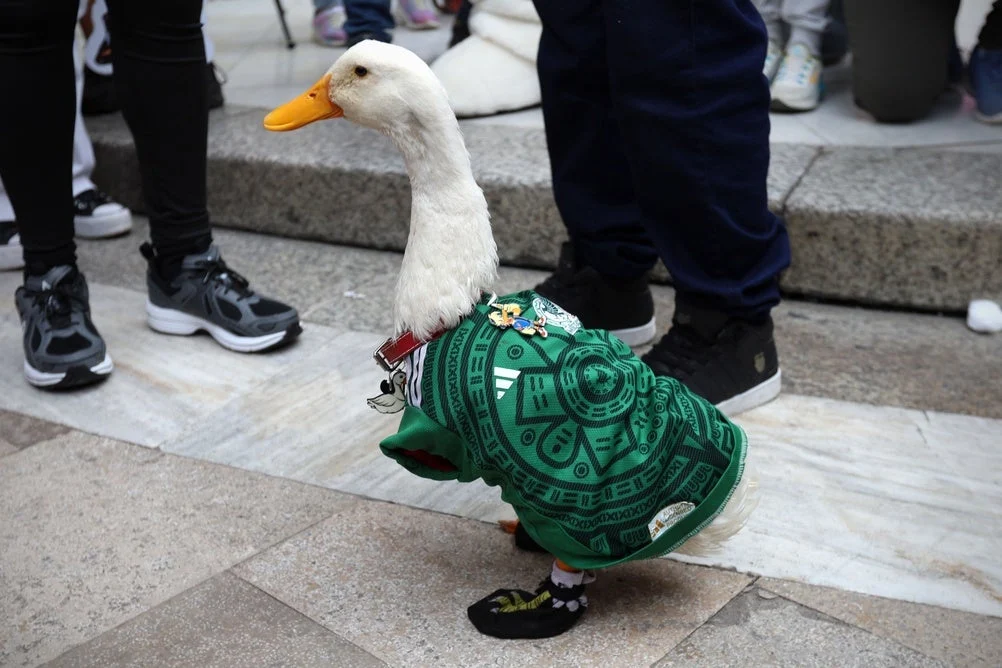
The landscape of public relations and brand communications is undergoing a fundamental transformation, driven by the shift from reactive monitoring to proactive, AI-driven social intelligence. This evolution was perhaps most vividly illustrated during the opening stages of the 2026 FIFA World Cup in Mexico City, where an unexpected mascot—a small duck named Merlin—captured the global imagination, leaving traditional keyword-based marketing strategies in his wake. As the world’s largest sporting event unfolded across North America, the emergence of Merlin underscored a critical reality for modern communicators: in a hyper-connected digital economy, the most valuable brand opportunities are often those that cannot be predicted by standard search terms.
The 2026 FIFA World Cup represents a monumental undertaking in sports history, featuring 48 teams and 104 matches hosted across the United States, Canada, and Mexico. For global brands, the tournament is the ultimate stage for visibility. However, the sheer scale of the event also creates a saturated noise floor. While most marketing departments focused their resources on high-volume keywords such as #WorldCup2026, the names of elite strikers, or stadium-specific hashtags, the most significant organic engagement of the opening week centered on a domestic duck standing outside the Palacio de Bellas Artes (Palace of Fine Arts).
The Merlin Phenomenon: A Case Study in Organic Virality
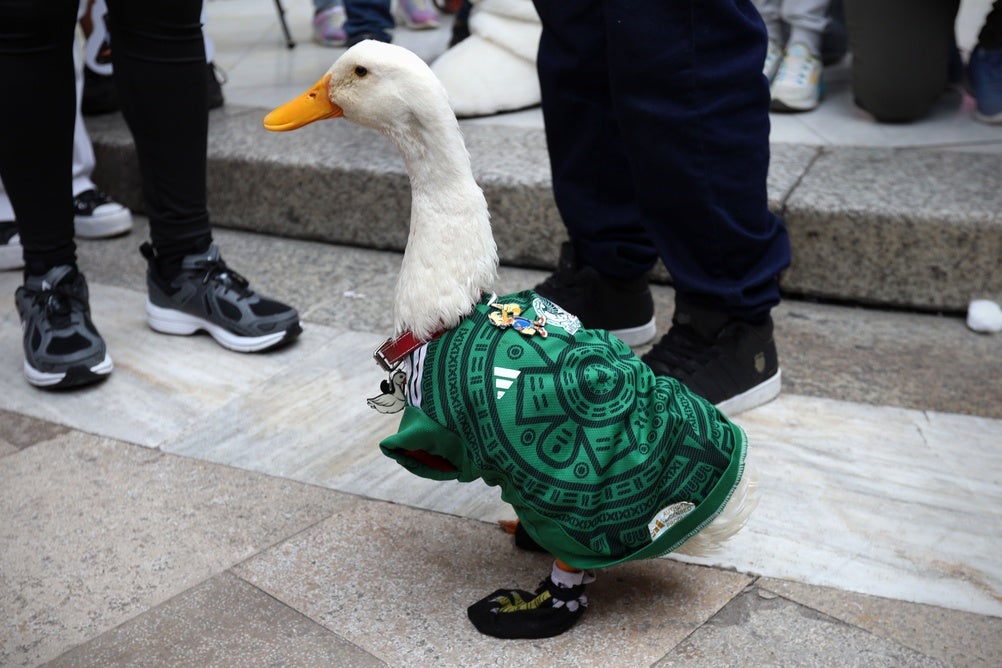
Merlin the Duck became an accidental sensation during the initial festivities in Mexico City. Dressed by his owners in miniature jerseys and often seen navigating the bustling streets near fan zones, Merlin provided a moment of levity and cultural connection that resonated far more deeply than polished corporate campaigns. Social media users quickly dubbed him a “national treasure,” and his image began appearing in thousands of TikTok videos and Instagram reels.
For brands in the food, beverage, and consumer goods sectors, Merlin represented a “goldilocks” opportunity for engagement—wholesome, safe, and universally liked. Yet, many major corporations found themselves unable to participate in the conversation in real-time. The reason was a reliance on legacy PR tools. Traditional social listening dashboards are built on rigid keyword definitions. Because “duck” and “World Cup” were not pre-programmed as a relevant pair, these systems failed to alert communications teams until the trend had already reached its peak and begun to plateau. By the time many legal and creative teams had approved a “Merlin-themed” post, the internet’s fickle attention had already migrated to the next spectacle.
The Limitations of Traditional Keyword-Based PR
Historically, PR and communications leaders have operated within a reactive loop. Strategies are typically built around historical data—analyzing what people talked about yesterday to predict what they might talk about tomorrow. This methodology relies on keyword volumes, which only spike after a trend has already entered the mainstream.
In the context of the 2026 World Cup, this reactive approach creates several strategic bottlenecks:
- The Latency Gap: There is a significant delay between the emergence of a “ripple” in a digital community and its appearance on a mainstream dashboard.
- Contextual Blindness: Keyword tools often struggle to differentiate between a spike in volume caused by a crisis and a spike caused by a positive viral moment.
- Multimedia Barriers: A significant portion of modern trends originates in visual media—images and short-form videos—which traditional text-based scrapers often ignore.
The Merlin incident highlights the need for “agentic” social intelligence—systems that do not just count words but understand semantic stories and contextual meaning. Agentic AI is designed to scan the digital environment for anomalies, identifying patterns that do not fit the expected narrative of an event.
A Chronology of the Modern Viral Cycle
To understand the speed at which modern PR must operate, one can examine the typical timeline of a viral event like the Merlin phenomenon during a global tournament:
- Phase 1: The Emergence (Hours 1-6): A single video or image is posted in a localized community (e.g., a Mexico City neighborhood group or a specific football fan forum). At this stage, keyword volume is near zero, but engagement rates among those who see the content are exceptionally high.
- Phase 2: The Cross-Platform Jump (Hours 6-12): The content is picked up by “aggregator” accounts on X (formerly Twitter) and TikTok. This is the critical window for brand entry. Early adopters who join the conversation here are seen as authentic participants in the culture.
- Phase 3: Peak Saturation (Hours 12-24): The story is picked up by digital news outlets and mainstream sports commentators. Keyword volumes spike. At this point, the “market” for the trend is crowded, and late-arriving brands risk appearing as though they are “trying too hard.”
- Phase 4: The Pivot or Decay (Day 2 and beyond): The trend either evolves into a long-term meme or fades away. Brands still trying to gain approval for a Day 1 trend are now actively harming their digital relevance.
Data-Driven Insights: The Power of Social Intelligence
The shift toward AI-powered intelligence is backed by significant market data. During the 2022 World Cup in Qatar, social media interactions reached an estimated 5 billion across all platforms. Projections for the 2026 tournament suggest this figure could double, given the expanded format and the time-zone accessibility of the North American market.
Data from recent marketing surveys indicates that “real-time” brand responses have a 20% higher engagement rate than scheduled promotional content. Furthermore, 65% of Gen Z and Millennial consumers report a higher affinity for brands that demonstrate an “authentic understanding of internet culture.”
Agentic social intelligence solves the “Merlin problem” by utilizing multimodal AI. Unlike older systems, these AI agents can “watch” social videos and “see” images in real-time. They can detect that a specific animal is appearing repeatedly in the background of World Cup fan footage and alert a brand that this specific visual is gaining traction, even if no one is using a specific hashtag yet.
Strategic Implications for Communications Leaders
For PR professionals, the integration of advanced AI means a shift in the hierarchy of tasks. If the “heavy lifting” of trend spotting is handled by intelligent systems, the role of the PR lead moves from “ambulance chasing” to strategic foresight.
1. Moving Beyond Monitoring to Prediction
Instead of asking “What happened?” teams can now ask “What is emerging?” Agentic systems can identify “scattered signals”—disparate posts that, when combined, indicate a looming narrative shift. This allows comms teams to prepare assets and messaging before a trend hits the mainstream.
2. Managing Risk in Real-Time
Social intelligence is not only about finding “ducks.” It is also about identifying risks. During a massive event like the World Cup, geopolitical tensions, logistics failures, or player controversies can escalate in minutes. AI that understands context can distinguish between a minor complaint and a burgeoning PR crisis, allowing for immediate intervention.
3. Claiming a Seat at the Strategy Table
When a communications team can provide data-backed predictions about where audience attention is moving, they become more than just a reactive service department. They become a visionary team that informs broader business strategy, from product placement to official partnerships.
The Future of Brand Intelligence
The story of Merlin the Duck serves as a microcosm of the 2026 World Cup’s broader digital reality. In a world where a bird in Mexico City can temporarily outshine the world’s most expensive athletes, brands cannot afford to rely on static strategies. The “old keyword scramble” is being replaced by a more sophisticated, nuanced approach to understanding human behavior online.
As the 2026 tournament continues to dominate the global conversation, the divide between successful and unsuccessful brands will likely be determined by their technological agility. Those who leverage agentic social intelligence will be able to “ride the vibe” of the tournament, participating in the moments that matter to fans. Those who do not will remain trapped in the reactive loop, wondering why they missed the next “duck moment” until it is far too late to join the conversation.
In conclusion, the 2026 World Cup is more than a sporting event; it is a laboratory for the future of digital communication. By embracing AI systems that prioritize semantic meaning over rigid keywords, PR and marketing professionals can finally stop chasing the internet and start leading it. The goal is no longer just to be part of the news cycle, but to anticipate the cultural shifts that define it.