The landscape of entrepreneurship, particularly within the e-commerce sector, often emphasizes the growth and eventual exit of a business as the primary measure of success. However, a growing contingent of successful business owners is advocating for a parallel and equally critical financial objective: the robust development of a personal balance sheet. This approach, rooted in the principle of diversified financial security, aims to provide entrepreneurs with greater optionality, resilience, and a stronger foundation for strategic decision-making, irrespective of their business’s future liquidity event. As part of a broader framework for financial mastery, this strategy highlights the importance of building personal wealth concurrently with business expansion.
The rationale behind this dual-focus approach is to mitigate the inherent risks associated with placing all entrepreneurial capital and personal financial security on the success of a single business exit. Such an outcome, while often the aspiration, is far from guaranteed. Market conditions, industry shifts, and unforeseen challenges can all impact a company’s valuation and the feasibility of a profitable sale. By cultivating a diversified personal portfolio, entrepreneurs can achieve a state of financial independence that reduces desperation and enhances their ability to make objective, long-term decisions about their ventures.
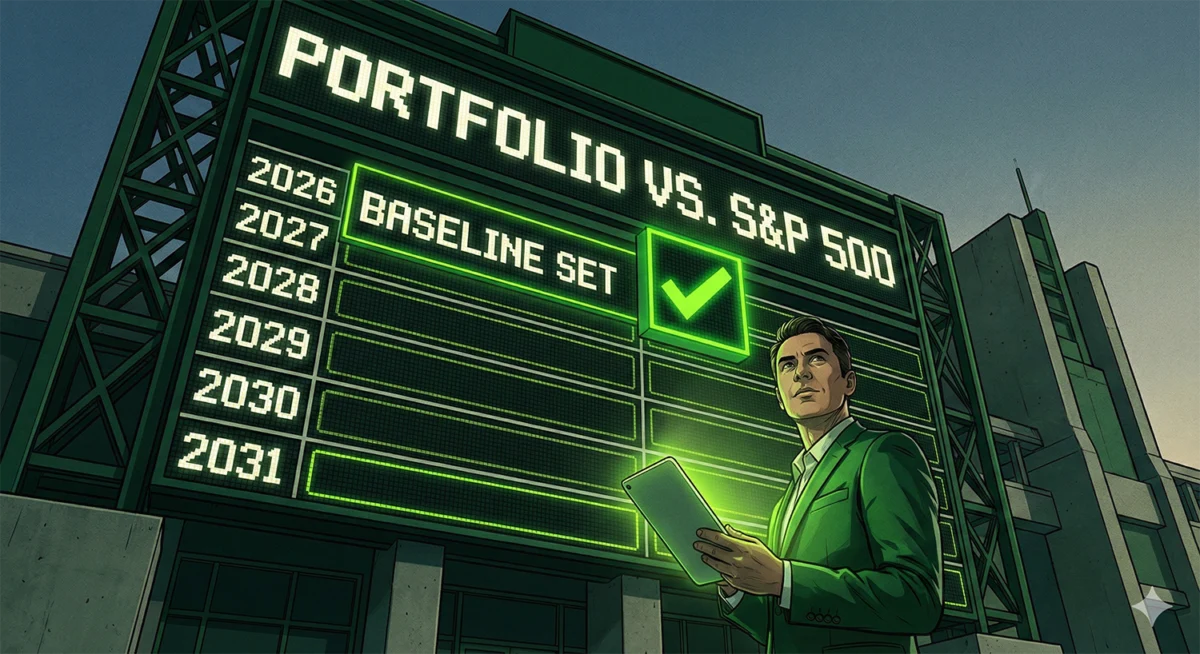
To illustrate this strategy in practice, a prominent e-commerce entrepreneur, who has chosen to remain unnamed but is a recognized figure in the industry and a contributor to thought leadership platforms, has committed to transparently tracking and reporting the performance of their personal investment portfolio against the S&P 500 index annually. The following analysis details the baseline of this personal portfolio as of early 2026, offering a comprehensive look at its composition and the underlying investment philosophy.
The Composition of a Diversified Personal Portfolio
The entrepreneur’s personal balance sheet, as presented for the 2026 baseline, intentionally excludes primary residences, personal possessions, and the value of the active business. This exclusion is a deliberate choice to focus on liquid and investable assets. The reasoning is that a primary residence is primarily a consumption asset, physical possessions are not typically income-generating investments, and an active business, until it is sold, is illiquid and subject to significant volatility. By isolating these liquid investments, the entrepreneur aims for a clearer and more accurate assessment of their financial diversification and growth potential.
The portfolio is allocated across several key asset classes:
-
Individual Stocks (3.5%): The investment philosophy here is described as “90% boring and 10% bold.” This means the vast majority of the portfolio is dedicated to low-risk, diversified investments, with a small, carefully selected allocation to individual stocks where there is deep conviction in outperformance. The two current individual stock holdings are Shopify and Cloudflare.
- Shopify: The rationale for holding Shopify is its perceived near-monopoly status in the e-commerce platform space, excluding Amazon. The company’s hosted software solution is considered to have few viable alternatives and is seen as becoming increasingly entrenched.
- Cloudflare: While acknowledging less intimate knowledge of Cloudflare’s internal operations, the entrepreneur cites overwhelmingly positive feedback from industry contacts and a strong personal experience with the service. The company is recognized for its broad capabilities and a seemingly robust corporate culture.
-
Index Funds (63%): This forms the core of the “boring” yet intentional investment strategy. The allocation is predominantly in U.S. total market index funds, with approximately 15% in international index funds. Notably, there are no bond holdings at this time. The entrepreneur expresses an intention to increase international exposure, citing recent strong performance in international equities and potential valuation advantages, alongside the inherent diversification benefits. The overarching principle for this segment is simplicity: broad market index funds, low fees, and a long-term holding strategy.
-
Cryptocurrency (12%): The primary holdings in this category are Bitcoin and Ethereum. The long-term belief in these digital assets as a store of value and a hedge against potential monetary policy missteps by governments remains. However, a recent observation highlights a concerning trend: cryptocurrency has been exhibiting behavior more akin to a risk asset than “digital gold.” The comparative underperformance against gold, which saw significant gains over the preceding twelve months, is noted as a point of concern. Despite this, the entrepreneur maintains their holdings, citing long-term fundamental beliefs, unrealized gains that are strategically being held to avoid immediate tax implications, and the diversification value of cryptocurrency as an anti-institutional hedge. The increasing institutional adoption is acknowledged as a factor that could potentially temper upside potential and increase volatility.

-
Real Estate (11%): This portion of the portfolio consists of a single rental property. The entrepreneur clarifies that this is not primarily a strategic investment but rather a property they personally favor, which is being rented out pending a future decision on its disposition. The experience of managing a short-term rental (e.g., via Airbnb) over the past four months has provided significant insight into the operational complexities involved, even with third-party management. This hands-on experience has also fostered a greater appreciation for the value proposition of platforms like Airbnb from a consumer perspective.
-
Cash (9%): A cash cushion is maintained, particularly given the current market environment of all-time highs. A significant portion of this cash is earmarked for a “big bets” fund, awaiting high-conviction investment opportunities in 2026 where a substantial stake can be taken.
-
Private Investments (Less than 1%): This segment comprises three small investments in early-stage companies: IntelliGems, Postpilot, and Kanpai Foods. These investments are made in founders with whom the entrepreneur has strong relationships and in companies they believe are building significant value. While acknowledging the appeal of private investments when domain expertise aligns with trusted opportunities, it remains a minor component of the overall portfolio.
Strategic Divestments and Lessons Learned
The year 2026 also saw two notable divestments from the portfolio, each carrying distinct lessons:
-
Tesla: After a four-year holding period, Tesla was sold. The original investment thesis was based on the product quality and customer satisfaction with the vehicles. However, the entrepreneur observed a strategic shift within Tesla, moving beyond its core automotive business to focus heavily on robotics, self-driving technology, and automated taxi services. While acknowledging the potential of these ventures, the entrepreneur noted a lack of deep homework to justify the company’s valuation based on these new directions, diverging from the initial investment thesis. Furthermore, increasing “key man risk” associated with Elon Musk, given his age, intense workload, and multi-company commitments, was cited as a growing concern. The combination of a changed investment thesis and significant valuation led to the decision to exit.
-
Airbnb: This sale is characterized as one of the entrepreneur’s poorer recent decisions. The initial investment was described as a “knee-jerk” reaction, prompted by a recommendation without thorough personal conviction – a classic investment pitfall. The stock was held for approximately six to twelve months, breaking roughly even. The subsequent experience of setting up a personal Airbnb rental significantly altered the entrepreneur’s perspective on the company’s operational realities and growth prospects. While not deeming Airbnb “terrible,” the entrepreneur expressed a lack of strong bullishness due to years of lackluster growth and an unclear catalyst for future acceleration. The key takeaway from this experience is the importance of investing only when there is high conviction; for investments lacking such conviction, allocating capital to index funds is deemed the more prudent approach.
Looking Ahead: A Commitment to Transparency and Financial Mastery
This baseline portfolio snapshot for early 2026 serves as a foundation for future reporting. The entrepreneur has pledged to provide year-end updates on the performance of this personal portfolio relative to the S&P 500. This commitment to transparency aims to provide valuable insights for other entrepreneurs navigating the complexities of financial management.
The broader implication of this strategy extends to the entrepreneurial community, emphasizing that business success and personal financial security are not mutually exclusive but rather complementary pillars of a well-rounded and resilient financial future. By actively cultivating a diversified personal investment portfolio, entrepreneurs can build a stronger foundation for their businesses, enhance their decision-making capabilities, and secure a more predictable and prosperous future. For those seeking ongoing guidance on financial mastery and insights from a community of successful business owners, continued engagement with platforms that foster such dialogue is encouraged.